



Sewn-In Hair Extensions 101: Everything You Need to Know
A Standard Support & Education Guide Featuring Human Hair Weave Wefts
Sewn-in hair extensions remain one of the most durable, versatile, and professional methods for achieving seamless volume, length, and texture enhancement. Unlike temporary clip-ins or semi-permanent tape-ins, sewn-in extensions are integrated directly into the hair’s structure through braids and stitching, creating a long-lasting transformation that withstands daily movement, weather, workouts, and extended styling.
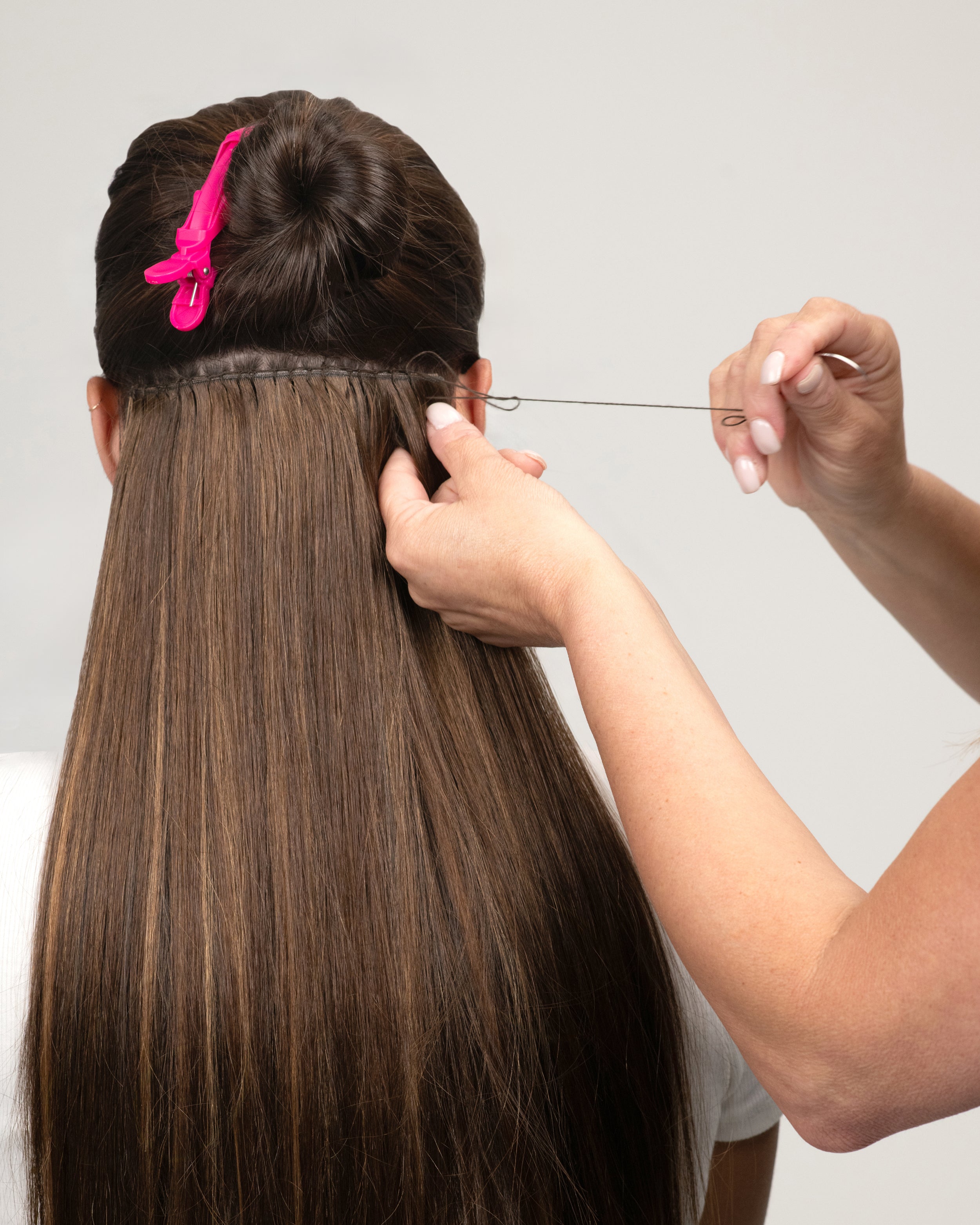
Whether you’re a first-time wearer, a stylist expanding your skill set, or someone seeking informed confidence before a salon appointment, this guide covers everything you need to know about sewn-in extensions—from technique and installation to blending, maintenance, and styling. We’ll also explore how sewn-in fits into the broader world of weft systems, creative hairstyle options, and best-fit scenarios compared to related methods.
What “Sewn-In” Hair Extensions Really Means
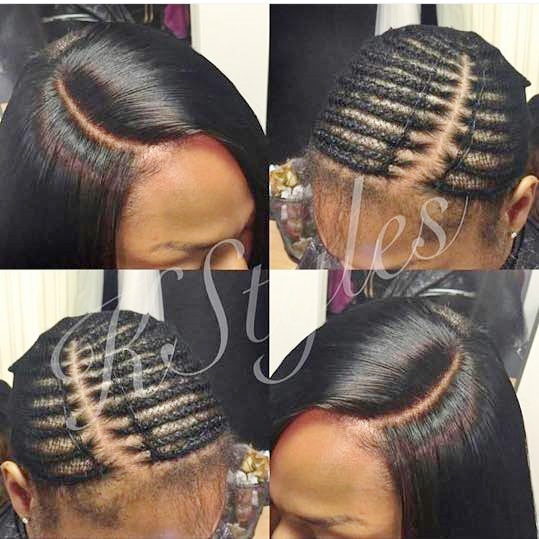
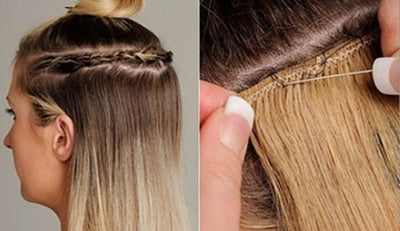
Sewn-in hair extensions—sometimes referred to as weave extensions—involve braiding the natural hair into cornrows or a supportive base and then stitching weft tracks onto that base using a curved weaving needle and durable thread. This technique creates a secure foundation that resists slippage and supports long-wear extension styles with minimal daily adjustment.
Unlike methods that attach extensions to individual strands, sewn-in extensions distribute weight evenly across a braided foundation. This makes them especially suitable for long-term wear, higher-density styles, and individuals who prefer a non-adhesive, non-removable solution. For foundational knowledge on weft systems, refer to Human Hair Weave Wefts Hair Extensions: Everything You Should Know.
The Sewn-In Installation Process Explained
The sewn-in method follows a structured, professional sequence:
Consultation and Assessment
The stylist evaluates natural hair density, scalp health, and styling goals to determine braid patterns and weft selection.
Braiding the Base
Natural hair is braided into horizontal or curved cornrows close to the scalp. The pattern varies based on desired volume and blend.
Securing the Weft
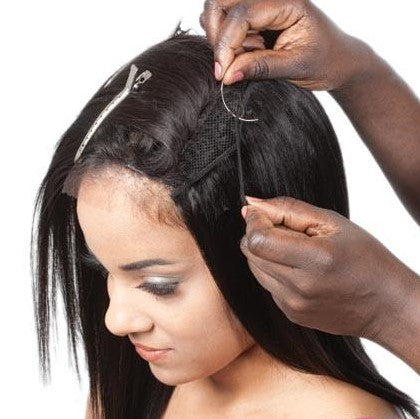
Weft tracks are stitched onto the braid base using a curved needle. Proper tension is critical—secure but never painful.
Blending and Cutting
Extensions are layered and shaped to merge seamlessly with natural hair.
Final Styling
Hair is styled into the desired finish, whether sleek, wavy, or layered.
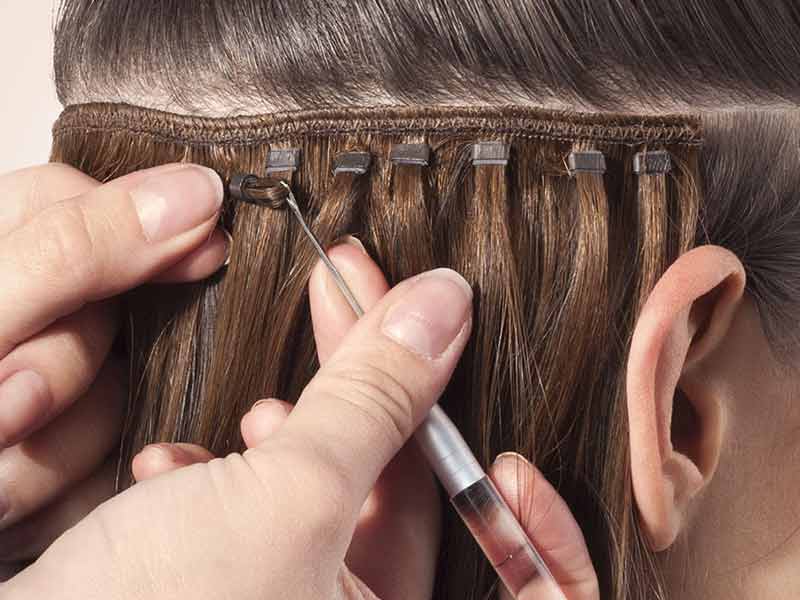


Because the braid base is stable and the wefts are physically sewn into place, sewn-in extensions can last 6–8 weeks or longer with proper care.
Sewn-In vs Other Extension Methods
Understanding how sewn-ins compare to other methods helps determine when they’re the best choice:
• Sewn-In vs Clip-Ins: Clip-ins offer flexibility but require daily removal. Sewn-ins provide stability and zero daily handling.
• Sewn-In vs Tape-Ins: Tape-ins are lightweight but better suited for subtle volume. Durability comparisons are explored in Double Weft Hair Extensions for More Volume With Less Effort.
• Sewn-In vs Nano Rings: Nano rings rely on micro-links that may slip. Sewn-ins lock onto a braided foundation for greater security.
Sewn-in extensions remain the preferred choice for maximum longevity and load-bearing styles.
Choosing the Right Weft for Sewn-In Methods
Weft selection directly impacts comfort, blending, and final results. Premium options such as professional human hair weave wefts for sewn-in extensions offer superior movement and heat tolerance.
Key weft types include:
• Standard Wefts: Balanced density for everyday wear
• Flat Wefts: Low-profile comfort explained in Everything You Need to Know About Flat Weft Hair Extensions
• Quad or Double Wefts: High density with fewer rows, detailed in Quad Weft Hair Extensions: The Voluminous Upgrade Your Hair Needs
• Double Drawn Luxury Wefts: Uniform thickness showcased in Remy Royale Double Drawn Hair Weft Extensions: Luxury for Your Hair


Blending Techniques for Sewn-In Extensions
Blending ensures extensions appear natural rather than attached. Effective blending focuses on:
• Color Harmony: Match undertones, not just shade
• Density Distribution: Place heavier wefts where natural density is strongest
• Texture Matching: Align curl or straight patterns
Advanced strategies are detailed in Seamless Blending: How to Match Weft Extensions With Your Natural Hair.
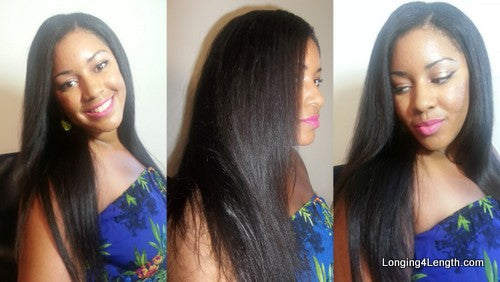


Creative Styling With Sewn-In Extensions
Sewn-in extensions support a wide range of styles:
• Voluminous curls that hold shape
• Sleek straight finishes
• Layered cuts with depth
• Updos and braids for events
For hairstyle inspiration, explore Creative Hairstyles Using Weft Extensions to Transform Your Look.

Maintenance Tips for Longevity
Proper care protects both extensions and natural hair:
• Use sulfate-free shampoo
• Condition mid-lengths and ends only
• Sleep with hair loosely secured
• Schedule maintenance every 6–8 weeks
• Limit heat at the braid base
Longevity-focused weft systems are discussed in Why Weft Extensions Are the Best Option for Long-Lasting Natural-Looking Hair.
Addressing Tension and Scalp Comfort
To maintain scalp health:
• Avoid tight installation near the hairline
• Use flat wefts in sensitive zones
• Communicate discomfort early
Correct tension protects edges and prevents breakage.
Common Mistakes to Avoid
• Installing too many tracks
• Placing wefts too close to the hairline
• Skipping hair prep
• Ignoring maintenance schedules
Avoiding these mistakes preserves results and hair health.
When Sewn-In Is the Best Option
Sewn-in extensions are ideal when:
• Long-term wear is desired
• High volume or dramatic length is required
• Natural hair is medium to thick
• Frequent styling is planned
Conclusion: The Art and Science of Sewn-In Wefts
Sewn-in hair extensions combine technical precision with premium materials to deliver durability, versatility, and confidence. From braid foundation to weft choice and blending, every step influences the final result. With proper care and professional execution, sewn-in extensions remain one of the most reliable enhancement methods available. Discover premium options through Fabulive’s official hair extensions destination and explore more styles via Fabulive’s complete hair extensions collection.
Frequently Asked Questions About Sewn-In Hair Extensions
How long do sewn-in hair extensions last
Typically 6–8 weeks, depending on hair growth and maintenance.
Are sewn-in extensions damaging
When installed correctly and maintained properly, sewn-ins are low-risk and protective.
Can I wash my hair with sewn-in extensions
Yes, gentle washing with sulfate-free products is recommended.
Are sewn-ins suitable for fine hair
They can be, provided braid size, tension, and weft weight are adjusted.
Can sewn-in extensions be heat styled
Yes, human hair wefts tolerate heat when heat protectant is used.
How often should sewn-in extensions be maintained
Professional maintenance is recommended every 6–8 weeks.
Do sewn-in extensions feel heavy
When properly balanced, they feel secure rather than heavy.
Are sewn-ins good for active lifestyles
Yes, they are one of the most stable options for workouts and travel.
