



Seamless Blending: How To Match Weft Extensions With Your Natural Hair
A Styling, Lookbook & Tutorial Guide to Flat, Sewn-In, and Luxury Weft Extensions


Seamless blending is the defining difference between hair extensions that look wearable and hair extensions that look real. Length and volume alone do not guarantee a natural result; the true artistry lies in how well extensions integrate with the wearer’s natural hair in color, density, texture, and movement. Weft extensions, when chosen and placed correctly, offer one of the most convincing and long-lasting blending solutions available—but only when blending is treated as a technical process rather than an afterthought.
This guide focuses on the mechanics of seamless blending with weft extensions, exploring how to match extensions to natural hair using structural planning, visual balance, and installation strategy. Rather than repeating basic extension theory, this article addresses the practical decisions that create invisible results, whether using flat wefts, sewn-in methods, quad wefts, or luxury double drawn options.
Why Blending Is The Most Critical Step In Weft Extensions
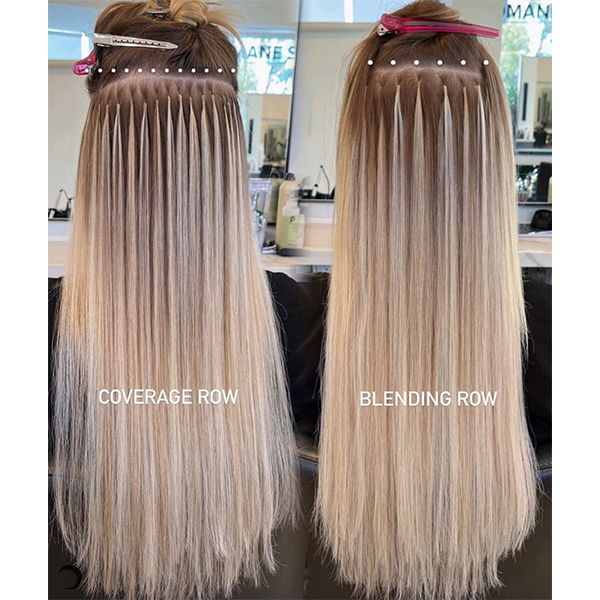
Blending determines whether extensions enhance natural hair or compete with it. Poor blending results in visible tracks, abrupt density changes, or mismatched movement that draws attention to the extensions rather than the style. Proper blending allows extensions to disappear into the hair, making added length and volume feel like a natural continuation rather than an attachment.
Weft extensions are particularly well suited to seamless blending because they distribute hair across continuous tracks, allowing precise control over density and placement. When approached methodically, wefts create a cohesive silhouette that holds up in motion, varied lighting, and different hairstyles.

Understanding Your Natural Hair Before Choosing Wefts
Blending begins before extensions are installed. Natural hair must be assessed realistically, not aspirationally. Density, strand thickness, growth pattern, and texture variability all influence how extensions should be selected and placed. Fine hair behaves differently from medium or coarse hair, even at similar lengths. Layered cuts require a different strategy than blunt or uniform shapes.
Ignoring these variables often leads to overloading some areas while under-supporting others. Seamless blending depends on choosing wefts that complement natural characteristics rather than overpower them.
Why Flat Wefts Are A Blending Essential
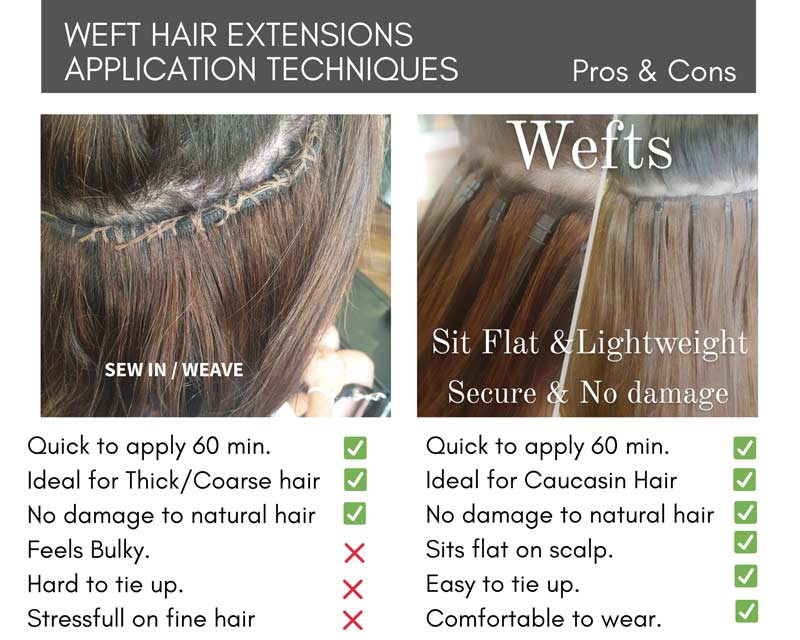
Flat wefts play a foundational role in invisible blending. Their low-profile construction allows them to sit close to the scalp without creating ridges or bulk, making them ideal for areas where concealment is critical—such as the crown, nape, and sides.
Flat wefts featured in flat weft hair extensions designed for discreet blending are commonly used as base layers in blended installations. They provide structure without visual weight, allowing denser wefts to be layered only where volume is truly needed.
Matching Density: Avoiding The “Shelf Effect”
One of the most common blending failures is abrupt density transition. When extensions are significantly thicker than the natural hair above them, a visible “shelf” forms where fullness suddenly increases. Seamless blending requires a gradual density build rather than an instant jump.
Luxury options such as Remy Royale double drawn hair weft extensions for premium density help minimize this issue by maintaining consistent thickness from root to tip. However, even double drawn wefts must be placed with restraint to avoid overwhelming finer natural hair.
Strategic Placement: Where Wefts Should—and Should Not—Go
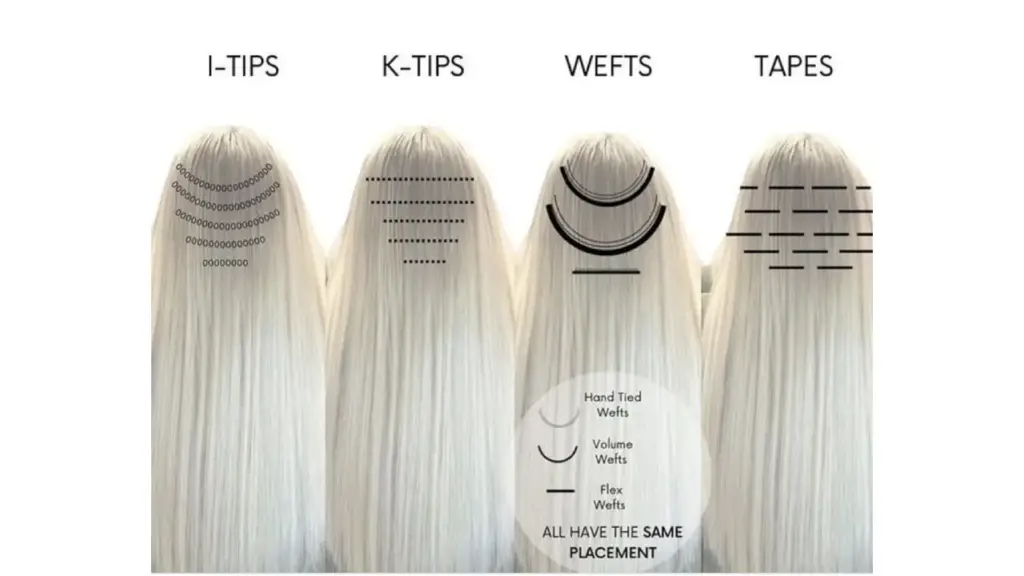
Placement influences blending more than styling. The densest wefts belong in the mid-occipital and lower sections of the head, where natural hair density is strongest. As placement moves upward, lighter or flatter wefts should be used to maintain concealment.
Over-placing wefts near the crown or temples leads to stiffness and visibility that styling cannot hide. Installation principles outlined in sewn-in hair extensions installation fundamentals help explain how placement affects blending as hair grows.

Texture Matching: The Silent Blending Factor
Color often receives the most attention, but texture mismatch is what most frequently reveals extensions. Straight wefts blended into naturally wavy hair—or vice versa—create inconsistent movement that breaks the illusion even when color is perfectly matched.
Wefts should mirror the hair’s natural baseline texture, not its styled finish. Subtle movement in extensions helps maintain cohesion when hair is worn naturally or styled minimally.
Layering As A Blending Tool, Not A Fix
Layering should refine blending, not compensate for poor weft selection. When extensions are chosen and placed correctly, layering enhances flow and softness rather than disguising structural flaws. Over-layering weakens natural hair and shortens style longevity.
Professional blending relies on minimal, intentional layering that preserves coverage where it matters most.
Using Quad And Double Wefts Without Compromising Blend
Quad wefts, explored in quad weft hair extensions for enhanced volume and fullness, deliver dramatic density but require disciplined placement. They perform best in areas where natural hair can support their volume.
Similarly, density-focused designs highlighted in the double weft hair extensions trend for more volume with less effort should be integrated selectively rather than uniformly to preserve blending harmony.


Color Harmony Beyond Shade Matching
True blending goes beyond base color. Undertone, dimension, and light reflection all influence integration. Extensions with flat, single-tone color often stand out against naturally dimensional hair.
High-quality systems like those discussed in human hair weave wefts hair extensions explained offer richer tonal depth, making natural blending easier across different lighting conditions.
Styling Techniques That Enhance Blending
Certain styles naturally improve blending. Soft waves, loose curls, and layered blowouts allow natural hair and extensions to visually interlock. Ultra-sleek styles demand higher precision and superior weft quality, as they offer less margin for error.
Styling should support the blending strategy rather than compensate for it.
Blending Over Time: Accounting For Growth And Wear
Blending evolves as natural hair grows. Extensions that look seamless initially may become visible weeks later if maintenance is neglected. Regular professional check-ins allow for repositioning and refinement.
Systems designed for longevity, such as those discussed in weft extensions as the best option for long-lasting natural looking hair, accommodate this progression more gracefully.

Common Blending Errors And How To Avoid Them
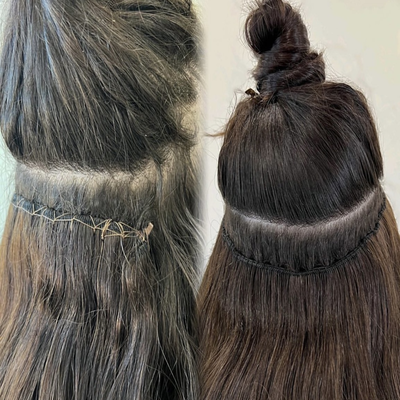
Blending most often fails due to excess—too many wefts, overly dense tracks, or aggressive placement. Relying on heavy products to mask issues worsens buildup and separation near attachment points.
The most natural blends are achieved through restraint, precision, and respect for natural hair limits.
Conclusion: Blending As A Design Discipline
Seamless blending is not a single step but a design discipline that combines assessment, selection, placement, and maintenance. Weft extensions provide the most adaptable canvas for this process, allowing refinement over time. By prioritizing harmony over volume and precision over excess, blending transforms extensions from an accessory into an integrated part of the hair. Explore professional resources through the official Fabulive hair education destination and discover curated options in the complete human hair extensions collection.
Detailed FAQ Section
What makes weft extensions easier to blend than other extension types?
Wefts allow controlled density distribution across the head, making transitions smoother and more natural.
Are flat wefts better for fine hair blending?
Yes. Their low-profile construction reduces bulk and improves concealment near the scalp.
Can quad wefts still look natural?
Yes, when placed in density-supporting zones and balanced with lighter wefts elsewhere.
Does color matching matter more than texture?
Both are critical, but texture mismatch is often more noticeable in motion.
How often should blending be checked or adjusted?
Every 6–8 weeks to account for natural hair growth and shifting placement.
Can seamless blending be achieved without heavy styling?
Yes. Proper selection and placement reduce the need for corrective styling.


