
-
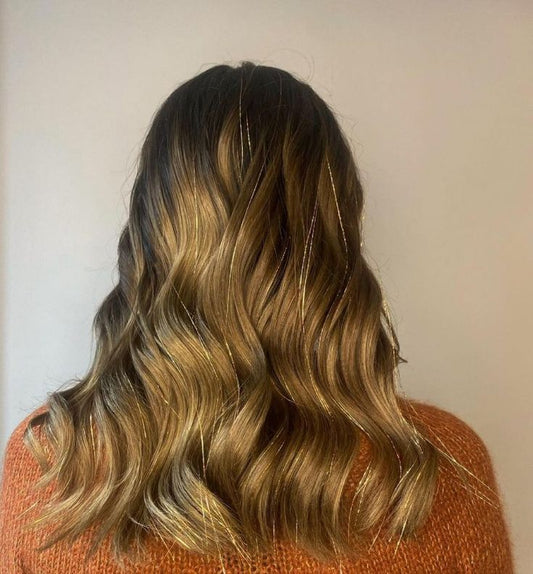
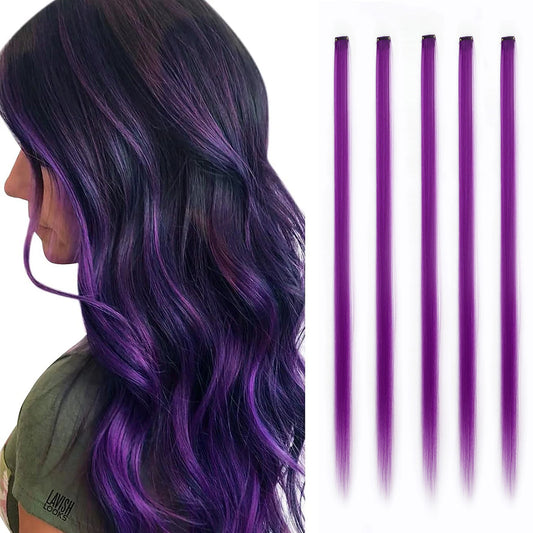
Sparkle Hair Extensions Clip In Hair Extensions
Regular price From $81.99 USDRegular priceUnit price per -
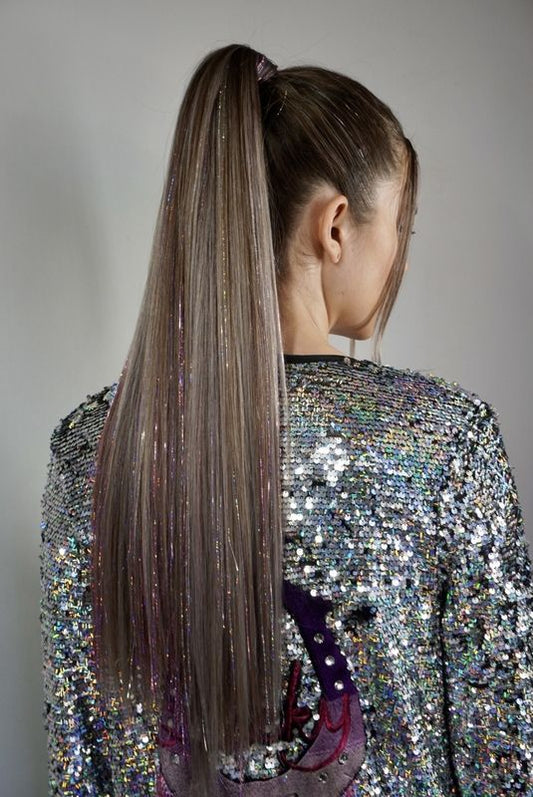
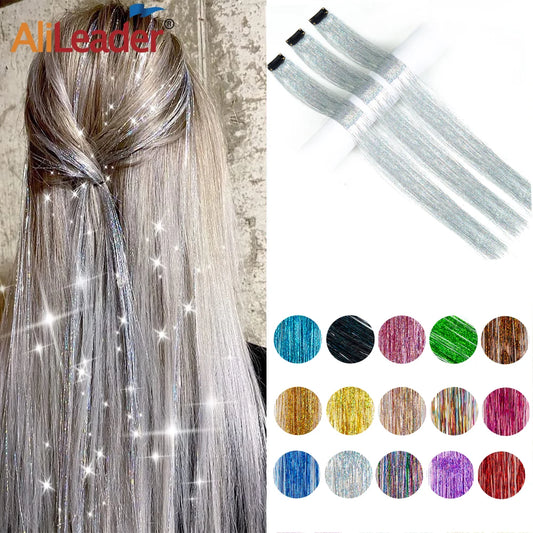
Clip In Hair Tinsel Rainbow Hair Extension
Regular price $121.99 USDRegular priceUnit price per
Blue Hair Extensions: The Modern Guide to Wearable Color, Seamless Blend, and Statement-Ready Styling
Blue hair extensions are the fastest way to add personality without locking yourself into permanent dye. Whether you’re after a subtle midnight tint, a bold cobalt moment, or a dimensional “peekaboo” panel that only shows when you move, the right extensions can look intentional, elevated, and surprisingly natural. This short intro sits above the product grid; the long guide below is your research-driven blueprint for choosing the right shade, length, texture, and attachment method—plus the care habits that keep blue looking crisp, rich, and photo-ready.
Shop blue hair extensions curated for statement color with wearable blending
What It Is and Who It’s For
Blue hair extensions are colored extension pieces—often pre-toned in shades ranging from deep navy to bright electric blue—designed to add length, volume, or color accents without requiring permanent processing of your natural hair. They can be worn as an all-over color shift, as dimensional ribbons mixed into darker hair, or as concentrated face-framing panels that create a bold effect with minimal commitment.
They’re ideal for shoppers who want creative color with control. Control means you decide when the color shows, how saturated it looks, and how it frames your features. Blue is particularly versatile because it can read edgy, elegant, or editorial depending on tone and placement. A deep, inky blue can behave like a cool-toned lowlight in dark hair. A brighter royal blue can read like an accessory you’re wearing—intentional, graphic, and modern. And a softer blue-green family can look fashion-forward without feeling neon, especially when paired with neutral outfits and glossy, healthy movement.
Blue extensions are also a strategic choice for people who love “clean beauty decisions” but still want style range. If you’ve ever hesitated to bleach, worried about staining, or simply don’t want to spend months correcting a color experiment, extensions give you the freedom to explore without sacrificing your natural hair goals. For many shoppers, blue is less about rebelling and more about refining identity: a signature detail you can turn on and off.
Blue extensions are especially useful for:
- People who want statement color without bleaching or permanent dye
- Natural brunettes who want a cool-toned accent that blends with depth
- Blondes who want a high-contrast fashion color moment without staining
- Short hair wearers who want instant length plus a color identity shift
- Event seasons (concerts, prom, festivals, shoots) where photos demand impact
If you’re building a broader extension wardrobe beyond fashion color, it helps to understand the wider landscape of extension categories, weights, and methods before you commit to a blue look that fits your routine.
Explore the full hair extensions category to compare methods, textures, and wear goals
One more reality check: blue is a color that rewards intentional design. That doesn’t mean it’s hard—it means the best results come from thinking like a stylist. Where do you want the blue to appear? How do you want it to photograph? Do you want it to look like a subtle tint in motion or a bold, unmistakable pop? When you answer those questions first, everything else—shade family, coverage, and placement—gets easier.
Why It Matters Now
Blue has moved from costume color to everyday fashion signal. The shift is driven by two trends: dimensional hair and controlled self-expression. Dimensional hair means color looks better when it has depth—shadow roots, gradient fades, and multi-tonal movement. Blue works beautifully within that logic because it can be layered into natural hair as a lowlight-like accent or worn as an intentional contrast panel that reads curated rather than chaotic.
Controlled self-expression means you can match your hair to your mood without long-term consequences. Blue extensions let you do exactly that: go subtle for workdays, bold for weekends, and fully dramatic for events, all with the same base hair. If you’re someone who likes a clean personal style, blue can still fit—especially in deeper tones that show as sheen rather than neon. If you love maximal styling, brighter blues can anchor an entire look, functioning like a statement jacket you can wear with a simple outfit.
Blue extensions also align with hair-health priorities. Many people are avoiding repeated bleach cycles and instead choosing style-based impact. Extensions can add perceived thickness and color richness without pushing your natural hair into more chemical stress. For anyone recovering from breakage or growing out a haircut, color extensions can also make the in-between stage feel intentional: instead of waiting for hair to “become something,” you style it into something now.
Another reason blue matters: it’s one of the most flattering fashion colors for contrast styling. Against black and brown hair, blue can look glossy and expensive—like a cooler version of shine. Against blonde hair, it reads like a deliberate edge, especially when placement is symmetrical or face-framing. And because blue sits in a cooler spectrum, it pairs naturally with modern makeup and wardrobe palettes—grays, creams, blacks, denim, silver jewelry—without looking out of place.
Finally, shoppers have become more research-driven. People don’t just want to buy; they want to know what will blend, what will last, and what will look good in real light. Blue extensions reward that approach. When you choose the right shade family, match texture to your baseline pattern, and build a care routine that preserves finish, the result is not “temporary color.” It’s a wearable identity detail.
How to Choose
Decision Framework
Goal → Shade → Texture → Type → Coverage → Occasion → Care → Budget
Micro-intent: Define your goal—full color shift or targeted accents
Start by deciding whether you want an all-over blue impression or a controlled accent. An all-over look usually requires more coverage and a consistent tone strategy so the color reads cohesive. Accent looks—peekaboo panels, underlayer color, or face framing—require less hair but benefit from precision: you’re designing where the blue appears and how it interacts with your natural base.
If you’re new to fashion color, accent placement is often the most wearable entry point. It lets you test how blue fits your style without committing to a full transformation. If you already know you love bold color, a fuller coverage approach can deliver a runway-level effect, but you’ll want to align shade and texture carefully so it looks polished rather than overpowering.
Micro-intent: Choose the right blue for your undertone and base color
Blue isn’t one shade. Navy and midnight blues can read elegant and blend easily into dark hair because they carry depth. Royal and cobalt blues read vibrant and editorial. Teal-leaning blues can feel softer, especially against warm brunettes. The most flattering choice is the one that harmonizes with your base hair and the tones you naturally wear well—brows, wardrobe neutrals, and makeup style included.
If your natural hair is dark, deep blues often look like a glossy, cool-toned dimension rather than a separate color block. If your hair is light, brighter blues will show more clearly and create higher contrast—ideal for statement styling, but best when the placement looks deliberate. If your base is warm brown or highlighted brunette, consider whether you want the blue to feel cool and crisp (more contrast) or softened (more blend). Both can be beautiful; the difference is how intentional and graphic the end result looks.
Micro-intent: Select length by lifestyle, not by trend
Length changes how blue reads. Shorter lengths can look punchy and graphic, especially as face-framing pieces. Longer lengths create movement color—blue that appears and disappears as the hair shifts. The best length is the one you’ll actually wear confidently and maintain. If you dislike daily detangling, choosing a practical length keeps the look elevated with less effort.
For a clean, wearable blue look that still makes an impact, a defined length category can simplify decisions and keep proportions believable. It also helps you plan styling: the longer the hair, the more the color shows through waves and bends; the shorter the hair, the more it shows through placement and contrast.
Browse 18-inch blue hair extensions for a balanced, wearable statement length
Micro-intent: Match texture to your natural pattern for invisible blending
Texture is the difference between extensions and your hair. If your natural hair has wave, a perfectly straight blue piece can look separate even if the shade is stunning. Matching texture doesn’t mean perfection—it means the movement family is consistent. Straight-to-straight looks sleek and editorial. Wave-to-wave looks soft and forgiving, and it often makes color look more dimensional because light hits the hair at different angles.
Even if you style your hair daily, start with a texture that matches your baseline. It reduces your styling burden and keeps the blue looking intentional on low-effort days. If you like to alternate between straight and wavy looks, choose a texture that can adapt: a natural wave can be smoothed; a super-straight piece can be waved, but it often requires more effort to keep the pattern consistent.
Micro-intent: Decide coverage based on how you wear your hair most
Coverage is not only about how much hair you buy; it’s about how you intend to wear it. If you wear your hair down most days, you can place blue strategically in the mid-lengths and ends to create a dimensional effect with minimal exposure at the root. If you wear ponytails or half-up styles often, you’ll want enough coverage on the sides so the color looks balanced and doesn’t disappear or bunch into one visible stripe.
A simple rule: the more you pull your hair back, the more evenly distributed your color pieces should be. The more you wear it down, the more you can concentrate the blue where it naturally shows through movement. If you want a “secret color” effect, keep the blue underneath. If you want a “signature pop,” keep it closer to the surface and near the face.
Micro-intent: Choose a weight category that supports your density goals
Weight affects how full the hair looks and how well the ends hold shape. If your goal is mainly color accent, you may not need a heavy weight. If you’re using blue extensions as both color and density support—especially if your ends are thin—choosing a higher weight can help the silhouette look intentional rather than wispy.
Compare 100g hair extensions when you want fuller ends and a more substantial silhouette
When thinking about weight, consider what you want your hair to do in motion. If you want a soft, airy effect, moderate weight with wave texture can feel light and modern. If you want a sleek, dramatic “hair commercial” effect, higher weight supports that polished fall and keeps the ends from disappearing.
Micro-intent: Pick the extension type that fits your routine and skill level
Some people want quick-change color for weekends; others want a consistent daily look. Your ideal type depends on how often you plan to wear blue and how much time you want to spend applying hair. If you love flexibility, choose a method that supports quick application and removal. If you want wake up with the look, choose a method that stays put with minimal daily effort.
For shoppers who prioritize a modern, premium blend with directional dimension, advanced methods can also be part of the decision—especially if you want color that behaves like natural hair rather than sitting on top of it. The goal is not complexity; it’s natural movement and a finish that looks cohesive.
Explore 6D hair extensions for a modern, dimensional approach to blending
Before moving on, a quick placement mindset can prevent most first-time mistakes: start conservatively, then build. It’s easier to add a second blue panel or distribute the color more widely than it is to undo an over-saturated look that feels too loud for your daily life. Your most wearable “first blue” is often a deep shade placed under the top layer or as controlled face framing—enough to be exciting, subtle enough to look intentional every day.
Shade, Undertone, and Finish
Blue looks best when you treat it like a shade family rather than a single color. The three variables that determine whether blue looks wearable or costume-like are undertone compatibility, saturation control, and finish consistency.
Undertone compatibility means the blue should harmonize with the tones you already wear well—your hair, your brows, your skin undertone, and even your wardrobe neutrals. Saturation control means choosing how vivid the blue should be relative to your base. A vivid cobalt against jet black hair looks high contrast and deliberate. A deep navy layered into dark brown hair looks subtle and glossy. Finish consistency means the blue pieces should reflect light similarly to your natural hair; if the finish is too glossy or too matte, the color can look separate.
One of the most effective approaches for first-time blue wearers is to start with depth and dimension rather than maximum brightness. Deep blues tend to read more expensive because they resemble natural depth tones and show up as movement rather than a flat block. If you want brighter blue, keep it polished: even placement, clean styling, and a finish that looks smooth and intentional.
Consider “finish harmony” as part of your color plan. If your natural hair is typically matte (from texture, dryness, or product choice), choosing an ultra-glossy blue piece can look like a different material. If your natural hair is smooth and reflective, a very matte blue can look dull. You can adjust finish with styling, but starting closer to your baseline makes the look easier to maintain.
Texture and Blending
Blending is where blue becomes sophisticated. The most premium blue looks don’t fight the base hair—they work with it. That can mean placing blue underneath as a peekaboo layer, mixing it with darker strands for a tonal gradient, or using it as a framing element that complements your face shape.
Blending also benefits from a color distribution mindset. Think like a colorist: brighter pieces often look best near the face and surface for impact, while deeper pieces create depth underneath. If you’re doing a subtle look, keep the blue concentrated under the top layer so it flashes through movement. If you’re doing a bold look, distribute the blue more evenly so it reads intentional from the front, sides, and back.
If your goal is to create a gradient rather than a hard line, you can use dimensional extension strategies as inspiration even when you’re building a fashion color look. Gradient thinking keeps blue from looking like a single strip and helps it read more editorial.
Learn how to style blue hair extensions for a bold look that still feels polished
Continue to Part 2 for deeper guidance on texture-specific styling, care habits that preserve vivid blue, and length-based planning that helps your look stay wearable beyond the first day.
Styling Ideas (Daily + Event)
Blue extensions look most expensive when the styling supports the color story. The goal isn’t to “show the blue at all times.” The goal is to control when and how it appears: a flash of color in movement, a deliberate ribbon near the face, or a bold, symmetrical panel that reads intentional from every angle. Good styling also improves blending, because it helps your natural hair and the extensions move as one unit.
Micro-intent: Daily styling that keeps blue wearable and polished
For everyday wear, aim for controlled softness. Overly stiff curls can make color look set and artificial, while completely flat styling can make panels look like separate strips. A soft bend—especially through mid-lengths—helps the blue feel integrated. If you wear your hair straight, keep the finish smooth and consistent from root area to ends, then add a slight curve at the bottom so the silhouette looks natural rather than rigid.
Everyday styles that make blue feel intentional without requiring constant effort:
- Soft bend waves: a large-barrel curl brushed out so the blue diffuses through movement
- Half-up twist: keeps the top clean while letting the blue peek through underneath
- Low pony with a wrapped base: makes the color look sleek and designed, especially with consistent finish
- Loose braid: turns blue into a woven accent that reads dimensional rather than striped
- Sleek down with curved ends: highlights shine and makes deep blues look glossy
If you’re working with very short hair or a lob and want the blue to feel chic—not costume—think about scale. Smaller, more precise panels often look more elevated than large blocks. A single face-framing piece paired with a subtle underlayer can change your whole look without dominating it.
For short hair transformations that feel modern and proportional, this resource is helpful for understanding how extensions change silhouette and confidence—not just length.
See why hair extensions are a game-changer for short hair and style identity shifts
Volume also changes how blue reads. A fuller silhouette makes color look richer and more dimensional, while very flat hair can make panels look obvious. Even if your goal is not “big hair,” a little root lift and mid-length body can make blue look more premium.
Use volume techniques that improve blending and make fashion color look more natural
Micro-intent: Event styling for bold impact (prom, concerts, festivals)
For events, you can lean into drama—but the difference between bold and messy is symmetry and finish. If you want a high-impact blue look, consider balancing the color on both sides of the face or distributing it in a pattern that looks designed. For example, two face-framing panels plus a subtle underlayer often photographs better than a random cluster of color, because it creates intention from the front view.
Event hair also demands longevity. If you’re dancing, traveling, or wearing hair for hours, choose styles that hold shape while keeping movement. Too much teasing can dull the hair and make color look dusty. Too much heavy spray can make ends stiff. Instead, aim for a style with structure at the base and softness through the ends.
Explore prom hairstyles that work beautifully with fashion-color accents and added density
Celebrity styling references can also help because they show how pros control proportion and shine on camera: where volume sits, how ends are shaped, and how the hair looks under flash.
Study celebrity hairstyles for polished finish and camera-ready movement
For a playful, fashion-forward event option that still reads polished, accessories can act as a “style amplifier.” A bandana or scarf can frame the face while allowing the blue to peek through in a controlled way, making the look feel intentional even if the styling is simple.
Try bandana hairstyles that make blue accents look intentional and editorial
Micro-intent: Length-based styling plans (so the blue shows exactly where you want it)
Different lengths create different “color behaviors.” Shorter lengths make the blue appear more graphic and concentrated, especially in face framing or ends. Mid lengths make blue look wearable and versatile, because the color can appear in movement without overwhelming the base. Long lengths create the most dramatic color flow, because the blue has more space to show through waves and curls.
Use length as your control dial:
- Short and chic: best for precise, modern panels and ends-focused color
- Mid length: best for everyday wearability with enough movement for dimension
- Long: best for dramatic waves, braids, and high-impact editorial looks
If you’re curious how shorter extension lengths can still look elevated, especially when you want a fashion color moment without extreme length, this guide is a helpful reference for proportion and styling direction.
See short, chic styling ideas that translate well to controlled blue accents
If your priority is a mid-length upgrade that flatters fine hair while keeping styling manageable, this length-focused guide offers useful context for planning your silhouette.
Plan a mid-length upgrade that keeps blue wearable and flattering on fine hair
For the most universally wearable “everyday length,” 16 inches often hits the balance between natural proportion and visible movement—enough length to style, not so much that it becomes high-maintenance.
Use 16-inch guidance to choose an everyday length that supports effortless styling
If you want full glamour and flowing movement, 20 inches creates the most dramatic “color in motion” effect—especially in waves and braids.
Explore 20-inch styling ideas for glamorous movement and high-impact color flow
For one of the most luxe length benchmarks in extension styling, 22 inches is often the point where hair looks unmistakably “done,” especially when styled with soft waves and polished ends.
Learn why 22-inch length is considered a luxe benchmark for dramatic hair
Care and Maintenance
Blue extensions stay premium when you protect two things: finish and clarity. Finish is softness, shine, and movement. Clarity is how clean and crisp the blue looks—whether it reads deep and glossy or bright and vivid. Most “color fade” complaints are really about surface issues: dryness that makes color look dull, buildup that makes hair look coated, or friction that roughens the cuticle and reduces shine.
Start with a simple mindset: treat blue like an investment piece. You wouldn’t wash a silk blouse harshly and expect it to look new. Hair is similar: a gentle routine protects the surface, which protects how the color reads.
Micro-intent: Wash cadence that preserves blue vibrancy and movement
Over-washing is one of the fastest ways to make color look tired. Wash only when needed, focusing on scalp cleansing for your natural hair and gentle care for the lengths. When you do wash, the goal is thorough rinse-out with minimal agitation. Tangling often happens when hair is washed while already knotted, so detangle beforehand and keep handling gentle.
Practical habits that help blue stay crisp and soft:
- Detangle before washing so water doesn’t tighten knots
- Rinse thoroughly to prevent residue that dulls the color
- Condition mid-lengths and ends so hair stays flexible, not stiff
- Keep heat moderate and always use protection to preserve shine
- Brush from ends upward to reduce shedding and roughness
Clarity is also affected by how you dry and store hair. Hair that dries in a rough pattern sets that texture into the surface, which makes color look less luminous. If you air-dry, keep hair smooth and detangled as it dries. If you blow-dry, use controlled airflow and avoid aggressive brushing that separates the hair into visible layers.
Micro-intent: Storage, travel, and friction control (the invisible reason color looks dull)
Friction is the silent enemy of colored hair. It creates roughness, which makes color look less vibrant and increases tangling. If you wear extensions frequently, protect them when you sleep and when you travel. A simple, consistent routine reduces tangles and preserves the “new hair” feel longer.
Friction-control habits that make a visible difference:
- Secure hair loosely at night to reduce rubbing and twisting
- Avoid sleeping with wet hair, which increases tangling and roughness
- Store removable pieces in a way that prevents bending and compression
- Refresh with light finishing products instead of heavy oils that separate strands
- Brush gently and regularly so knots never become a “project”
As you move into Part 3, you’ll compare categories and build a smarter shopping pathway: which shades and collections pair well with blue, which products are best for different goals, what mistakes to avoid, and how to anchor your decision with an FAQ that matches real search intent.
Category Comparisons
Choosing blue extensions is easier when you compare them through two lenses: color story and method strategy. Color story determines how the blue integrates with your base—high contrast, tonal blend, or gradient dimension. Method strategy determines how the blue fits your routine—quick-change flexibility or longer-wear consistency. The “best” choice is the one that fits how you live, because wearability is what makes color look confident and intentional.
Start by comparing blue to adjacent color families. If your base is dark, blue can behave like a cool-toned sheen that adds depth. If your base is light, blue becomes a statement contrast that reads graphic and fashion-forward. If you want a more “salon-inspired” approach, blending blue into a dimensional color story can make the look feel elevated rather than costume.
If you love dimensional color logic—multi-tonal movement, gradient finishes, and natural-looking transitions—balayage-inspired collections can help you understand how to build depth around a fashion color accent.
Explore balayage hair extensions for dimensional blending ideas and gradient inspiration
If your base is deep and you want blue to read like refined contrast rather than bright pop, black-based collections can support the glossy, cool-toned look that makes blue feel expensive.
Browse black hair extensions for deep-base styling and high-shine contrast foundations
If you’re starting from a lighter base and want to plan a high-contrast blue moment that still looks polished, exploring blonde foundations can help you understand how contrast behaves and how finish influences realism.
Compare blonde hair extensions to understand contrast styling and finish control
If you sit in the middle—brown hair with warmth or neutrality—blue can be tuned to look either bold or blended. Brown foundations are useful for thinking about how deep, wearable blues integrate with everyday tones.
Explore brown hair extensions to plan wearable blue blends against natural depth
Method strategy matters just as much. If you want quick-change blue for weekends and events, prioritize flexible methods and styling routines that let you apply and remove without stress. If you want a consistent daily look, prioritize methods that hold shape and keep the color placement predictable so you’re not re-designing your look each morning.
Internal guide: Clip-in vs tape-in vs halo for fashion colors (internal link placeholder)
Featured Picks
Featured picks should function like a decision shortcut: choose the option that matches your goal, then refine by styling plan. If your goal is dramatic length, pick a longer option and commit to a softness-focused routine. If your goal is everyday wearability, prioritize movement, proportion, and finish. If your goal is versatility, choose pieces that support both sleek and wavy styling without requiring constant rework.
If you want a broad length range that supports both dramatic styling and flexible proportion control, this long-length option can anchor a “statement hair” wardrobe—especially if you plan to alternate between big waves, braids, and sleek finishes.
Explore a long-length Remy option for dramatic styling range and premium movement
If your goal is glamour with softness, a wavy clip-in option supports effortless movement that makes blue accents look more dimensional and less strip-like—especially in photos.
Choose 20-inch wavy clip-ins for soft movement and high-impact styling versatility
If your styling identity is sleek and polished, a straight tape-in option can deliver a smooth fall that reads premium—especially when your finish is consistent and your ends look full.
Consider straight Remy tape-ins for sleek polish and a consistent everyday silhouette
If you prefer a balanced-weight tape-in option and want a natural movement profile that doesn’t feel overly heavy, a Brazilian Remy set can be a strong foundation for daily wear.
Choose Brazilian Remy tape-ins for a balanced feel and natural movement in daily styling
If you’re building coverage gradually and want a practical density that supports fullness without overwhelming fine hair, a moderate-weight tape-in option can be a smart, wearable building block.
Pick a moderate-weight Brazilian tape-in set for wearable fullness and easy blending
If you want a classic tape-in configuration that supports consistent blending through the mid-lengths and ends, this option can help you build a reliable everyday result when your placement and care are disciplined.
Select a classic tape-in set for consistent blending and a dependable full-end finish
Non-salesy way to choose your pick:
- If you want movement and softness for blue accents, prioritize wave-friendly styling and a flexible method
- If you want sleek, high-polish hair, prioritize consistent finish and a disciplined heat routine
- If you want maximum range, choose an option that supports both everyday styling and event-level drama
Internal: Shade matching help for fashion colors (internal link placeholder)
Buying Mistakes
Most blue-extension disappointment comes from avoidable mismatches: choosing the wrong shade intensity for your lifestyle, selecting a texture that doesn’t match your baseline, or buying a length you don’t want to maintain. The goal is not “maximum blue.” The goal is a blue look you’ll actually wear, confidently, more than once.
Common mistakes to avoid:
- Going too bright too fast: vivid blue can be stunning, but it’s less forgiving in everyday settings if placement isn’t intentional
- Ignoring texture: mismatched movement can make the blue look separate even when color is beautiful
- Choosing length for fantasy rather than routine: dramatic length needs more detangling and styling discipline
- Over-concentrating color on one side: asymmetry can look accidental unless it’s clearly designed
- Forgetting finish: overly glossy or overly matte pieces can make the color read artificial
- Neglecting friction control: tangling and roughness dull the color faster than most people expect
Another subtle mistake is underestimating how lighting changes blue. Deep blues can look almost black indoors and then show vibrant sheen in daylight. Bright blues can look electric under flash. Decide whether you want the color to be “always obvious” or “revealed in movement,” then choose shade depth and placement accordingly. That choice prevents regret more than any single product decision.
Internal: Placement map for peekaboo, face framing, and underlayer blue (internal link placeholder)
FAQ
FAQ Schema
Best practice: implement the JSON-LD in the theme/template layer using script markup outside this restricted HTML block. The FAQ content below is structured for clarity and shopper intent.
-
Do blue hair extensions look natural, or do they always look costume-like?
They can look very natural when shade depth and placement are intentional. Deep blues often read like cool-toned dimension in dark hair, while brighter blues read as a deliberate fashion statement. The most natural results come from matching texture and keeping the finish consistent with your real hair.
-
What’s the best way to start if I’ve never worn fashion color before?
Start with accent placement rather than full coverage. A subtle underlayer or controlled face-framing pieces let you test how blue fits your style without feeling overwhelmed. You can always add more color once you know what feels wearable.
-
How do I choose the right blue shade for my base hair color?
Dark hair often looks best with deeper blues that blend into the base and show as sheen in daylight. Light hair creates higher contrast, so brighter blues will pop more strongly and should be placed symmetrically for a designed look. If you sit in the middle, you can choose either direction depending on how bold you want the final effect.
-
Will blue extensions work on short hair?
Yes, especially when you focus on proportion and placement. Short hair often looks best with precise panels, ends-focused accents, or subtle underlayers rather than large blocks. Texture matching and soft bends help the blend look cohesive.
-
How do I keep blue extensions looking vibrant and not dull?
Protect the surface: reduce friction, avoid over-washing, and keep the hair smooth with lightweight conditioning on mid-lengths and ends. Dullness often comes from dryness or buildup, not “color loss.” A gentle, consistent routine preserves clarity and shine.
-
Do waves make blue look better than straight styling?
Waves often make blue look more dimensional because they break up reflection and diffuse the color through movement. Straight styles can look very polished but require more precision in texture match and finish. Choose the style that fits your identity and routine, then keep it consistent.
-
How much blue hair should I add for a balanced look?
It depends on your goal. For a subtle look, start with one or two panels or an underlayer. For a bold look, distribute blue on both sides and through the back so it reads intentional from every angle. Build gradually so you stay in control of saturation.
-
Can I heat-style blue extensions?
Yes, with a disciplined routine. Use heat protection and keep tools at the lowest effective temperature to preserve softness and shine. Styling your natural hair and extensions together helps the color blend and keeps movement consistent.
-
Are blue extensions better as clip-ins or longer-wear methods?
Clip-ins are ideal for flexibility and event looks because you can remove them and change placement easily. Longer-wear methods can be better if you want a consistent daily color story. Choose based on how often you want to wear blue and how much daily effort you prefer.
-
What’s the easiest styling approach for blue that still looks premium?
A soft bend or brushed-out wave is often the most forgiving. It merges texture, diffuses color, and creates movement that looks expensive in photos. Keep the finish touchable and avoid stiffness so the color reads modern and intentional.
Conclusion
Blue hair extensions are the most controlled way to wear fashion color: you decide the shade depth, the placement, the intensity, and the day you want it to show. The premium result comes from a simple sequence—define your goal, choose a blue that complements your base and undertone, match texture for seamless blending, and protect finish with light, consistent care. When those pieces align, blue doesn’t look like a costume. It looks like a signature.
If you want a clear next step, choose your “first blue” strategy: a subtle underlayer for wearable dimension, face-framing panels for instant identity, or fuller distribution for event-level impact. Then commit to one finish style—soft bend, brushed wave, or sleek polish—so the color story stays intentional in every light.