
-
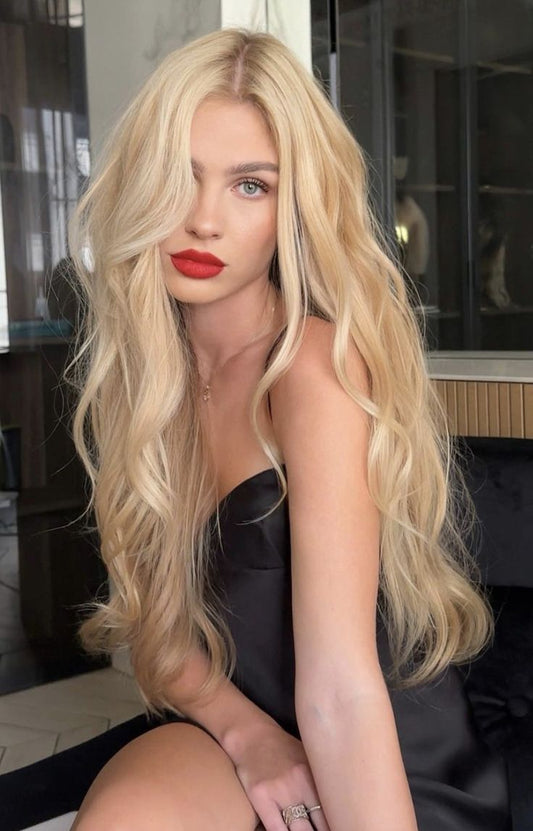
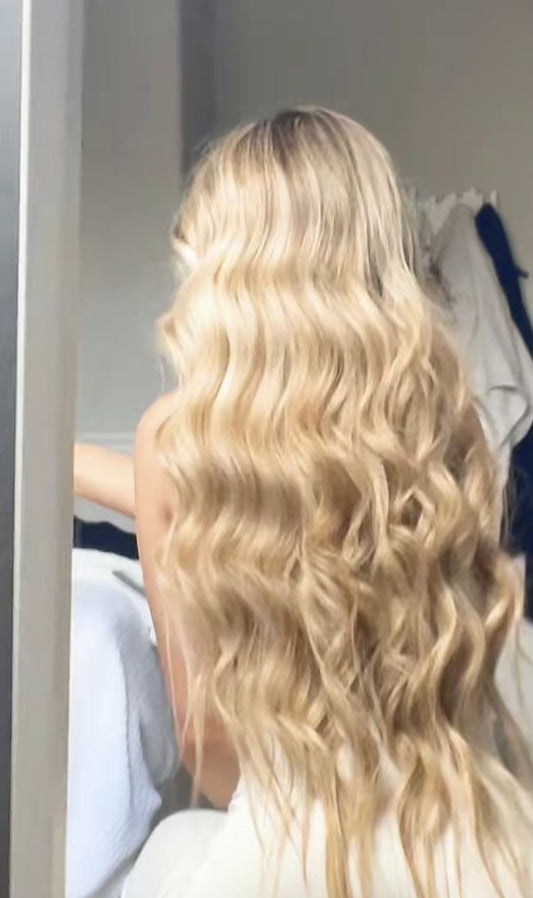
Bleach Blonde Human Weft
Regular price $334.99 USDRegular priceUnit price per
26 Inch Human Hair Extensions: The Long-Length Edit for Seamless Drama, Soft Movement, and Real-Life Wear
If you’re browsing 26 inch human hair extensions, you’re not shopping for “a little longer.” You’re choosing a statement length that changes proportion, movement, and styling options in a way shorter add-ons simply can’t. This collection is built for people who want waist-reaching glamour without sacrificing a natural finish—whether your goal is fuller ponytails, longer braids, or that slow, cinematic swish that reads expensive in daylight. Below the grid, you’ll find a practical, editorial guide to shade, texture, construction, blending, and longevity—so you can choose confidently, avoid common mistakes, and get the kind of results that look like they grew from you.
What This Collection Is and Who It’s For
26 inch human hair extensions sit in the “ultra-long” category: long enough to create a visible transformation, but still wearable when the construction and blend are chosen correctly. The defining advantage of human hair at this length is realism—how it catches light, how it moves, and how it behaves during heat styling. Done well, 26 inch extensions don’t look like an accessory; they look like your hair on its best day, just longer.
This collection is designed for a wide range of styling goals:
- Length lovers who want a waist-length silhouette for everyday outfits and elevated occasions.
- People growing out their hair who want a “now” solution without waiting months.
- Fine-to-medium hair types seeking a longer fall line and fuller ends, not just crown volume.
- Creators, brides, and event-goers who need hair that photographs beautifully under mixed lighting.
- Anyone who wants flexible styling—sleek, waved, curled, half-up, braided—using hair that blends and holds shape.
If you’ve been browsing the main collection page, treat it as your hub: 26 inch human hair extensions in ultra-long, natural-looking finishes.
One nuance that matters at 26 inches: your “who it’s for” isn’t just about hair type, it’s also about how you move through a day. If you commute in coats, carry a shoulder bag, or wear structured collars, you’ll have more friction points at the ends—so you’ll benefit from styles and care routines that protect the last 6–8 inches. If you’re mostly in lighter fabrics and wear hair up often, you may prioritize flatness at the base and a comfortable, secure feel near the scalp. Those practical realities are where a great choice becomes an effortless one.
Why This Category Matters Now: The Rise of “Wearable Ultra-Long”
Ultra-long hair is having a practical moment—not just a fantasy one. The shift is subtle: people still want drama, but they want it to look believable at brunch, in the office, and on regular camera settings. That means the standard for realism is higher. The hair has to sit correctly on the head, taper naturally, and move without that telltale “helmet” density at the ends.
Another reason 26 inch extensions matter now is styling versatility. At this length you can create curls that don’t spring up too short, braids that look intricate without needing extra pieces, and ponytails that still fall long even after being wrapped and secured. If you like the idea of the “long and luxurious” trend, it helps to study how the look is worn and maintained: what makes 26 inch hair extensions feel current, glamorous, and surprisingly wearable.
Finally, there’s a value argument. When you invest in the right length and construction, you can create multiple “hair identities” from one set—sleek and straight one day, soft waves the next, then a braided low pony for a third look—without buying separate lengths for each style. The key is choosing a texture that integrates easily with your natural pattern and a density that looks like your hair could plausibly grow that long.
How to Choose the Right Option
Decision Framework
Use this scannable method to choose 26 inch extensions that match your hair, your lifestyle, and the realism you expect:
- Goal → What do you want most: length, volume, or both?
- Shade/undertone → Match roots and mids first; refine ends second.
- Texture/finish → Straight vs body wave vs wavy; choose what mirrors your natural pattern.
- Construction/type → Clip-in, tape-in, weft/weave; consider your routine and styling frequency.
- Weight/coverage → Enough density for your hair type without creating a visible “ledge.”
- Occasion/frequency → Daily wear needs comfort; events can prioritize impact.
- Care tolerance → How much time will you actually spend detangling, storing, and washing?
- Budget/value → Aim for longevity: fewer, better pieces often outperform more, cheaper ones.
How to choose 26 inch extensions for thin hair right now
If your hair is fine or thin, the biggest risk at 26 inches is mismatch at the ends—your natural hair may taper while the extension hair stays denser. The fix isn’t “less hair,” it’s smarter coverage: choose a set that adds length while keeping the perimeter believable, and plan on subtle layering (either by heat styling or a professional trim) so the transition disappears. In many cases, a slightly shorter companion length can help you build a gradient from your natural hair to ultra-long ends—more on that in the comparisons section.
How many pieces do you actually need for a full look
Piece count matters less than coverage placement. For clip-ins, you want enough wefts to build a smooth fall line from mid-head to ends, plus smaller pieces for temples if you wear hair tucked behind ears. For tapes or wefts, you want evenly distributed density—too much hair in one band creates a ridge that reads obvious when you turn your head.
A practical way to sanity-check coverage is to decide your “default style.” If you almost always wear hair down, you can keep the crown lighter and focus on mid-head density. If you love half-up looks, you’ll need enough hair at the sides and back to prevent gaps when the top section is lifted. And if you prefer high ponies, temple coverage becomes a make-or-break detail because that’s where slippage and visible tracks show first.
What 26 inch hair looks most natural in daylight
Daylight highlights the things indoor lighting forgives: mismatched undertones, overly blunt ends, and shine that looks synthetic. For realism, choose human hair with a finish that mirrors your natural sheen (not glassy), and prioritize a shade match at the root-to-mid section where the eye anchors. If your natural hair has dimension, mimic it with tonal variation rather than a single flat shade.
How to avoid the “too perfect” effect in long hair
Ultra-long hair can look unnatural when every strand sits the same way. Real hair has micro-variation—some pieces catch light differently, some bend slightly, and the ends aren’t perfectly uniform. If you want a premium, believable finish, add gentle movement and allow a soft taper at the ends. Even a subtle bend through the mid-lengths can make the difference between “styled” and “styled and real.”
Best option for daily wear vs special occasions
For frequent wear, comfort and speed win: clip-ins for flexibility, tapes for consistent day-to-day polish, or wefts for a longer-term solution depending on your routine. For special occasions, you can choose maximum drama—more length, more volume, more styling—because you’ll wear it for fewer hours and maintain it more carefully. If you want a sense of how different lengths perform for everyday styling, the “everyday wear” lens is useful: how everyday-friendly lengths compare when comfort is the priority.
When to choose clip-ins at 26 inches
Choose clip-ins if you want the freedom to take hair out at night, change your look on demand, or avoid a long-term commitment. Clip-ins also help you “dial” volume up or down depending on your day. If you’re deciding between ultra-long clip-ins and a more moderate length, it can help to explore the dedicated category: 26 inch clip-in hair extensions for flexible, removable length.
When to choose tape-ins for a flatter, more seamless lay
Tape-ins distribute hair in a way that often feels more “built-in,” especially if you’re sensitive to clips or you style your hair up frequently. The key is correct placement and maintenance—tapes can look exceptionally natural when installed and cared for properly, but they do require routine adjustments. If you’re considering tape-ins for smoothness, product options can give you a practical starting point: straight Remy tape-in hair for a sleek, close-to-the-scalp finish.
When to choose weft/weave for maximum blend control
Wefts are a strong choice if you want consistent fullness and a blended perimeter, especially for thicker hair types or for people who like a more “styled” finish. They also offer flexibility in how volume is distributed. If you want to explore a weft-forward option in a mid-length that can be layered into ultra-long looks, this collection is a useful reference point: human hair weft/weave extensions for controlled density and layering.
How to choose construction based on your schedule
If your week is unpredictable, removable hair often wins because you can match your look to your day. If you thrive on routine and want hair to be “done” when you wake up, installed options can feel like a lifestyle upgrade. The best choice is the one you’ll actually maintain: a lower-effort method worn consistently often looks better than a higher-effort method used rarely.
Shade, Undertone, and Finish Selection
Shade matching at 26 inches is less forgiving than at 14 or 16 inches because the length creates more visible surface area. The goal is not a “perfect” match in every lighting condition; the goal is a believable match at the points where people actually look: roots, mids, and face frame.
How to match undertones without overthinking it
Start with your natural hair in indirect daylight. If your hair reads golden, honey, copper, or chestnut, you’re likely warm. If it reads ash, taupe, smoky brown, or cool espresso, you’re likely cool. If it shifts depending on lighting, you’re neutral—and neutral shades tend to blend more easily across seasons. When in doubt, match the mid-lengths rather than the ends; you can always tone, gloss, or style the ends to integrate.
What to do if your roots are darker than your lengths
Many people have a natural root shadow or grown-out color. In that case, you can prioritize a match to the root and mid, then allow the ends to run slightly lighter—this reads intentional and modern. For an even more natural effect, add soft waves; texture breaks up color transitions and reduces visible contrast.
Choosing a finish: sleek, soft wave, or textured wavy
Finish is as important as color. A straight finish looks sharp and editorial, but it also shows demarcations more clearly. Soft wave finishes hide blend lines, create dimension, and feel romantic. Wavy textures read youthful and effortless, especially for daily styling. If you lean into wave, consider a wavy set that already matches that pattern: wavy clip-in extensions that create movement and reduce visible transition lines.
How to choose between single-process and dimensional color looks
If your natural hair is one consistent shade, a single-tone match can look seamless—especially in straight styles. If your hair has highlights, balayage, or sun-lightened ends, dimension is your friend: it helps the extension hair blend across different lighting. A simple trick is to match your “average color” (the shade you see most when hair is down) rather than the brightest or darkest strand in your head.
Texture and Blend Strategy
Blending is the difference between “extensions” and “great hair.” At 26 inches, blending is a system: placement, texture matching, perimeter control, and styling technique working together.
How to blend with blunt haircut types
Blunt cuts create a crisp line that extensions can expose if the ends don’t taper similarly. The easiest fix is to add a soft bend or wave through the mid-lengths and ends so the bottom line looks intentionally styled. If you prefer straight, a light trim to the extension ends (not your natural hair) can create a more natural taper without sacrificing the length effect.
How to blend with layered haircut types
Layers are extension-friendly because they naturally hide transitions. The goal is to keep the shortest layers from sitting on top of long pieces like a shelf. Use smaller pieces near the crown, keep the heaviest wefts lower, and style everything together so the layers “talk” to the longer lengths rather than sitting apart.
How to blend with short hair
Short hair can absolutely wear 26 inches, but it requires strategy: create a gradual length ladder using mid-length pieces near the top and longer pieces lower. This prevents the “two-tier” effect where short hair sits on top like a cap. If you’re new to the idea, this guide is a helpful mindset shift: how extensions change what’s possible for short hair without looking costume-like.
How to blend with medium-length hair
Medium hair is the easiest starting point because the gap between your natural length and 26 inches is smaller than with a bob. Focus on matching texture and ensuring the ends don’t look too dense compared to your natural perimeter. A loose curl set often gives the most believable “grown” effect.
What to do if the blend line shows
When a blend line shows, it’s usually one of three issues: the extensions are too heavy for your natural hair, the placement is too high, or the texture is too different. Fix it by moving the heaviest wefts lower, adding face-framing pieces to soften the outline, and styling with a bend or wave. In many cases, changing technique—rather than changing hair—solves the problem. If you’re working with clip-ins and want more volume without obvious lines, technique matters: methods to build volume while keeping the blend seamless.
How to place ultra-long clip-ins so they don’t pull
Long length amplifies gravity, so comfort depends on placement. Build a supportive base: start low at the nape, then add wefts in a gentle curve that follows your head shape. Keep the densest wefts below the occipital bone (the roundest part at the back of your skull) so the weight is supported rather than hanging from the crown. If you’re wearing a half-up style, reserve lighter pieces for the upper rows so you don’t create a visible step when the top section lifts.
How to prevent a “gap” near the temples
Temple gaps happen when the side sections are too sparse compared to the back. Use smaller pieces closer to the face (where appropriate for your construction) and style with a slight forward bend so the side hair drapes naturally. If you wear glasses, be extra mindful: repeated friction near the arms of the frames can separate strands and reveal placement lines, especially in straight styles.
What to do if the ends look too thick or too blunt
Ends that look too thick are usually a density mismatch, not a length problem. Try a wave set and brush it out for a soft, airy finish. If you love straight hair, ask for a minimal “dusting” trim on the extension ends to create a gentle taper. The goal is to preserve the luxury of length while avoiding a bottom edge that looks cut with a ruler.
Styling Ideas for Daily Life and Events
At 26 inches, styling is about controlling length so it looks intentional. The best looks either emphasize the sleek fall line or break it up with movement. Consider your outfit neckline, your plan for the day, and the level of “hair presence” you actually want—ultra-long hair can be quietly elegant or dramatically glamorous depending on finish.
Quick looks that still feel polished
- Sleek low pony with a wrapped base: keeps length controlled and reads expensive.
- Half-up twist with soft waves: adds lift at the crown while keeping the long line.
- Side part with brushed-out curls: romantic, easy, and forgiving in mixed lighting.
- Low bun with long face-framing pieces: “quiet luxury” with a subtle statement.
Photo-ready looks for nights out and milestone moments
- Old-Hollywood waves: the length makes the wave pattern look elongated and cinematic.
- High pony with curled ends: creates that dramatic waterfall effect.
- Braided ponytail: ultra-long braids look intricate without extra add-on pieces.
- Soft glam blowout: movement through the mids and ends for dimension in flash photos.
If you’re styling for formal events—especially anything with professional photos—plan your look around what your hair does best. For prom and similar occasions, medium-length styling ideas can still translate beautifully when adapted to longer hair: prom hairstyle concepts that scale up elegantly with added length.
For a wider reference library of red-carpet energy—especially helpful when you’re deciding between sleek versus wave, center part versus side part, and how much volume reads “modern”—this inspiration can guide your finish choices: celebrity hairstyle ideas that translate well to ultra-long extension styling.
How to keep curls from falling flat on ultra-long hair
Long hair has weight, and weight stretches curls. Use a smaller barrel than you think you need, let curls cool completely before brushing, and finish with a light hold that doesn’t turn hair stiff. If you want a glamorous flowing effect without relying on tight curls, it helps to study how slightly shorter long lengths behave: why 20-inch styling holds differently and what you can borrow from it.
How to make ultra-long hair look expensive, not heavy
“Expensive” hair usually has two qualities: controlled volume and intentional movement. Avoid piling product at the ends, keep the root area smooth (even if you want volume), and choose a wave pattern that elongates rather than balloons. A soft S-wave with brushed-out finish often reads more premium than tight ringlets because it looks like natural, well-maintained hair—just amplified.
Bandanas, scarves, and accessories that actually work with long length
Ultra-long hair looks striking with accessories, but the secret is proportion: choose wider scarves, longer ribbons, or structured clips so the accessory doesn’t get visually “lost.” If you love casual styling with a little personality, accessory-led looks can be surprisingly wearable: bandana styling ideas that stay balanced even when your hair is very long.
Care, Maintenance, and Longevity
Longevity is where human hair earns its reputation—provided you treat it like real hair. At 26 inches, maintenance isn’t optional because tangling and friction increase with length. The good news is that small habits make the biggest difference.
How often should you wash 26 inch human hair extensions
Wash based on product buildup, not time. If you wear clip-ins occasionally, you may only need to wash every 15–25 wears. For more frequent wear, wash when hair feels coated or heavy. Always detangle before washing, use lukewarm water, and avoid aggressive scrubbing that creates knots at the ends.
A low-friction wash routine that protects the last 8 inches
Start by brushing thoroughly, then secure the hair in a loose braid before you wet it (this reduces tangling). Apply cleanser in a downward motion—think smoothing, not swirling—then rinse the same way. Condition from mid-length to ends and let it sit briefly so the strands feel supple before you comb through. When you towel-dry, press gently and avoid rubbing; friction is what creates the tiny tangles that become big knots later.
Detangling without breakage
Detangle from ends upward, holding the hair above where you’re brushing so you don’t pull at the base. Use a wide-tooth comb or a brush designed for extensions. At 26 inches, the ends experience the most friction—coats, seatbelts, and handbags all rub against the same area—so protect them with gentle styling and careful storage.
Heat styling and shine control
Use heat intentionally. Lower temperatures, fewer passes, and a heat protectant help preserve softness. If hair looks overly shiny, it may be product buildup rather than “too much shine.” Clarify lightly, then condition mid-lengths to ends. If you prefer a sleek, high-fashion finish, straight textures are a strong option—but keep the finish natural, not glassy.
How to air-dry without losing shape or creating frizz
Air-drying works best when hair is gently guided into the shape you want. After washing, comb through with a leave-in that doesn’t feel sticky, then lay the hair flat and smooth it with your hands. If you want wave, twist sections loosely and secure them so the hair dries in a soft pattern rather than drying randomly. The goal is to dry with minimal manipulation, not constant touching.
Night and travel storage that prevents matting
For clip-ins, store hair fully dry, gently brushed, and secured in a loose braid or soft wrap. For installed hair, sleep with a loose braid or low pony and consider a satin pillowcase. If you travel, keep hair protected from friction and compression; the less it gets crushed, the less it tangles.
How to spot when your extensions need a reset
If the ends feel rough even after conditioning, the hair may be carrying product residue or heat wear. A reset can be as simple as a gentle clarifying wash followed by a richer conditioner on the ends, then low-heat styling to smooth the cuticle. If the hair tangles faster than usual, reassess daily habits first—storage, brushing technique, and friction points—before assuming the hair is the problem.
Comparing Nearby Categories: Building the Right Length Ladder
Not everyone needs to jump straight to 26 inches across the entire head. In fact, one of the most natural-looking approaches—especially if your natural hair is shorter or fine—is to build a gradual ladder: shorter pieces higher, longer pieces lower. This creates a believable taper and reduces the risk of a visible shelf.
10–12 inches: short, chic, and surprisingly useful
Shorter lengths aren’t “less” hair; they’re different tools. They’re ideal for adding fullness, fixing uneven growth, or creating face-framing support so your long pieces blend better. If you’re learning what short lengths do best, these categories are useful context: 10 inch hair extensions for subtle fullness and natural finishing and 12 inch hair extensions for a short-to-medium boost that blends easily.
And if you prefer short clip-ins specifically, it helps to see styling ideas that keep short looks modern: 12-inch clip-in styling inspiration for clean, wearable shape.
14–16 inches: the “daily glam” middle ground
Mid lengths are often the bridge between your natural hair and ultra-long ends. They’re practical for layering, especially around the crown and sides where you want coverage without heaviness. For that purpose, explore 14 inch hair extensions for soft layering and easy blending and 16 inch hair extensions for balanced length that supports seamless transitions.
15 inches: the fine-hair upgrade that layers beautifully
If your natural hair is fine, mid-length additions can make ultra-long looks more believable by filling in the mid-shaft area where fine hair tends to look sparse. The category itself can be a helpful building block: 15 inch hair extensions for natural-looking volume and a smoother length gradient. For a fine-hair perspective, this guide frames the benefit well: why 15-inch length often looks more natural on fine hair and how to use it.
24 inches and adjacent ultra-long: the “near-26” experience
If 26 inches feels like a leap, 24 inches can be a stepping stone—still ultra-long, but slightly easier to manage and less prone to friction tangles. If you want to understand what changes when length pushes into the very long range, these reads are practical: how to manage ultra-long hair so it stays soft, not stressed and the core habits that keep very long extensions looking polished.
22 inches tape-in perspective: a length that emphasizes luxe without max weight
For people considering installed hair, 22 inches is a common “sweet spot” where hair still feels very long while remaining manageable. Even if you’re committed to 26 inches, the tape-in lens helps you understand how installation affects realism: why tape-ins at 22 inches look seamless and what to borrow for longer lengths.
Featured Picks and Use-Case Recommendations
Choosing the right set is about matching your styling habits. Below are curated use-cases that reflect how people actually wear ultra-long hair—whether you want a flexible clip-in wardrobe, a sleek installed finish, or a length that can shift between minimal and dramatic.
If you want “one set that does everything” in the 18–26 range
Some shoppers want a single kit that can scale up: subtle length on busy days, full glam on weekends. If that’s you, look for a set designed to cover multiple styling moods across long lengths: seamless clip-in set spanning 18–26 inches for adaptable everyday-to-event styling.
If you want Brazilian Remy length potential beyond 26
For those who love dramatic length and want options that reach even further, Brazilian Remy hair is often chosen for its softness, movement, and styling flexibility. If you’re mapping out long-term hair wardrobes, this can be a useful anchor product: Brazilian Remy extensions for ultra-long styling options up to 34 inches.
If you want a crisp shade like 1B with a double-weft feel
Darker shades can look especially glossy and editorial at 26 inches, but they also demand clean blending and careful finish control. If your natural hair sits in the soft-black to off-black range, a deeper shade option can create a striking, uniform fall line: double-weft Remy clip-ins in 1B for a sleek, high-impact long-hair silhouette.
If you want tape-ins but prefer a lighter-weight set option
Some people want the flatter feel of tape-ins with a more minimal weight profile. In that case, pay attention to grams as much as length, and plan on correct placement so the hair distributes evenly: lighter-weight Brazilian Remy tape-ins for a more understated installed finish.
How to match the product to your most-worn hairstyle
If you mostly wear hair down, prioritize overall blend and end realism. If you wear hair up, prioritize flatness at the base and temple coverage—updos expose placement and track visibility. If you alternate, choose a versatile set and practice two “signature” styles: one down look and one up look that you can repeat confidently.
How to build a “capsule wardrobe” of lengths for the most natural blend
If you want the most seamless look with minimal effort, think in layers: a supportive mid-length for the top and sides, then the ultra-long length for the lower half of your head. This approach reduces the chance of a visible shelf and gives you a more natural taper at the perimeter. It also makes styling easier, because curls and waves can be set in a consistent pattern from crown to ends.
Buying Guidance and Common Mistakes to Avoid
Ultra-long extensions can look extraordinary—or obviously “added”—depending on a few key decisions. Avoiding mistakes is less about expertise and more about knowing what matters most at this length.
Mistake: choosing too much density at the ends
Many people assume thick ends equal luxury. In reality, hair that’s too blunt at the bottom can look wig-like, especially in motion. A more natural taper reads expensive because it mirrors how real hair grows and wears over time. If your hair is fine, this point matters even more.
Mistake: matching only the ends instead of the mids
The eye reads “match” where hair overlaps—usually from the mid-length to the face frame. If that area blends, your look will read cohesive even if your ends are slightly lighter or darker. This is why subtle waves are so helpful: movement masks micro-differences.
Mistake: placing long pieces too high on the head
When long wefts sit too high, they create a visible step and can feel heavy. The fix is to keep the longest pieces lower and use shorter pieces higher to create a smooth gradient. Think “waterfall,” not “stack.”
Mistake: skipping a test-wear before your event
Ultra-long hair behaves differently across a full day. A quick test-wear helps you identify friction points, decide whether you prefer hair down or half-up, and confirm the placement feels secure. If something feels off after an hour at home, it will feel worse after six hours out—so a small practice run is one of the highest-return steps you can take.
Mistake: expecting ultra-long hair to behave like short hair
Very long hair needs different habits: more detangling, smarter storage, and styling that accounts for weight. The payoff is worth it, but only if you treat length like a fabric—something you drape and manage, not something you ignore.
How to decide between 26-inch categories quickly
If you’re choosing between long-length categories, map your priorities. For a broad overview that compares the feel of the length itself, start here: 26 inch hair extensions for maximum length impact across styles. Then decide whether you want removable flexibility (clip-ins), flatter installed wear (tapes), or longer-term density control (wefts/weaves).
FAQ
Do 26 inch human hair extensions look natural, or do they always look “extra”?
They can look extremely natural when the mid-length shade match is correct and the ends are not overly blunt. The most believable results usually include a soft wave or bend to break up the outline. Natural-looking 26 inches is less about “hiding” the extensions and more about choosing a texture and density that mirrors real hair.
What’s the best way to choose a shade if I’m between warm and cool tones?
When you’re between tones, choose neutral-leaning shades and prioritize matching the mids rather than the ends. If you wear your hair wavy most days, small undertone differences are less visible. If you wear hair pin-straight, you’ll want the closest undertone match possible under indirect daylight.
Are clip-ins heavy at 26 inches?
They can feel heavier than shorter lengths because there’s more hair and more length creating pull. The solution is correct distribution: fewer heavy pieces near the crown and more support lower on the head. If comfort is a concern, try wearing the full set for an hour at home to learn the best placement for your head shape.
How do I keep the ends from tangling throughout the day?
Ends tangle from friction—coats, scarves, seatbelts, and bags. Brush lightly during the day, keep hair in a loose braid when you’re active, and avoid applying sticky products near the bottom. A smooth, controlled style often tangles less than hair left fully loose.
Can I swim or work out in ultra-long extensions?
Clip-ins should be removed before swimming or intense workouts to avoid matting and unnecessary wear. For installed extensions, it’s best to secure hair in a braid and rinse promptly after exposure to sweat or chlorine. The less time hair spends damp, the better it stays soft and manageable.
What’s the difference between choosing 26 inches and choosing 24 inches?
Two inches doesn’t sound like much, but it changes manageability and how often the ends rub against clothing. 24 inches can be slightly easier for daily maintenance, while 26 inches delivers that unmistakable waist-length effect. If you’re unsure, consider your lifestyle first—commuting, coats, and frequent styling all make the extra length feel more high-maintenance.
How do tape-ins compare to clip-ins for realism?
Tape-ins often lay flatter and can feel more “built-in,” especially for people who wear their hair up often. Clip-ins offer flexibility and are easier to remove for sleeping and washing routines. The best choice depends on whether you value convenience (clip-ins) or a consistent installed look (tapes).
Do I need shorter lengths to blend 26 inches if my hair is shoulder-length?
It’s strongly recommended. A length ladder—shorter pieces higher, longer pieces lower—creates a natural taper that looks like real growth. Without it, shoulder-length hair can sit on top of 26 inches like a visible shelf, especially in straight styles.
How long do human hair extensions last with proper care?
Longevity varies with frequency of wear, heat styling, and storage habits, but consistent gentle care makes a noticeable difference. Minimize high heat, detangle regularly, and store properly to prevent friction damage. Ultra-long hair lasts longer when it’s treated like a wardrobe piece: maintained, protected, and used with intention.
Where should I start if I’m new to Fabulive and want a broader browse?
Start with the brand hub to explore categories by length, type, and styling goals, then narrow to your preferred construction. You can browse the full catalog and navigate into your ideal match here: Fabulive hair extensions and styling collections for length, volume, and everyday realism.
Related Collections
If you’re building a more natural gradient or comparing length families, you’ll typically get the most seamless results by pairing an ultra-long finish with supportive mid-length layering. In this guide, that “length ladder” is covered through the short, blend-friendly lengths (10 inch and 12 inch), the mid-range layers that smooth transitions (14 inch, 15 inch, and 16 inch), and the construction-specific options that change how hair sits (26 inch clip-ins, tape-in product choices, and weft/weave approaches). If your goal is realism, explore the lengths you saw referenced above as a system: shorter pieces higher, longer pieces lower, styled together so the perimeter looks naturally tapered.
- Use shorter lengths as blend support near the crown and face frame, especially if your natural hair is above chest length.
- Use mid-length categories to fill the mid-shaft so ultra-long ends don’t look disconnected.
- Choose construction based on lifestyle: removable clip-ins for flexibility, tape-ins for flatter daily wear, and wefts for controlled density.
- If you’re deciding between ultra-long lengths, the 24-inch care guidance above is a useful reference for what changes as hair gets longer.
Conclusion: Browse the Collection with a Clear Plan
26 inch human hair extensions are a design choice as much as a beauty choice: they change your silhouette, your styling options, and the way hair reads in motion. The best results come from a simple approach—match mids in daylight, choose a texture that mirrors your natural pattern, distribute weight thoughtfully, and style for a believable finish. If you’re ready to choose your set, browse the collection with the Decision Framework in mind and select the construction that matches how you actually live: removable flexibility, flatter installed wear, or controlled density through wefts. When the match is right, 26 inches doesn’t look like “extra.” It looks like you—just longer.