



24 Inch Extensions How To Manage Ultra Long Hair
Why Ultra-Long Hair Changes Everything (And Why Most People Aren’t Prepared)

There is a moment—usually the first time you see yourself in the mirror—when you realize that 24-inch hair is not just longer hair.
It is different hair.
It moves differently. It occupies space differently. It changes how you stand, how you style, how you plan your day. Ultra-long extensions are not an upgrade in inches; they are a shift in presence.
And that’s exactly why so many people want them—and why so many struggle once they have them.
This guide is not about fantasy hair.
It’s about living with ultra-long hair successfully.
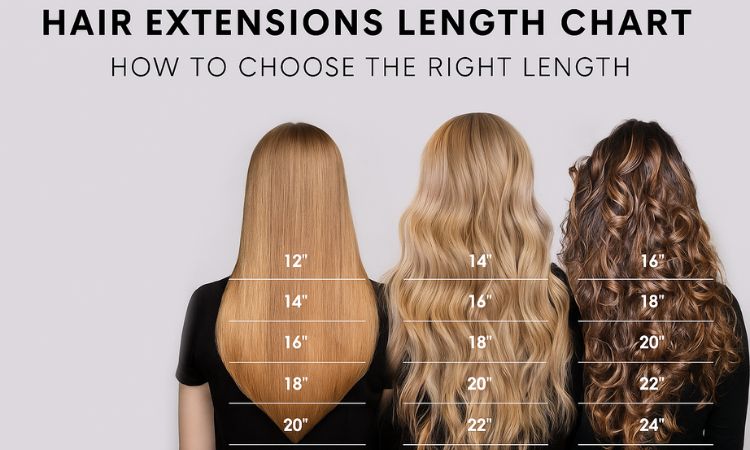
Why 24 Inches Is A Psychological Threshold
There is a clear break point in hair length.
Up to shoulder length, hair is manageable by default.
At mid-back, hair becomes noticeable.
At waist length—around 24 inches—hair becomes a responsibility.
That’s where ultra-long extensions sit.
At this length:
-
Hair touches furniture before you do
-
Movement becomes part of styling
-
Weight distribution starts to matter
-
Maintenance becomes a system, not a routine
This is why many people who were comfortable at 20 inch hair extensions feel surprised when they jump to 24. The difference is not incremental—it’s exponential.
The Myth Of “Just Longer”
One of the biggest misconceptions is that managing 24-inch hair is the same as managing 18 or 20 inches, just with extra length.
It’s not.
Longer hair introduces:
-
Increased friction (clothing, chairs, bags)
-
Greater tangling risk at the ends
-
More visible wear if care is inconsistent
-
A higher styling learning curve
This is why some people actually prefer stepping up gradually—from everyday lengths like 16 inch hair extensions to longer glamour lengths—before committing fully.
Ultra-long hair rewards preparation.
Why People Choose 24 Inches Anyway
Despite the responsibility, demand for ultra-long extensions continues to rise.
Why?
Because 24-inch hair delivers something shorter lengths can’t:
-
Dramatic silhouette
-
Editorial movement
-
High-impact styling even when worn simply
-
A sense of luxury that reads instantly
Ultra-long hair doesn’t need complex styling to look intentional. Even a simple braid or low ponytail looks elevated.
This is why 24 inches often appeals to people who want less daily effort with more visual return—once they learn how to manage it.
Decision Point: Are You Ready For Ultra-Long Hair?
Before choosing 24 inches, designers and stylists quietly ask their clients three questions:
-
Do you style your hair daily—or do you rely on default looks?
-
Are you willing to adjust habits (sleeping, brushing, storage)?
-
Do you want presence—or convenience?
If convenience is the priority, many people remain happiest at 22 inch hair extensions, which offer length without full lifestyle adjustment.

If presence is the goal, 24 inches is where that begins.
The Weight Factor No One Talks About
Ultra-long hair has weight—not just physical, but sensory.
At 24 inches, extensions:
-
Pull differently at the crown
-
Respond more to gravity
-
Require balanced placement
This is why method matters.
Clip-ins offer flexibility but require strategic placement to avoid drag. Tape-ins distribute weight more evenly but demand professional installation. Wefts and layered systems change how weight sits across the head.
Many first-time buyers underestimate this and choose based on length alone, not structure.
This is where starting with curated systems—like 24 inch clip-in hair extensions—gives flexibility to experiment before committing permanently.
Ultra-Long Hair And Identity
Hair at this length changes how people perceive you—and how you perceive yourself.
Ultra-long hair reads as:
-
Intentional
-
Feminine
-
Statement-driven
-
Often editorial or dramatic
This is why it pairs naturally with bold aesthetics—whether that’s revival trends like 90s hairstyles making a comeback or darker, more stylized looks explored in features like hairstyles for goths to become the next Wednesday Addams.
Ultra-long hair doesn’t whisper. It communicates.
The Practical Reality Of Daily Life
This is where fantasy meets friction.
At 24 inches:
-
Hair gets caught under bags
-
Ends brush against seats
-
Wind becomes a styling variable
-
Storage matters more than ever
People who succeed with ultra-long hair don’t fight this—they adapt.
They learn:
-
Protective styling for errands
-
Controlled styles for work
-
Loose styling for social settings
Ultra-long hair requires situational styling, not one default look.
The Length Spectrum Why 24 Inches Sits Where It Does
Think of extension lengths as a spectrum of commitment:
-
18 inch clip-in hair extensions: everyday enhancement
-
20 inch hair extensions: visible glamour
-
22 inch hair extensions: long-hair confidence
-
24 inches: ultra-long presence
-
26 inch human hair extensions: editorial, high-impact territory
Understanding where you sit on this spectrum prevents regret.
24 inches is not “long hair.”
It is ultra-long hair with intention.
Why Method Choice Becomes Non-Negotiable
At shorter lengths, almost any method can work.
At 24 inches, the wrong method becomes obvious fast.
Placement, density, blending, and hair quality matter more because:
-
Errors are visible
-
Imbalance causes discomfort
-
Poor quality shows at the ends first
This is why ultra-long hair demands better planning, not just better products.
Setting Up What Comes Next
By now, you should know:
-
Why 24 inches feels different
-
What changes once you cross this length
-
Whether you want presence or convenience
-
Why preparation matters more than impulse
Choosing The Right Method Density And Structure For 24 Inches
If Part 1 helped you understand why 24-inch hair changes everything, Part 2 is about making the length work for you, not against you.
Ultra-long extensions fail for only one reason: people choose length first and structure last. At 24 inches, that order has to reverse. Method, density, and placement decide comfort, realism, and longevity long before styling ever enters the conversation.
Why Method Matters More At 24 Inches Than Any Other Length
At shorter lengths, most extension systems can be forgiven.
At 24 inches, they cannot.
The extra length amplifies:
-
Weight imbalance
-
Poor blending
-
Low-quality ends
-
Incorrect placement
This is why a system that feels “fine” at 20 inches can feel unwearable at 24.
Before choosing, ask one foundational question:
Do you need flexibility—or long-term integration?
That single answer determines everything that follows.
Clip-In Extensions At 24 Inches Flexibility With Responsibility
Clip-ins are often the first stop for ultra-long hair, and for good reason.
They offer:
-
Zero commitment
-
Removable wear
-
Style-specific use
-
Easy experimentation
Well-constructed options like 24 inch clip-in hair extensions allow you to test the reality of ultra-long hair before restructuring your routine around it.
When Clip-Ins Work Best At This Length
Clip-ins are ideal if you:
-
Want ultra-long hair occasionally
-
Prefer switching lengths often
-
Style for events, content, or evenings
-
Don’t want to sleep in extensions
They are especially effective when layered strategically rather than stacked heavily.
Where People Go Wrong With Clip-Ins
The mistake is density overload.
At 24 inches, adding too many wefts creates downward pull, scalp fatigue, and unnatural movement. The solution is fewer, wider wefts placed lower, allowing gravity to work with the hair rather than against it.
If you’re used to shorter clip-ins like 18 inch clip-in hair extensions, adjust your expectations—less is more at ultra-long lengths.
Tape-In Extensions Even Weight Better Longevity
Tape-ins are often the most comfortable option for 24 inches when installed correctly.
Their advantages include:
-
Even weight distribution
-
Flat, discreet attachment
-
Natural movement
-
Low daily handling
For people who want to live in ultra-long hair rather than put it on and take it off, tape-ins become the logical next step.
This is where structured sets such as 20pcs 100 remy hair tape-in straight human hair extensions shine—offering consistency through the length without bulk at the root.
Decision Point Tape-Ins Or Clip-Ins
Choose tape-ins if:
-
You wear long hair daily
-
You want less daily styling friction
-
You value comfort over flexibility
Choose clip-ins if:
-
You change looks often
-
You want removable control
-
You don’t want professional maintenance
There is no superior method—only alignment with lifestyle.
Weft And Sew-In Systems Maximum Drama Maximum Planning
Weft-based systems deliver the most dramatic result at 24 inches, but they demand the most planning.
They provide:
-
Strong hold
-
Seamless blending
-
Editorial density
However, they are best suited for:
-
Thick natural hair
-
Experienced wearers
-
Professional installation
For many people, wefts work best as partial builds, layered with lighter systems rather than used alone.
If you’ve never worn long extensions before, it’s often smarter to build up gradually—moving from 20 inch hair extensions or 22 inch hair extensions before committing fully.
Density Planning The Most Important Step Nobody Explains
Length gets the attention.
Density determines success.
At 24 inches, too little density looks stringy. Too much looks heavy and artificial. The goal is tapered fullness—volume that supports the length without overpowering it.
The Golden Rule Of Ultra-Long Density
-
Fuller through the mid-lengths
-
Lighter at the crown
-
Clean, healthy ends
This is why premium construction matters. Poorly tapered extensions reveal themselves quickly at this length.
High-quality options like 26 inch human hair extensions often perform better visually even when trimmed down—because the hair quality holds through the ends.
Choosing Between 22, 24, And 26 Inches Honestly
Many people debate between these three lengths.
Here’s the truth:
-
22 inches is long hair confidence
-
24 inches is ultra-long lifestyle hair
-
26 inches is editorial, high-impact hair
If you are unsure, start at 22. If you crave presence and are willing to adjust habits, 24 is the sweet spot. If you want visual dominance and don’t mind extra care, 26 is unmatched.
Guides like 22 inches of hair the ultimate guide to long glamorous extensions exist for a reason—jumping too fast is the most common source of regret.
Hair Quality Why Ends Matter More Than Roots At 24 Inches
At ultra-long lengths, people stop noticing the top first.
They notice the ends.
That’s where:
-
Dryness shows
-
Friction accumulates
-
Quality becomes visible
This is why Remy alignment, cuticle integrity, and construction quality matter more at 24 inches than any shorter length.
Lower-quality hair looks acceptable at 18 inches and exposed at 24.
Color And Blending At Ultra-Long Lengths
Color mismatch becomes more obvious as length increases.
Subtle tones—ombré, dimensional blends, muted shades—blend more naturally than flat single colors at 24 inches. This is why styles like black and silver extensions the coolest ombre trend you need work especially well at ultra-long lengths.
Blending is visual math: the longer the hair, the more forgiving dimension becomes.
Setting Up What Comes Next
At this point, you should understand:
-
Which extension method fits your lifestyle
-
How density impacts comfort and realism
-
Why quality matters more at 24 inches
-
Where 24 inches sits compared to other lengths
Daily Management Styling Systems And Living With 24 Inches
By the time someone reaches 24 inches, styling is no longer the main challenge.
Management is.
Ultra-long hair doesn’t fail because it looks bad. It fails because it interferes with daily life—catching, tangling, pulling, and demanding attention at the wrong moments. This section is about removing that friction so 24-inch hair feels intentional, not exhausting.
The Shift From Styling To Systems
Short and mid-length hair relies on styling.
Ultra-long hair relies on systems.
People who thrive with 24 inches don’t style from scratch every day. They rotate reliable hair systems—styles that work for errands, work, rest, and movement.
Once you stop treating ultra-long hair as a constant styling project, it becomes dramatically easier to live with.
The Three Hair Systems That Make 24 Inches Wearable
Most experienced ultra-long hair wearers rely on three core systems:
1. Controlled styles for movement
2. Protective styles for rest and travel
3. Statement styles for visibility and impact
Trying to wear ultra-long hair loose all day, every day is the fastest path to burnout.
Controlled Styles That Prevent Chaos
Controlled styles keep hair gathered without flattening its beauty.
At 24 inches, the most reliable options include:
-
Low ponytails with wrapped bases
-
Loose braids (single or double)
-
Low buns with length folded, not coiled
-
Half-up styles that reduce front friction
These styles limit tangling while still showcasing length. They also reduce stress at attachment points—especially important for clip-ins and tape-ins.
For those transitioning up from 20 inch hair extensions, this adjustment period is critical. Styles that felt optional before become essential now.
Why Half-Up Styles Are Ultra-Long Hair’s Best Friend
Half-up styles solve three problems at once:
-
Keep hair off the face
-
Reduce front tangling
-
Preserve visible length
They’re especially effective at 24 inches because they balance weight without hiding length. This is why half-up looks dominate long-hair editorial styling and return strongly in revival aesthetics like 90s hairstyles making a comeback.
If you want ultra-long hair to feel wearable rather than theatrical, master the half-up system early.
Protective Styling For Sleep The Non-Negotiable Habit
Sleep is where most ultra-long hair damage happens.
Friction, rolling, and compression at night undo daytime care quickly. People who maintain 24-inch hair long-term treat sleep styling as mandatory—not optional.
The most effective sleep systems include:
-
Loose braids secured with soft ties
-
Low ponytails with fabric scrunchies
-
Silk or satin wraps
-
Length folded upward, not left loose
Skipping this step is why many people believe ultra-long hair is “high maintenance.” In reality, it’s high-planning, not high effort.
Brushing Strategy Changes At 24 Inches
Brushing ultra-long hair is not about speed.
It’s about sequence.
The correct order:
-
Detangle ends first
-
Move upward gradually
-
Support the hair near the root
-
Brush in sections
Rushing this process creates tension at the scalp and stress on the ends. This matters even more with extensions, where attachment points must be protected.
If you’re used to brushing shorter lengths like 18 inch clip-in hair extensions, this slower rhythm is an adjustment—but it pays off quickly.
Styling Tools That Work (And Ones That Don’t)
Ultra-long hair exposes weak tools immediately.
Flat irons with uneven heat create dull ends. Curling wands that are too short produce inconsistent curls. Brushes without flexibility cause breakage.
People who succeed with 24 inches simplify tools:
-
One reliable curling tool
-
One wide-tooth detangler
-
One smoothing brush
Less equipment, better results.
How Length Changes Curl Patterns
At 24 inches, curls behave differently.
Gravity stretches waves, meaning:
-
Loose curls look softer
-
Tight curls relax faster
-
Uniform curl patterns are harder to maintain
This is why many people prefer larger barrel curls or soft waves at this length. They hold shape better and look intentional longer.
Clip-in options like 4pcs thick clip-in long wavy synthetic hair extensions are often used for experimenting with curl patterns before committing to full styling routines.
Ultra-Long Hair And Clothing Friction
This is the part no one warns you about.
Ultra-long hair interacts with:
-
Coat collars
-
Bag straps
-
Scarves
-
Seat backs
Fabrics matter. Textured knits and rough materials increase tangling. Smooth fabrics reduce it.
This is why people often adjust wardrobes subtly when committing to ultra-long hair—choosing smoother outer layers or adapting how bags are worn.
The same awareness appears in lifestyle styling pieces like 12 kaftan types that will elevate your 2025 wardrobe, where flow and fabric choice work with movement rather than against it.
Managing Ultra-Long Hair In Public Spaces
Public spaces introduce unpredictable movement—wind, crowds, seating.
Experienced wearers instinctively:
-
Bring hair forward when sitting
-
Gather hair before leaning back
-
Secure hair before walking outdoors
These micro-adjustments become second nature, but they’re learned—not instinctive.
Once mastered, ultra-long hair stops feeling fragile and starts feeling controlled.
Why Ultra-Long Hair Feels Easier Over Time
The first few weeks are the hardest.
After that:
-
Styling becomes automatic
-
Sleep routines lock in
-
Friction awareness increases
-
Hair feels less “in the way”
This adaptation curve is why many people who survive the first month at 24 inches never go shorter again.
It’s not because the hair is easier—it’s because you become better at managing it.
Setting Up The Final Step
At this point, you should understand:
-
How to structure daily styling systems
-
How to protect 24-inch hair during sleep and movement
-
Why management matters more than styling
-
How habits—not products—determine success
Longevity Investment Logic And Confident Ownership
By the time someone commits to 24-inch extensions, the question is no longer “Will this look good?”
It’s “Can I live with this long-term?”
Ultra-long hair succeeds when expectations, habits, and investment align. This final section is about making that alignment permanent—so the hair serves you, not the other way around.
Longevity What Actually Lasts At 24 Inches
Ultra-long hair does not fail suddenly. It degrades slowly.
The first signs are almost invisible:
-
Ends losing softness
-
Increased tangling near the tips
-
Styling taking longer than before
These are not flaws of length—they’re signals to adjust care.
People who keep 24-inch hair looking exceptional long-term focus on preserving the last six inches, because that’s where quality is most visible. When the ends stay healthy, the entire length reads premium.
This is why higher-quality builds—and sometimes stepping up to options like 26 inch human hair extensions trimmed to preference—often outperform cheaper, exact-length alternatives over time.
Cost Logic Why Ultra-Long Hair Is An Investment
The biggest misconception is that longer hair is automatically more expensive.
In reality, replacement frequency determines cost—not length alone.
Poor-quality 24-inch extensions may need replacing every few months. High-quality systems last longer with fewer refreshes, even if the upfront cost is higher.
Compare two paths:
-
Replacing budget extensions twice a year
-
Investing once and maintaining carefully
Designers, stylists, and long-hair veterans always choose the second.
This mirrors investment thinking across lifestyle categories—where craftsmanship and longevity outweigh initial savings, whether in fashion, interiors, or accessories.
When To Upgrade And When To Scale Back
Not everyone needs 24 inches forever.
Some people rotate lengths seasonally:
-
24 inches for events, winter, or styling-heavy months
-
22 inch hair extensions for daily wear
-
20 inch hair extensions for travel or minimal styling
This rotation preserves both hair quality and personal energy.
Ultra-long hair doesn’t need to be worn constantly to be worth owning.
Knowing When 24 Inches Is Not The Right Choice
24 inches is not for everyone—and that’s a strength, not a flaw.
It may not be ideal if:
-
You dislike daily hair awareness
-
You avoid protective styling
-
You prefer wash-and-go routines
-
You don’t want to adjust sleep habits
In those cases, everyday lengths like 18 inch clip-in hair extensions or structured glamour lengths like 22 inches of hair the ultimate guide to long glamorous extensions often deliver better satisfaction.
Choosing the right length is always more luxurious than choosing the longest.
The Confidence Check Before You Commit
Before finalizing your 24-inch decision, ask yourself:
-
Am I choosing this for presence or pressure?
-
Do I enjoy styling—or just the idea of styling?
-
Am I willing to build systems, not shortcuts?
If your answers feel calm—not excited or anxious—you’re ready.
Confidence in ultra-long hair shows immediately. Hesitation shows faster.
Who 24-Inch Hair Is Truly For (And Who Should Pause)
Ultra-long hair rewards clarity. Twenty-four inches is ideal for people who enjoy styling as a ritual, not a chore, and who value presence over convenience. It suits those comfortable adjusting sleep habits, managing weight distribution, and choosing outfits with movement in mind. Content creators, event-focused lifestyles, and statement dressers often thrive at this length. You may want to pause if your routine favors wash-and-go simplicity, minimal daily maintenance, or frequent physical activity without styling breaks. If you prefer hair you can forget about entirely, or if protective styling feels restrictive, a slightly shorter length may feel more luxurious long-term. Choosing 24 inches works best when the decision feels calm, intentional, and grounded—not rushed, trend-driven, or fueled by comparison. Confidence grows when expectations match lifestyle, energy, and long-term personal priorities honestly.
Frequently Asked Questions About 24-Inch Hair Extensions
1. Is 24-inch hair too heavy to wear daily?
Not when installed or layered correctly. Weight issues usually come from excess density or poor placement, not length itself. Choosing balanced systems and avoiding over-stacking prevents discomfort.
2. How long do 24-inch extensions realistically last?
With proper care, high-quality extensions can last 9–12 months or longer. Longevity depends on hair quality, maintenance habits, and how often they’re worn and styled.
3. Are clip-ins or tape-ins better for 24 inches?
Clip-ins offer flexibility and removability, while tape-ins provide comfort and consistency for daily wear. The better choice depends on lifestyle, not aesthetics.
4. Do 24-inch extensions tangle more than shorter ones?
They can—because there’s more surface area. Regular detangling, protective styling, and mindful clothing choices dramatically reduce tangling.
5. Can I sleep in 24-inch extensions?
Yes, if they are designed for sleep (like tape-ins or professionally installed systems) and styled protectively. Loose braids or silk wraps are essential.
6. Is 24 inches too long for fine hair?
Fine hair can wear 24 inches successfully with the right method and density. Lighter systems and strategic layering are key.
7. How often should I wash ultra-long extensions?
Typically every 7–14 wears, depending on product use and environment. Over-washing shortens lifespan more than under-washing.
8. Do ultra-long extensions limit hairstyle options?
They actually expand them—once management systems are in place. Braids, buns, half-up styles, and low ponies look especially elevated at this length.
9. Can I color or tone 24-inch extensions?
Yes, if they are high-quality human hair. However, minimizing chemical processing preserves longevity. Dimensional tones often blend better than flat colors.
10. What’s the biggest mistake people make with 24-inch hair?
Choosing length before method and density. Structure determines success more than inches.
11. Is 26 inches better than 24 inches?
Not better—different. 26 inches delivers editorial impact but requires more care. 24 inches is often the best balance between drama and wearability.
12. How do I know when it’s time to replace my extensions?
When ends no longer respond to conditioning, tangling increases despite care, or styling results diminish consistently, replacement is the right call.


