
-
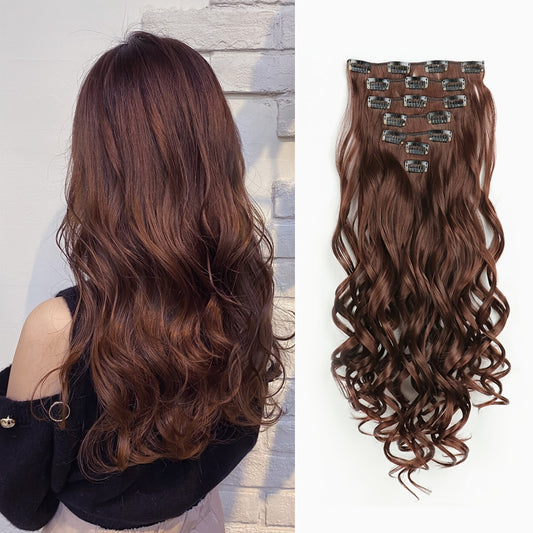
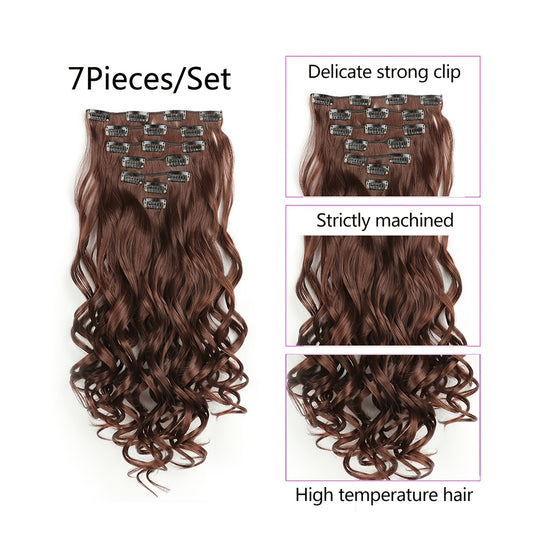
22 Inch Full Head Clip In Hair Extensions
Regular price From $105.19 USDRegular priceUnit price per$3.99 USDSale price From $105.19 USD -

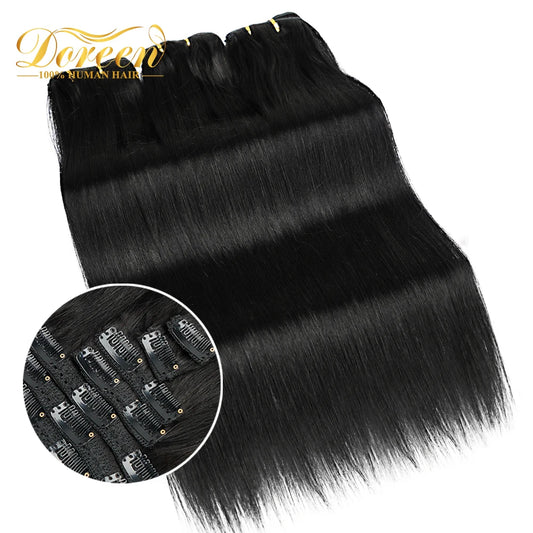
Brazilian Remy Straight Clip In Human Hair Extensions
Regular price $345.00 USDRegular priceUnit price per -
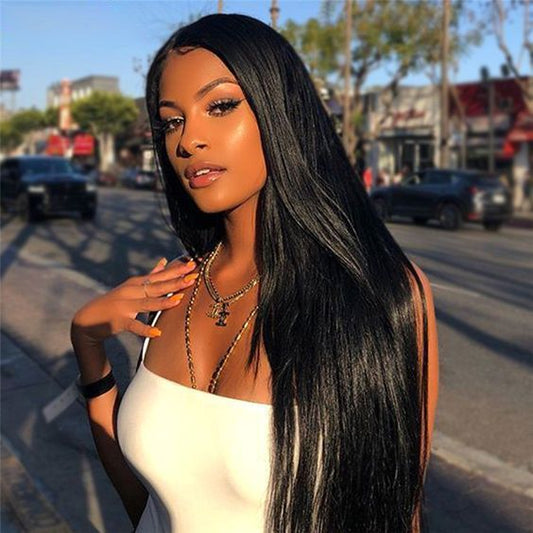
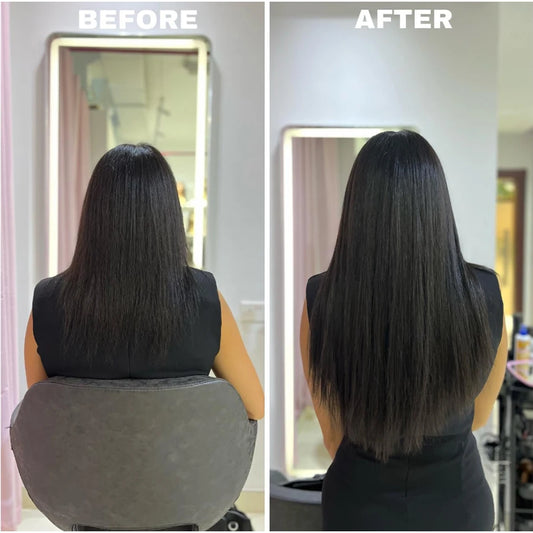
Black Human Hair Clip on Hair Extensions
Regular price $420.66 USDRegular priceUnit price per -
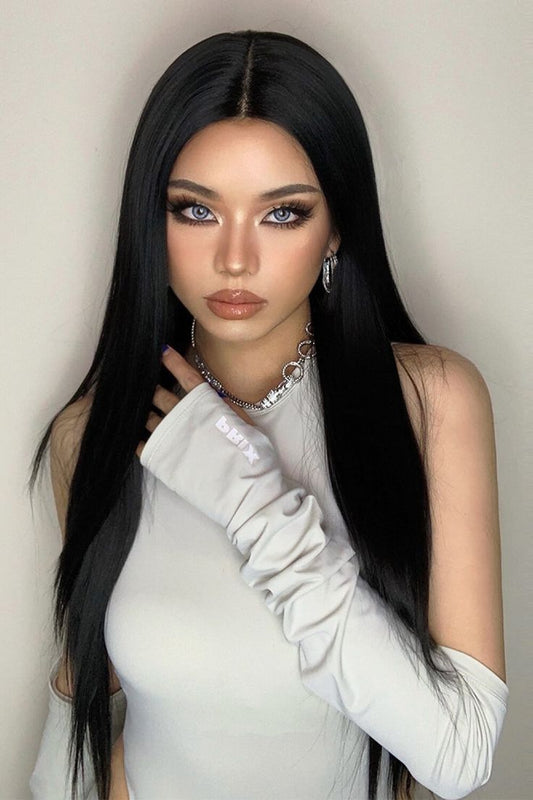
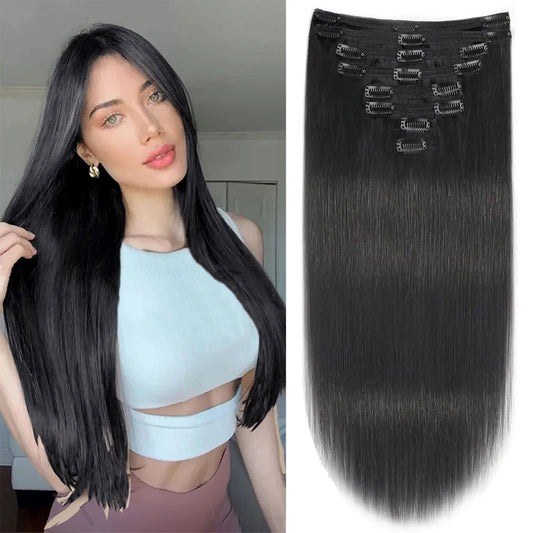
Black Straight Clip in Hair Extensions
Regular price $456.99 USDRegular priceUnit price per

Black Clip-In Hair Extensions: Seamless Blending, Natural Volume, and Everyday Styles That Look Like Your Hair
Black clip-in hair extensions are the fastest way to upgrade your hair without long-term installation: fuller ends, longer lines, and better shape in minutes. The difference between “obvious add-ons” and a natural, wearable result comes down to the details—texture behavior, weft construction, finish, and placement. Browse the black clip-in hair extensions collection for instant length and density in deep, natural-looking tones, then use the guide below to choose the most believable option for your haircut, hair density, and daily routine.
What This Collection Is and Who It’s For
Black clip-in hair extensions are removable wefts and pieces that attach with small, secure clips. They’re designed to add volume, length, and structure on demand—without the commitment of semi-permanent methods. The best clip-ins don’t just “add hair”; they refine your silhouette so the hair you already have looks healthier, thicker, and more intentional.
This collection is for people who want realism that holds up in real light. Black hair can be forgiving because depth helps camouflage transitions, but it can also be revealing because shine and texture differences show quickly. If you’ve ever tried extensions that looked “too glossy,” felt heavy, or created a visible blend line, you already know that success is about more than matching a color name.
Black clip-ins are particularly useful for:
- Fine or low-density hair that needs fuller ends and mid-length support.
- Short-to-medium haircuts that want length without an obvious shelf.
- Thick hair that wants added length while keeping the perimeter (ends) dense.
- Anyone who wants multiple looks—sleek, wavy, half-up, ponytail—without being locked into one install.
- Event styling where you want volume and photo-ready polish, then want to take everything out at night.
For a fast overview of why clip-ins are such an effective method, see why clip hair extensions are the quickest way to transform your look. Then return here for the decision framework and the blending strategies that prevent the most common mistakes.
Why This Category Matters Now
Clip-ins matter now because hair routines have become more flexible. People are styling around busy schedules, travel, and constant camera moments—work calls, social content, events—while still wanting hair that feels “like them.” Clip-ins meet that moment: you can go subtle on weekdays, fuller for weekends, and dramatic for special occasions without committing to the maintenance cycle of longer-wear methods.
Black clip-ins also align with a shift in search intent. Many shoppers aren’t looking only for length; they’re searching for solutions: fuller ends, seamless blending, realistic shine, comfort, and a method that doesn’t damage hair when used responsibly. This guide addresses those practical needs with an editorial approach—what actually makes the hair look natural and feel wearable, not just what sounds good on a product page.
Finally, black clip-ins are a smart entry point into extensions because they let you learn what you like. You can adjust placement, experiment with textures, and build a personal “hair wardrobe” over time—straight for polished days, waves for soft glam, curls for texture matching—without guessing your forever choice on day one.
How to Choose the Right Option
The most reliable way to choose is to define your goal first, then select construction for comfort, then pick texture behavior for blending, and finally refine shade/finish so it looks right in daylight. Most disappointing purchases happen when shoppers start with length alone and ignore weight, finish, and mid-length support.
Decision Framework
Use this scannable method to choose with confidence:
- Goal → length, volume, or both?
- Shade/undertone → soft black vs deeper black reflect; neutral vs warm cast?
- Texture/finish → straight, wavy, or curly behavior; natural sheen vs high gloss?
- Construction/type → weft design, density per weft, flexibility, comfort profile?
- Weight/coverage → targeted coverage for fine hair vs perimeter matching for thick hair?
- Occasion/frequency → daily wear comfort vs event-level impact?
- Care tolerance → realistic detangling, styling, storage habits?
- Budget/value → choose the option you can maintain well; routine protects longevity.
If you want a dedicated, black-specific placement guide, use the ultimate guide to black clip-in hair extensions for seamless blending as your step-by-step reference for top-layer coverage and natural placement.
Step 1: Define the Goal You’re Solving
Most people are solving one of three problems: thin ends, flat shape, or not enough length. Each has a different “best” strategy.
How to choose black clip-in hair extensions for thin hair right now
Thin hair looks best with targeted coverage rather than heavy stacking. Start by strengthening the perimeter so ends look healthy, then add mid-length support where hair looks sparse. Keep the crown light to avoid root bulk and to keep clips discreet. For practical placement tactics that increase fullness without heaviness, use clip-in volume techniques that enhance fullness while staying natural.
How to choose clip-ins for thick hair so the ends don’t look see-through
Thick hair often needs more hair lower on the head to match density through the ends. If you add significant length with too little coverage, the perimeter can look tapered and “added.” Prioritize enough density in the lower rows, then blend the top layer with texture so the transition disappears in motion.
How to decide whether you need more volume or more length
Check the bottom three inches of your hair when it’s down. If the ends look narrow or wispy, fix volume and perimeter first. If the ends already look dense, length can be your main upgrade. The most believable long hair usually starts with a strong perimeter; otherwise, longer length highlights thinness.
How many wefts or pieces do you actually need
The “right” number is the least amount of hair that achieves your goal comfortably. If you mostly wear your hair down, you can focus on under-layer density and use your natural top layer as coverage. If you wear ponytails and half-up styles often, you’ll need a placement plan that stays hidden when the top layer lifts. Comfort is a decision metric: if you feel scalp pressure, you’re unlikely to wear the set often—no matter how good it looks.
Step 2: Choose Construction That Matches Comfort and Coverage
Construction affects how the hair lies against your head, how visible the weft edge can become, and how dense the ends look. It’s also the difference between a set that feels wearable for hours and one that creates “clip fatigue.”
Double-weft vs single-weft: what changes in real wear
Double-wefted options often provide more density per weft. That can mean fewer wefts needed for fuller ends, but it can also mean more weight per row. Single-wefted options can feel lighter and more flexible, which can suit sensitive scalps or very fine hair. For a clear breakdown that helps you choose correctly, read double-weft vs single-weft guidance for choosing which clip-ins are better.
When a double-wefted set is the smartest choice
If your goal is stronger ends, a fuller silhouette, or longer lengths that still look dense, double-wefted construction can help. It’s also a practical option when you want impact without wearing a large number of separate pieces. To shop specifically by construction, explore double-wefted clip-in hair extensions for richer density and fuller ends.
How to avoid scalp tension and headaches with clip-ins
Most discomfort comes from placement. Avoid clipping too close to the hairline or directly under your part. Distribute weight across the head rather than stacking multiple dense pieces in one row. If you feel pressure within ten minutes, reposition immediately—tension is a signal that placement needs adjustment, not that you should “get used to it.”
How to choose a length that looks believable with your haircut
Believability increases when length feels like “your hair on its best day,” not a sudden identity shift. If you’re short or medium, it’s often smarter to go shorter first, strengthen the perimeter, then go longer once you’ve nailed placement and texture matching. If you want polished shorter lengths that still feel transformative, explore 12-inch clip-in hair extensions for short, chic styles that look intentional.
Shade, Undertone, and Finish Selection
“Black” is not one shade. Natural black hair can read soft black, deep black, or espresso, and it can reflect warm or cool tones depending on lighting. Dark extensions can hide certain blend issues, but they can also reveal finish mismatches quickly—especially shine differences that make hair look synthetic.
Match Depth, Reflect, and Shine
Depth is how dark the hair reads at first glance. Reflect is the subtle cast you see in daylight: cool espresso, neutral soft black, or warm brown-black. Shine is how strands reflect light. A perfect depth match can still look “off” if the reflect or shine doesn’t align.
How to match undertones without overthinking it
Look at your hair in natural light near a window. If it reads cool, choose cooler blacks. If it reads warm, choose warmer reflect tones so it blends in sunlight. If you’re unsure, choose neutral black and prioritize matching shine level through styling habits rather than relying on a label.
What black clip-ins look most natural in daylight
The most natural sets have believable sheen and movement. Extremely glossy dark hair can look like a separate material under bright light, while overly matte hair can look dry. Soft bends or waves can help diffuse reflections and make the blend look more organic.
How to avoid a too-shiny finish that looks obvious
If extensions reflect light more strongly than your natural hair, they can stand out even if the color is close. Keep heavy oils and silicone-heavy products off the top layer. Use light smoothing only through mid-lengths and ends. If you need a quick realism fix, add gentle texture—waves can reduce the “flat shine panel” effect.
How to shop for dimension if your hair isn’t one flat black
If your hair has subtle tonal variation, a solid black set may look too uniform. Dimensional options can make blending easier in daylight and more flattering in photos. If you want a highlight-like effect with soft transitions, explore balayage clip-in hair extensions for dimensional contrast that still blends naturally.
How to choose brown clip-ins when black feels too intense
Many people describe their hair as black, but in daylight it reads deep brown. If true black looks slightly harsh or disconnected, a deep brown option can blend more seamlessly—especially for sleek styles where reflect is obvious. Browse brown clip-in hair extensions for warm depth and a softer everyday match if you want a more natural transition.
When blonde clip-ins make sense as an accent option
Some shoppers want contrast—face framing, money-piece effects, or event styling with brighter dimension. The key is controlled placement: keep the crown grounded and add lighter pieces where highlights naturally sit. If you’re shopping for lighter contrast, browse blonde clip-in hair extensions for bright accents and statement styling.
Texture and Blend Strategy
Texture is where seamless blending is won. Even an ideal shade match can look off if the hair moves differently than your natural hair. Choose texture based on your natural baseline—how your hair behaves when it’s air-dried and minimally styled—then refine with styling routines you actually maintain.
Pick Texture Based on Your Hair’s “Behavior”
If your hair is naturally straight, straight clip-ins give you the cleanest blend and you can add waves when you want. If your hair holds a wave naturally, wavy clip-ins reduce daily effort. If your hair is curly, curly clip-ins usually look most believable because curl clumping hides transition points and creates natural fullness.
How to blend with blunt haircut types so the ends don’t look thin
Blunt cuts demand perimeter density. If extension ends are too wispy, the join becomes visible because your natural ends look thicker. Choose enough coverage in lower rows, then style with a slight bend or smooth blowout curve so the perimeter reads as one continuous line.
How to blend with layered haircut types without a two-tier look
Layered hair often needs mid-length support. Place smaller pieces higher to bridge your layers into the added length. Keep your natural top layer thick enough to cover the weft edge. Movement styling helps layers and extensions interlace so the blend looks effortless.
How to blend clip-ins with short hair without an obvious shelf
Short hair blending is about taper and support. Choose a believable length change, add volume first, and style with waves that cross the transition line. This reduces the visual “step” and makes the result look intentional. For scenario-based advice, read reasons hair extensions are a game-changer for short hair transformations.
What to do if the blend line shows
Fix blend lines in this order: add mid-length support, improve top-layer coverage, then adjust styling. Many blend lines disappear when you place one piece slightly higher to bridge the gap. Finish with a bend or wave that crosses the transition point so the eye reads one continuous shape.
How to choose straight clip-ins for a crisp, sleek silhouette
Straight styles are unforgiving—shine and perimeter density are obvious—so the payoff is a very polished look when you get it right. Choose straight clip-ins if you love sleek hair, straight blowouts, or refined ponytails. Shop the straight texture path with clip-on straight hair extensions for sleek silhouettes and clean lines.
How to choose wavy clip-ins that look natural instead of uniform
Natural waves vary; they aren’t identical spirals. Choose a wave pattern that matches your hair’s typical movement and avoid over-brushing. If you want movement-forward shopping that helps hide transitions, use clip-on wavy hair extensions for natural movement and easier blending.
How to choose curly clip-ins for texture matching and defined volume
Curly blending depends on curl size, spring, and clumping. Choose a curl pattern close to your own, then style both your hair and extensions so they clump similarly. For curl-specific shopping, browse curly clip-in hair extensions for defined texture and seamless curl blending.
How to choose black wave clip-ins for soft glam without over-styling
Soft glam works when wave shape looks effortless and the perimeter looks full. Choose a wave pattern that mirrors your preferred styling and place pieces to support mid-lengths and ends so the wave has a strong silhouette. For a dedicated dark-wave path, explore black wave clip-in hair extensions for soft glam texture and natural-looking movement.
Styling Ideas: Daily Looks and Event-Ready Hair
Clip-ins are most valuable when you can repeat styles easily. The best styles are not complicated—they’re reliable. Dark hair looks especially elevated when shapes are clean: smooth crowns, strong ends, and movement that looks intentional.
Quick looks that feel polished with minimal effort
- Blowout bend through mid-lengths and ends to make the perimeter look thicker.
- Low ponytail with a smooth crown and softly curved ends for a refined silhouette.
- Half-up twist that reveals volume underneath while keeping the top layer natural.
- Low braid with fuller ends for an elegant everyday look that hides transitions.
Photo-ready looks that make volume show on camera
- Loose waves with alternating curl direction for natural-looking movement.
- High ponytail with a wrapped base so added length looks intentional.
- Side-swept waves that showcase fullness through the lengths.
- Half-up, half-down with subtle crown lift for balanced shape and dimension.
If you want inspiration for volume-forward shapes that translate well to photos, see celebrity hairstyles that stole the show and highlight volume and structure.
Best option for daily wear vs special occasions
Daily wear usually means lighter coverage and maximum comfort—hair that feels like yours, just better. Special occasions can handle more length and density because you’ll likely style with structure: waves, ponytails, accessories. A practical strategy is to build a baseline set you wear often, then elevate it through styling for events.
How to build a formal style that stays secure for hours
Formal styles are about anchoring. Place clip-ins where pins can support the shape, avoid installing too close to the hairline, and build the hairstyle before refining texture. For event hair ideas that scale well with extensions, see prom hairstyles for medium-length hair that can be elevated with clip-ins.
Bandana styling that looks intentional, not like a shortcut
Accessories work best when the foundation is clean: smooth crown, intentional placement, and full-looking ends. A bandana can frame the face while the added length and density carry the style. For wearable ideas, see cute bandana hairstyles you can adapt to fuller hair and clip-ins.
Care, Maintenance, and Longevity
Longevity is mostly friction management and residue management. Friction causes tangling and dryness, especially at the nape and ends. Residue can make hair stiff and overly shiny, which is particularly noticeable on dark shades. A simple, consistent routine protects movement and realism.
Daily Habits That Keep Clip-Ins Looking Fresh
- Detangle gently from ends upward before and after wear.
- Avoid sleeping in clip-ins to reduce friction and stress on clips.
- Use the lowest effective heat setting and avoid repeated passes.
- Store extensions flat or hung so they don’t kink or knot.
- Keep products light near the top; focus conditioning on mid-lengths and ends.
How often should you wash clip-in hair extensions
Wash only when needed. Clip-ins don’t receive scalp oils the way natural hair does, so overwashing can dry them out and reduce flow. If the hair tangles quickly, feels stiff, or looks dull from buildup, a gentle wash and conditioning routine can restore softness.
How to keep ends from drying out and looking separated
Ends dry out mainly from heat and friction. Lower your heat settings, reduce repeated curling, and choose low-manipulation styles on days you don’t want to restyle. Consistent detangling prevents small knots from tightening into damage.
How to prevent tangling at the nape
The nape tangles because it experiences the most friction from collars, scarves, and movement. Place wefts so they aren’t rubbing directly at the nape, detangle gently, and consider protective styles on high-friction days to keep ends smooth.
Comparing Nearby Categories: Clip-Ins vs Alternatives and How to Decide
Choosing the best method is about how you wear your hair and how much control you want. Clip-ins offer customization: you can add hair exactly where you need it and remove it whenever you want. Alternatives can feel simpler, but they often provide less placement control.
Halo vs clip-ins: which one should you choose
Halo extensions can feel minimal because they rely on a single band, but clip-ins often blend better for ponytails, half-up styles, and custom volume placement. If you’re choosing between both, see halo hair extensions vs clip-ins for deciding which method you should choose.
Why texture category can matter more than length
Texture category determines how easily hair blends without heavy styling. Straight hair exposes mismatches, wavy hair hides transitions, and curly hair can conceal edges through clumping. The most “natural” set is often the one that matches your baseline hair behavior—even if the length change is modest.
Featured Picks and Use-Case Recommendations
These recommendations map to real-life intent: everyday realism, sleek straight polish, deeper shade matching, ponytail upgrades, wavy soft glam, and full-head transformations. Use these as targeted starting points, then refine by your desired density and comfort level.
For classic everyday fullness with natural-looking blending
If your goal is wearable fullness that suits multiple hairstyles—down hair, half-up styles, low ponytails—consider black human hair clip-on extensions for versatile fullness and natural blending. This is a strong baseline option when you want a believable upgrade rather than an extreme change.
For sleek straight styling with a crisp perimeter
Straight hair highlights your ends, so density and finish matter most. If you prefer sleek looks and want a refined silhouette, consider black straight clip-in hair extensions for a polished finish and full-looking ends. Pair with a smooth blowout bend if you want softness while keeping the perimeter strong.
For a deeper dark-black match when standard black looks slightly off
Some natural hair shades read darker than standard black, especially indoors. If you need a deeper tone match for seamless results in sleek styles, consider dark black human hair clip-ons for a deeper shade match and smoother realism.
For a fast ponytail transformation that still looks natural
Ponytails are one of the most convincing clip-in styles because the added hair becomes the feature and the base can be wrapped for a clean finish. For quick impact without full-head placement, consider a wrap-around black clip-in ponytail for a secure, polished ponytail upgrade.
For wavy soft glam that hides transitions easily
Wavy textures can be forgiving because movement interlaces your hair with the extensions. If you want a wearable length that supports soft glam without intensive styling, consider 20-inch wavy clip-in hair extensions for soft glam movement and easy blending.
For full-head coverage when you want a more noticeable transformation
If you want a cohesive all-over result—more length and more density across the head—a full-head set can simplify your routine and deliver consistent coverage. Consider 22-inch full-head clip-in hair extensions for complete coverage and a fuller transformation when your goal is maximum impact with balanced density.
Buying Guidance and Common Mistakes to Avoid
Most “obvious extensions” outcomes come from predictable issues: too much weight in one spot, not enough mid-length support, placement too close to the hairline, or a shine mismatch that makes the hair look separate. Solving these creates better results than simply changing the length.
Common mistakes that make clip-ins look obvious
- Placing wefts too close to the hairline or directly under the part line.
- Overbuying density for fine hair, creating bulk at the root and discomfort.
- Skipping mid-length pieces and relying only on long pieces, causing a visible transition step.
- Choosing an overly glossy finish that reflects differently than natural hair.
- Trying to force a texture mismatch instead of shopping your baseline behavior.
How to learn clip-in placement without stress
Start with fewer pieces, place them lower, and confirm comfort first. Add pieces only where you see gaps in density. Placement is a skill that improves quickly when you repeat the same map. For a thorough pre-buy overview that clarifies what to expect, read everything you need to know before buying clip-in hair extensions.
How to keep clip-ins fun, not dramatic
Clip-ins should feel empowering, not like a performance. Often the most expensive-looking result is a realistic length with a strong perimeter and comfortable placement. If you want a lighter, confidence-friendly perspective on mastering the method, see mastering clip-in extensions without the drama for a more approachable learning curve.
FAQ
What makes black clip-in hair extensions look natural in daylight?
The most natural results come from matching shine level and texture behavior, not just color depth. Place wefts so your natural top layer fully covers the weft edge, and style with soft bends or waves to interlace hair. Avoid heavy oils near the top, which can create uneven reflections.
Are black clip-ins better for thin hair or thick hair?
They work for both, but the strategy changes. Thin hair usually needs targeted coverage and lighter placement to avoid bulk at the root. Thick hair typically needs more coverage to keep ends dense after adding length.
How do I choose the right length if I want believable results?
Believable results usually come from a length that looks like a natural upgrade rather than a sudden shift. If you’re short or medium, build length gradually and prioritize mid-length support. Movement styling helps longer lengths look cohesive.
How many wefts should I use for daily wear?
Daily wear is usually more comfortable with fewer pieces placed where they matter most—mid-lengths and ends. You can add extra density for events, but your baseline routine should feel light enough to wear for hours. Consistency matters more than maximum volume.
What should I do if the blend line shows when I move?
Add one piece slightly higher for mid-length bridging and ensure your top layer covers the weft edge. Then style with a wave or bend that crosses the transition point. Most blend-line issues are solved by distribution and texture, not by buying a new set.
Do I need straight, wavy, or curly clip-ins if I style my hair often?
Choose the category that matches your natural baseline and style from there. Straight is versatile for sleek looks, wavy reduces daily work if you prefer movement, and curly blends best for textured hair because clumping conceals edges. The easier it is to match your baseline, the less styling you need for realism.
Can I wear clip-ins to formal events without them looking obvious?
Yes, especially with structured styles like waves, ponytails, and half-up looks. Place clips away from the hairline, create a stable foundation, and build the style first before refining texture. Secure anchoring is the secret to comfort and longevity.
How should I store clip-in extensions to prevent tangling?
Detangle before storing and keep the hair aligned so it isn’t crushed. Store flat or hung in a way that prevents friction and bending. Good storage is one of the easiest ways to keep ends smooth over time.
How often should I wash black clip-in extensions?
Wash only when needed. If the hair tangles easily, feels stiff, or looks dull from product buildup, a gentle wash and conditioning routine can restore softness. Overwashing can dry out ends and reduce movement.
Is it better to choose clip-ins or halo extensions for a low-effort routine?
It depends on how you wear your hair. Clip-ins offer targeted placement and often blend better for ponytails and half-up styles. Halo extensions can feel minimal, but they provide less customization in where volume sits.
Browse the Collection
Black clip-in hair extensions look most natural when every choice supports realism: texture that behaves like your hair, construction that feels comfortable, and placement that strengthens the perimeter before chasing extreme length. Use the decision framework above to shop intentionally, then style with movement so the blend disappears in daylight. When you’re ready to explore options with clarity, visit Fabulive for hair extensions designed for seamless blending and everyday versatility.
Related Collections Module
Related collections module: Add internal links here to reinforce the clip-in hair extensions silo and create clear browse paths by goal. Suggested modules: “Shop by finish” (natural sheen vs higher shine), “Shop by density” (fine-hair sets vs fuller coverage), “Shop by length range” (short chic to long glam), and “Shop by use case” (workday polish, weekend soft glam, event styling, travel hair). Internal linking placeholder: add a curated guide called “Choosing clip-ins by haircut type” and a separate guide called “Best clip-in sets for ponytails and half-up styles.”