
-

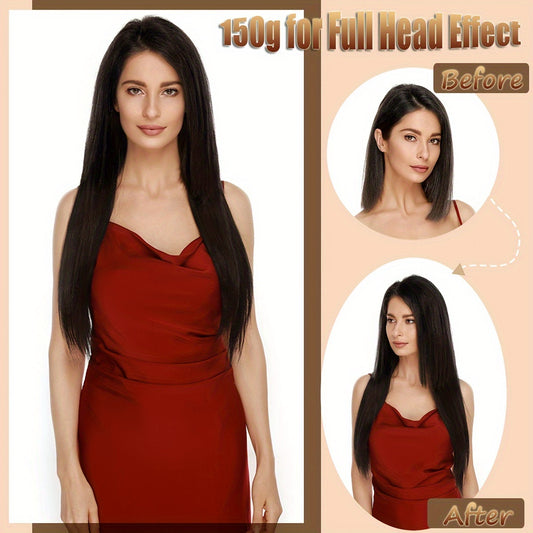
100% Human Hair Extensions - 50 Strands Nano Rings, Thick, Smooth, Remy Hair
Regular price $239.00 USDSale price $239.00 USDUnit price per

6D Hair Extensions: A Modern, Seamless Approach to Length, Volume, and Everyday Realism
If you’re considering 6D hair extensions, you’re likely looking for something specific: a result that feels light, looks undetectable at conversational distance, and fits into real life without constant fuss. This category is often chosen for its streamlined, low-profile finish—especially by wearers who want consistent hair confidence rather than a one-night transformation. Begin with the 6D hair extensions collection, then use the long guide below to choose shade, texture, weight, and maintenance habits that keep your blend believable in daylight, on camera, and in motion.
What This Collection Is and Who It’s For
6D hair extensions are commonly described as a newer-generation extension approach that emphasizes a smooth finish and a comfortable feel. Depending on the specific item and how it’s constructed, the “6D” category is often associated with efficiency, a refined blend, and a look that sits close to the head without bulky attachment visibility. In plain terms: the intention is hair that looks like it belongs on your head, not hair that looks “added.”
This collection is typically a strong fit for people who care about realism across the full day—not only right after styling. That includes commuting in weather changes, shifting between indoor and outdoor lighting, and wearing hair through longer hours where touch-ups aren’t realistic. It can also suit people who want a dependable silhouette: hair that looks balanced from front to back, with density that doesn’t disappear at the sides.
6D options tend to appeal to:
Busy professionals who want hair that stays polished from morning to evening.
Wearers who prioritize a low-visibility finish around the crown and side areas.
People with fine-to-medium density hair who want fullness without the “heavy curtain” effect.
Anyone who prefers an elevated look that still reads natural in close-up photos.
It can also be a thoughtful next step if you’ve relied on occasional wear methods and want something that feels more integrated into your routine. Many people start with removable solutions for events, then move toward a method that supports consistency—less “hair planning,” more “hair living.”
Why This Category Matters Now
The way people evaluate hair has changed. High-resolution phone cameras, social content, and video calls have made details more visible—undertones, shine level, and blend lines show up faster than they used to. At the same time, the prevailing aesthetic has shifted toward believable luxury: hair that looks healthy, moves naturally, and feels intentional without being overdone.
6D hair extensions matter in this context because the category often centers on a low-profile finish and a wearable silhouette. That’s particularly relevant for people who want length and volume that remain consistent through daily activities: walking outdoors, traveling, attending events, and wearing hair through long days where your style needs to hold up without constant rework.
If you’re comparing methods and wondering why extensions can be more practical than purely aesthetic, this guide on how extensions can transform short-hair routines captures the bigger picture: the right extensions can simplify styling, expand your options, and make grow-out phases feel intentional rather than awkward.
Most importantly, 6D can support a “repeatable” look. Repeatable hair is the real luxury: hair you can recreate quickly, trust in different lighting, and wear without thinking about it all day.
How to Choose the Right Option
Decision Framework
Use this method before you choose a shade, a texture, or a pack size. It keeps decisions grounded in your routine instead of your feed.
Goal → shade and undertone → texture and finish → construction and type → weight and coverage → occasion and frequency → care tolerance → budget and value
The value of a framework is that it prevents “single-factor buying.” If you buy only for color, you may end up with a texture you dislike styling. If you buy only for length, you may end up with coverage that feels heavy or looks thin at the ends. If you buy only for price, you may compromise on the specific element that makes hair look natural on you, which is often undertone harmony.
When these steps align, the outcome feels effortless: the hair blends easily, styles predictably, and looks consistent across your week. When they don’t align, you end up with hair that looks good only in one scenario—which is rarely what people want from a category designed for everyday realism.
How to choose 6D hair extensions for thin hair right now
If your hair is fine, prioritize a believable silhouette rather than maximum length. Fine hair can look “stringy” when you add inches without supporting mid-length density, so aim for coverage that thickens the center and sides, not just the ends. A soft texture also helps because movement disguises the transition between your natural hair and the added hair.
Comfort matters more for fine hair as well. If you feel weight or tension, you’ll touch and adjust your hair more often, which can disrupt your blend. The best option for fine hair is typically the one you can forget you’re wearing.
What 6D hair extensions look most natural in daylight
Daylight reveals the truth: undertone differences, mismatched sheen, and any visible separation at the sides. For a natural finish, match your root area first, then ensure the mid-length warmth or coolness is aligned. If your hair has natural variation, aim for a cohesive color story rather than a perfect single shade match.
Texture also plays a role in daylight realism. Soft waves and brushed movement reduce the “flat sheet” effect and help hair reflect light like real hair. If your goal is invisible blend, daylight is the lighting you should choose for matching.
How to match undertones without overthinking it
Check your hair in indirect daylight. If it reads smoky or slightly cool, stay in cooler families. If it reads honey or caramel, stay warmer. If it reads balanced, choose neutral. Undertone harmony matters more than shade labels because undertone is what your eye notices first when hair moves.
If you’re between two options, choose the one that best matches your roots. Root harmony makes the overall blend appear intentional, even if the ends have subtle variation.
How many pieces or units do you actually need
Instead of focusing on piece count alone, start with your goal. Do you want subtle thickening, balanced everyday fullness, or event-level density? Fine hair usually needs strategic distribution for the sides so the front lengths connect naturally into the back. Medium-to-thick hair may need fewer additions if your natural density already supports the perimeter.
A practical way to think about it is this: your sides and the outer perimeter are what people see most often. If those areas look thin, the whole look reads less believable—even if the back looks full. Balanced distribution is the quiet difference between “extensions” and “great hair.”
Best choice for daily wear versus special occasions
Daily wear calls for comfort, consistency, and a finish that doesn’t require perfection every morning. Special occasions can handle more drama because you’ll invest more time in styling and setting. If you want one flexible approach, choose a texture that can be worn brushed and soft for day, then styled into a fuller shape for events.
Think of it as building a personal uniform. If your daily look is easy and polished, special-occasion styling becomes an upgrade rather than a reinvention.
How to choose weight and coverage so it doesn’t feel heavy
Hair feels heavy when density is concentrated in one area or when the final silhouette is too one-length and thick at the base. A balanced approach distributes fullness so the look remains airy. Style shape matters too: soft bends and movement create lift without needing extra weight.
If you’re sensitive to weight, prioritize lighter coverage that’s well placed, and rely on styling to build the appearance of fullness. Often the most natural looks are not the densest; they’re the most balanced.
What to do if the blend line shows
Blend lines typically come from placement that’s too high, insufficient mid-length coverage, or a mismatch in finish. The fastest fix is shape: add a soft bend at the transition point so hair overlaps naturally. The second fix is coverage: ensure the sides are supported so the front lengths don’t look disconnected.
When in doubt, avoid ultra-straight styling on days when your blend feels imperfect. Movement is forgiving and makes small mismatch moments disappear.
How to choose a method if you want more volume but not more length
If your goal is thickness rather than length, prioritize density and undertone match over inches. A shorter-to-medium length can look exceptionally natural and still feel transformative because it improves the overall shape of your hair. The most believable “volume-only” looks focus on the mid-lengths and perimeter rather than dramatic ends.
This approach is especially effective if you’re in a grow-out phase. Instead of chasing length immediately, you build a stronger silhouette first.
How to avoid the “too perfect” look on camera
Hair that looks overly uniform can read artificial in photos. The fix is realism: choose a finish with natural movement, avoid extreme shine, and style your natural hair and the added hair together so the texture story stays consistent. Soft waves and brushed-out curls often look more believable than ultra-straight hair unless your natural hair is already consistently sleek.
Also consider how your hair looks from the side. If the sides are too flat or too separated, the look can appear less natural in video. Light volume at the sides often makes the whole look more convincing.
How to decide between higher density and smarter distribution
Many people assume the solution is “more hair,” but a more natural result often comes from better distribution. If the back looks full but the sides look thin, you don’t necessarily need more total weight—you need side support. If the crown feels bulky, you don’t need less hair overall—you may need less density near the top and more through the mid-lengths.
Distribution is a quiet art, and it’s one of the biggest predictors of whether extensions look premium or obvious.
Shade, Undertone, and Finish Selection
Color is where most extension decisions succeed or fail. You don’t need a perfect match; you need harmony: root adjacency, undertone alignment, and a finish that mirrors your natural sheen level after styling. With 6D-inspired looks, the goal is often a low-profile blend, so shade choices should support an invisible transition.
If you’re still exploring what’s possible across methods and finishes, it helps to zoom out before you zoom in. Browsing the broader hair extensions collection overview can give you clarity on how color families and weight categories are organized so your decisions stay structured.
Choosing shade families: black, brunette, blonde, and copper
Start with the shade family that matches your everyday identity. If you prefer deep tones, explore black extension shades for a seamless dark finish and consider whether your black leans cool or neutral. If you live in brunette territory, look at brown hair extensions for natural-looking brunette blends and pay attention to whether your brown is warm, cool, or neutral.
If you prefer lighter looks, consider blonde extensions that support a bright, wearable finish, where undertone matters even more because light shades can look brassy or flat if the warmth level doesn’t align. If you love warmer red-leaning families, copper hair extensions with rich, believable warmth can look striking when they mirror your natural warmth rather than overpower it.
Balayage and dimension without constant salon maintenance
Balayage-inspired blends can create a grown-in highlight effect with less upkeep. The key is that the transition should feel intentional: dimension should look like it belongs to your natural hair, not like the ends are from a different person. If that’s your goal, explore balayage hair extensions for a soft, dimensional look and choose a blend that mirrors how light naturally hits your hair.
Dimension can also help with realism. Even if your match isn’t perfect, dimensional color can disguise small differences by making the eye read variation as natural rather than as a mismatch.
Fashion tones: how to go bold without losing polish
Fashion shades can look premium when the finish is controlled and the choice is deliberate. If you want a statement color that still feels refined, blue hair extensions for modern, creative styling can work beautifully—especially when paired with sleek silhouettes or softly waved texture that keeps the overall look cohesive.
For fashion shades, the highest detection risk is near the root area. Face framing and intentional styling are your best tools: you want the color to look designed, not accidental.
Finish selection: natural sheen versus high gloss
A natural sheen tends to look most realistic across lighting conditions. High gloss can be beautiful, but it needs to match your own hair’s finish and be styled carefully so shine reads as “healthy hair,” not reflective fiber. If realism is your priority, choose a finish that mirrors your hair on a good day after styling—not your hair at its most unstyled.
In practice, the most believable hair often looks softer rather than shinier. Softness reads as touchable and real; excessive shine can read as artificial when photographed.
Texture and Blend Strategy
Texture is the shortcut to believability. When texture matches, color doesn’t need to be perfect. When texture clashes, even the best shade match can look off. Choose a texture that aligns with your natural hair’s behavior, then style your natural hair and the added hair together so the transition looks seamless.
Blend is also about shape. A cohesive silhouette from front to back is what makes hair look “yours.” That silhouette comes from consistent texture, a balanced perimeter, and a finish that doesn’t change abruptly at the mid-lengths.
How to blend with blunt haircuts
Blunt cuts create a clean perimeter, which can expose density differences. The most natural approach is to support the perimeter with enough fullness so the ends look continuous. Then style with a soft bend or brushed wave so the edges read like one shape rather than two layers.
If your blunt cut is very sharp, avoid styling that keeps everything perfectly straight and separated. A slight bend adds overlap, and overlap hides transitions.
How to blend with layered haircuts
Layers blend well when your shortest pieces can veil the transition. Keep the highest placement point low enough that your own layers naturally fall over it. Then choose a styling shape that encourages overlap—loose waves and blowout curves are especially forgiving because they create continuity through the mid-lengths.
If your layers are very short, focus on face framing and half-up styles. These styles make the look feel designed and help the eye stop searching for a transition line.
How to blend with short-to-medium hair without it looking obvious
If your hair is shorter, the goal is to disguise the “jump” between your natural length and your extension length. Movement helps: waves, bends, and half-up styles create overlap. For reference on shapes that feel chic and natural even at shorter lengths, review short-chic styling ideas for shorter extension looks and apply the same principles: consistent finish, soft transitions, and intentional framing.
Short-to-long blending works best when you avoid harsh straight lines. Even a subtle bend can turn a visible line into a seamless gradient.
What to do if it looks obvious at the sides
The sides are where realism is won. If it looks obvious near the ears, you likely need more side support or a texture that better matches your natural hair. Add side coverage, choose a style that sweeps forward slightly, and avoid extreme behind-the-ear tucks unless your blend is flawless.
Side framing often solves the problem quickly. A face-framing bend and a touch of volume near the temples can make the entire look appear more natural.
How to build volume without creating bulk
Volume should look airy, not heavy. The trick is distribution: lift at the root, fullness through the mid-lengths, and ends that still look soft. If you want practical placement logic that keeps volume controlled, this guide on how to enhance volume with clip-in techniques is useful even when you’re evaluating other methods, because it teaches the fundamentals of balanced fullness.
Bulk happens when density is piled into one zone. Airy volume happens when density is spread intelligently and shaped through styling.
How to choose a texture that stays believable in humidity
If your natural hair expands or frizzes, choosing a perfectly sleek texture can create mismatch by midday. A slightly wavy texture often looks more natural because it mirrors how real hair behaves as weather changes. The goal is not to fight nature; it’s to choose a texture that stays consistent with you.
If you must wear sleek hair in humidity, prioritize controlled smoothing and a consistent finish rather than chasing a glass-straight look that won’t hold.
What to do if the texture looks mismatched after a few hours
Texture mismatch often appears as your natural hair changes through the day. The solution is to style for your hair’s natural behavior. If your hair naturally drops, style with a softer curl that can relax gracefully. If your hair naturally expands, add gentle movement so the overall look stays cohesive as your texture shifts.
Think of it as planning for the second half of the day, not just the first hour.
Styling Ideas: Daily Looks and Event Moments
Great extension styling is less about complexity and more about shape. A simple look can feel premium if the silhouette is intentional, the finish is cohesive, and the hair moves naturally. With 6D-inspired results, the aim is often a clean blend that doesn’t require constant adjustment—so your styling choices should reinforce that simplicity.
Quick looks that still feel elevated
Low ponytail with a smooth crown and soft movement through the ends.
Half-up twist that keeps the face open while letting length read naturally.
Side sweep with loose bends that soften transitions around the ear line.
Claw-clip French twist with lengths left out for modern, wearable polish.
For daily looks, consistency wins. Choose one signature finish—soft wave, blown-out curve, or sleek polish—and repeat it. Repetition is what makes hair feel like part of your identity, not an occasional accessory.
Photo-ready looks that don’t feel overdone
Photos reward movement and cohesion. Loose waves with brushed softness tend to look expensive because the hair separates naturally and reflects light in a realistic way. For silhouette inspiration that translates well without being complicated, this roundup of celebrity-inspired hairstyles with standout shape can help you choose a look that complements your face and outfit without relying on overly intricate techniques.
If you’re styling for photo moments, focus on the mid-lengths. Mid-length shape is where the camera reads volume and movement most clearly.
Prom and formal events: making long hair look intentional
For formal moments, choose one focal point: a dramatic ponytail, a half-up crown, or a soft cascade with structured framing. Too many details can make long hair look heavy rather than refined. If you’re building a prom look, these prom hairstyles that adapt beautifully to added length are easy to translate—keep the structure and let your length and finish do the work.
Formal hair looks most premium when it feels balanced: volume is controlled, the crown is smooth, and the ends remain soft rather than stiff.
Accessories that raise the style level without extra effort
A bandana, scarf, or headband can make hair look styled, especially on day two. It also helps the overall look feel deliberate if you’re wearing a more relaxed texture. If you enjoy accessory styling, this guide to bandana hairstyles that feel current provides options that look modern, not costume-like.
Accessories are also helpful if you’re still building confidence with blending near the temples. Smart styling can make your look feel intentional while you refine your placement technique over time.
How to choose a parting that makes the blend look most natural
Your part influences how visible the sides and crown appear. A deep side part can add drama and hide side transitions; a center part can look modern and clean but requires the most symmetrical blending. If you’re unsure, start with the part you wear most often in daily life. The most natural part is usually the one your hair naturally prefers.
For photo days, test your part under daylight and indoor lighting. If one part makes the sides look thinner, choose the part that supports the most cohesive silhouette.
Care, Maintenance, and Longevity
Maintenance is where premium results are protected. Extensions can look beautiful on day one, but the goal is a consistent, wearable look across weeks—soft, tangle-resistant, and easy to style. Longevity depends on how you treat the hair between wears: detangling habits, product choices, heat discipline, and storage.
Detangling routine that prevents damage over time
Detangle gently from the ends upward, supporting the hair above the knot so you’re not pulling tension through the strands. The most important habit is frequency. A short detangle after each wear prevents tangles from tightening and becoming stressful to remove.
Detangling is also a realism tool. When hair is smooth and free-moving, it looks like healthy natural hair. When hair is tangled, it looks like hair that has been “handled,” which is what people notice.
Washing strategy: less often, more intentionally
Extensions generally don’t need frequent washing because they don’t receive scalp oils the way natural hair does. Wash when styling becomes harder or when product buildup dulls movement. Use gentle cleansing, focus conditioning on mid-lengths and ends, and avoid heavy buildup that can create stickiness and friction.
After washing, handle hair like delicate fabric: squeeze water gently rather than rubbing, and let it air-dry most of the way before applying heat. This preserves softness, which preserves realism.
Heat styling rules for softness and shine
Use moderate heat and fewer passes. Repeated heat at the ends is one of the fastest ways to lose softness and create a dry, tired finish. If you want curls that last, set the curl once, let it cool, and then brush for softness. The more you chase perfection with repeated heat, the shorter the hair’s best-life window becomes.
Heat strategy also affects how natural your hair looks. Overheated hair becomes too glossy or too stiff, which reads less believable on camera.
Night and storage habits that keep the finish expensive
Friction is the quiet enemy of softness. Store hair neatly so ends don’t kink, and avoid tossing it into bags without protection. If you want hair to keep its movement and look fresh longer, storage matters almost as much as styling.
If you’re wearing hair through longer hours, a quick mid-day finger comb to separate sections can prevent knots from tightening. The goal is to keep hair free-moving rather than letting tangles build.
How to tell when it’s time for a refresh versus a replacement
Hair doesn’t suddenly become unusable; it gradually becomes harder to style. If detangling takes longer, if ends feel rough, or if the hair looks dull even after styling, it may be time for a reset: gentler heat, cleaner product choices, and better storage discipline.
Replacement becomes relevant when ends can’t hold a clean finish anymore or when the overall movement looks compromised. In other words, when hair stops behaving like hair and starts behaving like fiber.
Comparing Nearby Categories: Length, Coverage, and Lifestyle Fit
Smart shoppers compare categories before committing because the best result isn’t only about method—it’s about lifestyle. If you want to browse in a structured way, it helps to compare by weight, length, and color family, then narrow into your preferred finish. One common baseline many people use is weight coverage, and 100g hair extensions for fuller coverage can be a helpful reference point when you’re deciding how much density you want.
How length changes your daily maintenance needs
Longer hair typically looks more glamorous, but it increases tangling risk and requires more careful storage. Medium lengths often feel more “everyday,” blend faster, and are easier to repeat consistently. If you want to understand how lengths behave in real life, these guides help set expectations: why 15 inches works well for fine hair, why 16 inches often feels easiest day to day, and how 20 inches shifts into visible glam.
Length choice is also a realism decision. If you pick a length that fits your natural density, the blend looks believable. If you pick a length that exceeds what your density can support, you’ll need more coverage and more styling to keep the look cohesive.
When 22 inches becomes the statement-length threshold
For many wearers, 22 inches is the point where hair becomes unmistakably long in photos. That can be the perfect target if you want a dramatic effect without the maximum maintenance of ultra-long lengths. If you’re deciding whether to go longer or stay at a bold but wearable length, explore what 22 inches truly looks like and compare it to your current hair density and lifestyle.
Statement length is also about styling tolerance. If you love styling, longer hair feels like a canvas. If you prefer minimal styling, a slightly shorter statement length often looks more natural with less effort.
Understanding tape-in comparisons when you’re evaluating low-visibility finishes
Many shoppers compare 6D with tape-in approaches because both can aim for a low-profile finish when done well. If you’re trying to understand how tape-in length and look translate, this overview of 22-inch tape-in length for luxe locks clarifies how silhouette and finish can change as length increases.
Comparisons are useful because they help you choose based on the life you want to live in your hair: how often you want to style, how much time you want to spend on maintenance, and how important repeatable realism is for you.
Featured Picks and Use-Case Recommendations
Below are curated product options for different goals. The best pick is not the most talked-about one—it’s the one that matches how you want to live in your hair: how often you’ll wear it, how much styling you enjoy, and how important a low-profile blend is in your routine.
For dramatic length and flexible styling potential
If your goal is big-length versatility and you like the idea of customizing the final shape, explore Brazilian Remy hair with an extended length range. Options like this can suit people who want to tailor the silhouette—trimming to their ideal length, adding a soft face frame, or shaping ends for a more natural perimeter.
This type of option is also appealing if you want one hair solution that can be styled into multiple looks: sleek, blown-out, softly waved, or more glamorous curls.
For soft movement that blends naturally
If you want a texture that hides transitions and looks realistic in motion, a wavy finish can be a strong everyday choice. Consider 20-inch wavy clip-in hair for a lived-in finish if your styling preference leans toward effortless softness and brushed movement.
Wavy textures are often the easiest to wear because they conceal small mismatch moments: slight color differences, slightly different densities, and minor placement imperfections.
For a sleek tape-in look when you want a streamlined silhouette
If you’re comparing finish styles and prefer a straighter, sleeker shape, evaluate straight Remy tape-in hair for a clean polished silhouette. Sleek looks can read very premium when your undertone match is precise and your overall finish remains consistent through the day.
For best realism, avoid overly stiff styling. The sleek look that reads most natural still has movement when you turn your head.
For lightweight density-building in a 50g pack format
If you prefer building gradually rather than committing to maximum coverage immediately, a lighter pack format can help you dial in your ideal fullness. Consider 50g Brazilian Remy tape-in packs for customized coverage as an approach that supports careful scaling: you add coverage in stages until the silhouette looks right for you.
This can be particularly helpful if you’re new to extensions or still learning what density feels comfortable day to day.
For a natural, classic tape-in option for everyday wearability
If your priority is a practical, everyday-friendly result that can be styled simply, consider Brazilian human hair tape-ins in a 50g pack format. Options like this can suit people who want reliable texture behavior and a consistent look without needing complicated styling routines.
The key is matching your natural finish and maintaining softness so your hair continues to look cohesive across repeated wears.
For value-focused tape-in coverage with a natural look
If you’re staying value-aware while still prioritizing realism, explore 100% human hair tape-in packs for cost-to-coverage balance. A value-aware choice can still look premium if your shade story is cohesive and your styling finish remains consistent from root to ends.
Value is best measured by wearability: hair that blends easily and styles predictably is the hair you’ll reach for most often.
Buying Guidance and Common Mistakes to Avoid
Most extension regret comes from one of three issues: choosing color without undertone awareness, choosing length without density logic, or choosing a method without lifestyle honesty. Fix those three decisions, and you typically end up with hair you actually wear.
Mistake: choosing shade based on a name instead of how it reads in daylight
Shade labels can look consistent on a product page and still read differently on you. What matters is how the color sits next to your roots in indirect daylight. If undertone matches, slight differences look like dimension. If undertone clashes, the mismatch becomes obvious near the face and crown.
Mistake: buying length but not buying the density to support it
Long hair demands a believable perimeter. If you buy length without enough mid-length coverage, the ends can look thin and the silhouette can feel unfinished. The fix is often smarter coverage rather than more weight: balanced distribution across back and sides and a style shape that supports realism.
Mistake: expecting one style to work perfectly every day
Hair changes with weather, schedule, and natural texture shifts. Instead of forcing one look, plan two: a daily look and an event look. Daily should be fast and repeatable; event can be more glamorous. This keeps your routine practical while still giving you room for high-impact styling when you want it.
Mistake: overusing heat to chase perfection
Heat is useful, but repeated heat is what makes hair look tired. Style with intention: one clean pass, proper setting, then a finish that matches your natural sheen. The goal is softness and movement, not stiffness and shine overload.
Mistake: forgetting that comfort is part of realism
If hair feels uncomfortable, you touch it more. If you touch it more, you disrupt the blend and create visible issues. The most natural extension look is often the one you forget you’re wearing—because it sits comfortably and doesn’t require constant adjustment.
FAQ
Are 6D hair extensions a good choice for beginners?
They can be, especially if your priority is a clean, low-visibility finish and you’re willing to keep a consistent care routine. Beginners often get the best results when they focus on undertone match and choose a forgiving texture that blends easily. If you’re unsure, start with a natural shade family and a soft finish that doesn’t require perfect daily styling.
How do I choose the right color if my hair has highlights or balayage?
Match your roots first, then choose a mid-length tone that aligns with your overall warmth or coolness. You don’t need to match every highlight; you need a cohesive blend that reads natural from a few feet away. Dimensional tones often feel more realistic because they mimic natural variation.
Will 6D hair extensions look natural on fine hair?
Yes, if the weight and distribution are chosen thoughtfully. Fine hair usually benefits from balanced side support and a texture that adds softness, because movement hides transitions. The most common issue is under-supporting the mid-lengths, so prioritize a silhouette that looks consistent rather than overly long.
What texture looks most realistic if I don’t style my hair every day?
A soft wave is often the easiest to live with because it blends well and stays forgiving as your natural hair changes through the week. Ultra-straight looks can be beautiful, but they tend to reveal mismatches faster unless your natural hair is consistently sleek. Choose the texture that matches your real routine, not your ideal routine.
How can I make sure the hair doesn’t look too shiny?
Aim for a natural sheen and avoid heavy product layering that can create reflective buildup. Style your natural hair and the added hair together so the finish matches from top to ends. Soft movement also helps hair reflect light like real hair rather than like a glossy sheet.
How long do extensions typically stay looking fresh with good care?
Longevity depends on how often you wear the hair, how much heat you use, and how well you detangle and store it. Gentle, frequent detangling and moderate heat usually preserve softness best. When hair stays soft and free-moving, it continues to look believable.
What’s the biggest mistake people make when choosing extensions for everyday wear?
They choose a look they love in a photo without considering upkeep. Everyday wear should prioritize comfort, repeatability, and a style you can recreate quickly. When your routine and your hair choice align, the result looks effortless and stays consistent through the day.
Can I switch between different color families without dyeing my hair?
Yes, especially with dimensional blends that complement your natural shade range. The key is choosing shades that still harmonize with your roots, even if the ends shift slightly. If you want a more dramatic change, use intentional styling and face framing so the look reads designed rather than accidental.
How do I avoid visible transitions near my face?
Face areas need the most attention because they’re the most visible in photos and conversation. Choose a close root match, keep texture consistent, and style with soft framing that creates overlap. Avoid extreme behind-the-ear tucks if your blend is not fully seamless.
Do I need a lot of hair for a full look, or can I build gradually?
You can build gradually if you’re clear about your goal. A subtle thickening requires less coverage than a dramatic transformation. If you build, prioritize side coverage and cohesive shape first so the look remains balanced as you add fullness over time.
How do I decide between 6D and other methods if I’m comparing categories?
Start with lifestyle and finish goals: how often you’ll wear the hair, how much you enjoy styling, and how important a low-visibility blend is. Then compare maintenance demands and the texture you want day to day. The best method is the one that fits your routine without making hair feel like a project.
Related Collections to Explore Next
To keep your browsing efficient and strengthen your decision, compare by color family and coverage. The black, brunette, blonde, copper, balayage, and blue collections above create clean pathways for tone comparison, while the 100g category can help you evaluate fullness. This structure keeps your choices in a clear silo: shade family first, then texture, then coverage.
Conclusion Encouraging Browsing the Collection
6D hair extensions are best approached as a system: the right shade story, the right texture behavior, the right coverage plan, and a maintenance routine that protects softness and movement. When those pieces align, the result doesn’t look like added hair. It looks like your hair—just fuller, more polished, and easier to style into the version of yourself you want to show up as.
Browse intentionally, prioritize undertone harmony, and choose a texture that matches your real routine. When you’re ready to compare options in one place, start at Fabulive and return to the 6D collection to evaluate shades, textures, and coverage with clarity.
::contentReference[oaicite:0]{index=0}