


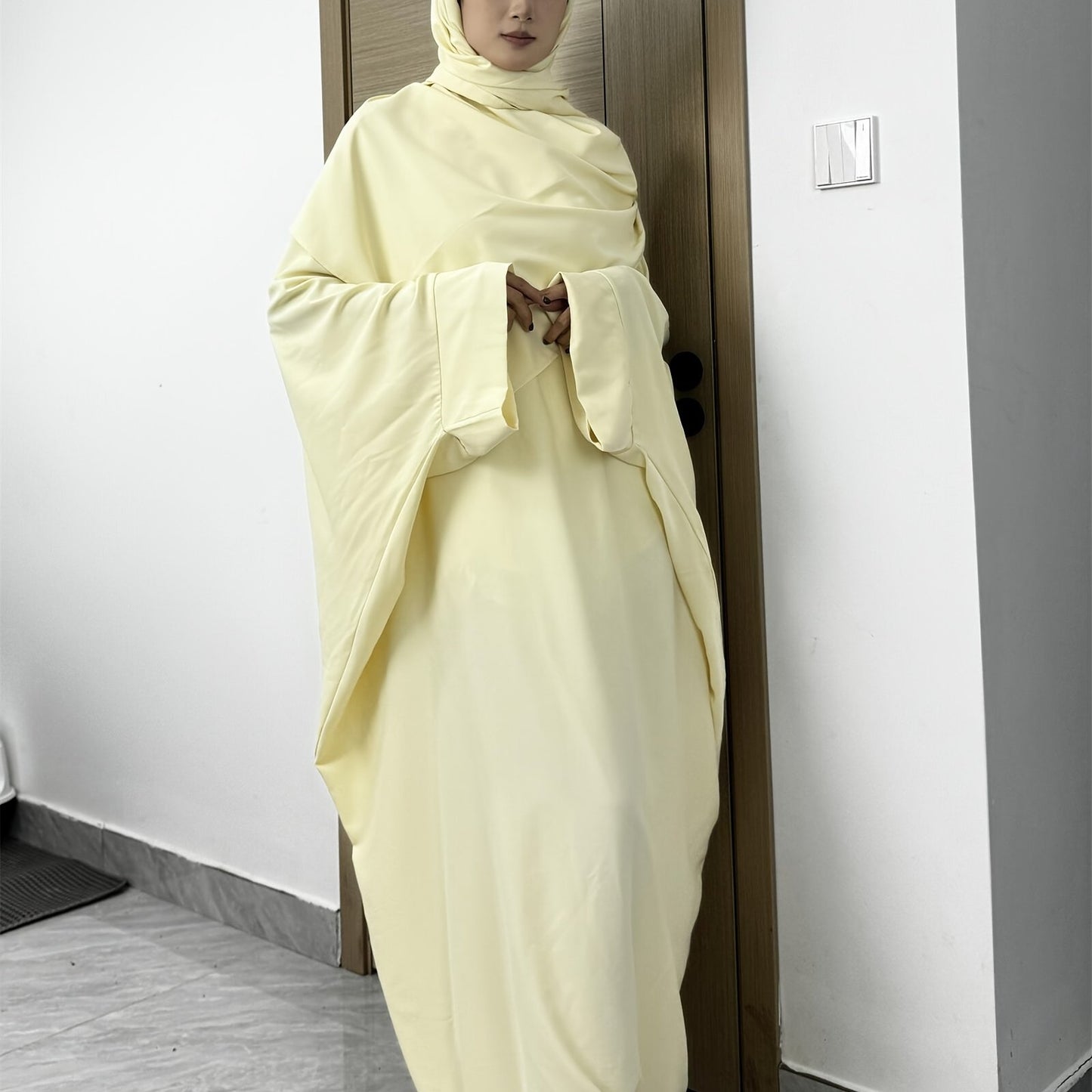
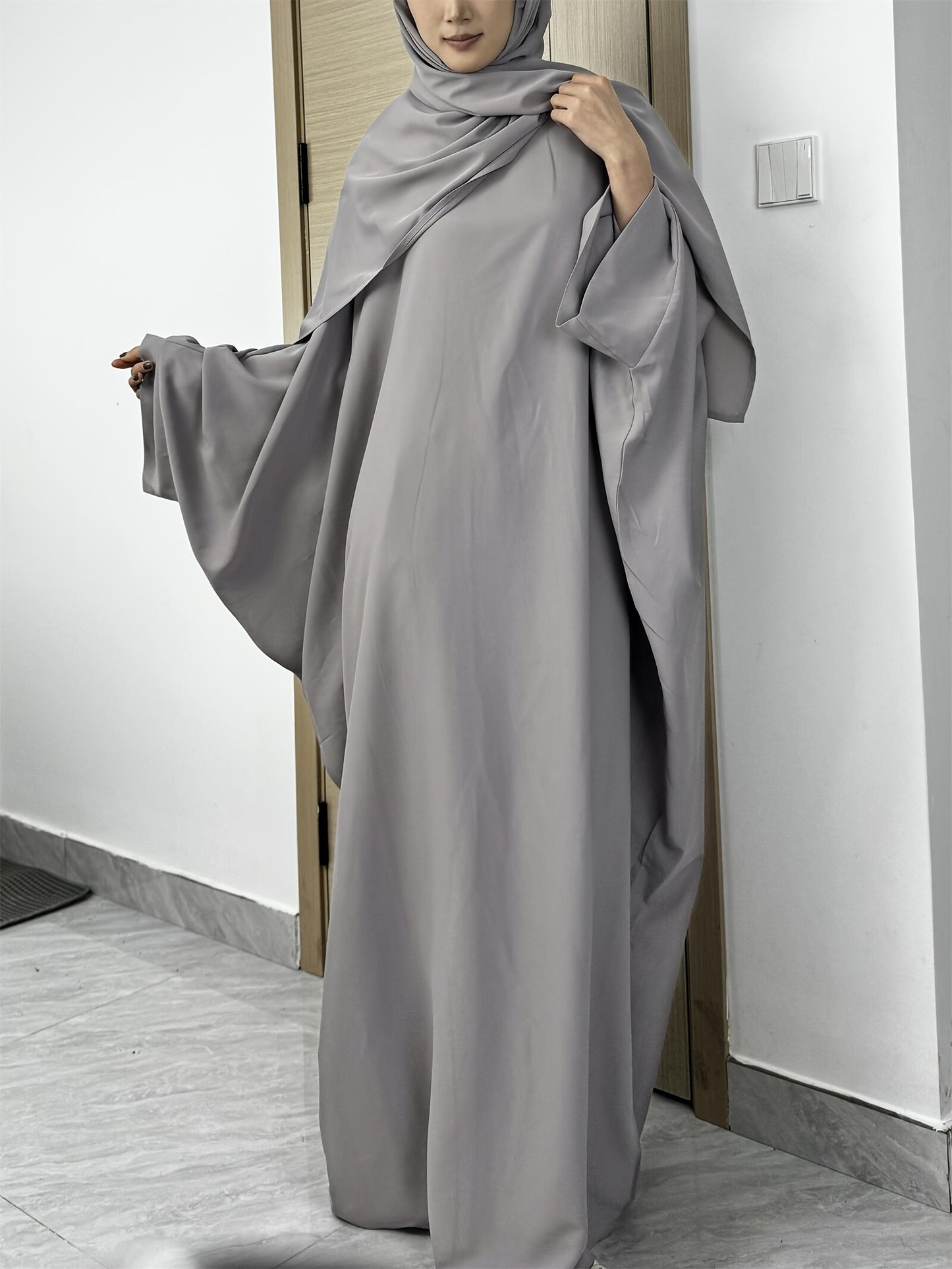
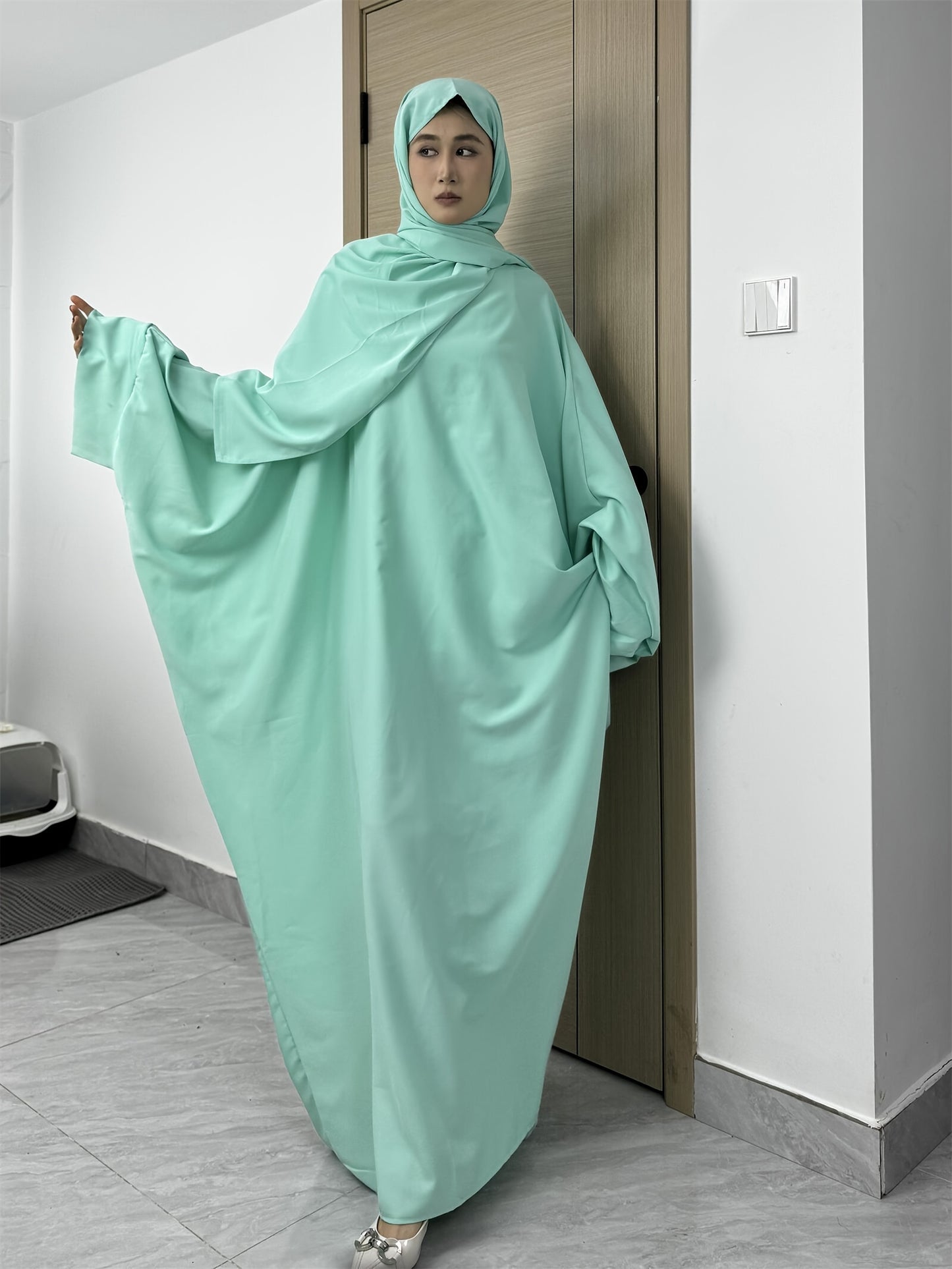
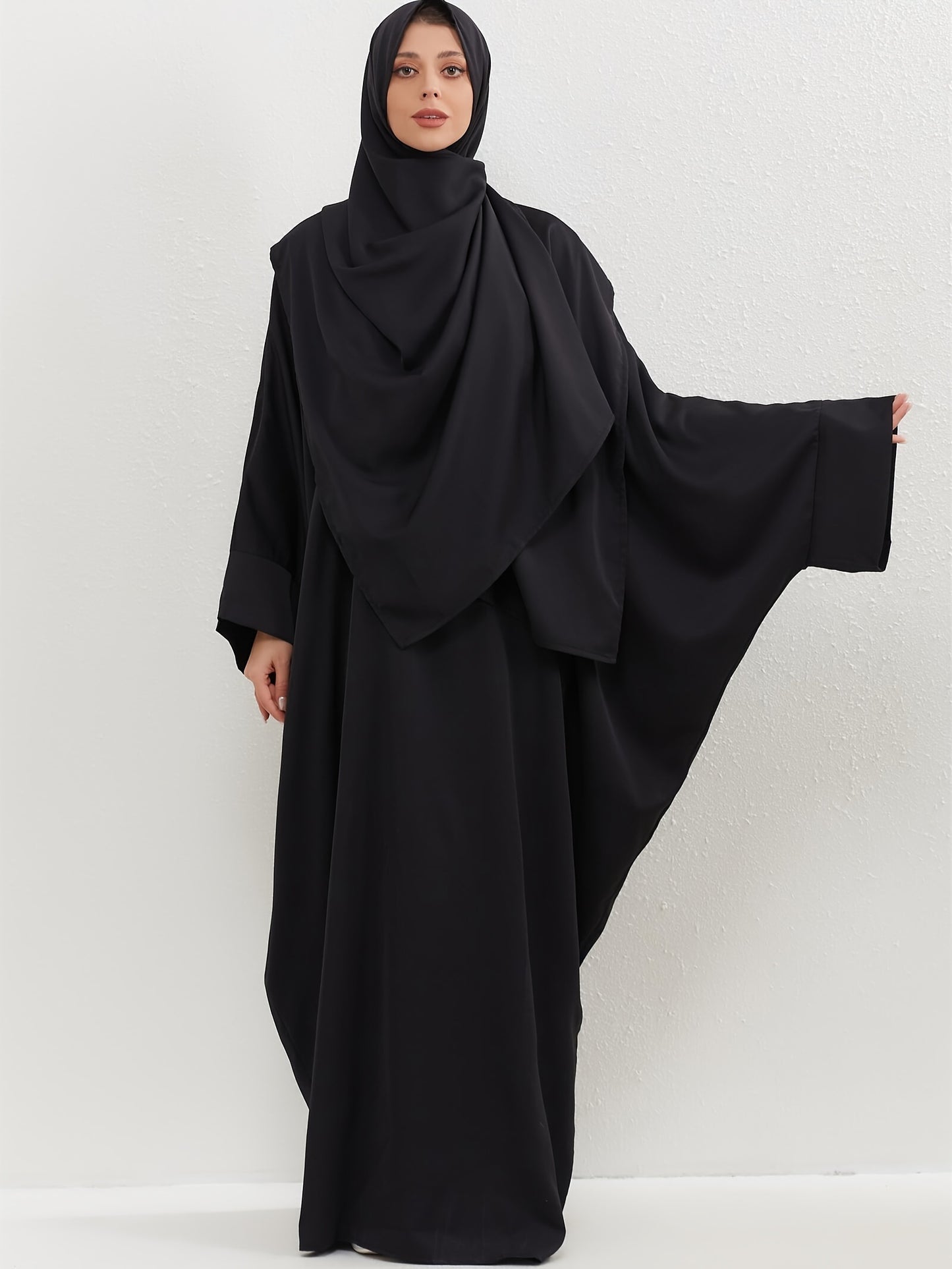
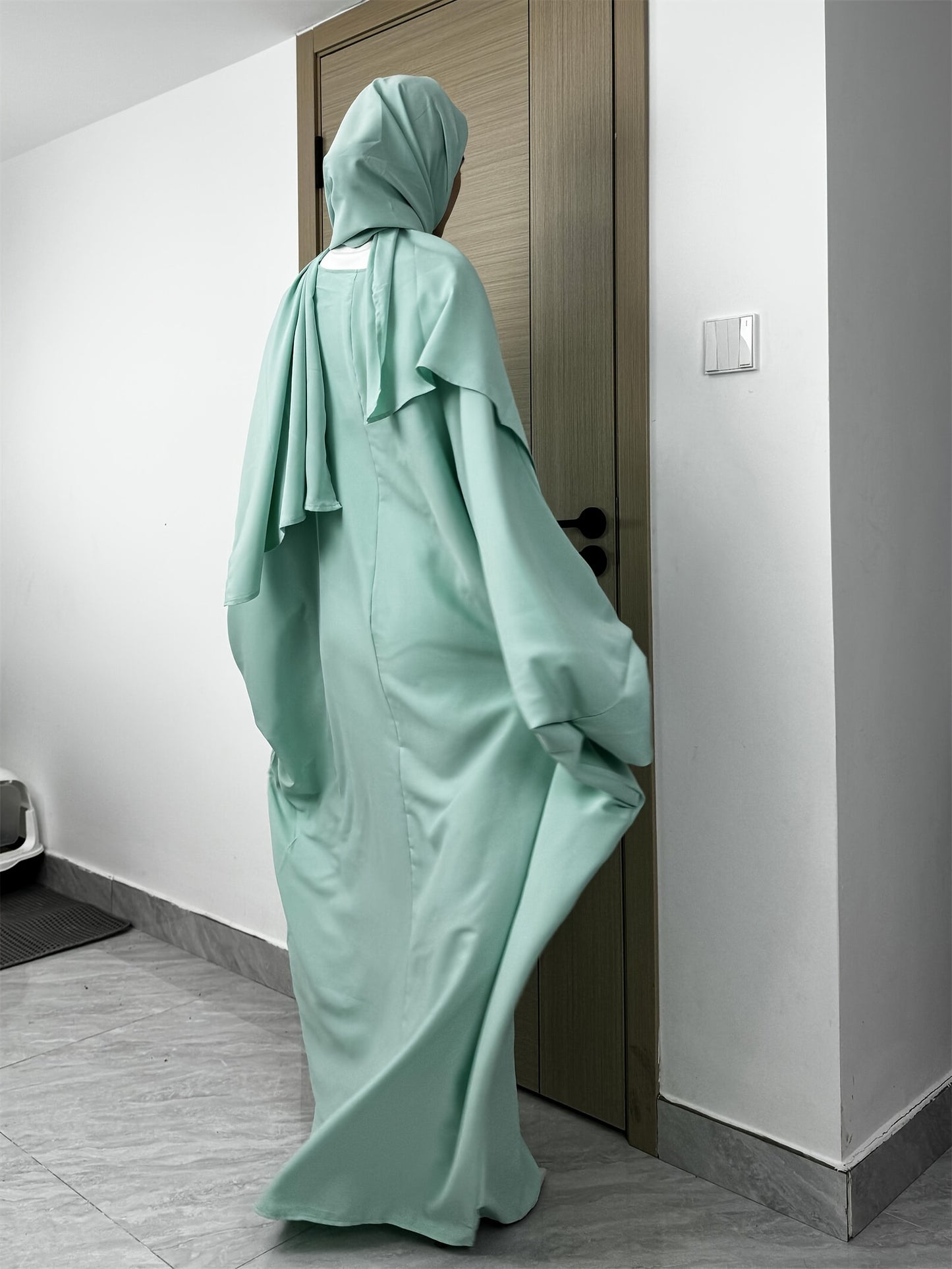
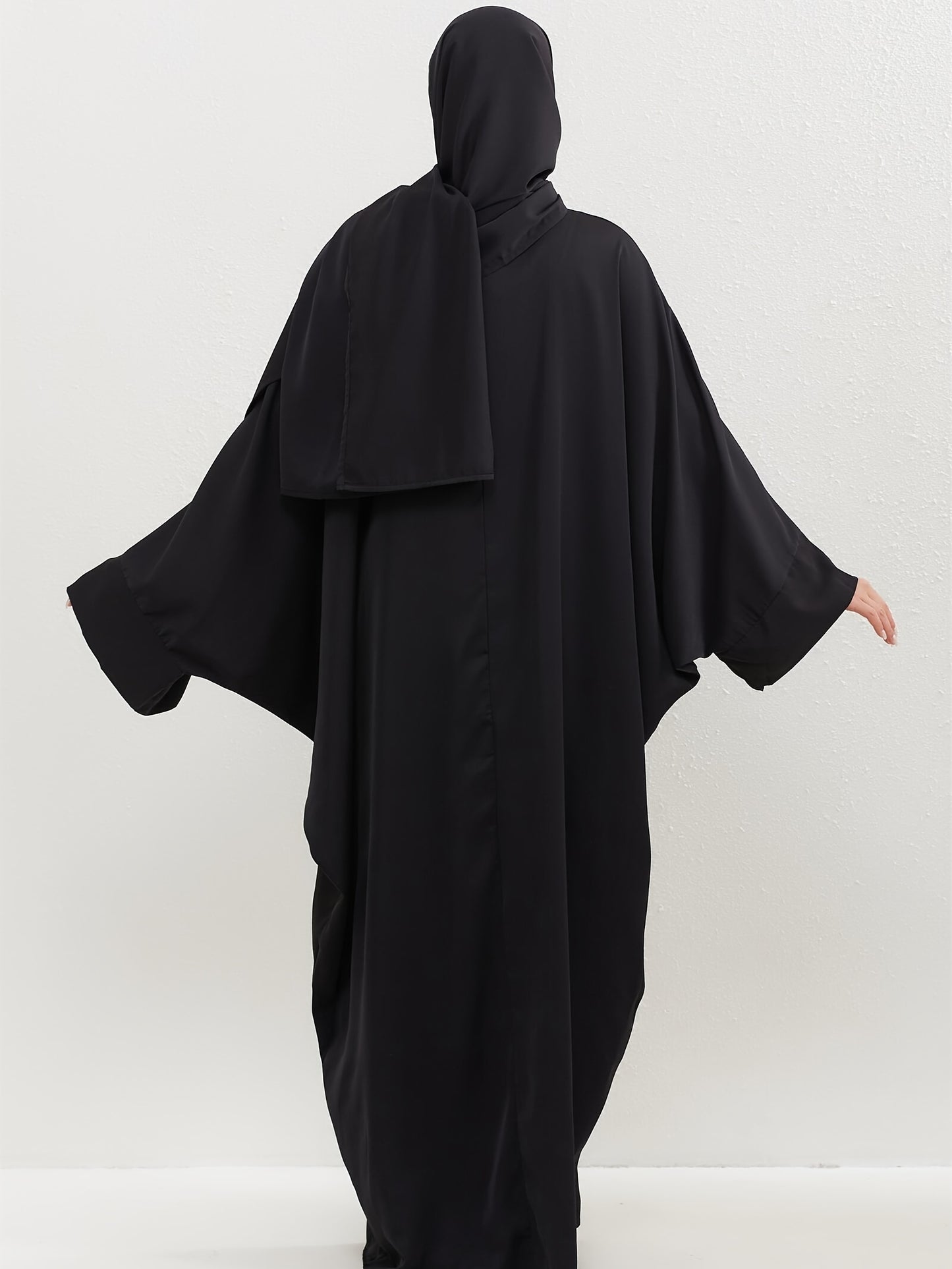
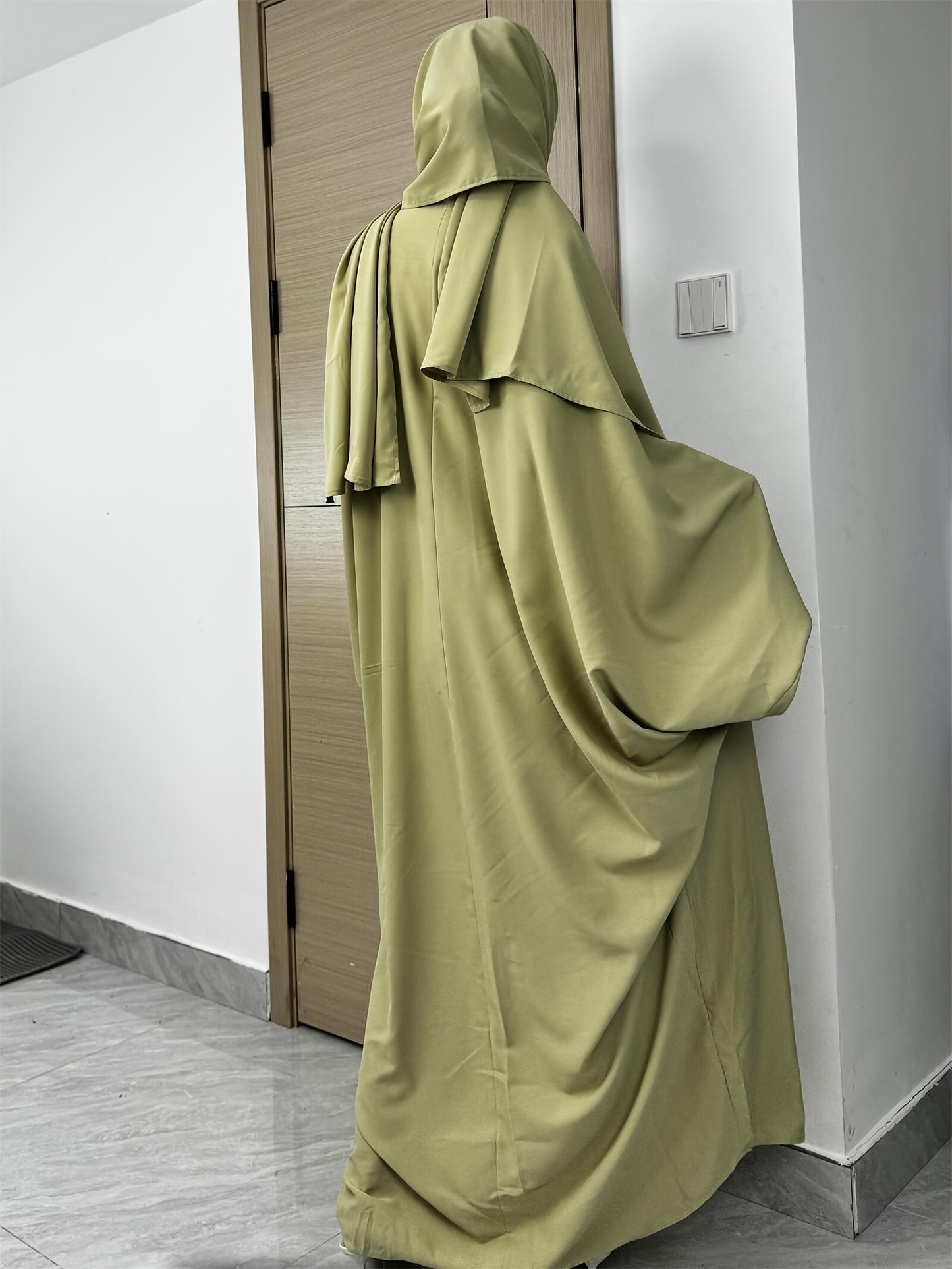
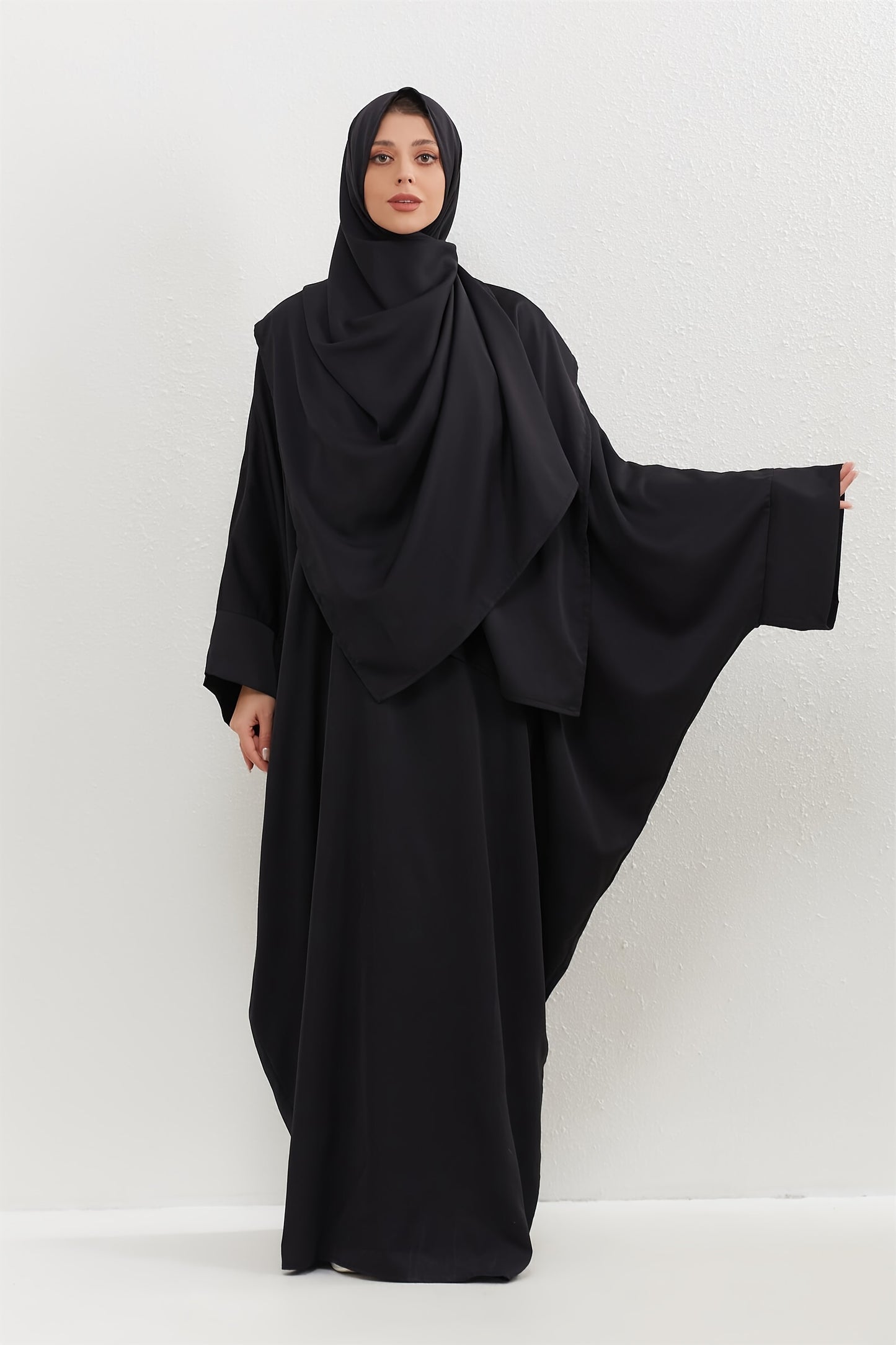
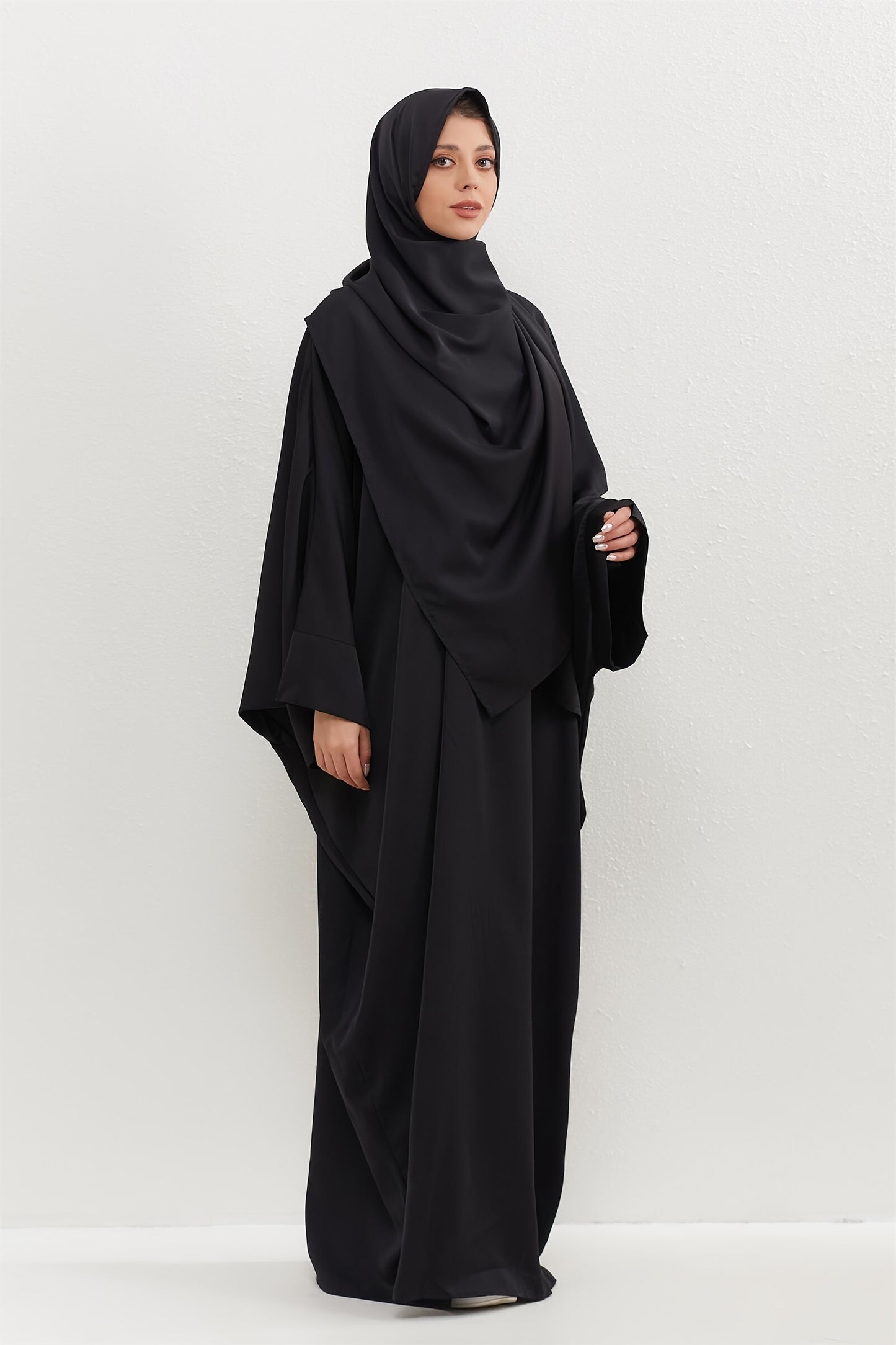
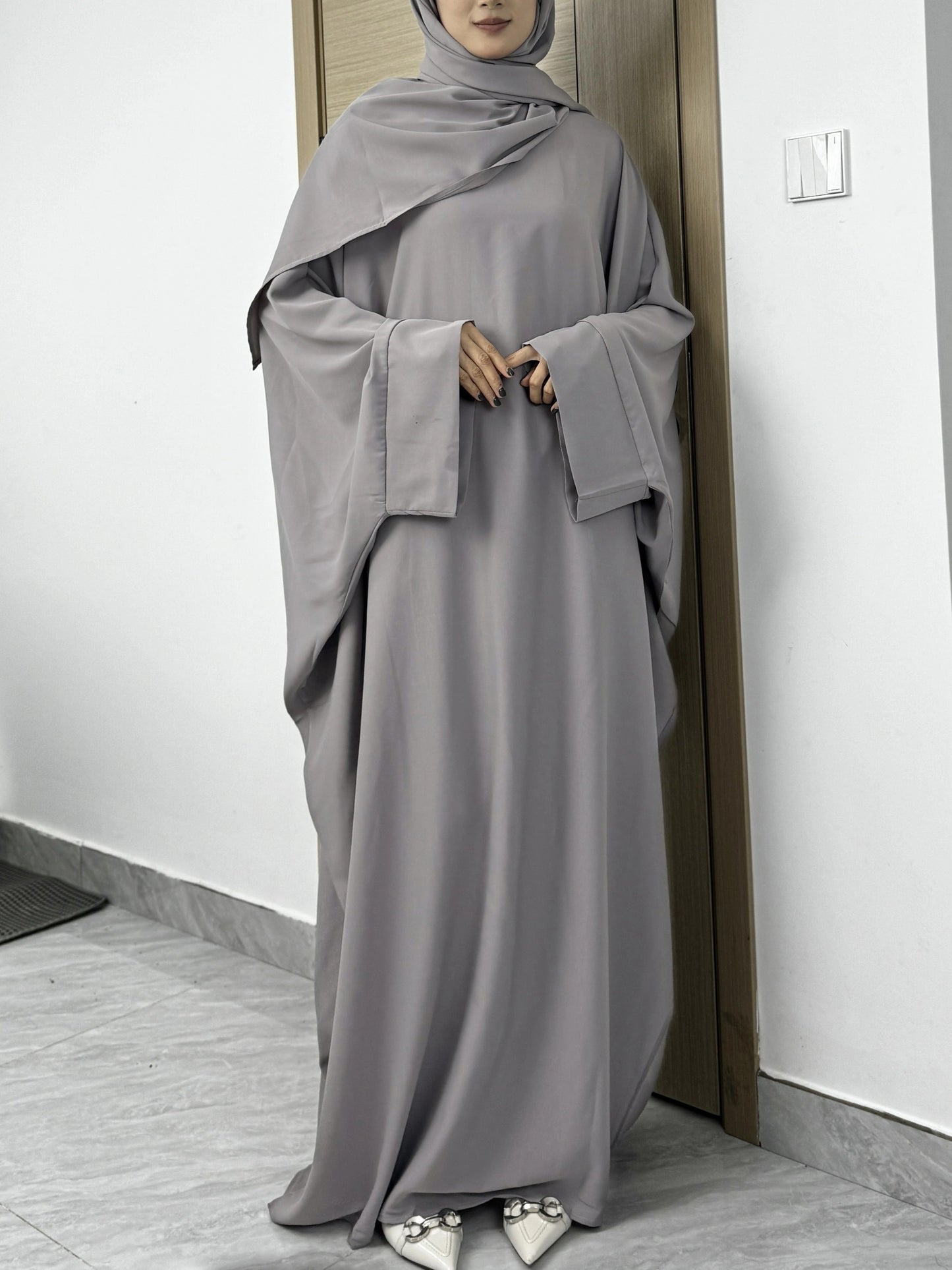
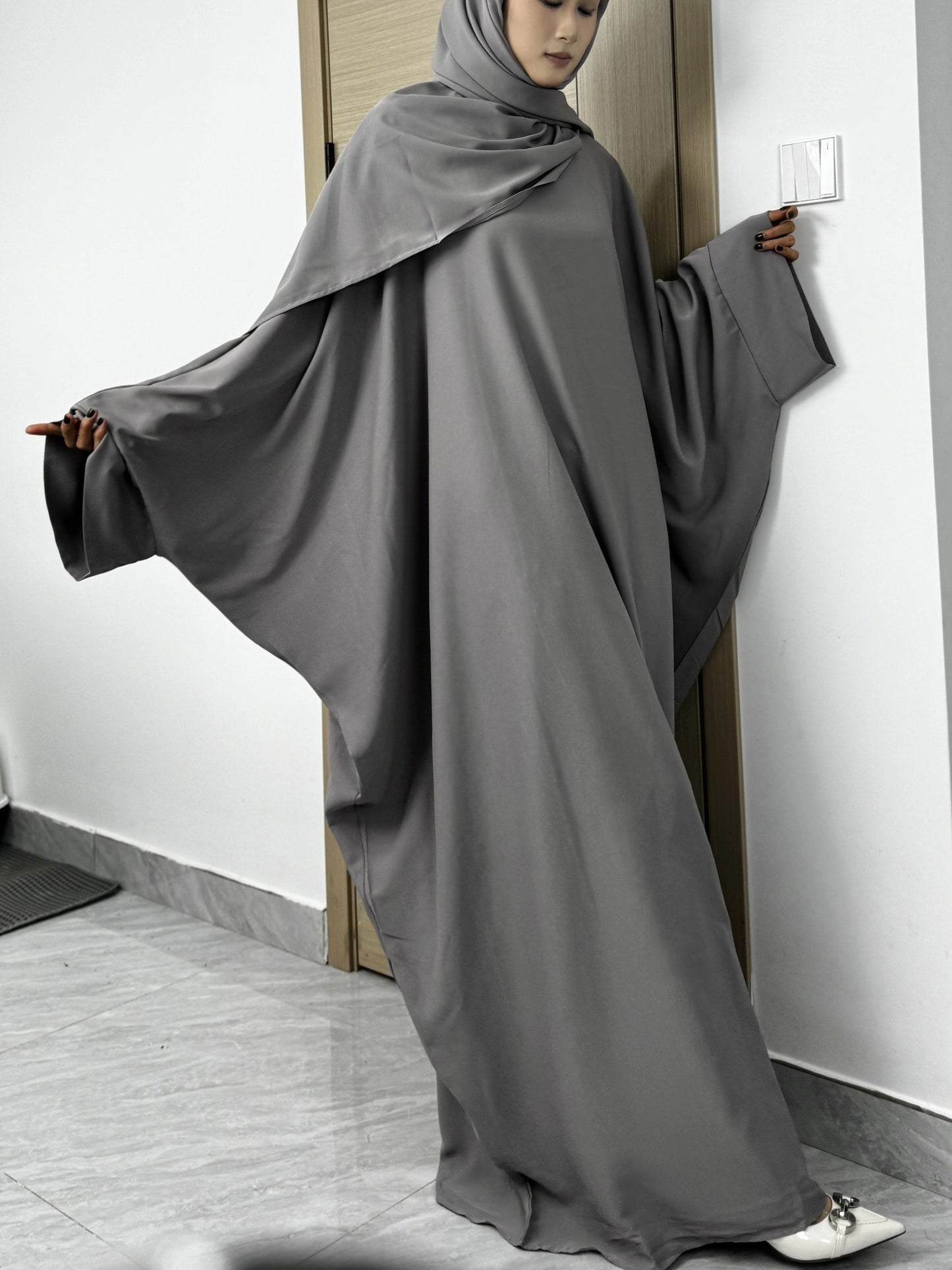
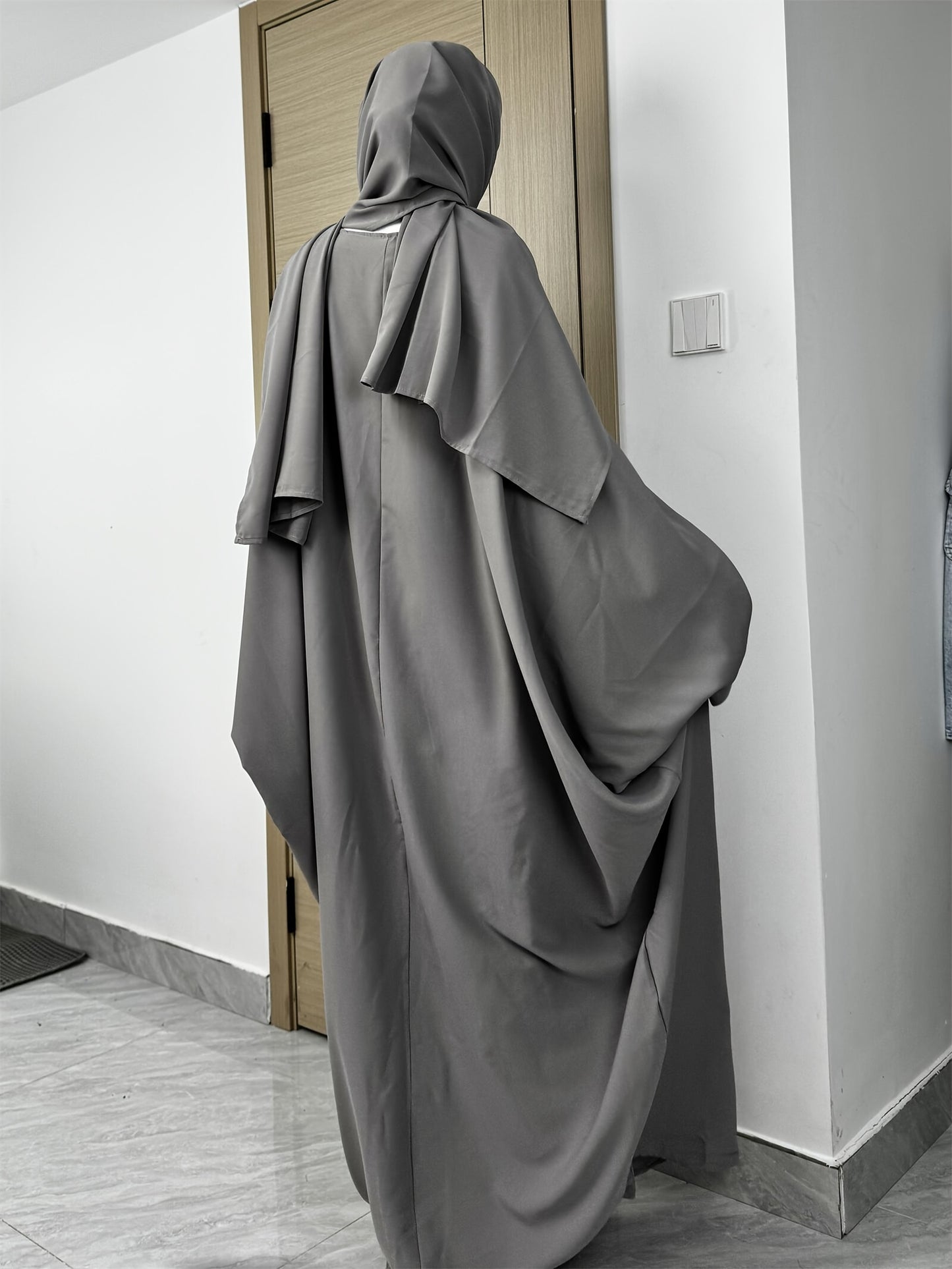
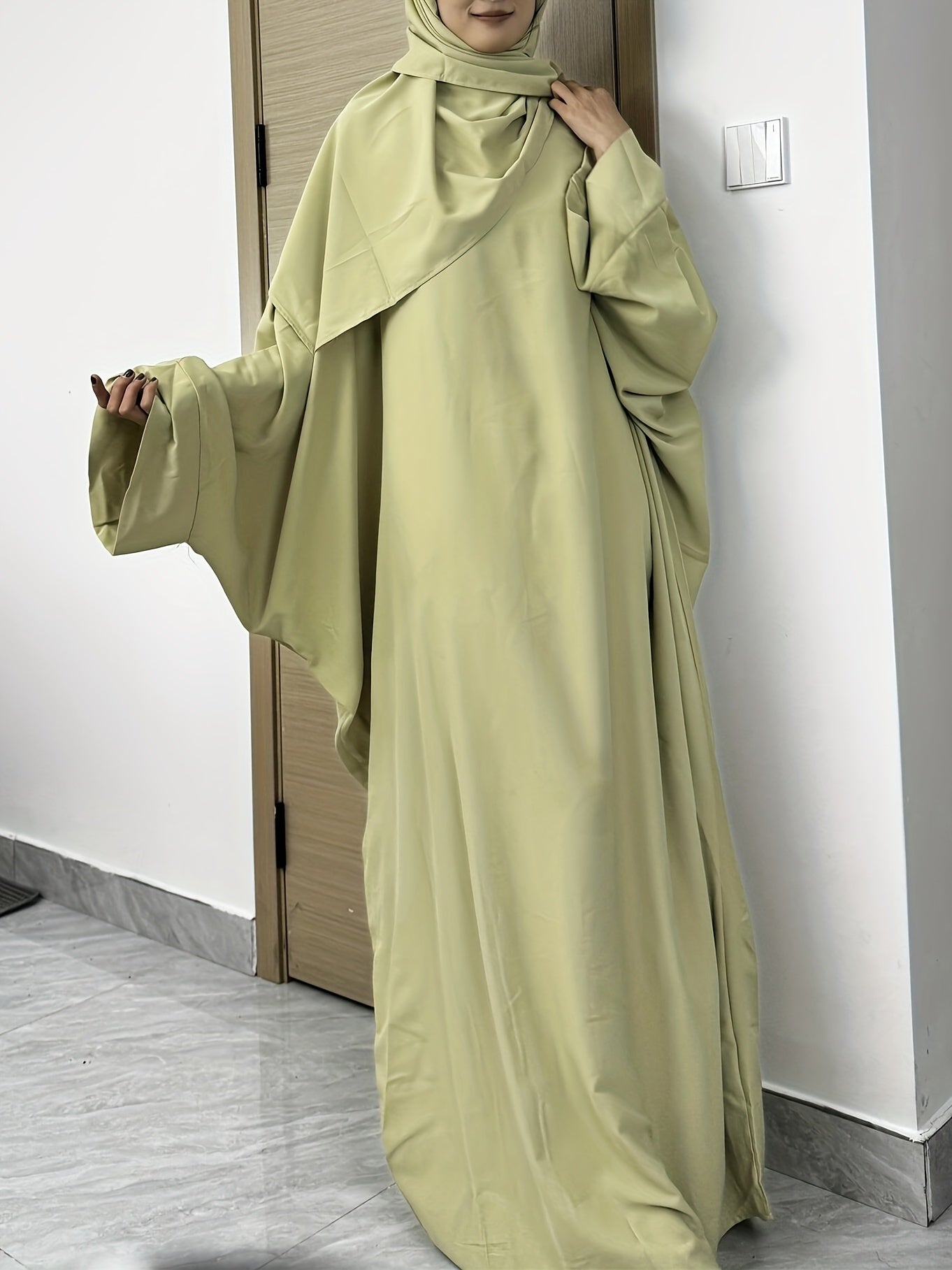
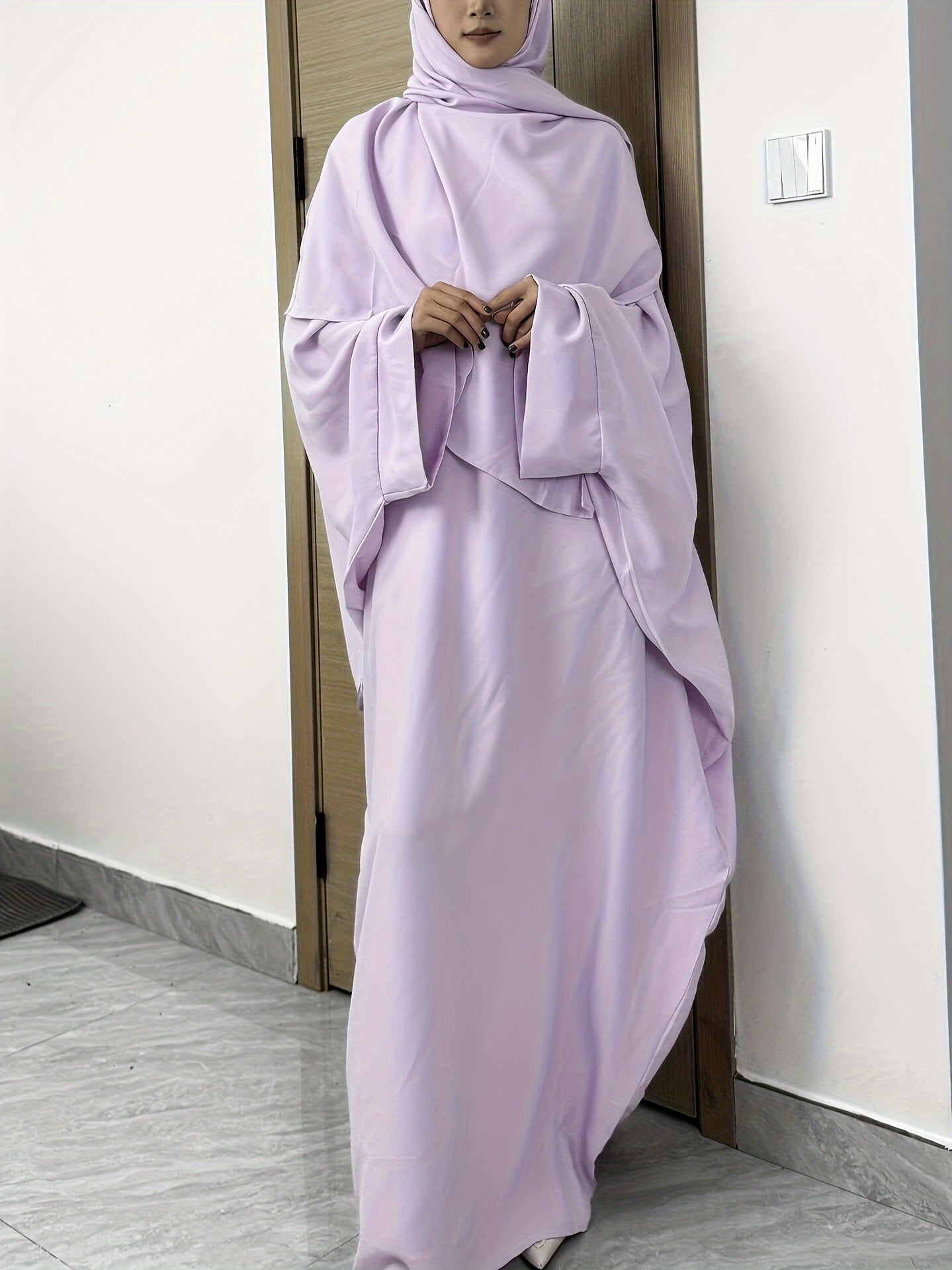
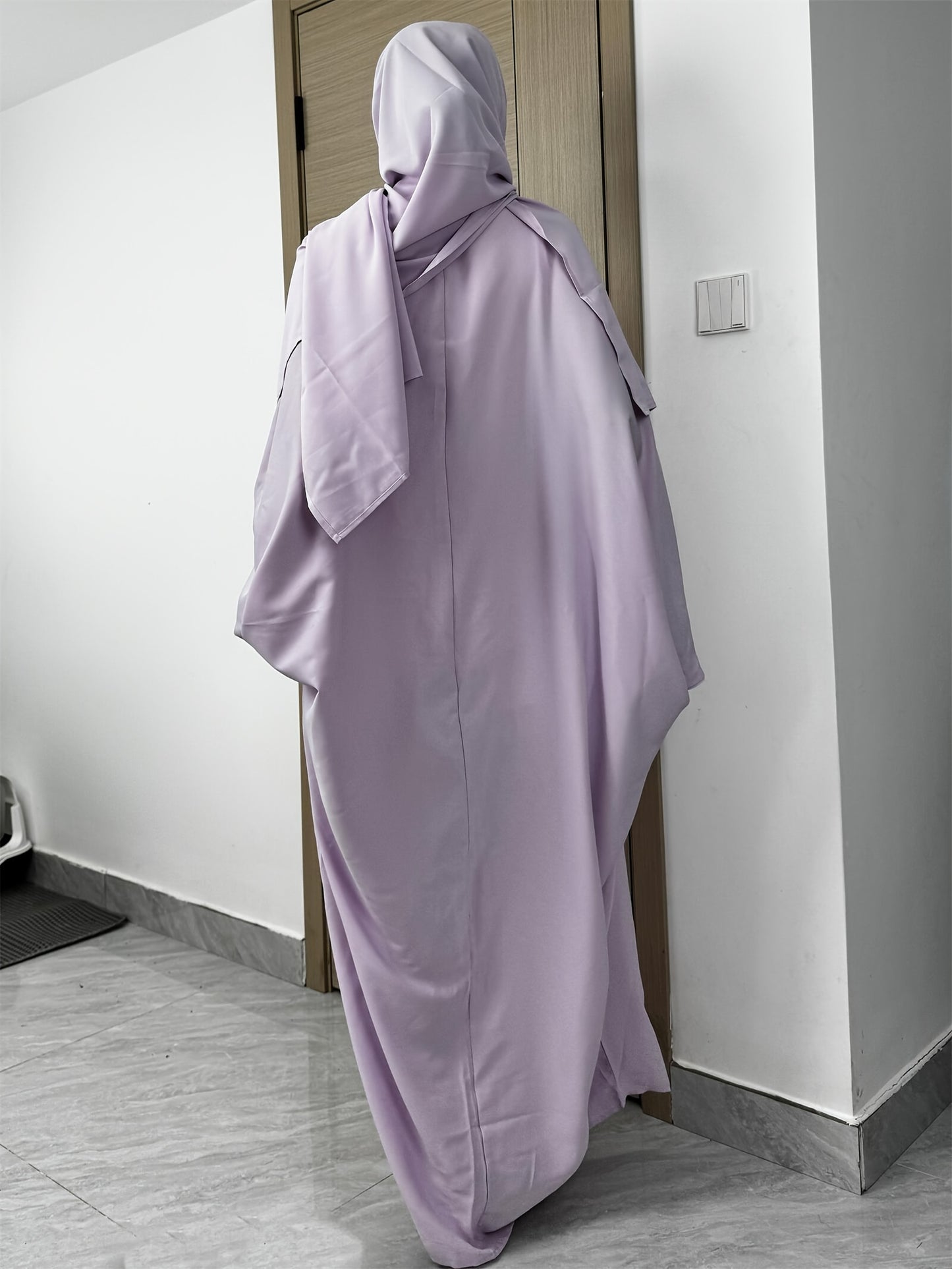
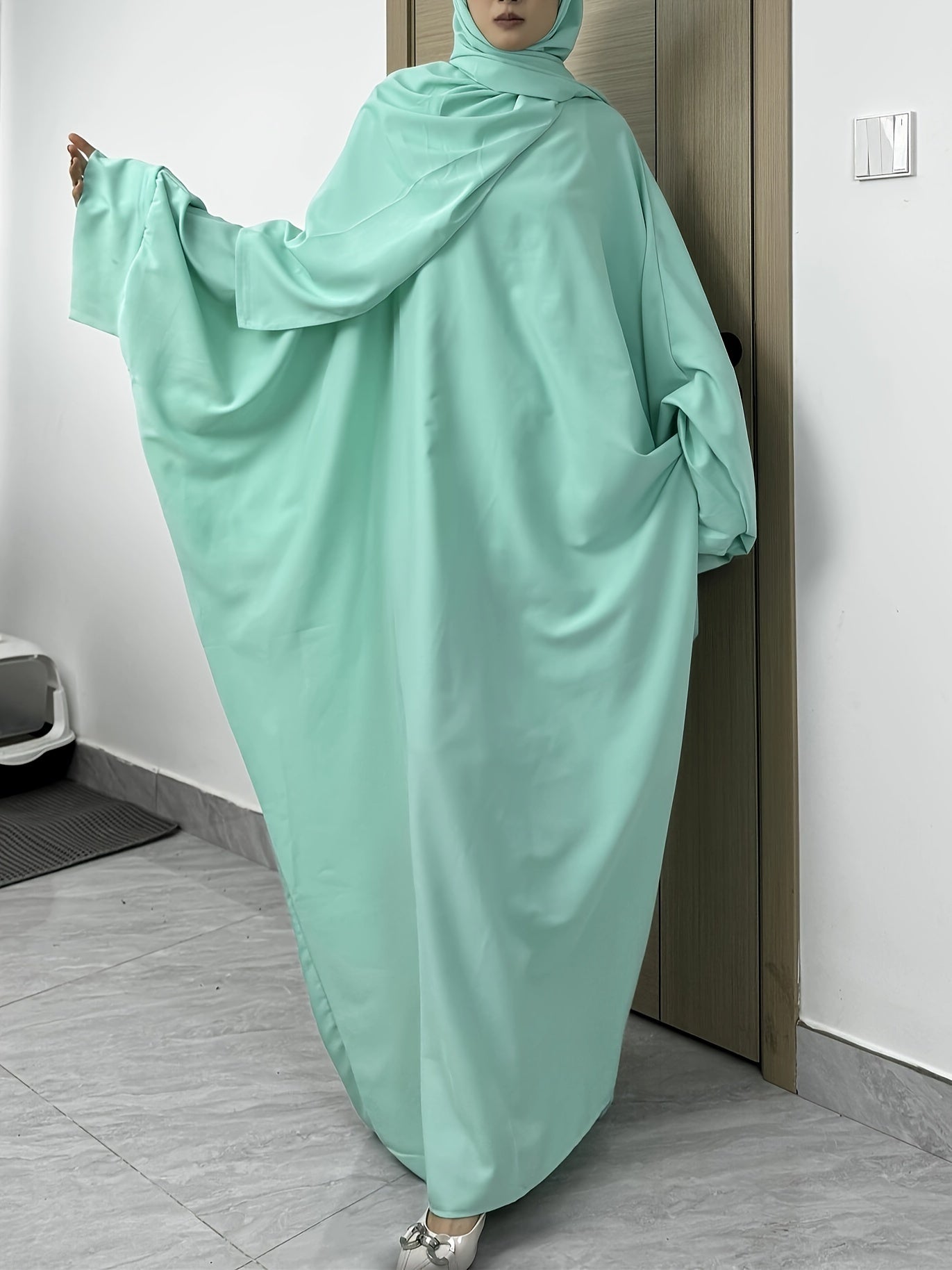
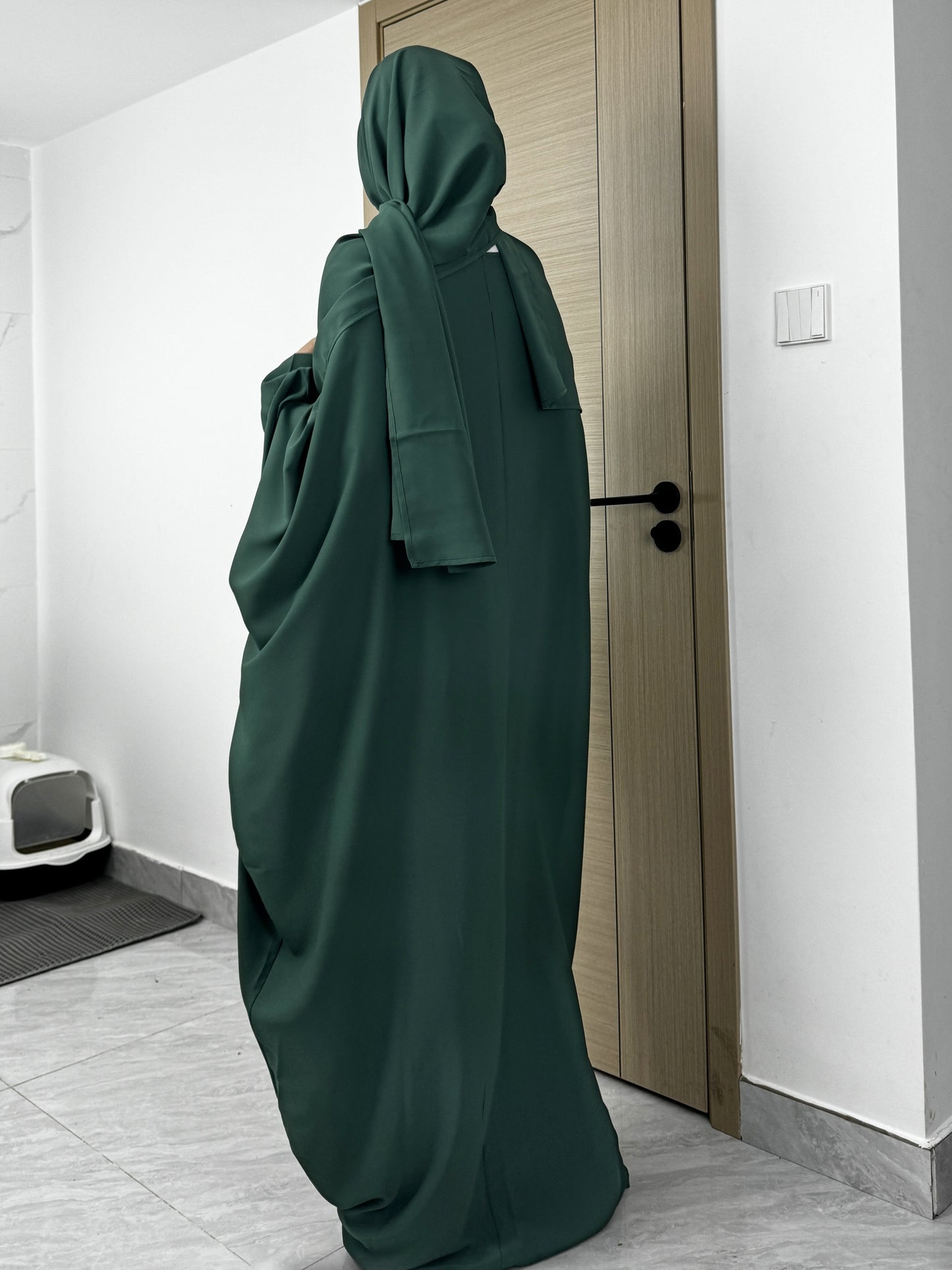
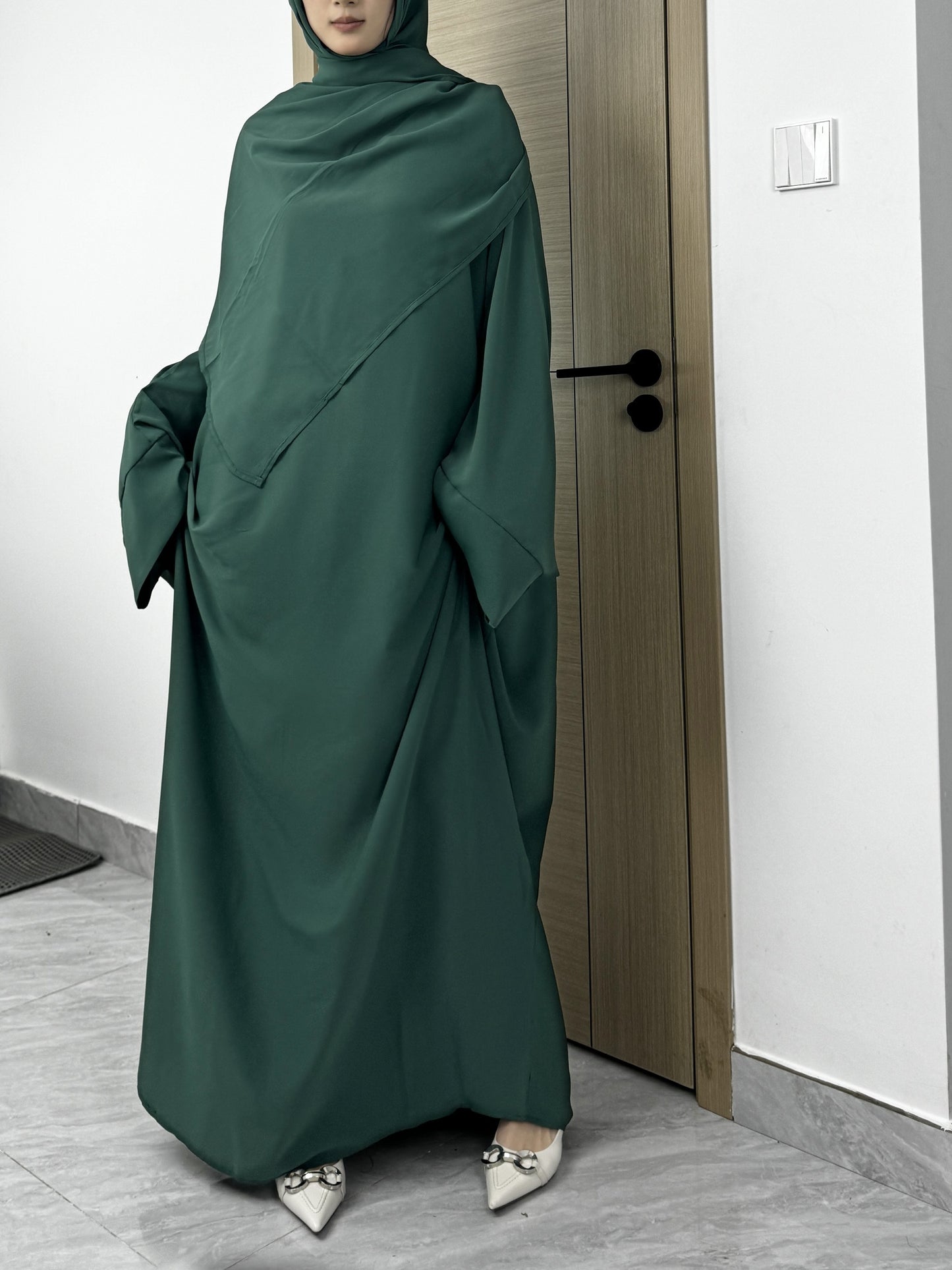
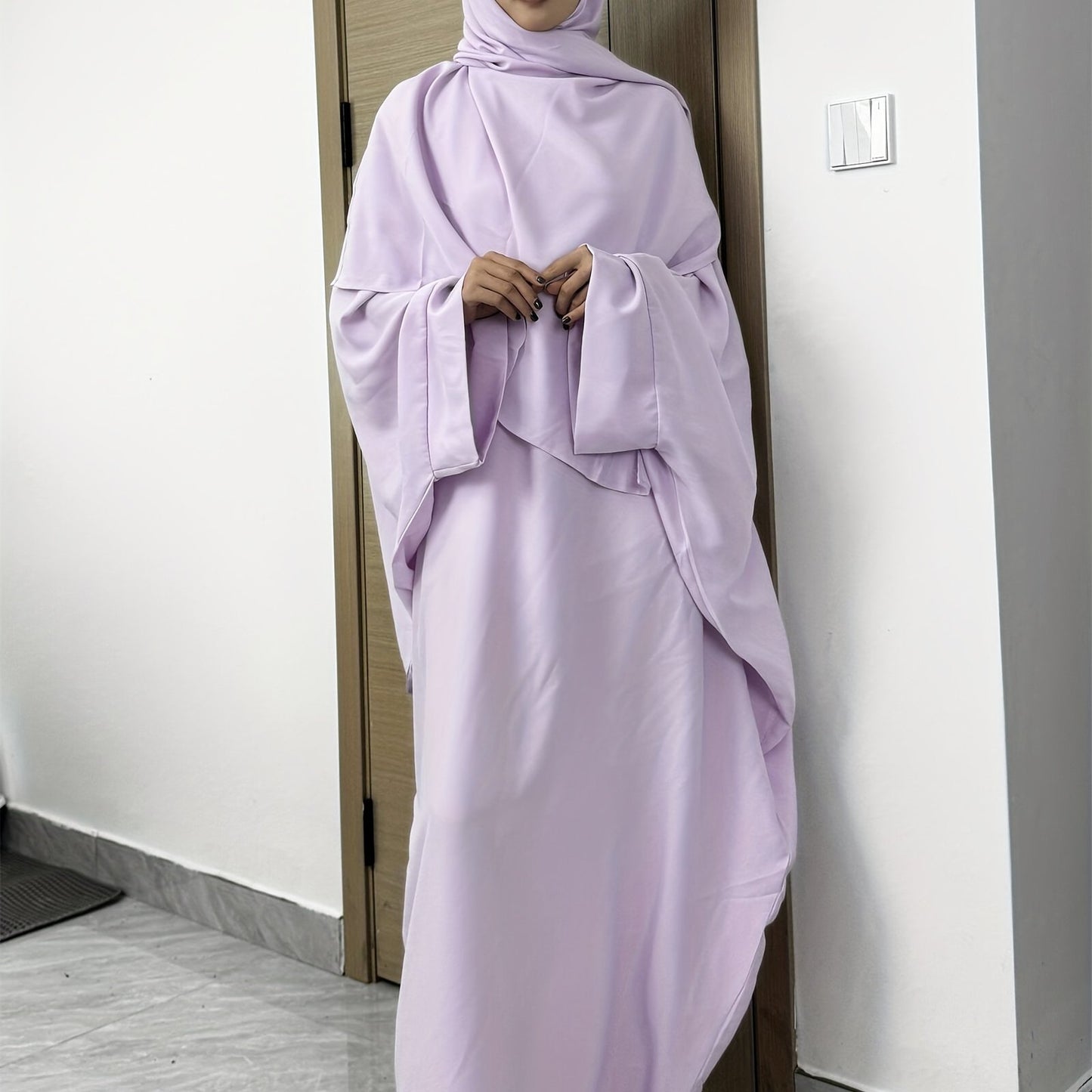
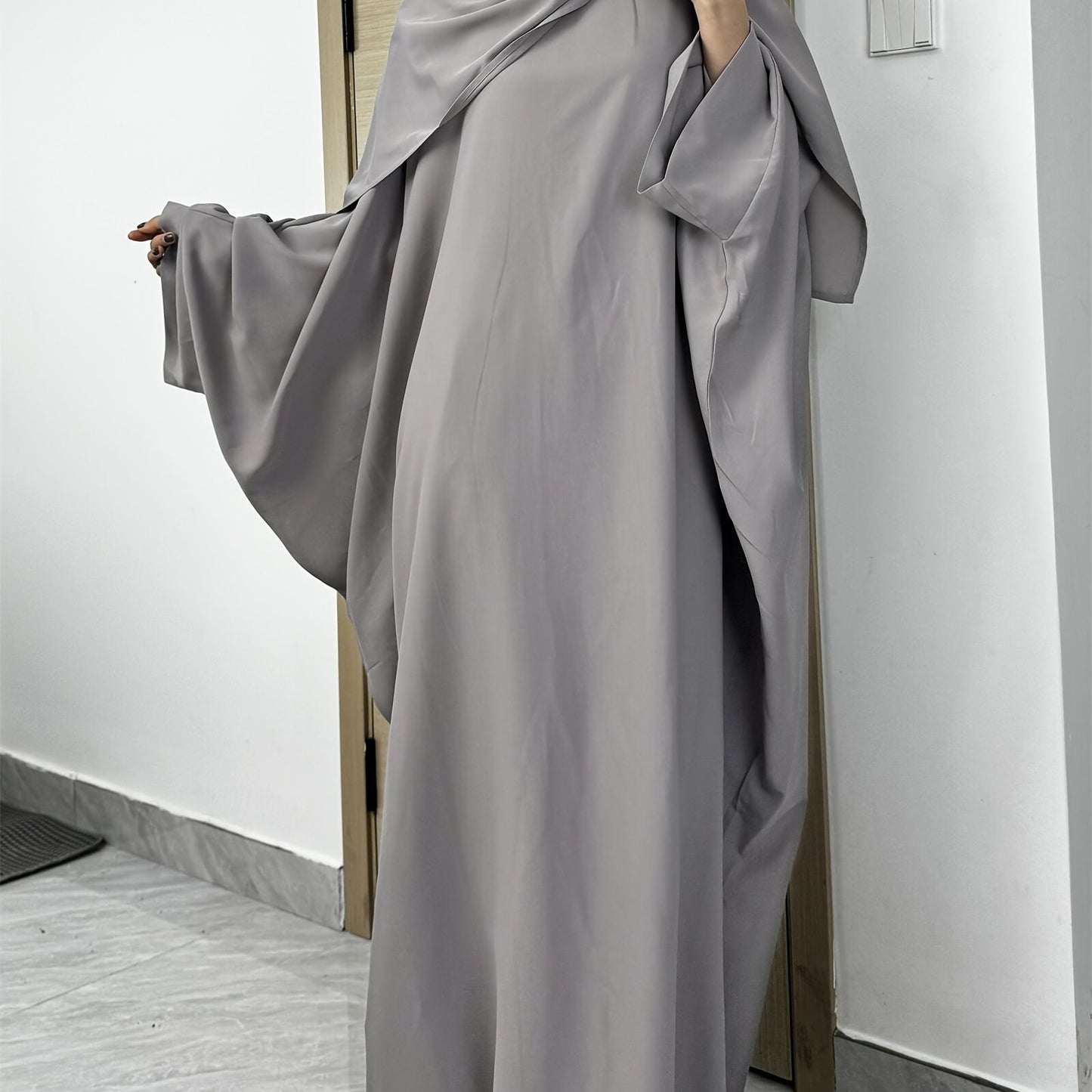
SPECIFICATIONS
Belt: No
Composition: 100% Polyester
Contour: H
Fabric: Non-Stretch
Fabric Elasticity: No Elasticity
Fit Type: Loose
Length: Extra-long
Material: Polyester
Operation Instruction: Machine wash or professional dry clean
Pattern: Solid color
Printing Type: No Printing
Season: All
Sheer: No
Sleeve Length: Long Sleeve
Sleeve Type: Batwing sleeve
Weaving Method: Woven
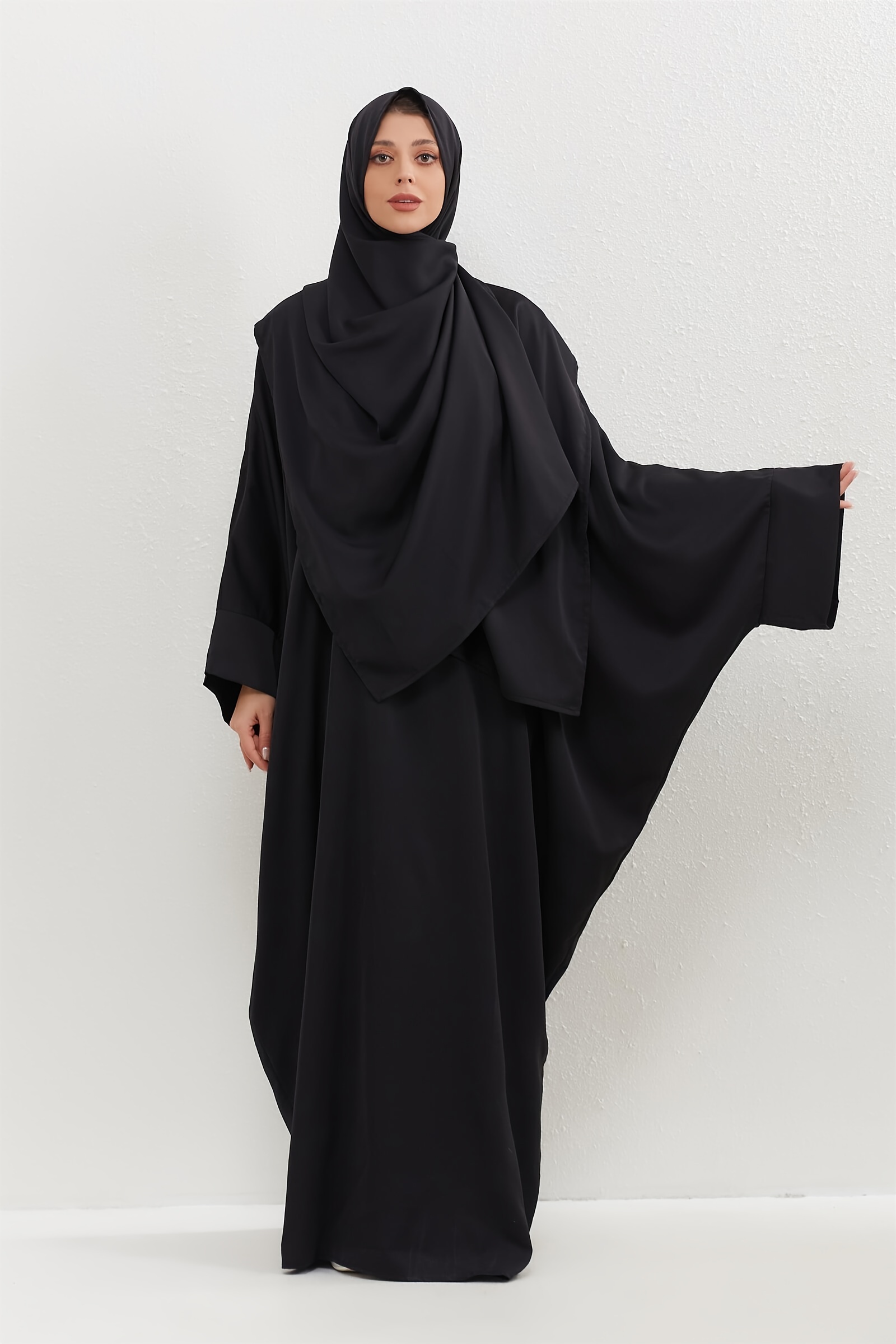
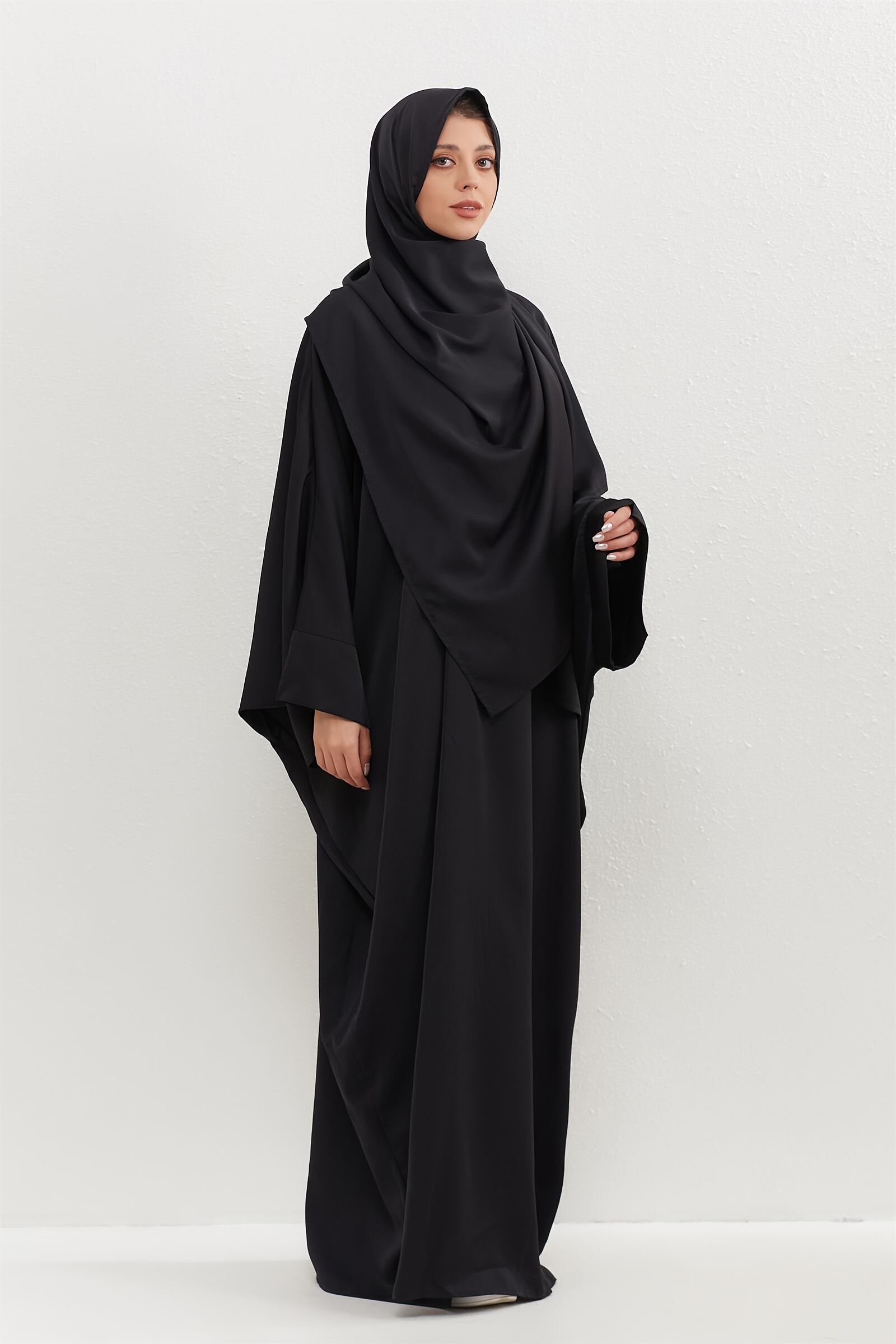
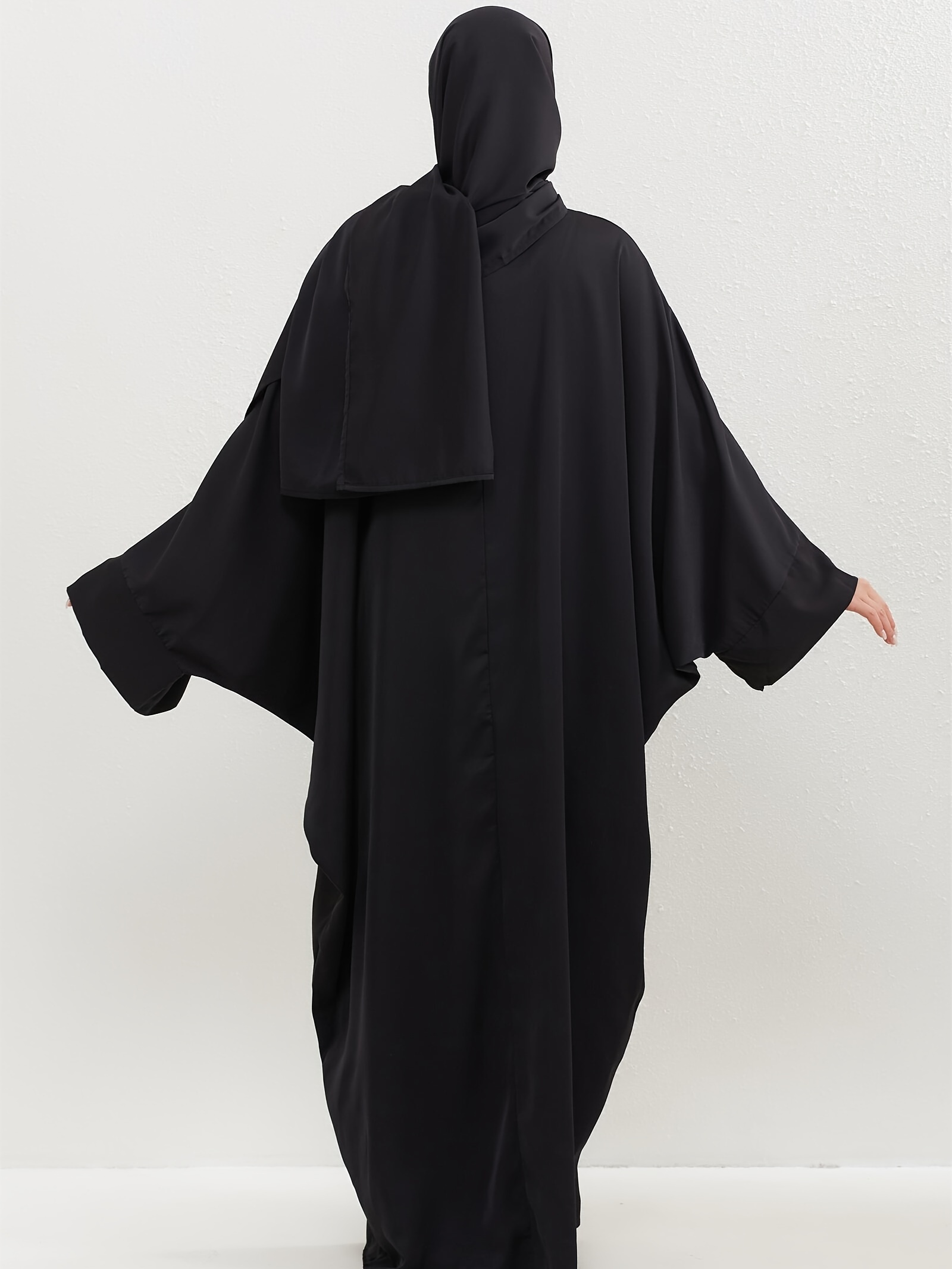
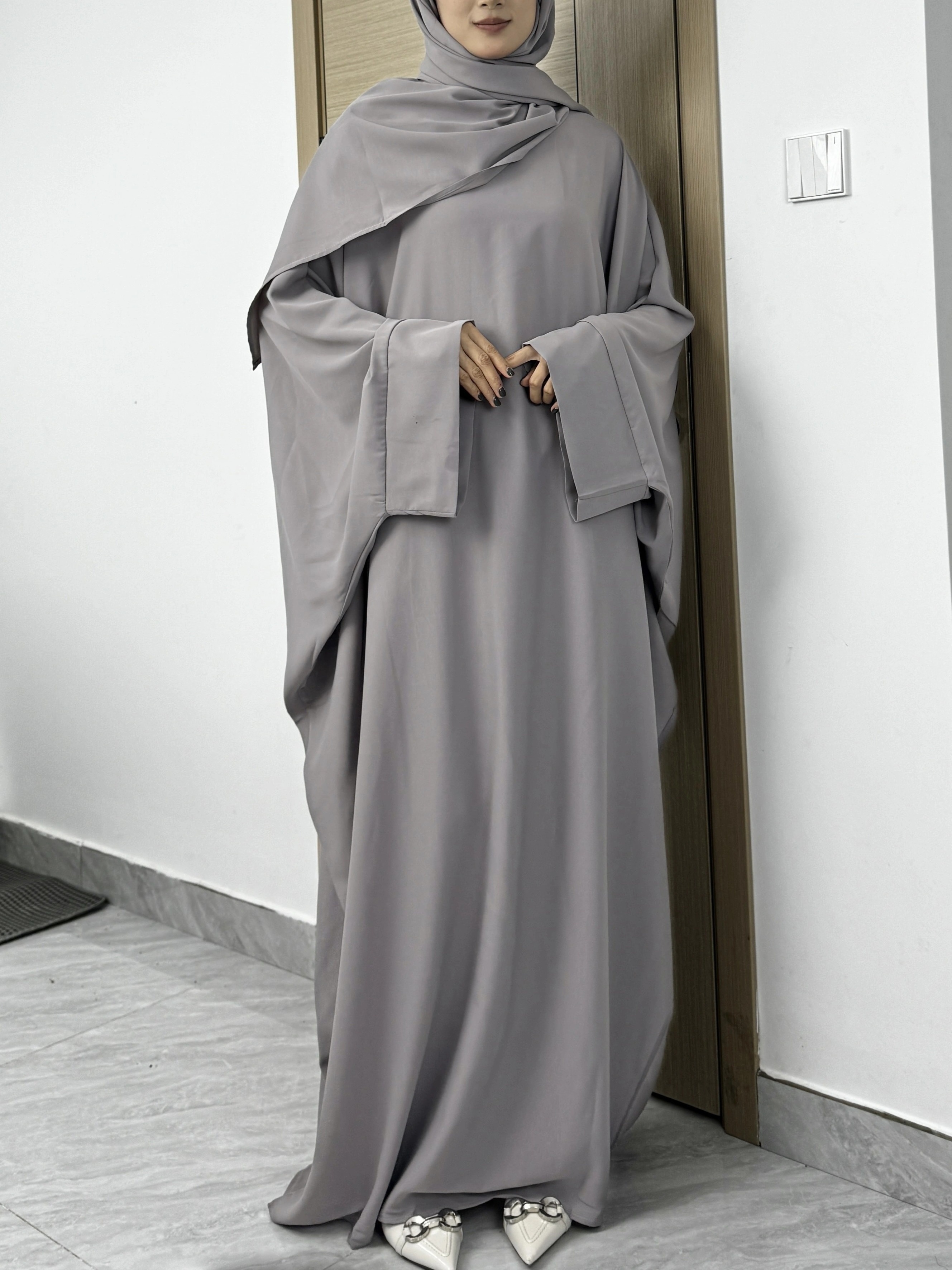
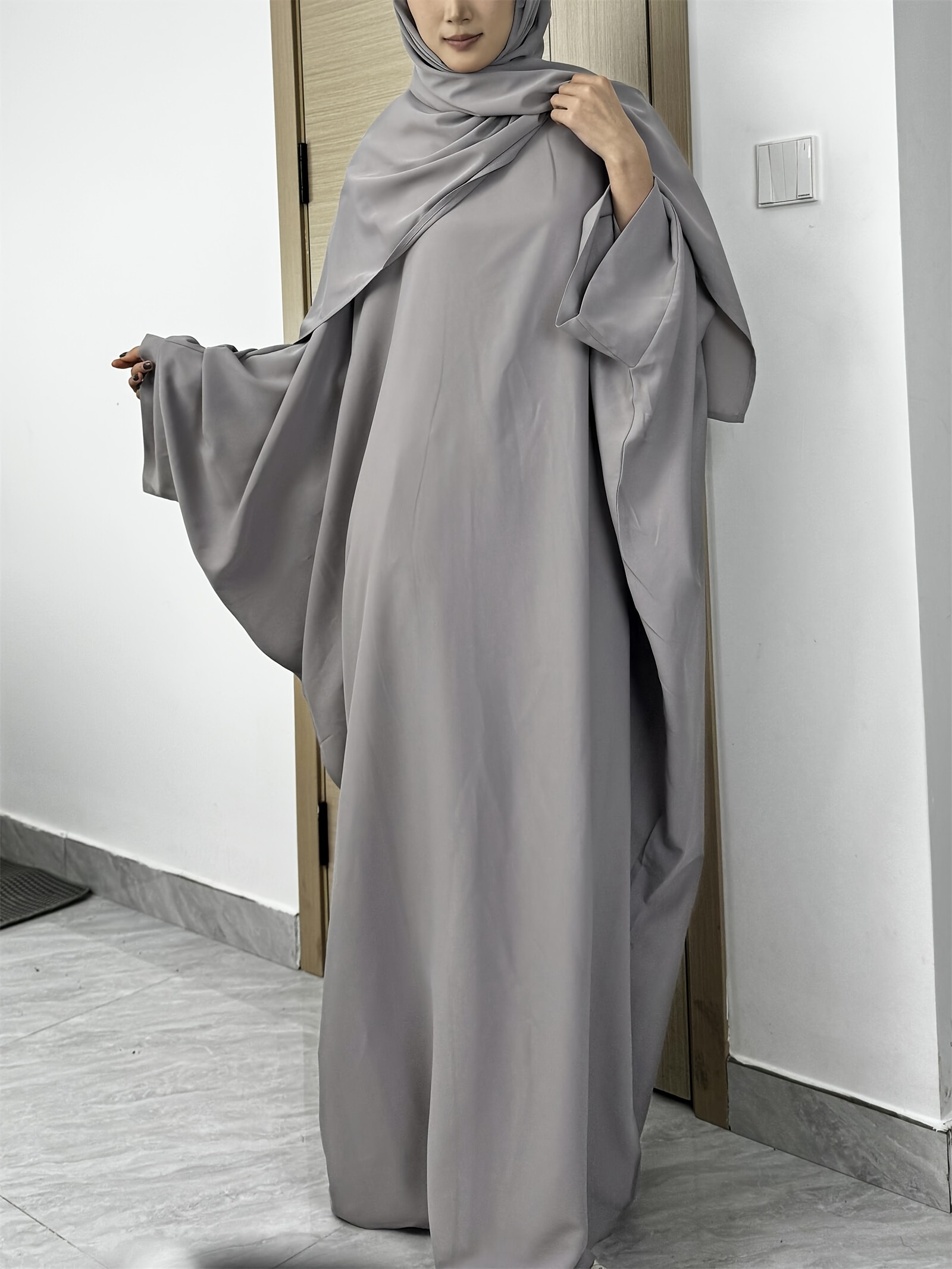
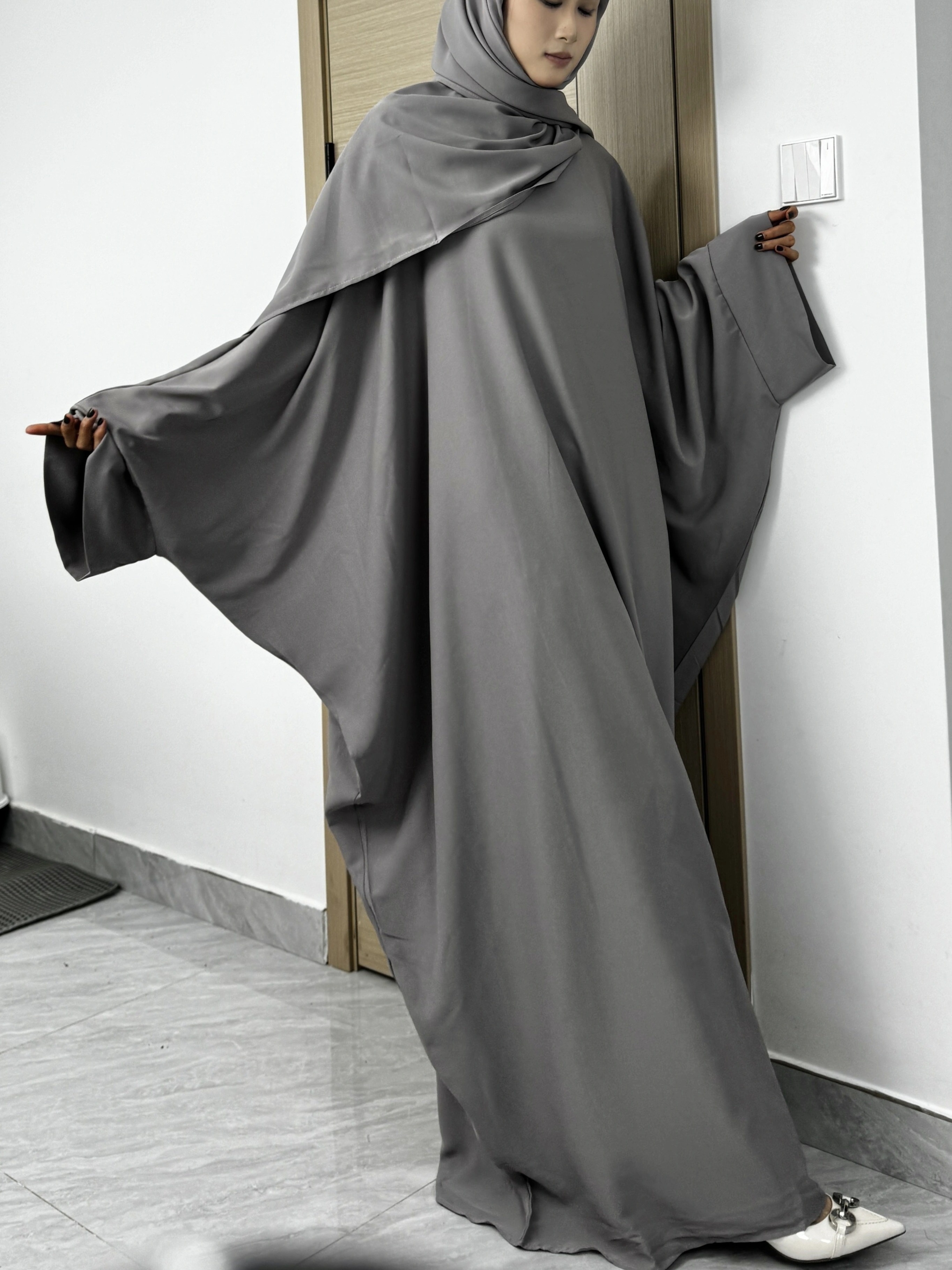
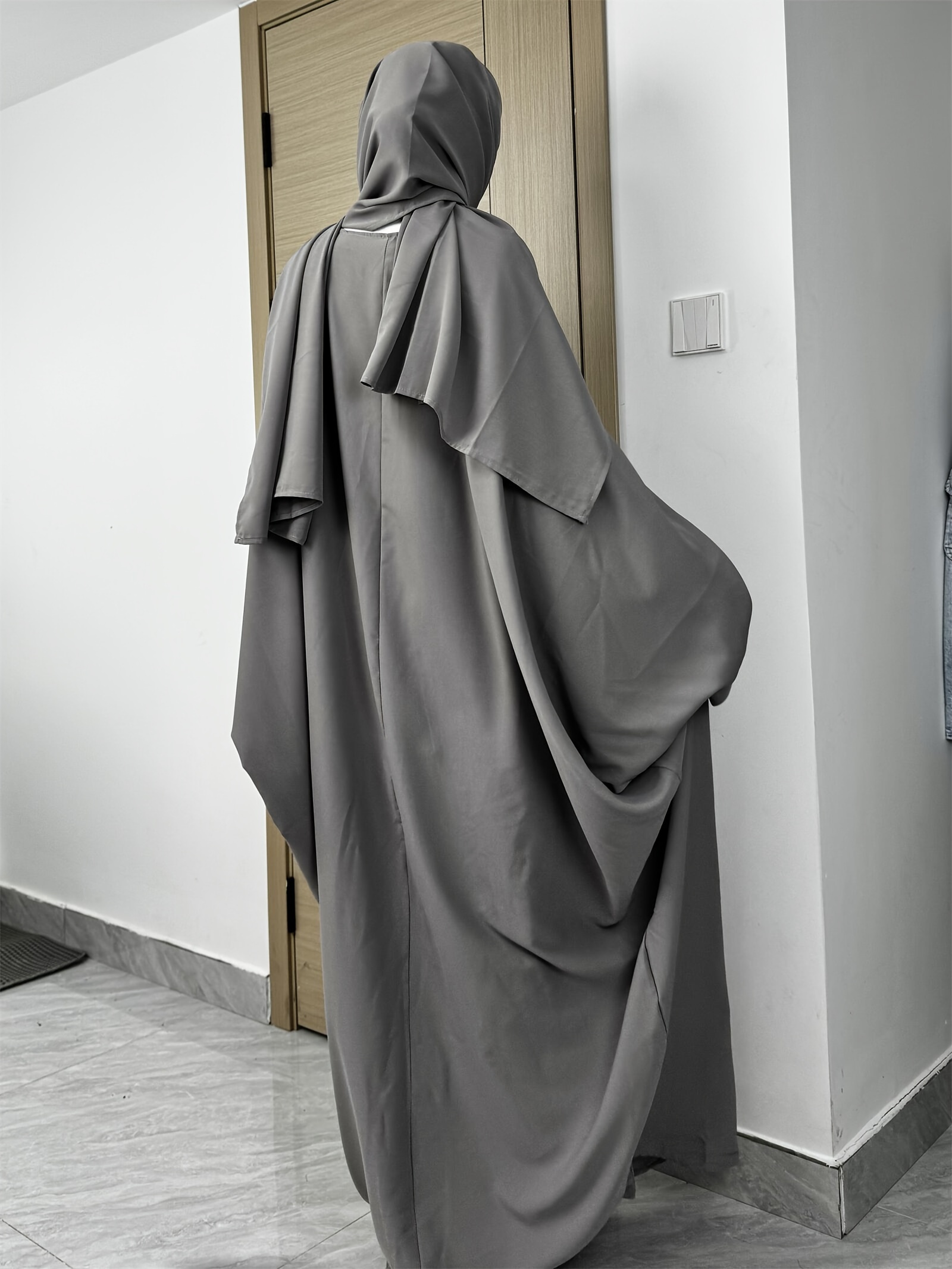
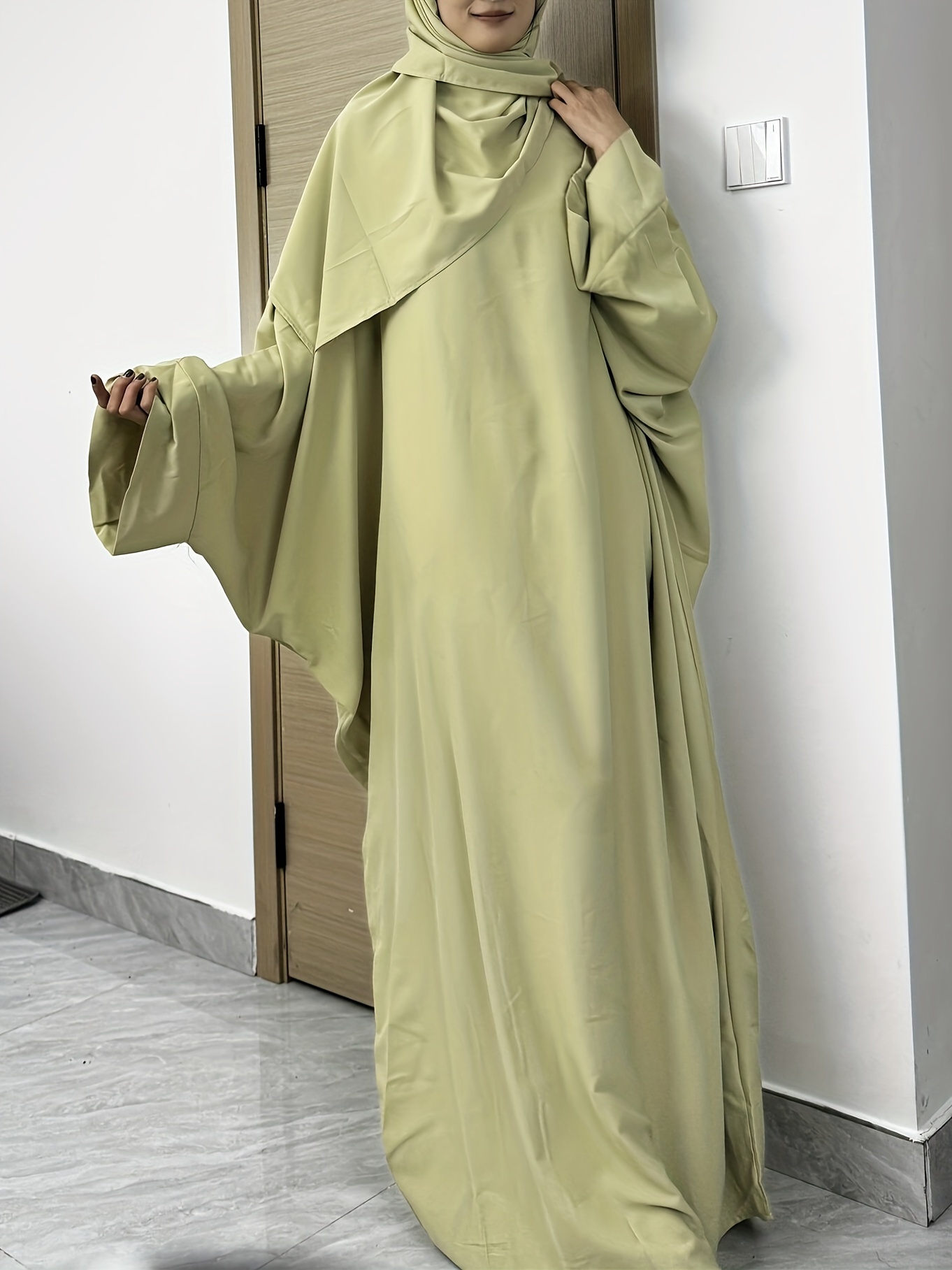
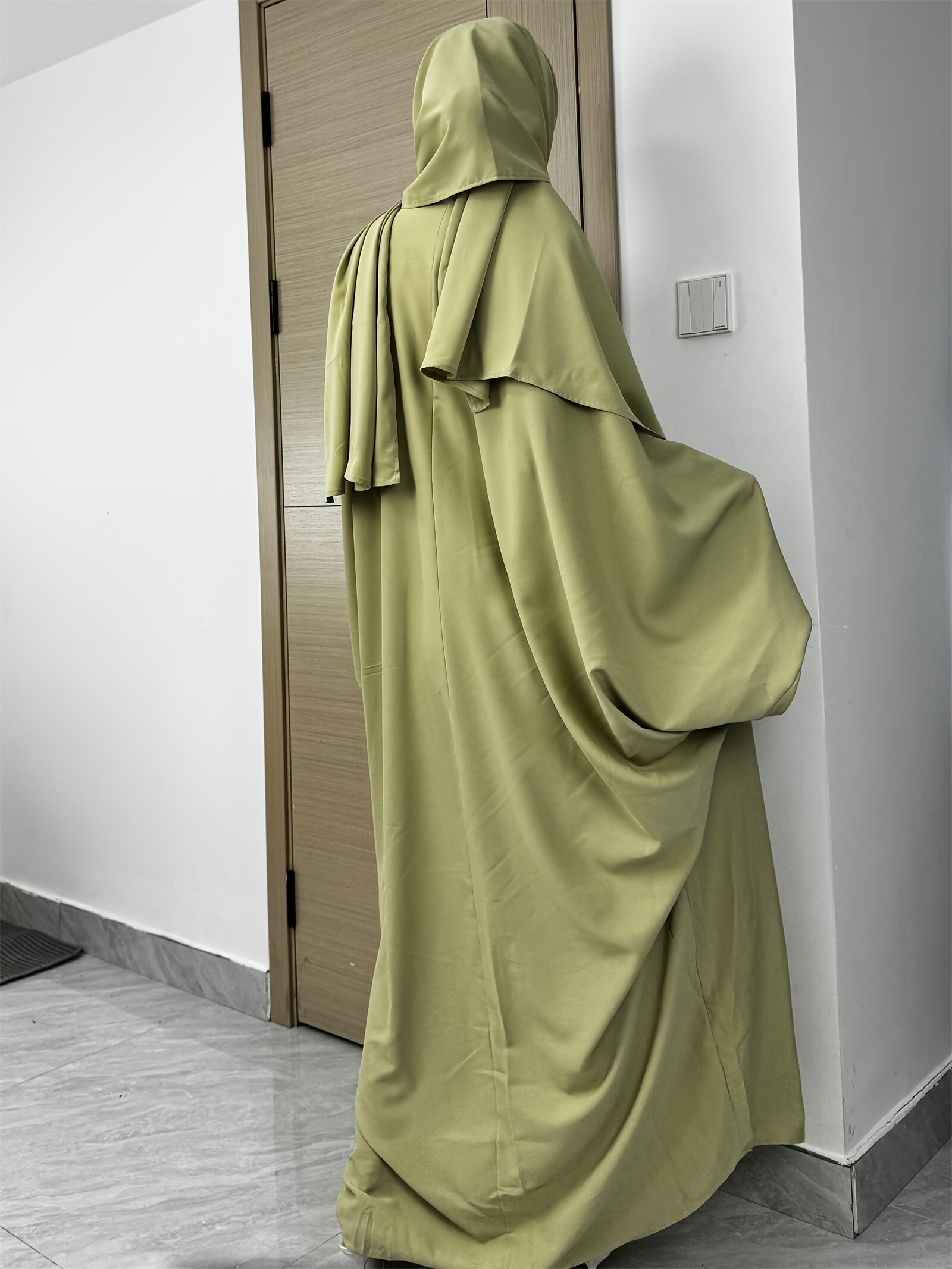
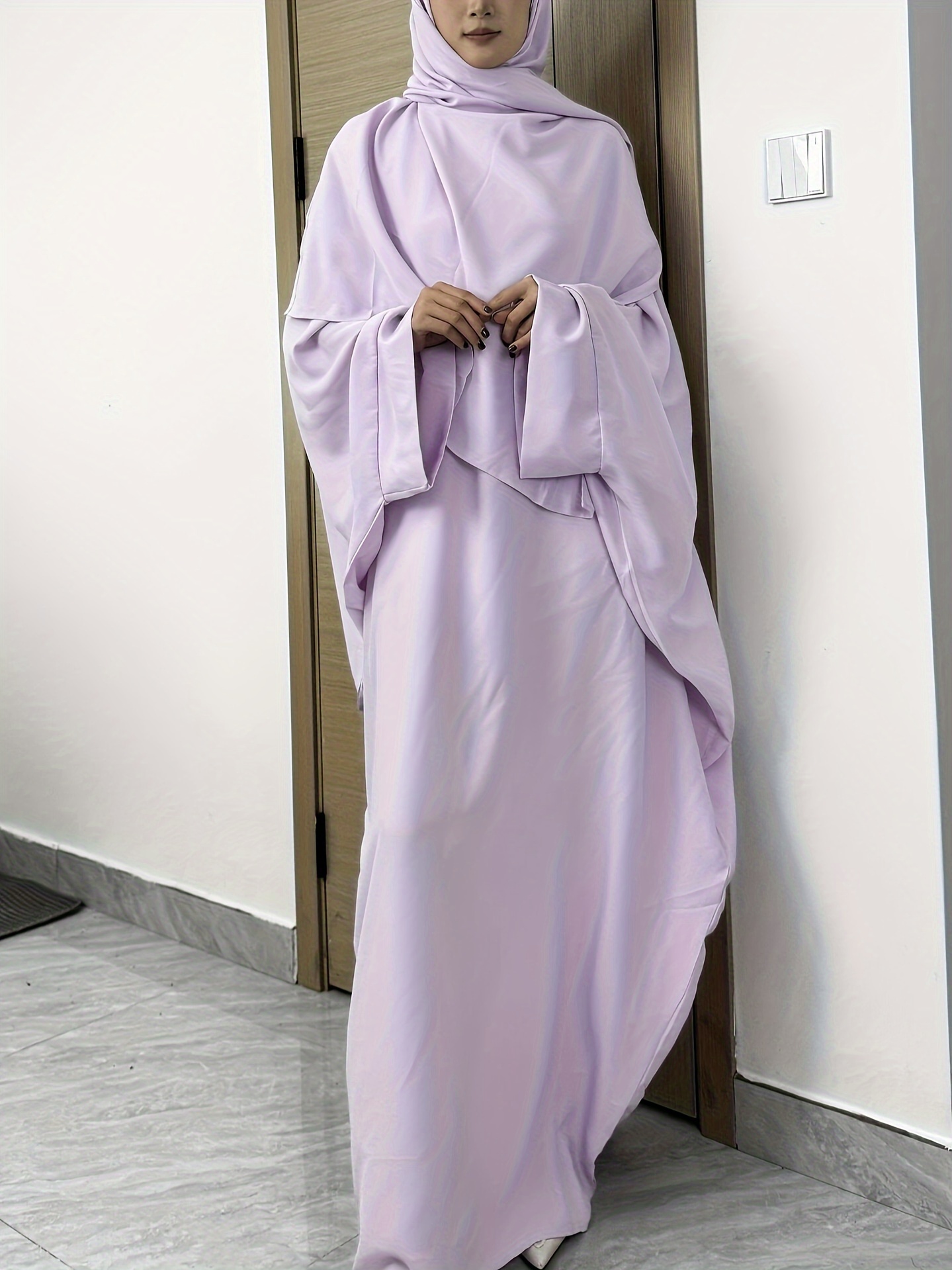
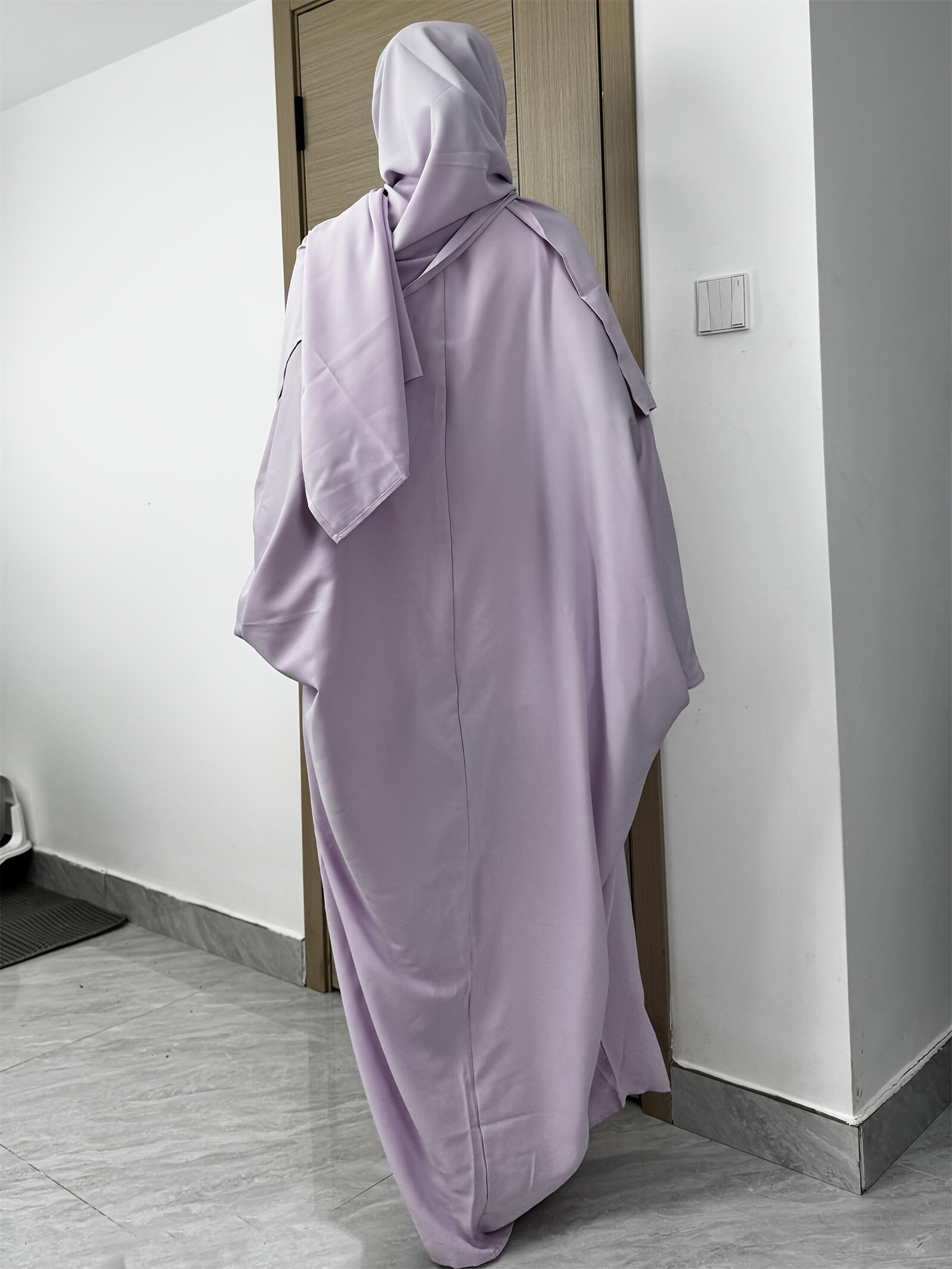
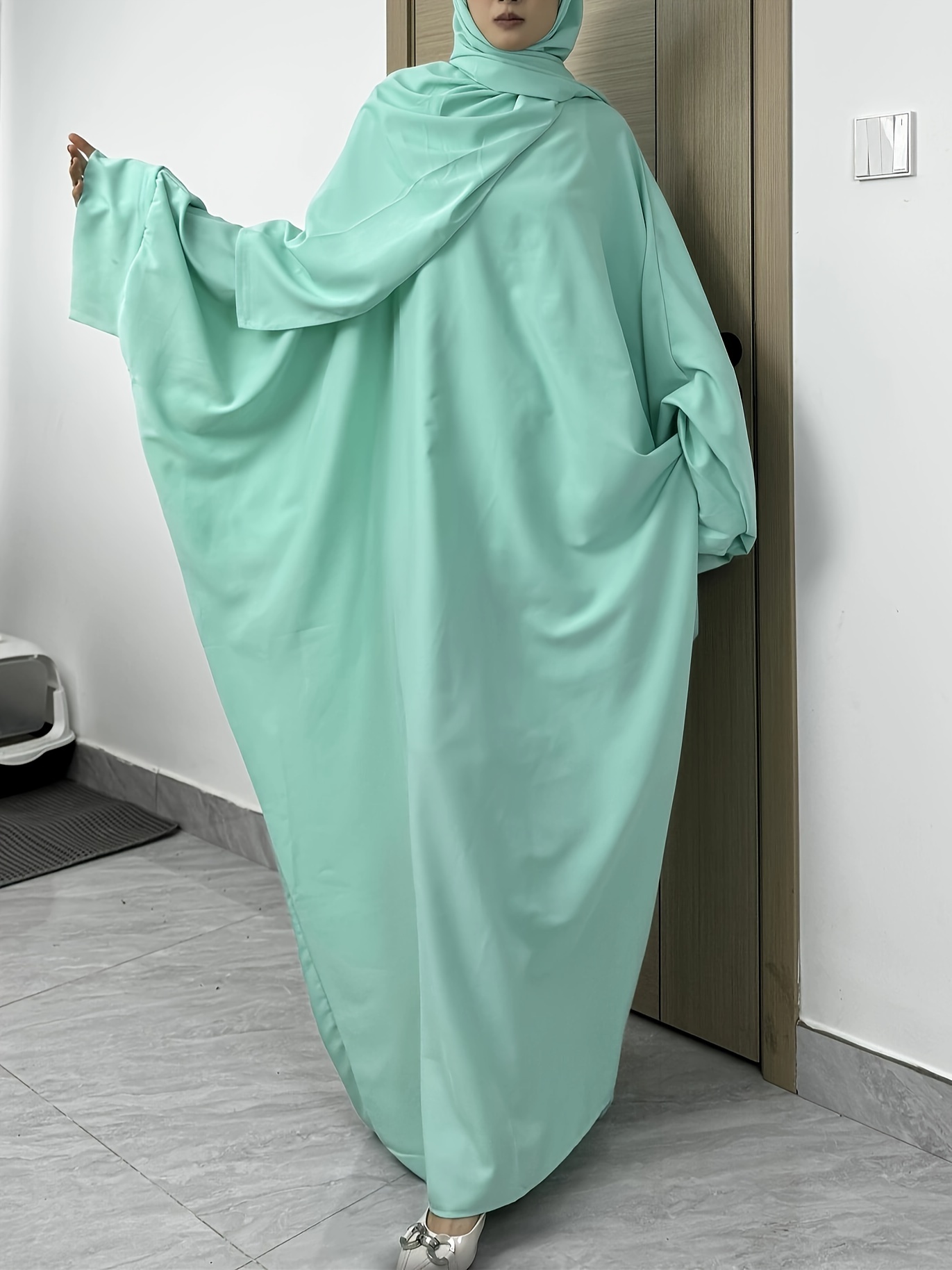
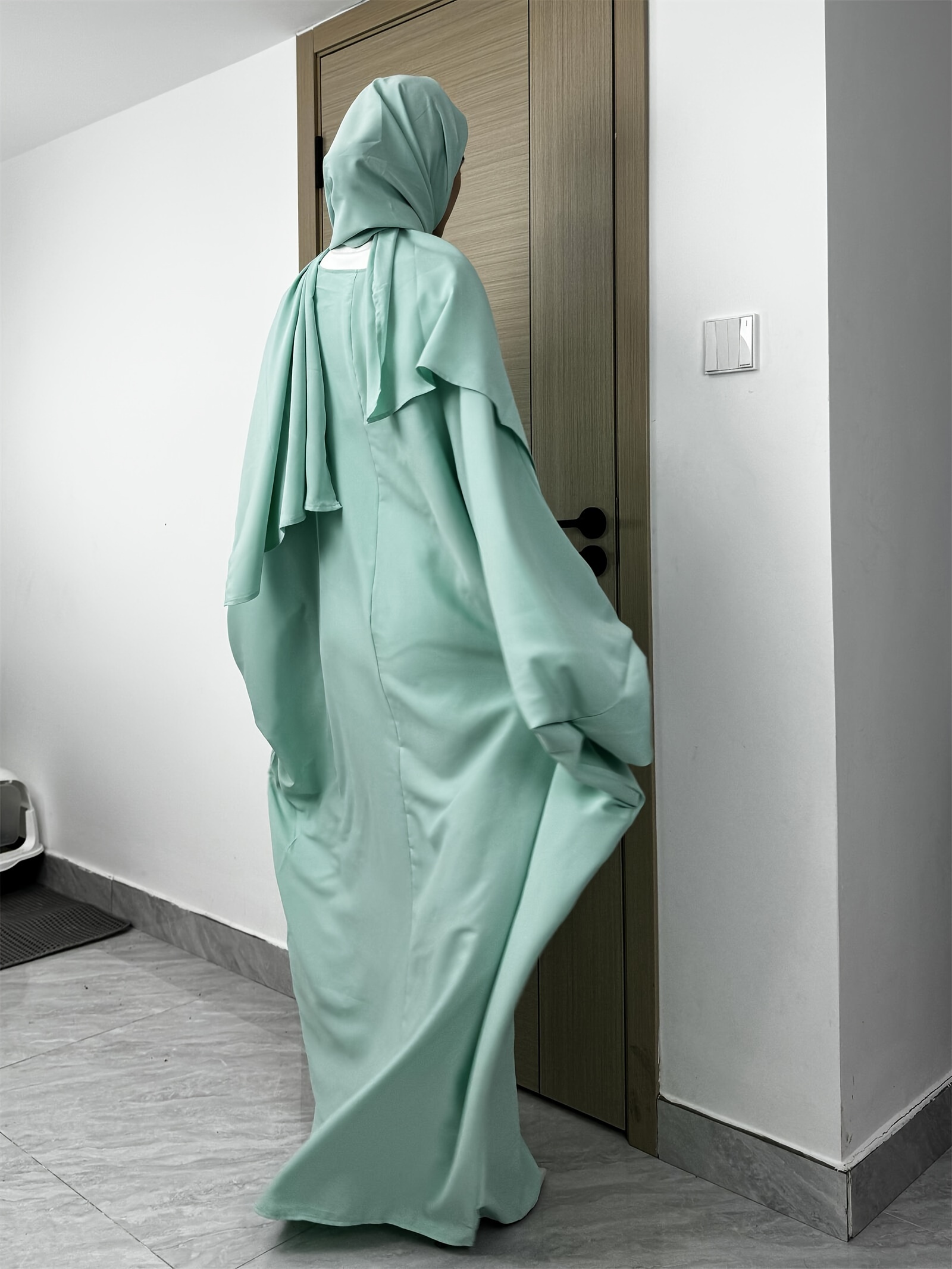
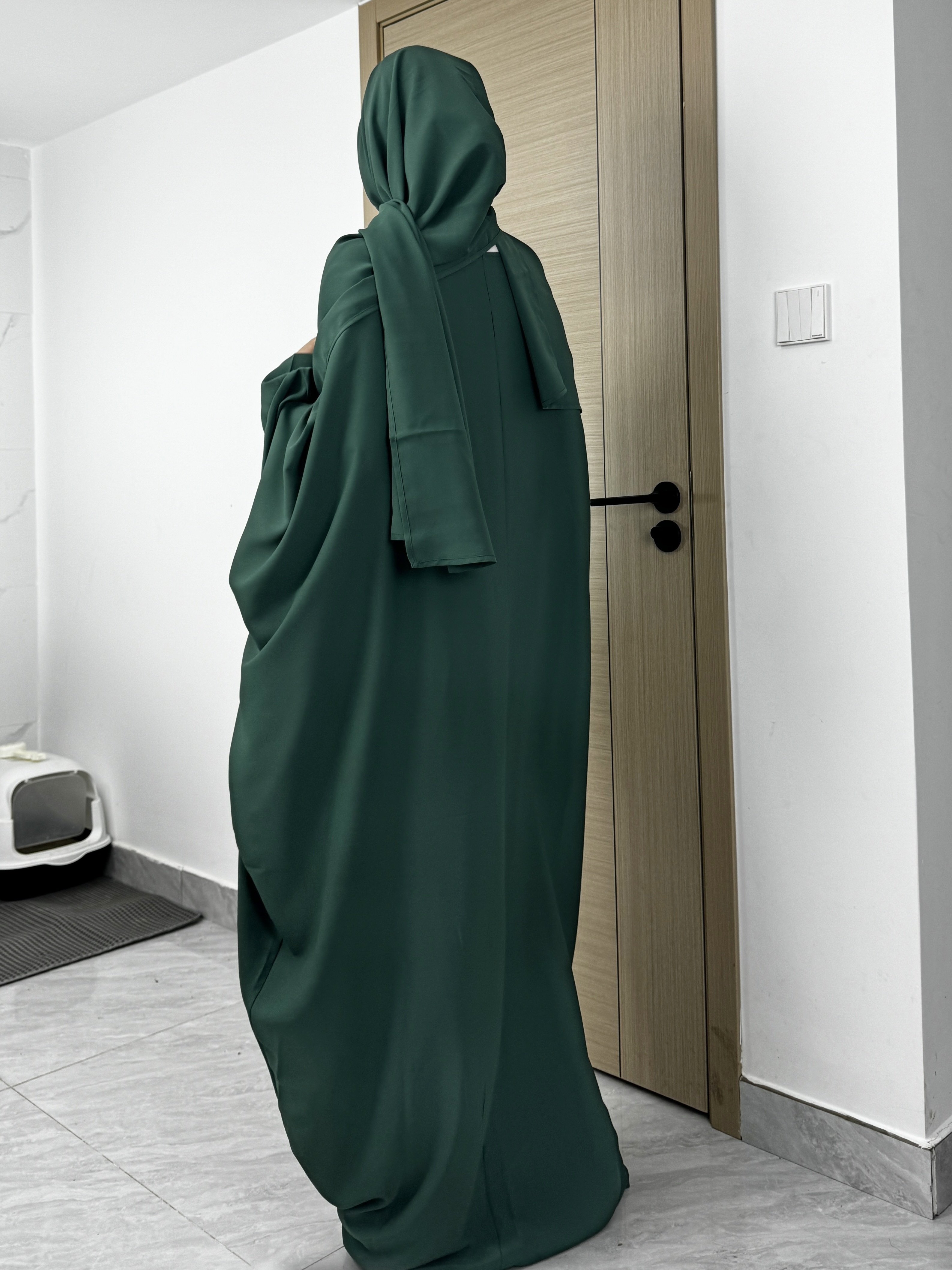
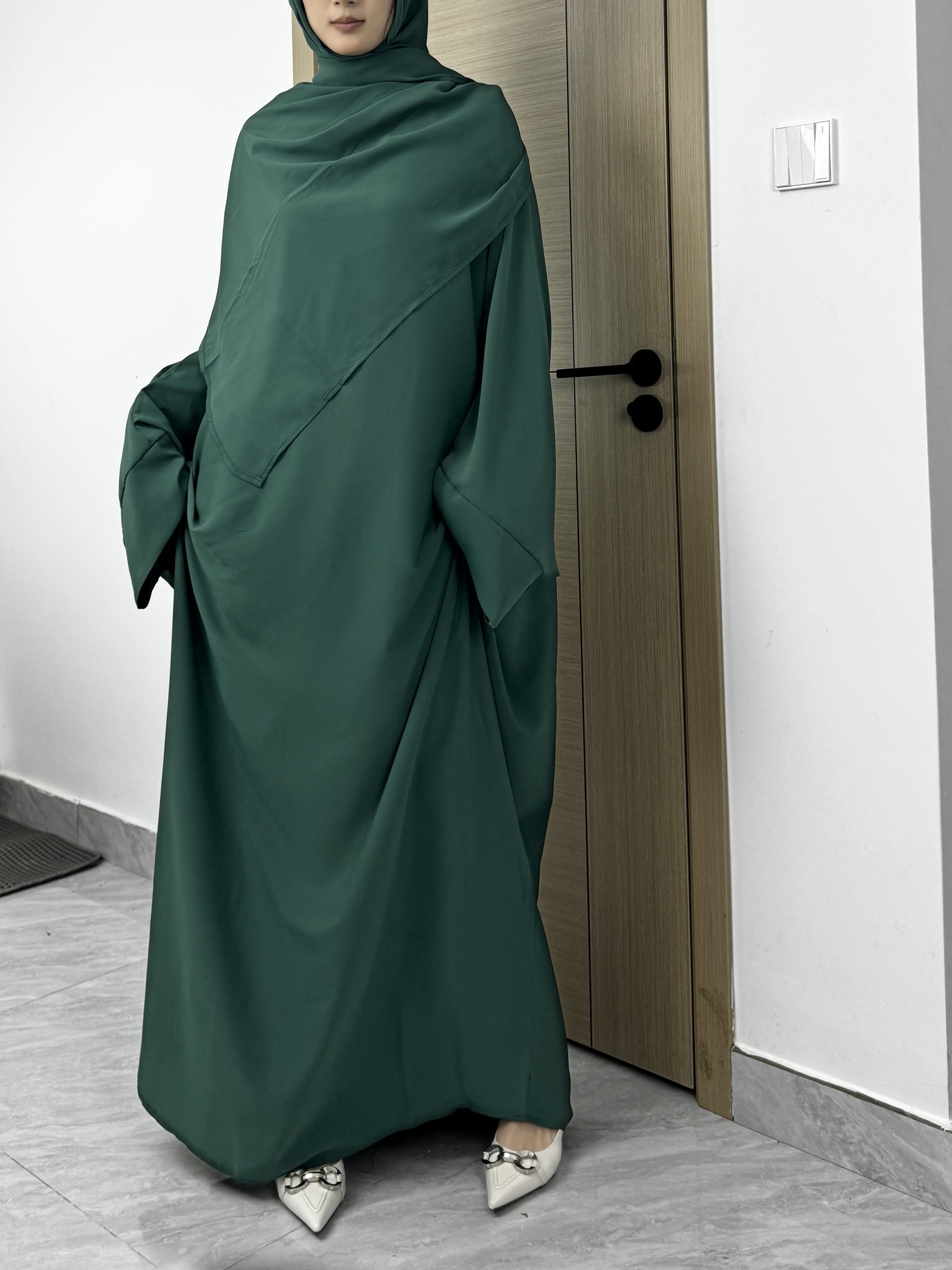
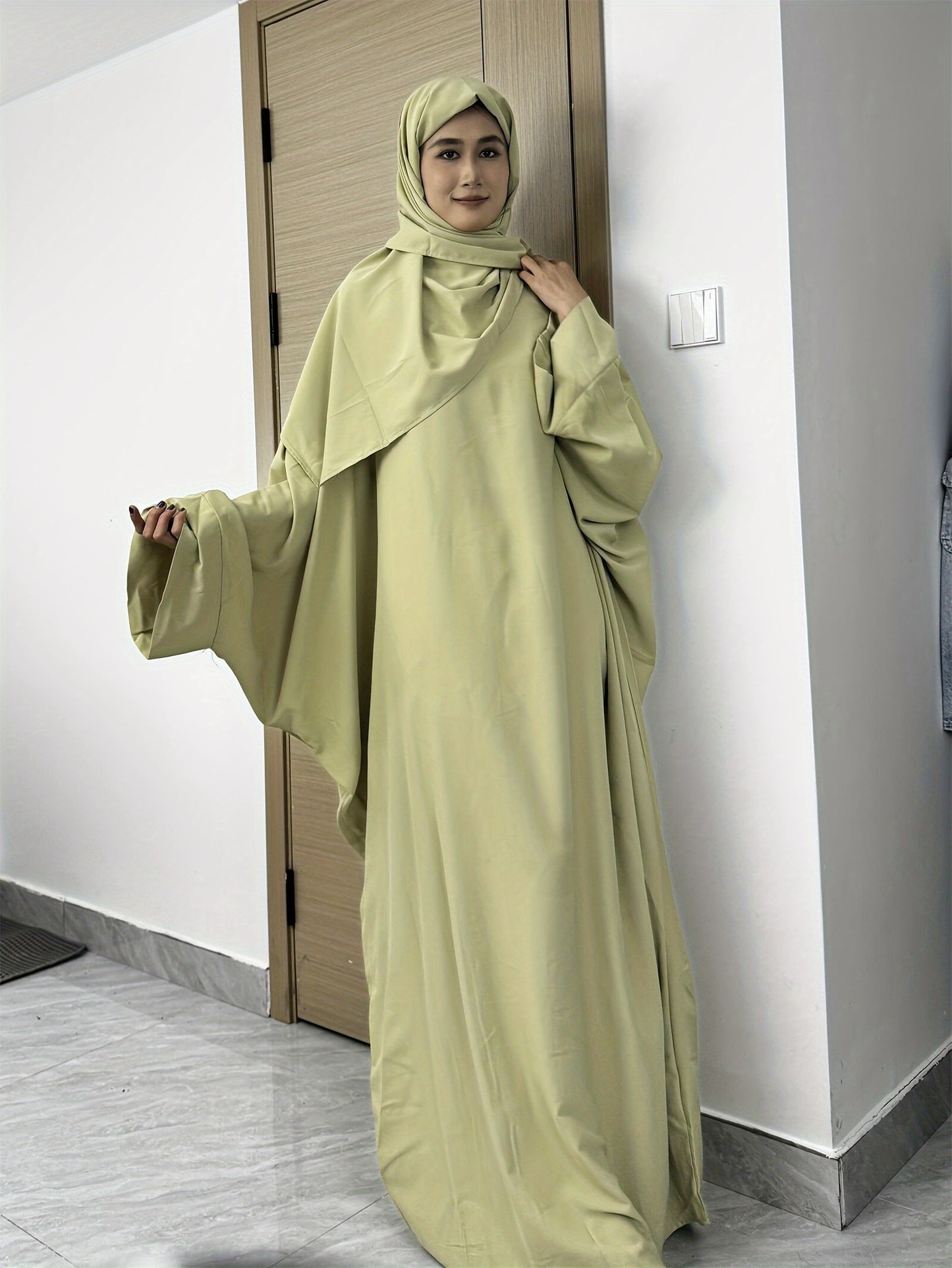
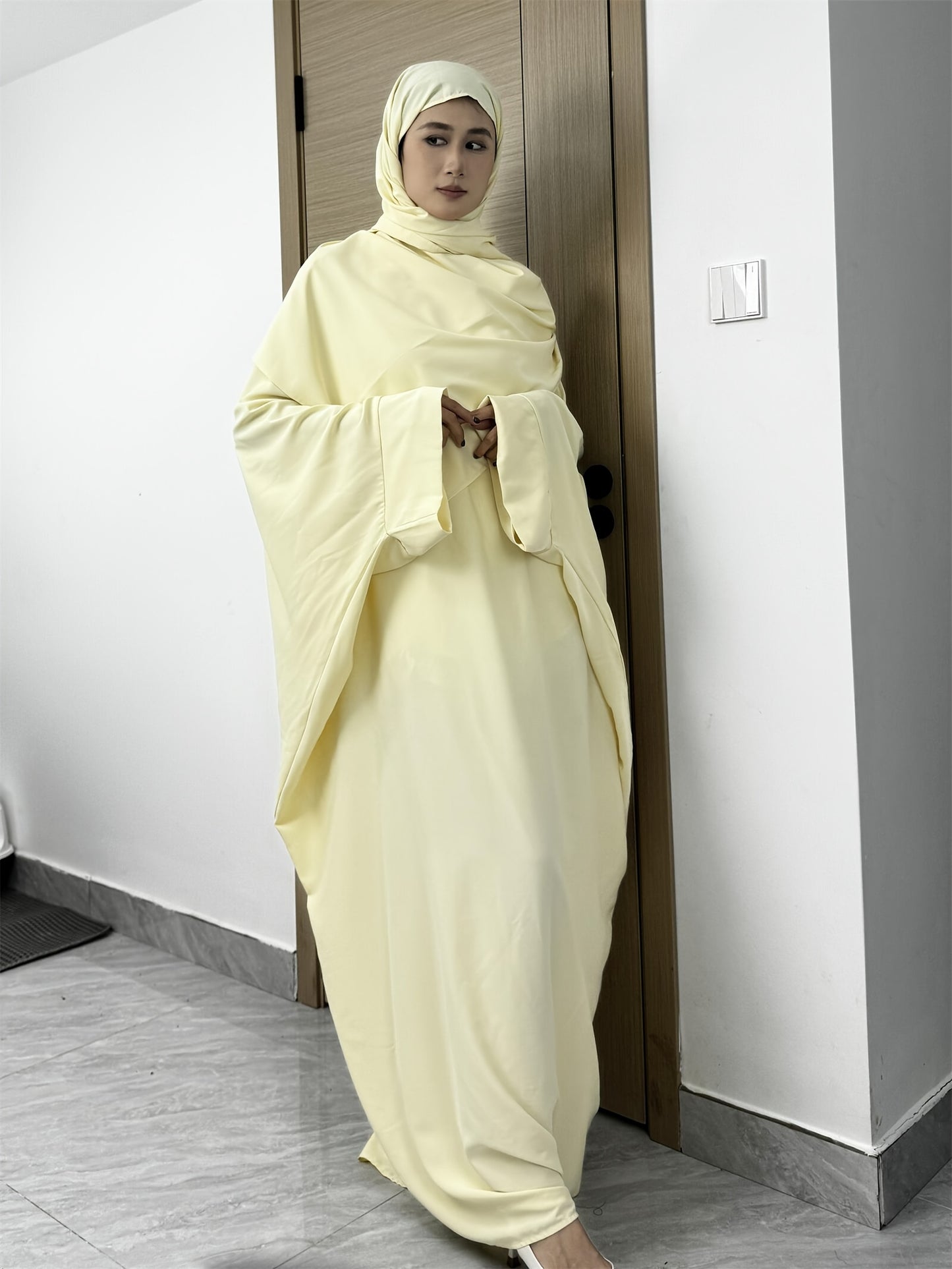
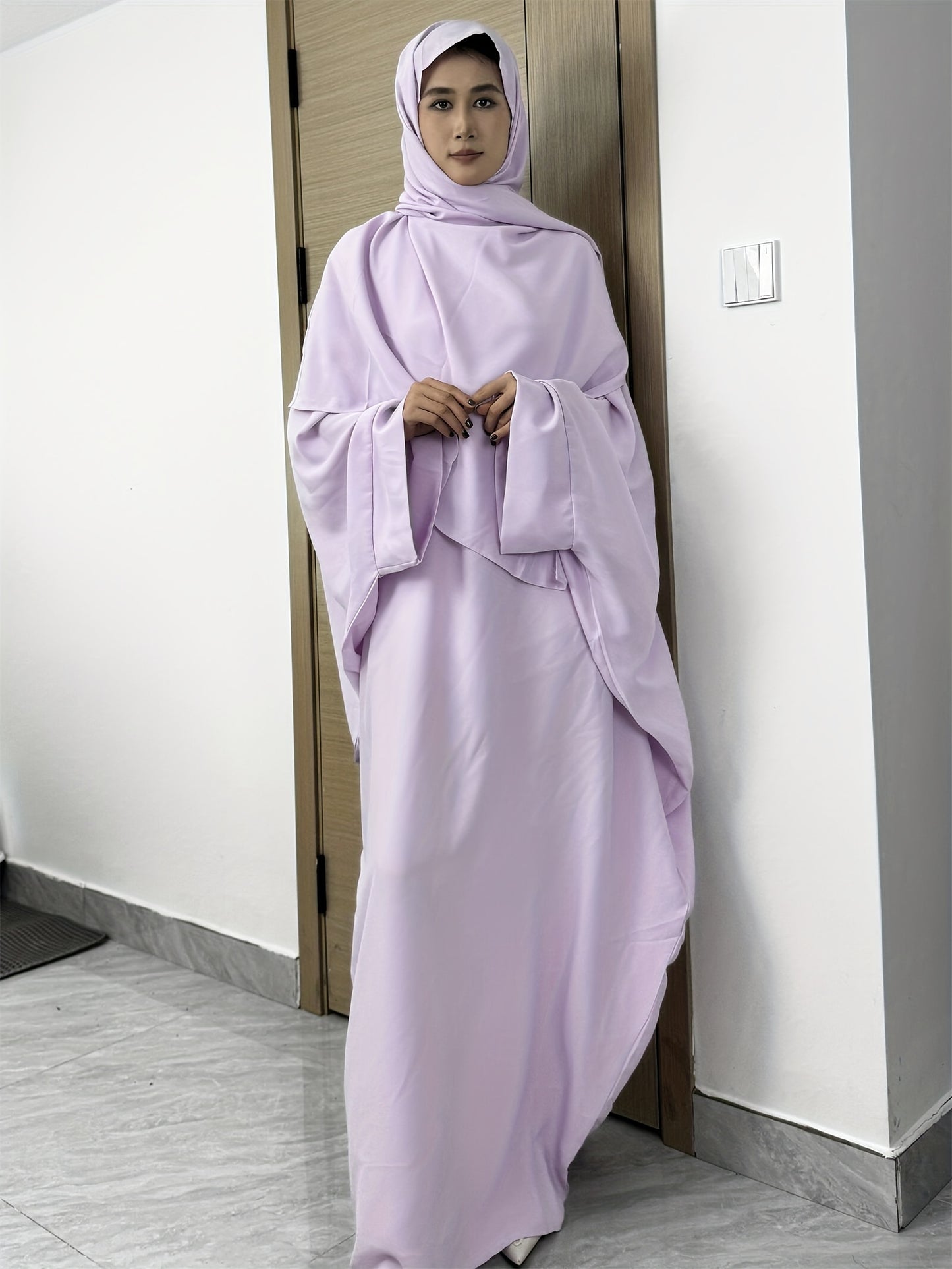
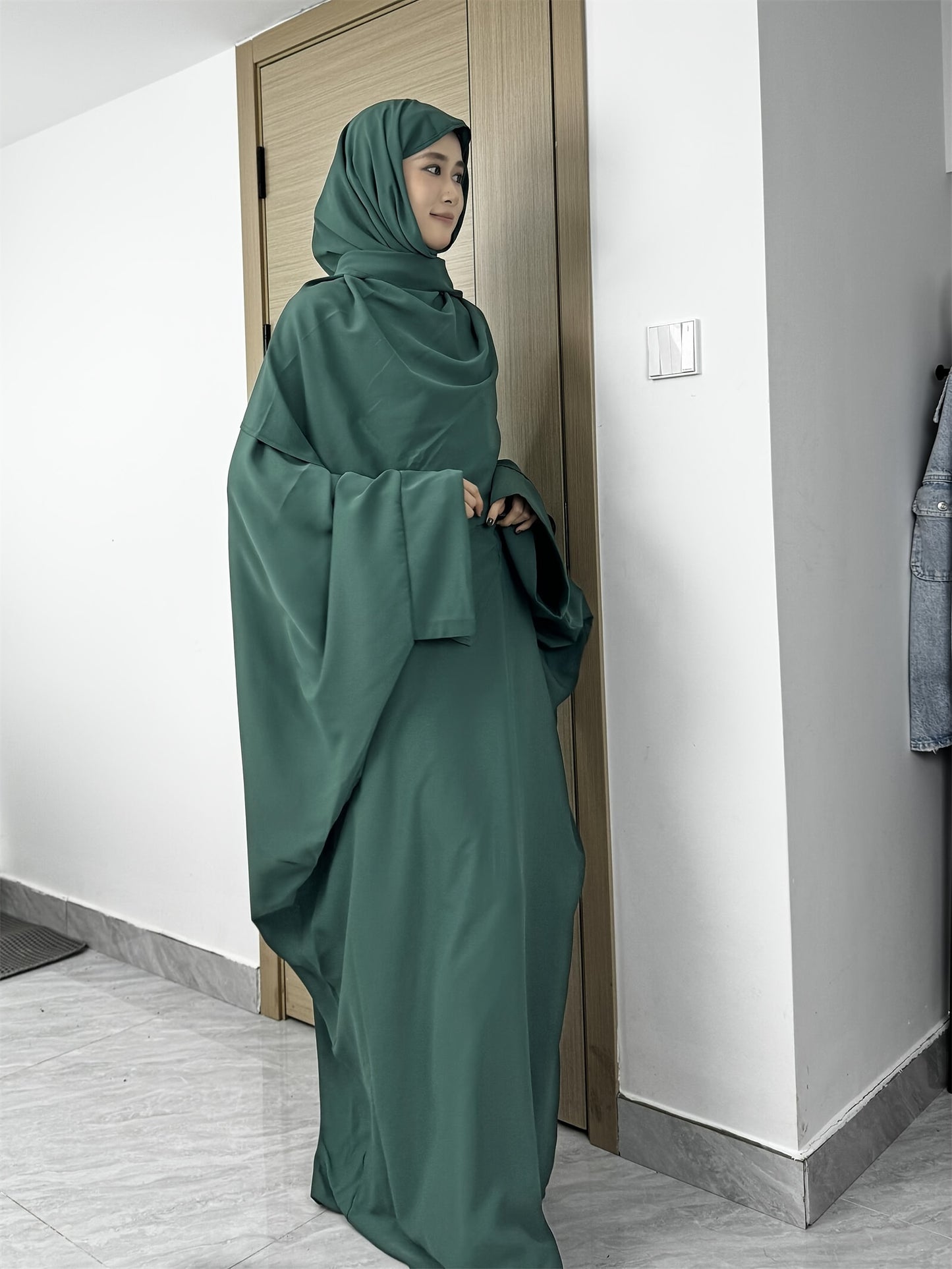
Full-Length Islamic Abaya Dress with Hijab – Modest Ramadan Outfit for Women’s Prayer & Gatherings
The abaya, a flowing garment steeped in history and cultural depth, has long symbolized modesty, dignity, and timeless grace. Originating in the heart of the Arabian Peninsula, the abaya served not only as clothing but as an emblem of identity and spiritual consciousness. Its presence across centuries demonstrates its adaptability, responding to shifting social, cultural, and environmental contexts while maintaining its essence.
In its earliest form, the abaya was a simple black cloak, serving both practical and symbolic purposes. The garment protected women from harsh desert climates—providing a shield against sun and sand—while at the same time aligning with values of modesty deeply rooted in Islamic culture. Over time, variations began to emerge, each influenced by local artistry and regional preferences. In Ottoman courts, abayas were adorned with intricate embroidery, while in North Africa, looser interpretations incorporated Berber influences, blending geometric design with cultural heritage.
The enduring nature of the abaya lies in its ability to evolve without losing its symbolic resonance. As global fashion trends leaned toward minimalism, the abaya’s restrained elegance found renewed relevance. Today, collections such as the set of two abaya dresses with hijabs offered by Fabulive reinterpret tradition with contemporary sophistication. These garments reflect a narrative where heritage and modernity do not compete but harmonize, offering women the ability to honor their roots while engaging confidently with the modern world.
This ability to traverse centuries and cultures underscores the abaya’s universal appeal. It is not bound to one community alone but resonates with women across regions who seek elegance rooted in modesty. Whether worn for daily prayer, formal gatherings, or casual activities, the abaya remains an enduring wardrobe essential, affirming that modest fashion is not simply a passing trend but an enduring tradition infused with luxury and relevance.
Design Excellence: Crew Necklines And Batwing Sleeves
At the heart of this set lies a remarkable balance of structure and fluidity, achieved through its design elements. The crew neckline offers a clean, minimalist touch—an understated detail that conveys refinement. Unlike plunging or elaborate cuts, the crew neck reflects a commitment to modesty while simultaneously echoing modern fashion aesthetics. It allows for versatility, enabling the garment to be worn comfortably across various settings, from intimate family gatherings to communal prayers.
The batwing sleeve design provides the counterpoint to the structure of the neckline. Flowing generously from shoulder to wrist, the batwing sleeve embodies movement, grace, and ease. This design feature has historical resonance, recalling robes from Andalusian courts and Ottoman silhouettes where wide sleeves symbolized both comfort and authority. In contemporary fashion, the batwing form has been embraced by luxury houses for its ability to flatter all body types, offering freedom without compromising elegance.
Together, these elements create a harmonious composition: the restrained neckline focuses attention on the face, while the expansive sleeves lend drama and sophistication to the silhouette. The abayas’ floor-length cut complements this balance, elongating the form and presenting the wearer with a sense of regal poise.
By offering two dresses with accompanying hijabs, this Fabulive set recognizes the need for both practicality and variety. Women are not confined to one garment but are provided with a pair that ensures continuity in styling while offering flexibility for different occasions. This attention to function, paired with refined design, defines luxury in its most meaningful sense—clothing that not only looks elegant but serves the rhythm of daily life.
The Language Of Colors In Modest Fashion
Color is more than aesthetic; it is language, carrying meaning across cultures and contexts. In the history of the abaya, black has been the most iconic shade, symbolizing modesty, uniformity, and formality. However, as modest fashion has expanded globally, new palettes have entered the landscape, reflecting individuality while respecting tradition.
The set of abayas available here demonstrates this philosophy of color flexibility. Solid shades—whether in deep neutrals or lighter tones—allow for endless versatility. A darker hue can evoke solemnity and gravitas, perfect for formal prayers or religious gatherings. Lighter tones, by contrast, bring softness and serenity, suitable for daily wear and casual occasions. The colors chosen reflect universal elegance, ensuring that the garments never feel bound to fleeting fashion cycles.
What makes these dresses truly timeless is their ability to adapt to the wearer’s personal style through accessorizing. A neutral-colored abaya can be elevated with statement jewelry or paired with a bold-colored hijab for contrast. Alternatively, tonal harmony can be maintained for a minimalist, seamless appearance. In either case, the abaya’s design acts as a canvas—inviting the wearer to express personality while still maintaining the integrity of modest dress.
Luxury in color selection lies not in excess but in restraint, offering shades that stand the test of time and blend effortlessly with the existing wardrobe. This restraint ensures long-term value, affirming that each piece is not a passing indulgence but an investment in enduring elegance.
Materials And Textural Refinement
Fabric is the essence of any garment, determining not only its appearance but its longevity, comfort, and symbolic weight. Historically, abayas were crafted from wool or heavy cotton to withstand desert climates. As textile technology evolved, lighter materials such as chiffon, crepe, and polyester blends entered modest fashion, offering breathability and durability without sacrificing elegance.
The abaya set from Fabulive embodies this evolution through the use of lightweight, flowy fabric designed for both practicality and refinement. The material drapes gracefully, enhancing the fluidity of the batwing sleeves and the overall silhouette. Its breathability ensures comfort across different climates, from warm summer days to cooler evenings.
Durability is another hallmark of luxury, and the fabric here resists fading and wear, ensuring that the garments remain pristine even after repeated use. This resilience aligns with the modern demand for sustainable fashion, where consumers seek pieces that last rather than garments that succumb to quick obsolescence. The combination of softness, structure, and resilience reflects thoughtful craftsmanship, distinguishing these abayas as more than clothing—they are investments in quality and design integrity.
The accompanying hijabs further enhance the set’s functionality. Coordinated with the abayas, they simplify styling decisions, creating a cohesive look while eliminating the need for separate purchases. This integration of form and function underscores the thoughtfulness behind the collection, where every element serves both aesthetic and practical purposes.
Cultural And Spiritual Resonance
The abaya is more than fabric stitched into form—it is a garment of meaning. Its role in Islamic culture is profound, signifying devotion, modesty, and respect for tradition. When worn during prayer, the abaya creates a sense of focus and dignity, allowing the wearer to engage fully in spiritual practice without distraction.
Beyond its religious function, the abaya has become a symbol of cultural pride and identity. Across centuries, it has adapted to regional traditions, becoming not only a garment of faith but also an emblem of artistry. Embellishments, cuts, and textiles have varied, but the central principle has remained the same: to clothe the body with dignity and grace.
In today’s context, the abaya also plays a role in cultural diplomacy. As modest fashion appears on global runways and in international markets, garments like these connect traditions with global aesthetics. Women wearing abayas in Paris, London, or New York demonstrate that modest fashion is not bound by geography—it is a global language of elegance.
The Fabulive set of two abayas reflects this dual role, rooted in tradition yet adaptable to contemporary contexts. By offering garments that serve both prayer and everyday wear, the collection honors cultural values while engaging with the needs of modern women. This capacity for dialogue between the past and present, the spiritual and the practical, defines its cultural significance.
Functionality For Daily Life And Special Occasions
A defining quality of luxury modest wear lies in its ability to integrate seamlessly into diverse aspects of life. The abaya has historically been more than a ceremonial garment—it has accompanied women in their daily routines, journeys, and moments of devotion. This duality between everyday practicality and special-event grandeur is what makes the abaya indispensable.
The set of two abaya dresses from Fabulive reflects this heritage of versatility. Designed with loose-fitting silhouettes, they provide maximum comfort for daily use, allowing movement without restriction. For women balancing professional duties, familial responsibilities, and spiritual practice, such garments offer continuity across multiple roles. The inclusion of matching hijabs enhances practicality, eliminating the need to coordinate separate accessories. This makes dressing both efficient and dignified, aligning elegance with functionality.
When the context shifts to prayer or religious gatherings, the abayas reveal their spiritual resonance. The full-length cut ensures coverage, while the simplicity of design fosters focus during worship. At the same time, the structured neckline and refined sleeves elevate the garments into attire worthy of festive occasions, from community iftars during Ramadan to weddings or cultural celebrations. By functioning across this spectrum of contexts, the abayas embody true luxury: garments that support the rhythm of a woman’s life without demanding compromise.
The Influence Of Minimalism In Contemporary Modest Fashion
Global fashion has increasingly embraced minimalism, favoring clean lines, restrained palettes, and timeless silhouettes over excess and transience. This shift resonates profoundly with the philosophy of modest fashion, where dignity and restraint are central values. The Fabulive abaya set demonstrates how minimalism, when applied thoughtfully, enhances rather than diminishes the beauty of modest garments.
The crew neckline speaks to this minimalist ethos. Free of embellishment, it allows the garment to communicate elegance through form rather than ornament. The batwing sleeves, while dramatic in their movement, remain pure in design, avoiding unnecessary complication. The solid colors chosen affirm simplicity as a language of sophistication, reminding the wearer that refinement does not require adornment.
Minimalism also enhances adaptability. These abayas can be styled with ease because their foundation is so clean. A woman may choose to accessorize heavily for a special event or maintain a quiet elegance with minimal additions for daily wear. The restraint in the garment’s base design ensures it will never conflict with personal styling preferences, whether modest or elaborate.
In this sense, minimalism becomes not an aesthetic limitation but a foundation for creativity. It is a philosophy that allows garments like these to transcend trends and remain relevant season after season, affirming their place as investment pieces in a conscious wardrobe.
Styling Possibilities: From Subtle To Statement
Styling an abaya is an art form, one that balances tradition with individuality. The set of two abayas with hijabs is particularly conducive to varied styling approaches because of its clean foundation. With their neutral yet elegant structure, they become canvases upon which women can express personality, creativity, and mood.
For subtle styling, the garments can be worn as they are, with coordinated hijabs providing a seamless, monochromatic appearance. This minimalist approach emphasizes serenity and dignity, making it suitable for prayer, daily errands, or professional environments where understated elegance is ideal.
For more expressive styling, accessories can transform the abayas entirely. A metallic belt can introduce structure to the loose silhouette, while jewelry—whether delicate gold chains or bold statement pieces—can infuse personality. Layering with outerwear, such as a long tailored coat in winter or a lightweight kimono in summer, adds seasonal adaptability while preserving modesty. Footwear choices further expand the possibilities, from refined sandals for casual settings to heeled boots or pumps for formal occasions.
The hijabs included in the set enhance styling by offering continuity. They can be worn traditionally for complete coverage or styled more loosely for softer framing of the face. Women may also swap them for other fabrics—silk for evening elegance, chiffon for lightness, or jersey for practicality—demonstrating that the abayas can adapt not only across occasions but across seasons and climates.
Styling possibilities highlight the true meaning of luxury in modest fashion: garments that support, rather than dictate, the woman’s expression of herself.
Sustainability And The Question Of Longevity
In an era where sustainability has become a defining concern, fashion is increasingly scrutinized for its impact on the planet. The abaya, with its timeless form and long-lasting design, inherently aligns with sustainable principles. Unlike trend-driven garments that fall into obsolescence after a season, abayas such as this set from Fabulive are intended for enduring use.
The fabric chosen is durable and resistant to fading, ensuring that repeated washing and wear do not compromise its elegance. This longevity reduces the need for constant replacement, contributing to more sustainable consumption habits. Furthermore, the versatility of the set—appropriate for prayer, everyday life, and formal occasions—minimizes the need for multiple garments, aligning with the principles of capsule wardrobes and conscious ownership.
Sustainability also extends into cultural continuity. By wearing abayas, women engage in a practice that honors tradition while resisting the disposable culture of fast fashion. Each time the garment is worn, it affirms values of modesty, respect, and intentionality. These values resonate beyond the individual, contributing to a broader cultural narrative that prioritizes quality and meaning over excess and waste.
In this way, the abaya set represents more than a fashion choice. It reflects a philosophy of ownership that is mindful, respectful, and enduring. Luxury here is not measured by extravagance but by the capacity of a garment to remain relevant, beautiful, and functional across years and contexts.
The Emotional Dimension Of Modest Dressing
Clothing is not merely material—it is an emotional language that shapes how women experience themselves and how they are perceived. For many, the act of wearing an abaya is deeply connected to identity, faith, and self-expression. The garments in this set carry that emotional resonance, offering not only coverage but a sense of grounding and belonging.
When a woman dons the abaya for prayer, the garment becomes part of a ritual of focus and devotion. Its length and looseness signal the transition from worldly distractions to spiritual presence. This ritual dimension affirms that clothing can be more than fabric—it can be a vessel for sacred practice.
In daily life, the abaya provides confidence and comfort. Its modest cut allows the wearer to move freely without concern for exposure, supporting a sense of dignity in public spaces. For many women, this sense of security translates into empowerment, affirming that modesty does not limit expression but strengthens it.
The inclusion of two abayas in one set enhances this emotional connection, providing continuity and reliability. Owning a pair means always having a garment ready for prayer, gatherings, or travel, ensuring that the values of modest fashion remain consistent in all aspects of life.
Luxury, in this context, lies in how garments make women feel. By affirming identity, nurturing confidence, and supporting spirituality, the abaya set becomes not only attire but a companion in the journey of life.
Maintenance And Care For Lasting Elegance
A garment’s true value is revealed not only in its design but in its endurance. Luxury is inseparable from longevity, and the abaya has historically been revered for its ability to withstand years of wear while maintaining its dignified presence. Proper maintenance ensures that the abayas in this set continue to embody elegance long after their first use.
The lightweight fabric chosen for these abayas is resilient, resisting both fading and wrinkling. Yet, like all garments of refinement, it benefits from mindful care. Washing should be approached with a sense of preservation rather than convenience. Gentle hand washing in cool water with a mild detergent maintains softness, prevents color bleeding, and protects the integrity of the batwing sleeves. For women seeking efficiency, machine washing on delicate cycles with similar colors is acceptable, provided the garments are removed promptly to avoid creasing.
Drying should avoid direct sunlight, which can accelerate fading, even in high-quality textiles. Instead, air drying in shaded spaces preserves the vibrancy of the fabric. Ironing is rarely necessary given the draping quality of the material, but for those who prefer crisp lines, a low-heat setting with a pressing cloth ensures precision without damaging fibers.
The hijabs included in the set also require careful handling. Their lightweight nature makes them prone to snagging if washed alongside garments with zippers or rough textures. Washing them separately or in protective mesh bags ensures their longevity. By adhering to these practices, women ensure that the abaya set remains pristine, reinforcing the philosophy of luxury as investment rather than fleeting indulgence.
Long-Term Value And Investment Dressing
In the world of fashion, true investment pieces are rare. Many garments, even those with lofty price tags, succumb to changing trends and fading relevance. The abaya, however, stands apart as a garment immune to obsolescence. Its form is rooted in centuries of tradition, and its symbolism transcends shifting aesthetics.
This Fabulive set exemplifies the principle of investment dressing. By offering two abayas with matching hijabs, it provides not only immediate practicality but also long-term value. Each garment fulfills multiple roles—prayer attire, casual wear, travel companion, or formal ensemble—reducing the need for multiple purchases. This adaptability ensures cost-per-wear value that is far superior to trend-driven clothing.
Investment is not merely financial. It is emotional and cultural. By choosing abayas, women invest in continuity—continuity of modesty, tradition, and identity. Unlike fleeting fashion pieces that expire with the next season’s palette, the abaya remains steadfast, affirming that true luxury is defined by permanence.
This long-term relevance also aligns with sustainability, as garments designed for enduring use reduce waste. In a time where the fashion industry is criticized for disposability, owning abayas that retain elegance across years signifies a rejection of excess. It is a declaration that quality, not quantity, defines a sophisticated wardrobe.
Cross-Cultural Resonance And Global Appeal
The abaya, though deeply rooted in Islamic tradition, has transcended cultural borders to become a globally recognized garment. Its journey from the sands of Arabia to the runways of Paris and New York is a testament to its universal appeal. This cross-cultural resonance underscores the abaya’s dual identity: at once a deeply personal garment of faith and a global emblem of modest elegance.
In Europe, abayas have been embraced as statements of minimalism, blending seamlessly with modern aesthetics that favor flowing silhouettes and understated palettes. In South Asia, abayas coexist with traditional attire like the shalwar kameez, often enriched with embroidery or color variations. Across Africa, they echo regional robes while maintaining their unique identity.
The Fabulive set embodies this global adaptability. Its restrained design speaks the universal language of sophistication, enabling it to be worn comfortably across diverse cultural contexts. A woman in Dubai may choose it for evening gatherings during Ramadan, while a woman in London may style it with a trench coat for a modern cosmopolitan look. Its universality lies in its simplicity, allowing it to be contextualized according to geography without losing its essence.
This adaptability is the hallmark of luxury fashion. A garment that can transcend cultural and regional boundaries while retaining integrity is not simply clothing—it is cultural dialogue woven into fabric.
The Luxury Positioning Of Modest Wear
Luxury is often misconstrued as extravagance—adornments, embellishments, and excess. True luxury, however, lies in refinement, in garments that embody both restraint and excellence. Modest wear, particularly the abaya, has redefined luxury by centering dignity, cultural continuity, and functional beauty.
The Fabulive abaya set exemplifies this redefinition. Its design does not rely on heavy ornamentation but instead on proportion, cut, and flow. The crew neckline and batwing sleeves are details of subtle mastery, not ostentation. The fabric’s quality, draping effortlessly, speaks to craftsmanship. The inclusion of two abayas with hijabs reflects thoughtfulness, positioning luxury not as indulgence but as consideration of the wearer’s daily needs.
Luxury also lies in the narrative a garment carries. Each abaya is not only a dress but a story—of heritage, modesty, and the evolution of fashion. Wearing it affirms participation in a global dialogue where tradition and modernity converge. In this sense, the abaya becomes an emblem of cultural pride positioned within the global luxury market.
By situating modest wear within luxury fashion, Fabulive challenges and expands prevailing definitions. It affirms that dignity and simplicity are as luxurious as embellishment, that modesty is not exclusion but elevation. In this reframing, women find empowerment, seeing their cultural garments celebrated not as niche but as central to the conversation of style.
The Abaya As A Vessel Of Timeless Identity
Luxury editorial writing demands more than description; it requires reflection on the meanings embedded within garments. The abaya is not merely attire but a vessel of identity. Its continued relevance across centuries speaks to the human need for clothing that does more than adorn—it affirms, protects, and connects.
In a world saturated by transient fashion, garments like this abaya set embody permanence. They remind us that fashion, at its most profound, is not about cycles of consumption but about continuity of self. Each stitch, each drape, each fold of fabric is part of a narrative that ties women across generations and geographies. When a woman wears the abaya, she joins a lineage of dignity that stretches across centuries, affirming that identity is not negotiable, and style need not be sacrificed for modesty.
The emotional and cultural investment in the abaya also intersects with sustainability, positioning it as a garment of conscience. Unlike disposable fashion, the abaya resists obsolescence, embodying a philosophy of slow, intentional living. This alignment between identity, sustainability, and luxury positions the abaya as a rare garment that transcends categories—it is as spiritual as it is aesthetic, as personal as it is cultural.
The Fabulive set exemplifies this transcendence. By combining timeless design with modern functionality, it creates garments that are not only relevant today but will remain so tomorrow. They are reminders that the true value of fashion lies not in novelty but in meaning, not in possession but in connection.
Materials And The Science Of Comfort
The tactile experience of a garment is as critical as its visual presentation. For centuries, abayas were crafted from textiles that spoke not only of climate adaptation but also of status and refinement. In the desert landscapes of the Arabian Peninsula, thick woven fabrics provided protection from sun and sand, while in Ottoman traditions, silks and brocades expressed courtly prestige.
The set of two abayas from Fabulive aligns with this tradition of thoughtful material choice but reinterprets it for modern lifestyles. The fabric is lightweight yet resilient, designed to drape with fluidity across the body while allowing breathability. The softness against the skin enhances comfort during extended wear, while its structural integrity ensures that the garment maintains shape across repeated use.
This balance between softness and resilience illustrates the sophistication of textile innovation in contemporary modest wear. The batwing sleeves, expansive in form, would risk losing definition without the right weight of fabric. Here, the material is chosen with precision, allowing the sleeves to float elegantly yet settle gracefully. Similarly, the crew neckline, modest in its cut, sits neatly without sagging or warping.
Fabric is the unseen architecture of luxury fashion. It determines how garments move, how they endure, and how they feel against the body. In this abaya set, the textile is not incidental but central, reflecting the principle that luxury is rooted in material excellence as much as in design artistry.
Sustainability In Modern Modest Fashion
Fashion today carries an ethical dimension that cannot be ignored. The industry is increasingly scrutinized for its environmental impact, and consumers are demanding transparency, responsibility, and commitment to sustainability. Modest wear, long characterized by its timelessness, aligns naturally with these values, offering garments designed for longevity rather than seasonal obsolescence.
The Fabulive abaya set speaks to this alignment. Its durability reduces the need for constant replacement, supporting sustainable consumption practices. By providing two garments with coordinated hijabs, the set offers versatility that minimizes wardrobe clutter, embodying the principle of mindful ownership. Each abaya is not an isolated piece but part of a broader philosophy of investment dressing, where every garment earns its place through function, adaptability, and permanence.
Sustainability is also cultural. The abaya’s enduring relevance across centuries resists the fast-fashion model of disposability. Women who wear abayas participate in a tradition of intentional clothing, where garments are selected for meaning rather than trend. In this sense, the abaya is inherently sustainable, not only in material longevity but in symbolic permanence.
By choosing sets like these, women affirm that fashion need not compromise ethics. They declare that elegance and responsibility are not opposites but companions. This positioning aligns modest wear with global conversations on sustainability, placing abayas at the forefront of responsible luxury.
Seasonal Adaptability And Styling Across Contexts
A hallmark of well-crafted abayas lies in their ability to transcend seasons. While some garments are bound to summer or winter wardrobes, abayas crafted from versatile textiles offer year-round wearability. This adaptability is crucial in a world where women navigate diverse climates, from temperate cities to desert landscapes, often within a single year.
The lightweight fabric of this set makes it breathable in summer, allowing airflow through the generous batwing sleeves. During winter, layering becomes the key to versatility. A tailored coat worn over the abaya maintains modesty while providing insulation. Scarves of heavier fabrics—wool, cashmere, or pashmina—can replace or complement the included hijabs, creating warmth without sacrificing coordination.
Styling also adapts with the seasons. In spring, lighter accessories—delicate jewelry, floral pins, pastel-toned handbags—can introduce freshness. Autumn invites richer tones in footwear and layering pieces, harmonizing with the changing landscape. The abaya, by remaining understated in design, acts as a flexible base that responds fluidly to these seasonal variations.
Context, too, is crucial. For prayer, the abayas’ simplicity supports focus. For formal gatherings, metallic belts, jeweled brooches, or statement handbags transform them into evening attire. For casual outings, minimalist sandals and simple totes preserve understated elegance. This ability to move across seasons and contexts illustrates why abayas are considered investment garments: their utility is as expansive as their elegance.
Cultural Symbolism And Continuity
The abaya is more than clothing—it is cultural narrative woven into fabric. Its symbolism speaks to modesty, identity, and continuity across generations. By wearing the abaya, women affirm participation in a lineage that honors dignity while adapting to changing times.
In Islamic culture, the abaya holds spiritual resonance. It prepares the wearer for prayer by ensuring coverage and focus, aligning body and spirit in devotion. Beyond the act of worship, it symbolizes respect for tradition, signaling adherence to values that transcend geography.
Yet, the abaya is also a story of adaptability. In each region it touches, it absorbs local artistry. In Morocco, embroidery infuses abayas with regional motifs. In South Asia, vibrant colors and embellishments enrich the garment’s spectrum. In the Gulf, minimalism speaks to restraint and gravitas. These variations affirm the abaya’s capacity to carry multiple cultural identities without losing its essence.
The Fabulive set embodies this symbolism by offering garments that honor modesty while supporting modern lifestyles. By including two abayas with hijabs, it acknowledges the rhythms of contemporary women’s lives, where practicality must coexist with tradition. It reflects continuity not as static preservation but as dynamic evolution, ensuring that modest fashion remains relevant while retaining authenticity.
Fashion As A Dialogue Between Past And Present
At its highest level, fashion is dialogue—a conversation between past and present, tradition and modernity, individuality and community. The abaya epitomizes this dialogue. Rooted in centuries of practice, it continues to evolve, engaging with modern fabrics, cuts, and contexts without relinquishing its symbolic weight.
This set of abayas illustrates that dialogue. The crew neckline and batwing sleeves are modern design languages, yet they rest upon the foundation of modesty that defines the garment historically. The lightweight fabric is a product of contemporary textile refinement, but its purpose—to cover, to drape, to preserve dignity—remains unchanged.
Fashion, when approached through this lens, ceases to be fleeting. It becomes continuity, a thread linking ancestors and descendants, cultural origins and global futures. The abaya is not only worn; it is carried—carried as memory, as identity, as aspiration. Women who wear it step into this dialogue, embodying both reverence for the past and confidence in the present.
In this sense, the Fabulive set is not merely clothing. It is contribution to a living tradition, an affirmation that modest fashion is not static but alive, breathing, adapting. It demonstrates that true luxury lies in garments that transcend time, connecting women not only to elegance but to meaning.
The Philosophy Of Long-Term Value
True luxury is never measured by momentary allure but by endurance—how well a garment sustains beauty, meaning, and functionality across years. The abaya, with its timeless form and symbolic depth, embodies this philosophy more than most garments. When women choose abayas, they are not merely purchasing attire; they are investing in continuity, in a piece that will remain relevant across seasons, occasions, and stages of life.
The Fabulive abaya set strengthens this principle by offering two dresses with hijabs, ensuring practicality alongside elegance. This multiplicity allows wearers to extend the garments’ lifespan by alternating between them while retaining consistency of modest style. The design, minimalist yet elegant, prevents the garments from being bound to a specific trend cycle, guaranteeing that they remain sophisticated long after fast-fashion pieces have faded into obsolescence.
Such longevity enhances not only financial value but emotional resonance. A garment worn across milestones—Ramadan evenings, Eid gatherings, travel, daily prayer—becomes a companion in life’s journey. It weaves itself into memory, its significance deepened by association. This emotional durability is as valuable as its material longevity, affirming that the true worth of luxury garments lies in their ability to sustain presence in both wardrobe and memory.
The Global Rise Of Modest Luxury
The last two decades have transformed the global fashion landscape in ways few could have predicted. Modest wear, once considered a regional category tied exclusively to Islamic cultural contexts, has shifted into international recognition. Runways in Paris, Milan, and London now present collections where modest silhouettes take center stage. Fashion magazines and digital platforms feature abayas, jilbabs, and kaftans not as curiosities from afar but as staples of refined luxury. Major houses once associated with European haute couture now weave modest fashion into their seasonal lines, responding not only to demographic change but to the growing universal appeal of garments defined by restraint, dignity, and timelessness.
The abaya, with its flowing silhouette and inherent symbolism, is central to this rise. Long regarded as a garment deeply rooted in the traditions of the Arabian Peninsula, it has transcended geography to become a global icon. Its minimalism resonates with contemporary luxury aesthetics, where simplicity and restraint are prized above overt display. Yet its symbolism extends beyond visual design—it represents dignity, modesty, and continuity. In a world saturated with fast fashion and transient novelty, the abaya offers permanence, reminding wearers and observers alike that elegance grounded in meaning is more valuable than fleeting extravagance.
Historical Evolution Into A Modern Statement
Understanding the global prominence of the abaya requires revisiting its origins. The earliest abayas were simple cloaks, created to shield women from the harsh desert climate while ensuring modest coverage in public spaces. These garments were not about spectacle but about necessity and symbolism: they protected against sand and sun while affirming cultural identity. Over time, abayas evolved in fabric, cut, and detailing. Ottoman traditions introduced elaborate embroidery and luxurious textiles, while North African versions incorporated geometric motifs that blended Arab and Berber aesthetics. South Asian interpretations infused vibrant colors and regional stitching techniques, weaving new layers of artistry into the garment.
Despite regional variations, the abaya retained its essence: a garment of modest dignity. That essence positioned it well for global adoption as minimalism rose to prominence in international luxury fashion. Where European runways once prioritized fitted silhouettes and exposed skin, the late 20th and early 21st centuries saw a dramatic shift toward draped fabrics, flowing lines, and understated elegance. The abaya, with centuries of precedent, seamlessly aligned with these emerging values, transforming from cultural attire to a global statement of sophistication.
The Role Of Fashion Capitals
The entry of modest wear into mainstream fashion capitals cannot be underestimated. Paris, long the arbiter of couture, now embraces abayas and kaftans in collections where fluidity and dignity define luxury. Milan, with its reputation for tailoring and refinement, integrates modest silhouettes into eveningwear and resort lines. London, celebrated for its cultural diversity, treats modest fashion as part of the city’s broader dialogue with global style. Even New York, with its fast-paced embrace of urban chic, has carved space for abayas and hijab-inspired ensembles in both streetwear and high-end categories.
This expansion reflects more than commercial opportunity; it illustrates a cultural shift. Modesty, once perceived by Western fashion media as restrictive, is now celebrated as empowering. Designers highlight that elegance does not depend on exposure but on proportion, detail, and material excellence. In this climate, the abaya is not a garment on the margins—it is a central feature of fashion’s redefinition of sophistication.
The Universal Language Of Minimalism
Minimalism is the aesthetic bridge that allows modest fashion to resonate globally. Defined by clean lines, restrained palettes, and fluid movement, minimalism values form over ornament, substance over spectacle. The abaya is the embodiment of these principles. Its loose silhouette flows with the body rather than constraining it, while its solid colors and understated cuts align perfectly with the minimalist ethos dominating luxury design.
A woman in Doha may wear an abaya as part of religious and cultural tradition, while another in Paris may integrate it into her wardrobe as an expression of minimalist chic. In both contexts, the abaya conveys the same message: elegance through restraint, sophistication without excess. This universality has elevated the garment from cultural attire to a global style language.
The Fabulive set of two abayas with hijabs exemplifies this universality. Its restrained design ensures adaptability across cultural contexts, while its refined neckline and batwing sleeves reflect the balance between tradition and modern refinement. By crafting garments that honor cultural roots while aligning with global aesthetics, Fabulive demonstrates the abaya’s capacity to transcend boundaries without losing authenticity.
Cultural Symbolism And Identity
What makes the abaya so powerful on the global stage is its ability to carry cultural symbolism without alienating outsiders. For Muslim women, the abaya remains a profound expression of modesty and devotion, clothing that supports prayer and daily dignity. For women of other backgrounds, it functions as an elegant garment aligned with minimalism, inclusivity, and sophistication. This dual resonance allows the abaya to cross borders without losing meaning.
It is rare for a garment to maintain such authenticity while achieving universality. Denim, once workwear, became global but lost much of its cultural specificity. The abaya, in contrast, retains its symbolic depth even as it circulates worldwide. This retention of identity is what secures its position not only in fashion but in cultural dialogue. It affirms that garments can be simultaneously particular and universal, rooted in history yet open to reinterpretation.
Inclusivity And Representation
The rise of modest luxury also reflects broader societal demands for inclusivity. For decades, mainstream fashion neglected women seeking modest attire, assuming their needs lay outside luxury markets. That assumption no longer holds. Today, modest fashion represents one of the fastest-growing segments of the global industry, driven not only by Muslim consumers but by women across cultures seeking clothing that prioritizes dignity and comfort without sacrificing elegance.
Luxury brands have responded, integrating modest silhouettes into their collections not as niche lines but as central features. This inclusivity affirms that modesty belongs within the global luxury conversation. The abaya, with its timeless form, represents not exclusion but expansion—the broadening of fashion’s definition of beauty to encompass dignity, restraint, and cultural resonance.
Sustainability And Slow Fashion Values
Another dimension of the abaya’s rise is its alignment with sustainability. In an age where fast fashion is criticized for environmental damage and disposability, the abaya stands as a garment designed for longevity. Its timeless silhouette resists obsolescence, its versatility supports year-round wear, and its durability reduces the need for replacement. This philosophy mirrors the growing movement toward slow fashion, where consumers prioritize quality, meaning, and longevity over constant novelty.
The Fabulive set reflects this alignment. By offering two abayas with hijabs, it embodies efficiency and intentionality. Each garment is versatile enough to serve daily needs and special occasions, reducing the impulse for excess purchases. In this way, modest fashion is not only culturally meaningful but environmentally responsible, positioning the abaya as both a garment of tradition and of modern conscience.
Market Expansion And Economic Power
The modest fashion industry is now a multi-billion-dollar market, driven by global demand and digital accessibility. Online platforms allow women across continents to access collections once limited to specific regions. Social media amplifies modest fashion influencers, whose reach extends from Jakarta to New York. This digital expansion has democratized access while elevating modest wear to mainstream visibility.
Luxury houses recognize this power. By integrating abayas into their collections, they are not only expanding inclusivity but responding to a powerful economic force. The market is no longer niche—it is central, shaping the strategies of global brands. In this environment, labels like Fabulive thrive by offering products that honor tradition while competing in the arena of luxury.
At its deepest level, the global rise of modest luxury represents more than fashion—it represents a redefinition of elegance itself. For decades, elegance was equated with display: fitted silhouettes, revealing cuts, elaborate ornament. The abaya challenges that definition, asserting that elegance is not exposure but dignity, not spectacle but restraint.
Women worldwide are drawn to this redefinition. They seek garments that honor their values, their identities, and their comfort while affirming sophistication. In this sense, the abaya is not simply a garment but a philosophy. It demonstrates that fashion’s highest aspiration is not to dazzle temporarily but to sustain meaning across time, culture, and identity.
The Fabulive abaya set encapsulates this philosophy. It is more than two garments with hijabs—it is an affirmation that modesty belongs in luxury, that dignity is a form of sophistication, and that fashion at its most refined is also fashion at its most meaningful.
FAQs
What occasions are these abayas most suitable for?
These abayas are designed for both daily wear and formal gatherings. They transition seamlessly from prayer and community activities to family events and social settings, making them versatile wardrobe essentials.
How should the abayas be cared for to maintain quality?
Gentle hand washing or machine washing on a delicate cycle is recommended, followed by air drying in shaded areas. Low-heat ironing with a pressing cloth can be used if necessary.
Are the fabrics breathable enough for summer wear?
Yes. The lightweight, flowy fabric ensures comfort in warm climates by allowing airflow, while layering makes them adaptable for cooler seasons.
Can these abayas be worn for travel?
Absolutely. Their lightweight nature and versatility make them ideal for travel. They pack easily, resist wrinkling, and are suitable for prayer, casual outings, or formal gatherings abroad.
Do the abayas come in different color options?
This set focuses on elegant, solid tones chosen for timeless appeal. These shades harmonize with accessories, outerwear, and footwear, making them adaptable for different styles.
Are the hijabs included large enough for full coverage?
Yes. The hijabs are designed to coordinate with the abayas and provide complete coverage, simplifying styling and ensuring a cohesive appearance.
How inclusive are these designs in terms of body types?
The loose-fitting silhouette with batwing sleeves ensures comfort and dignity across diverse body shapes, emphasizing inclusivity as a key element of the design.
Can the abayas be accessorized without losing modest appeal?
Yes. Belts, jewelry, handbags, and footwear can personalize the look without compromising modesty. The minimalist base design supports both subtle and statement styling.
How do these abayas align with sustainable fashion principles?
Their durability and timeless design reduce the need for frequent replacement. By offering two garments in one set, they support conscious consumption and minimize waste.
Why choose this set over a single abaya?
The set offers practicality by providing two coordinated abayas with hijabs. This ensures versatility, convenience, and longevity, representing greater long-term value than a single garment.
Customer Reviews
Aisha – United Arab Emirates
I purchased this set for Ramadan, and it exceeded every expectation I held. From the very first wear, I noticed how breathable the fabric felt against the skin, a vital feature during long evenings of prayer and family gatherings. The elegance of the drape elevated the experience, reminding me that modesty can coexist beautifully with sophistication. Having two abayas with hijabs was invaluable throughout the holy month, offering me the freedom to alternate outfits without compromising consistency of style. I felt prepared for every occasion, from quiet prayers at home to festive Eid celebrations. This set captured the spiritual essence of Ramadan while addressing my practical needs, something few garments achieve. ⭐⭐⭐⭐⭐
Zainab – United Kingdom
The quality of this set is simply outstanding. I wore one of the abayas to a family wedding in London, and the compliments I received were countless. Everyone noticed the grace of the batwing sleeves, which added a dramatic yet refined element to my silhouette. Unlike other garments that tend to wrinkle after long hours, this abaya maintained its crisp elegance throughout the evening. What impressed me most was the versatility—I could wear the same abaya casually with minimal accessories, and it still looked perfectly chic. It feels like a true investment piece, not only because of its durability but because of the confidence it instills whenever I wear it. ⭐⭐⭐⭐⭐
Fatima – Canada
For someone like me who travels frequently, practicality is as important as beauty, and these abayas manage to achieve both. I packed them into a small carry-on during my last trip, and they emerged without a single wrinkle. That alone made them worth the purchase. Beyond convenience, the fabric felt breathable and comfortable during long days of movement, whether I was attending conferences or joining relatives for dinner. The included hijabs simplified styling, saving me from the constant search for coordinated scarves in unfamiliar places. This set has become a trusted companion, blending luxury with the kind of functionality that every modern traveler appreciates. ⭐⭐⭐⭐
Maryam – Qatar
I was searching for something minimal yet luxurious, a balance that is often difficult to find. This set delivered exactly what I had in mind. The fabric drapes with such fluidity that it moves gracefully with each step, embodying understated elegance. The neutral color palette has become a wardrobe essential because it pairs seamlessly with almost every accessory I own. Whether I dress it up with a statement clutch for evening events or keep it simple for everyday wear, it never loses its sophistication. For me, this purchase reaffirmed that modesty and luxury are not opposing concepts but partners in defining true elegance. ⭐⭐⭐⭐⭐
Haleema – Saudi Arabia
As a plus-size woman, my experience with abayas has often been one of compromise—too often the cuts are restrictive or fail to flatter. This set was a revelation. The loose fit and batwing sleeves flow beautifully over my frame without clinging, creating a silhouette that feels dignified yet stylish. I felt comfortable in public spaces in a way that I had not experienced in years, confident that my attire celebrated rather than diminished my presence. The inclusivity of the design is what makes this set so powerful. It reassures women of all sizes that modest fashion belongs to them too. ⭐⭐⭐⭐⭐
Nadia – France
The craftsmanship of these abayas stands out immediately. After several washes, I expected to see some fading or distortion in shape, but the garments look as pristine as the day they arrived. The colors remain vibrant, and the stitching has held firm without a single loose thread. In a market flooded with disposable clothing, finding garments of such resilience feels rare and precious. Each time I wear them, I am reminded of the value of investing in quality. They are not garments for a season; they are companions for years to come. This durability justifies every cent spent and enhances the sense of luxury. ⭐⭐⭐⭐
Iman – United States
What impressed me most about this set is the balance it strikes between modesty and modernity. I wore one of the abayas to a professional networking event in New York, accessorized only with a slim belt and a structured handbag. The look was polished, contemporary, and entirely appropriate for the setting. Yet, when I wore the same abaya to Friday prayer, its simplicity and coverage felt spiritually grounding. That dual functionality speaks volumes about the thoughtful design. These abayas do not demand that women choose between tradition and professional ambition—they embrace both, proving that modesty is not limitation but liberation. ⭐⭐⭐⭐⭐
Sahar – Pakistan
Wearing these abayas feels like a bridge between past and present. They remind me of the garments my grandmother wore—long, flowing, and dignified—but with a distinctly modern touch that makes them relevant to my life today. The batwing sleeves and refined crew neckline feel contemporary, yet the spirit of tradition is preserved. Each time I wear them, I feel connected to my heritage while confidently expressing myself in a modern world. This duality is what makes these abayas so unique—they are not simply clothing but carriers of memory and identity, harmonizing the voices of generations in a single garment. ⭐⭐⭐⭐⭐
Ruqayyah – Australia
For me, the practicality of this set is unmatched. I wear abayas daily, both for prayer and everyday errands, and having two coordinated dresses with hijabs has simplified my routine. The included hijabs mean I no longer spend time matching colors, and the abayas themselves feel suitable for nearly every occasion. They offer dignity and comfort at home, but also enough elegance for social gatherings or travel. It is the convenience of this set that impresses me most—without sacrificing sophistication, it delivers efficiency, which for a busy lifestyle is invaluable. ⭐⭐⭐⭐
Leila – Germany
This purchase has brought me genuine peace of mind. In the past, I often felt anxious about whether I had the right attire for different occasions, but now I rely on these abayas for almost everything. They are versatile enough for prayer, family gatherings, travel, and formal dinners. More importantly, they make me feel elegant in every setting. That consistency has reduced the stress of wardrobe planning and replaced it with confidence. Each time I wear them, I am reminded that investing in quality garments is not indulgence but wisdom. They are worth every cent for the serenity they bring. ⭐⭐⭐⭐⭐