


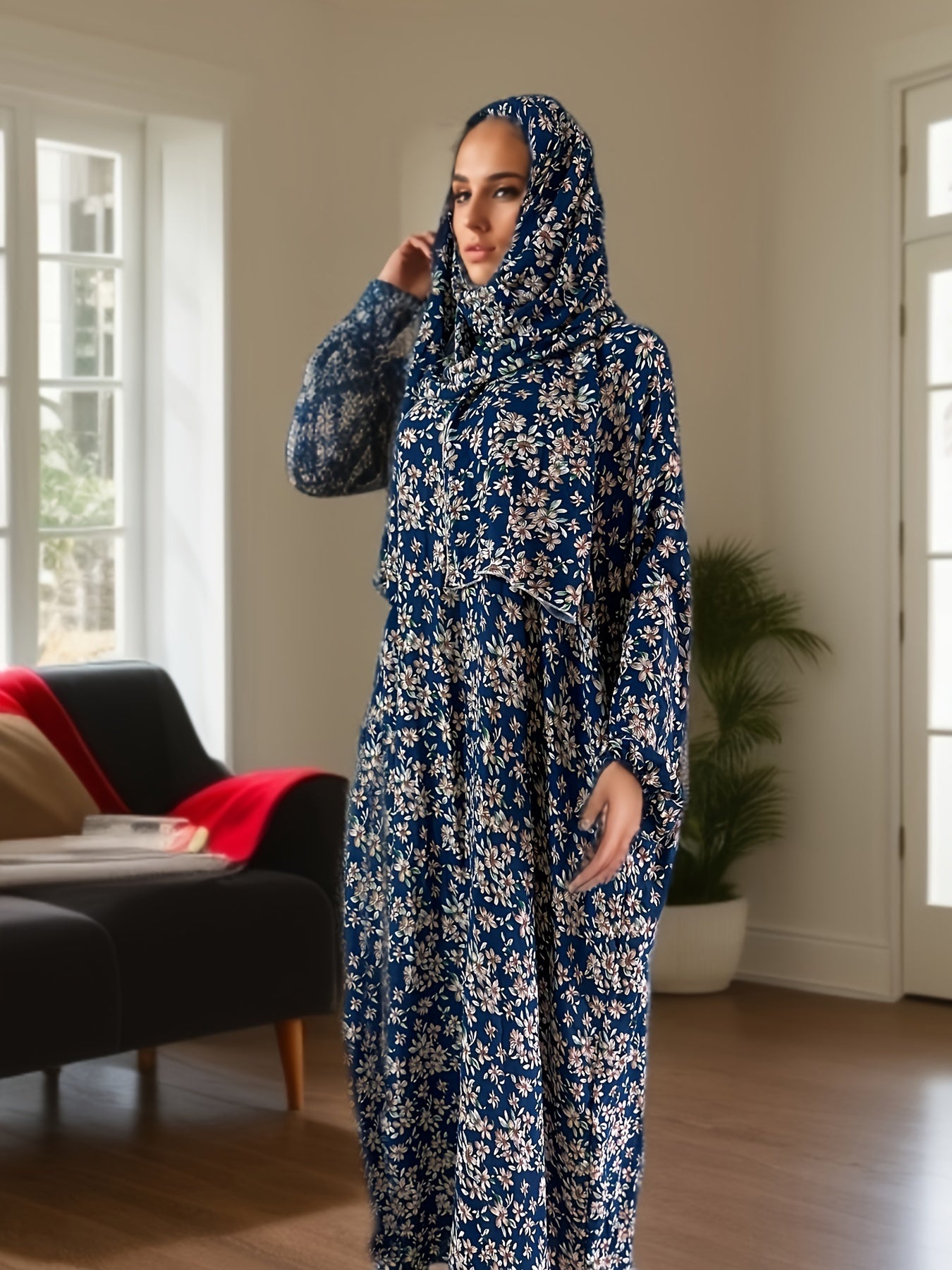
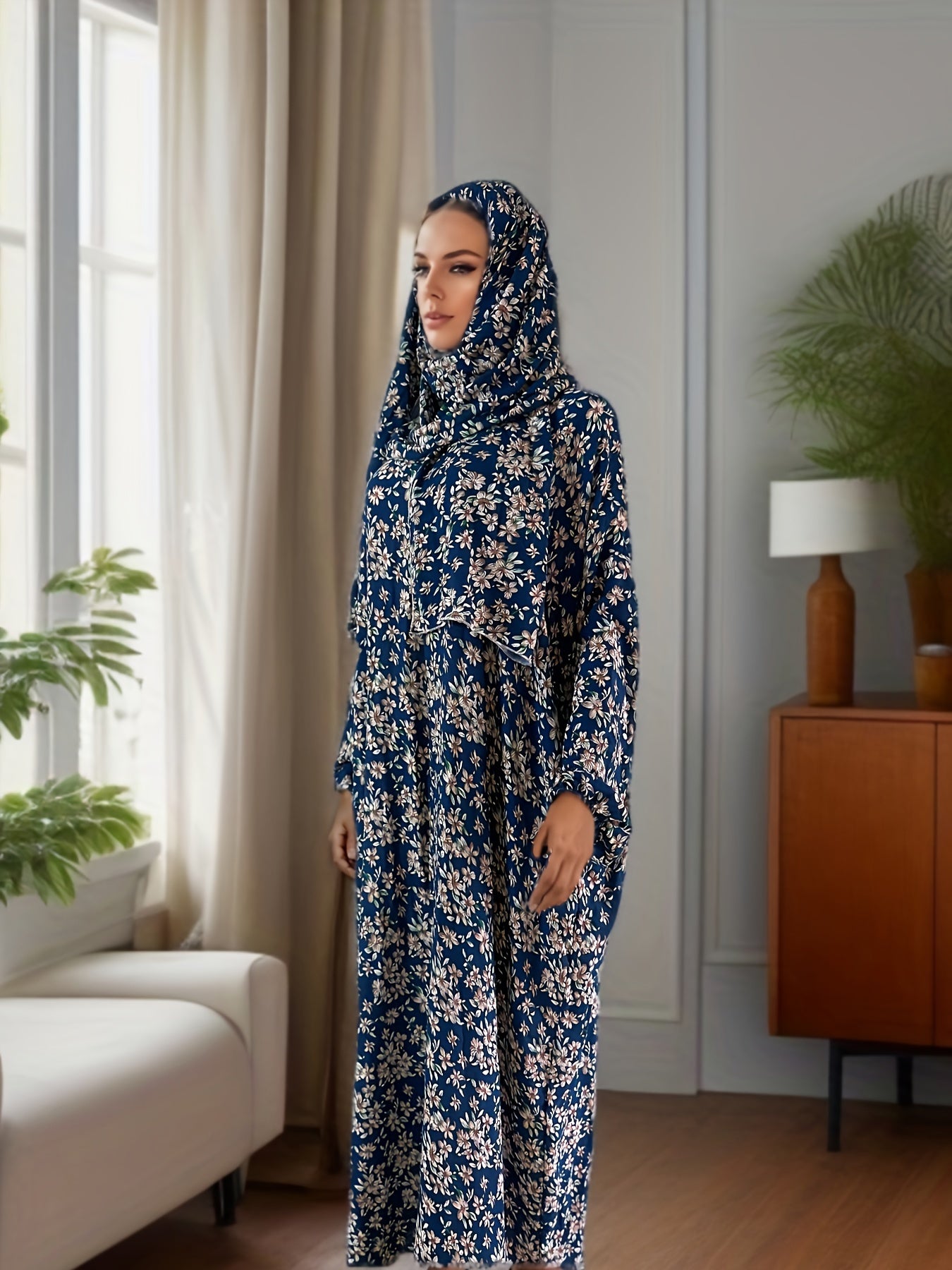
SPECIFICATIONS
Composition: 100% Rayon
Details: Zipper
Fabric: Non-Stretch
Material: Rayon
Operation Instruction: Machine wash or professional dry clean
Pattern: Floral
Printing Type: Random Printing
Season: All-season
Sheer: No
Type: Tunic
Weaving Method: Woven
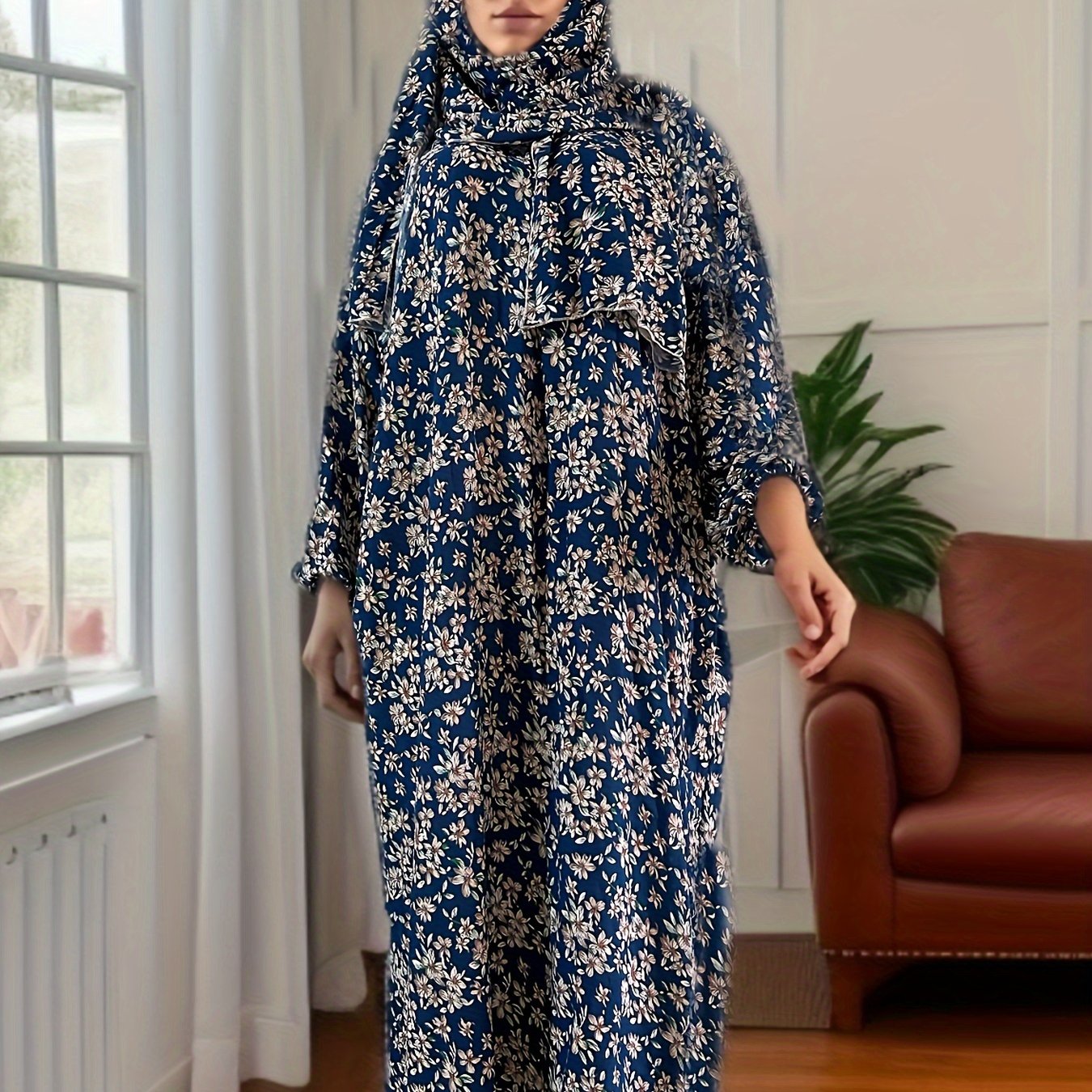
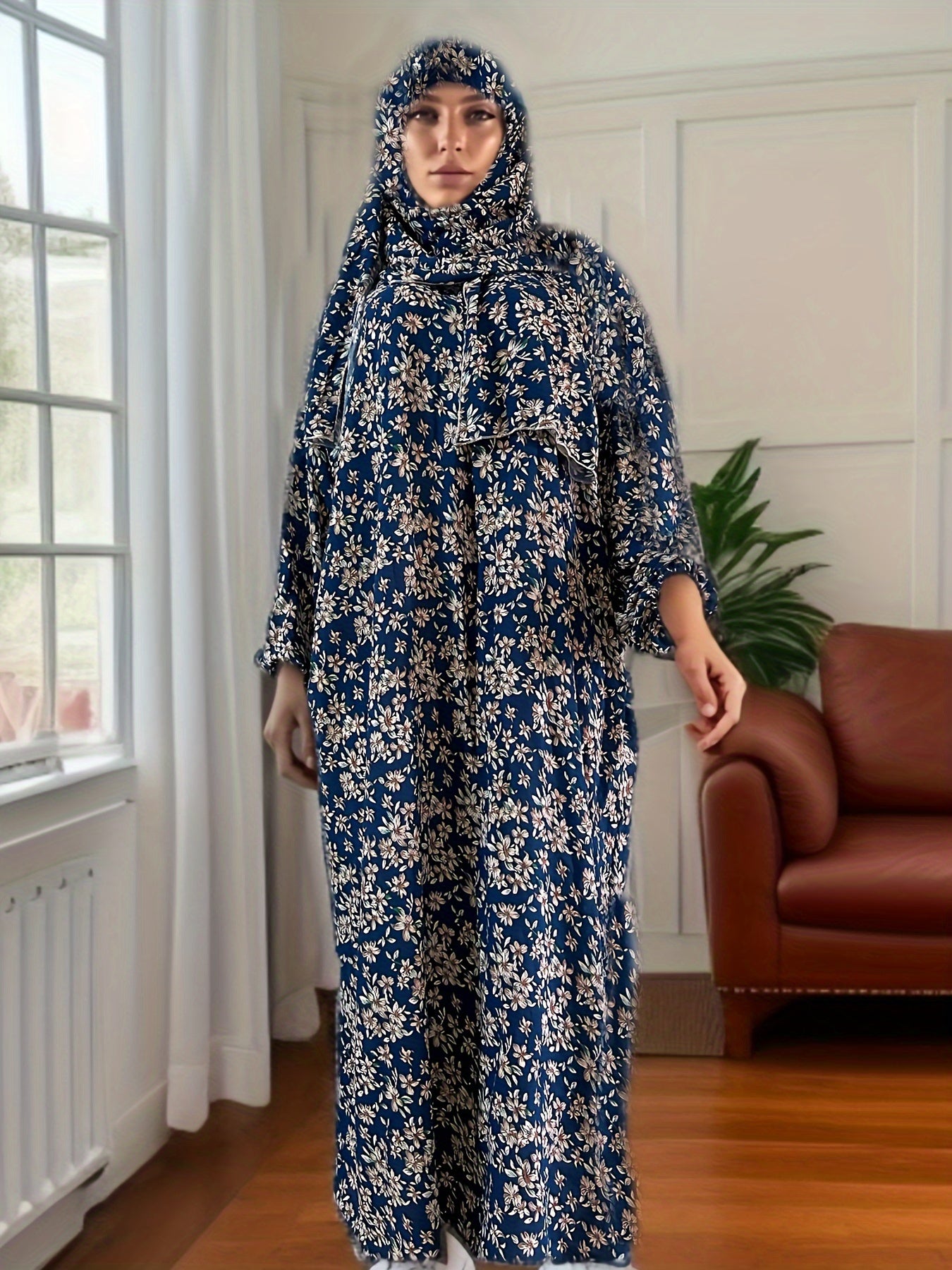
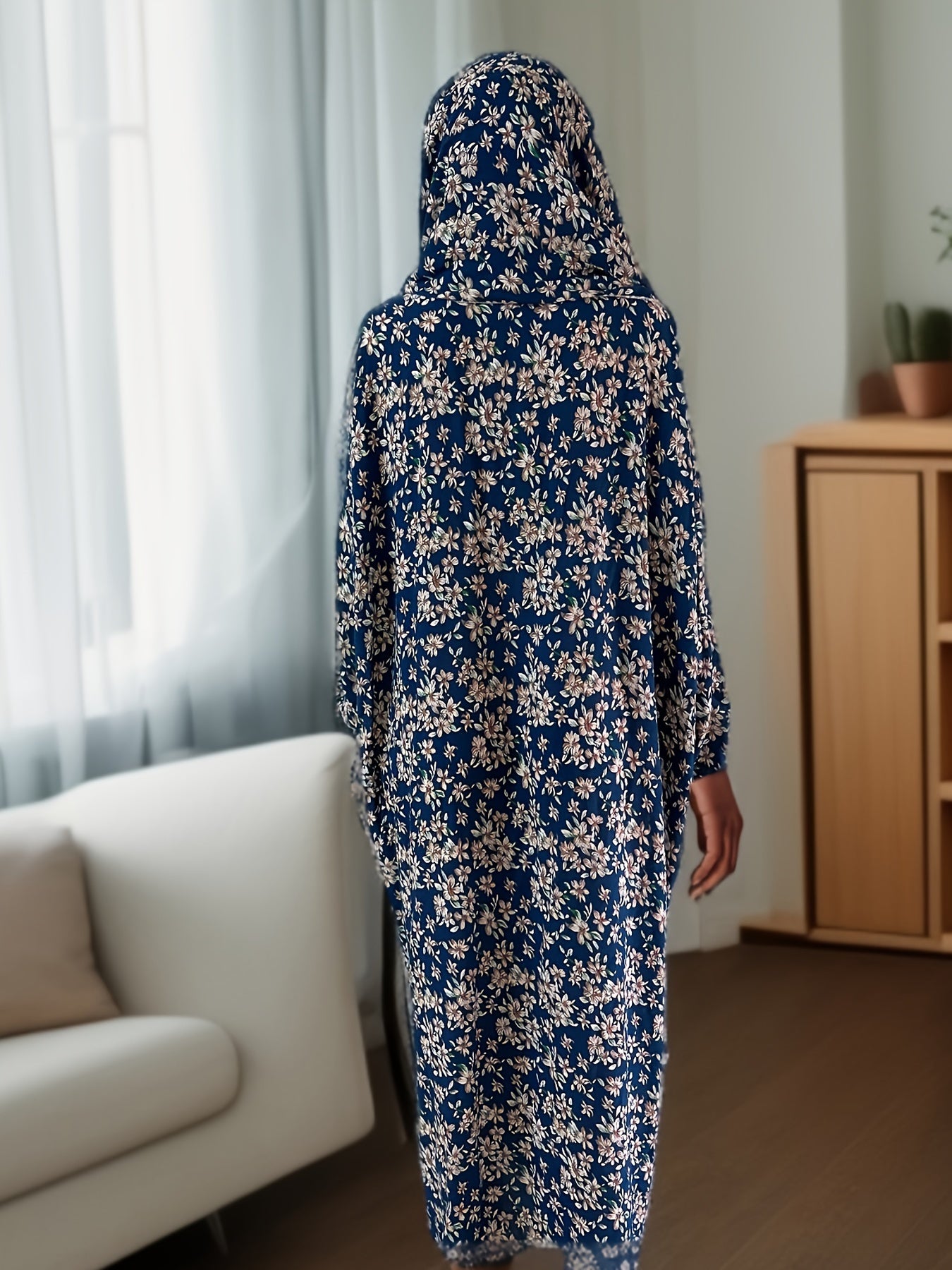
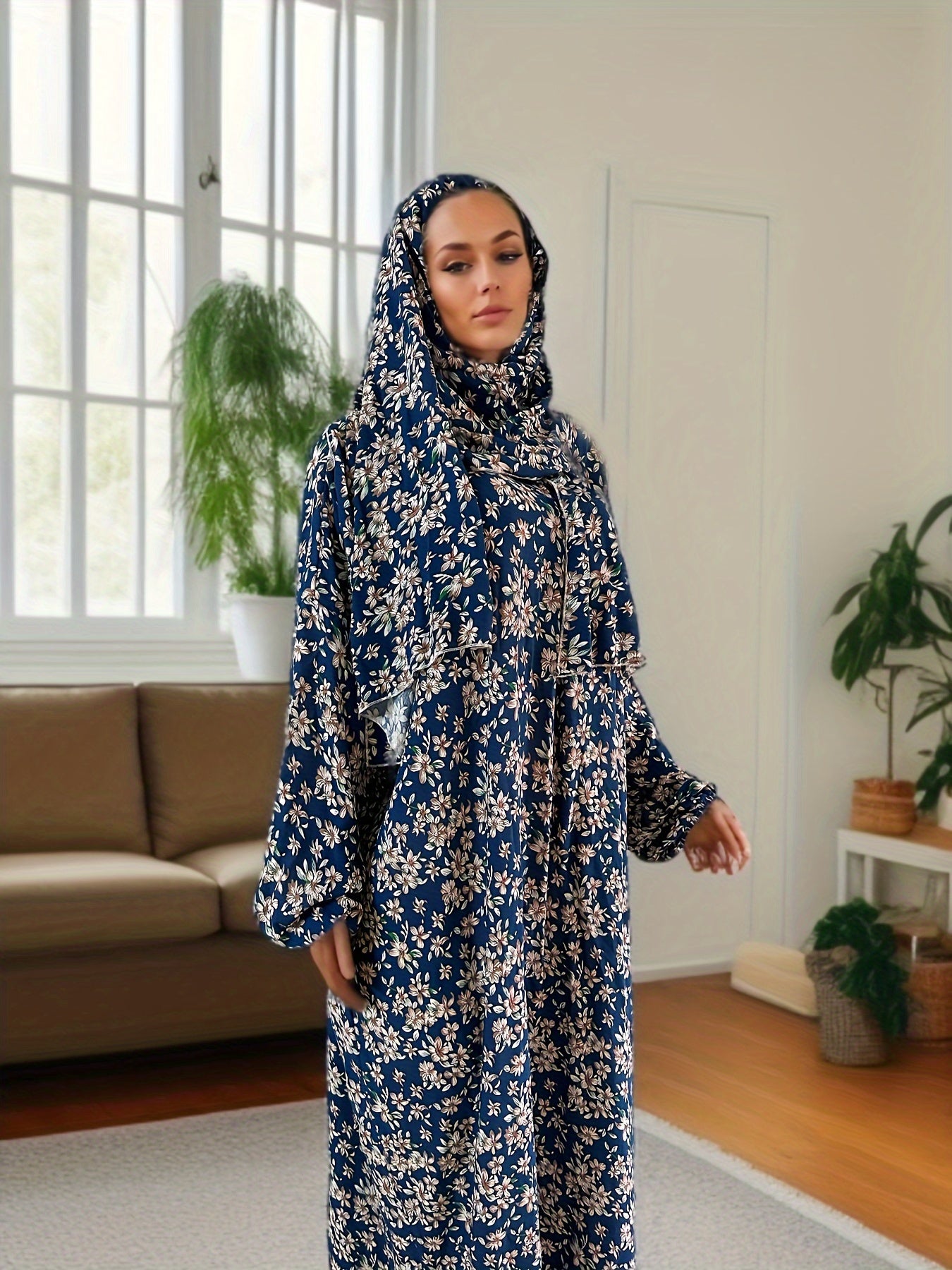
Plus Size Floral Print Modest Abaya and Hijab Set for Women
Every season brings garments that transcend their immediate utility and establish themselves as cultural statements. The Ramadan Plus Size Floral Print Modest Jilbab Abaya Dress with Hijab is precisely that kind of creation. It is not merely a garment to wear during special moments; it is an emblem of heritage, a symbol of dignity, and a versatile piece of attire that reflects the evolving language of modest fashion. In an era where inclusivity and representation are more valued than ever, this dress takes its place at the intersection of tradition and modernity, giving women across the world an opportunity to feel both confident and graceful.
This abaya dress is designed for women who seek modesty without surrendering style, who demand comfort while celebrating their individuality, and who wish to honor spiritual values while remaining deeply engaged with contemporary aesthetics. Fabulive has carefully composed this piece with these sensibilities in mind, ensuring that it speaks to women not just during the holy month of Ramadan but across countless contexts—family gatherings, community events, and personal moments of reflection.
Historical Resonance Of The Abaya
To truly appreciate this creation, one must first understand the long history of the abaya and its place within global modest fashion. Originating in the heart of the Arabian Peninsula, the abaya began as a cloak of protection. It shielded women from the scorching sun and desert winds while simultaneously embodying the principle of modesty that lay at the heart of Islamic culture. Over time, the garment evolved, traveling across geographies and being reshaped by local aesthetics. Ottoman influences introduced embroidery and fabric richness; South Asian adaptations infused color and intricate detailing; North African traditions added flowing silhouettes interwoven with tribal patterns.
Yet the abaya’s essence remained unchanged: dignity through simplicity. Across centuries, the abaya was never about ostentation but about presence—allowing a woman’s inner character and identity to shine beyond clothing. In this historical continuum, the Ramadan Plus Size Floral Print Jilbab Abaya Dress represents the next step. It maintains the long-standing spirit of modest fashion while embracing inclusivity for plus size women and incorporating modern design elements such as floral patterns and coordinated hijabs.
Design Philosophy: Harmony Of Structure And Flow
The design of this jilbab abaya is a study in balance. Its silhouette flows generously, ensuring coverage without sacrificing elegance. For plus size women, this structure is particularly significant: it avoids the rigidity often found in mainstream fashion cuts and instead emphasizes freedom of movement. The long sleeves and maxi length uphold modest principles, while the belted waist option allows wearers to tailor the garment’s flow to their preference—either letting it drape loosely for casual comfort or cinching for a more defined silhouette.
The floral print itself is not a trivial decoration but a thoughtful design element. Flowers have long represented renewal, beauty, and spiritual flourishing. When combined with the solemnity of an abaya form, the florals create a visual narrative of balance—between grace and strength, heritage and individuality. This duality makes the garment appealing not only for Ramadan wear but also for year-round occasions, be it a festive gathering or an everyday moment of personal significance.
Fabulive’s craftsmanship is evident in the subtle details: the clean stitching, the careful drape of fabric, and the seamless integration of hijab with the dress. Each element is designed to enhance the wearer’s dignity while allowing for versatile styling across different cultural contexts.
Colors And Symbolism
The palette of this abaya dress has been curated with a refined eye for symbolism. Unlike plain abayas that rely on uniformity, the introduction of floral patterns introduces vibrancy without undermining modesty. The base tones remain muted enough to uphold dignity, while the printed florals inject a whisper of personality.
Color in modest wear has always carried meaning. Black traditionally represented solemnity and timelessness, beige suggested neutrality and purity, while richer hues like navy or maroon expressed depth and confidence. In this creation, the floral accents provide a modern layer: they act as reminders of growth, renewal, and femininity. Women choosing this piece are not simply selecting attire but are making a subtle declaration that modesty and expressiveness can coexist harmoniously.
Materials And Comfort
Fabric is the foundation of every garment, and here, material choice becomes central to the dress’s appeal. Polyester has been used with deliberate intention. It is lightweight yet durable, able to drape smoothly across varied body shapes while resisting wrinkling. For plus size wearers, this is especially valuable—ensuring that the garment does not cling unnecessarily but instead flows with elegance.
Polyester also has the advantage of being versatile across seasons. During warmer months, its breathable weave prevents discomfort, while in cooler settings, it layers gracefully with coats or shawls. Another key advantage lies in maintenance: polyester resists fading and shrinking, allowing women to keep the garment pristine without exhaustive care routines. This quality aligns seamlessly with modern needs, where practicality is as important as beauty.
When combined with the matching hijab, the material continuity ensures a cohesive look that feels deliberate rather than improvised. This speaks to the garment’s holistic design: every element is carefully aligned for harmony.
Functionality In Modern Life
The jilbab abaya is not a garment meant for ceremonial storage; it is designed for life in motion. Functionality here means more than wearability; it refers to adaptability. Women today lead multifaceted lives—balancing spiritual practices, professional responsibilities, familial duties, and social engagements. This garment allows seamless transitions between these spheres.
During Ramadan, its modesty aligns perfectly with moments of worship and gatherings at iftar. Beyond Ramadan, it functions equally well at weddings, formal dinners, or casual community outings. The coordinated hijab eliminates the common challenge of styling mismatched accessories, ensuring that the wearer maintains a refined appearance without extra effort. For travel, the lightweight fabric and easy packing make it indispensable—particularly during pilgrimages or family visits abroad.
This versatility is part of what makes the garment timeless. Rather than being defined by one season or one occasion, it becomes a wardrobe essential that continues to hold value year after year.
Cultural Relevance: A Garment Rooted In Tradition And Evolving With Time
Every modest garment carries layers of meaning, and the jilbab abaya is perhaps one of the most enduring symbols of cultural identity across the Islamic world. For centuries, the abaya has existed as a shield, a statement, and a cultural touchstone. In the Arabian Peninsula, it was a garment of necessity, protecting women from the desert climate while embodying the principle of haya—modesty as a lived value rather than a superficial style. Across regions, its interpretation shifted, but its central purpose endured.
In the Ottoman courts, abayas and jilbabs became canvases for exquisite embroidery, where luxury met modesty. In Persia, flowing robes reflected elegance, often layered with intricate scarves. In North Africa, the loose silhouettes adapted to the rhythms of urban and rural life alike. South Asian cultures embraced embroidered fabrics, adding vibrancy and detailing. Each region infused the abaya with local artistry, but the philosophy remained untouched.
The Ramadan Plus Size Floral Print Modest Jilbab Abaya Dress is an heir to this historical journey. It preserves modesty but introduces inclusivity in size, artistry in floral design, and ease of styling with a matching hijab. Fabulive’s design direction honors heritage while presenting a garment that resonates with modern identity. For women today, this abaya is not only about coverage—it is about connection, a tangible link between past tradition and present expression.
Ramadan And The Emotional Landscape Of Modesty
Ramadan is a month where outer practice and inner reflection converge. Clothing during this time is not simply about aesthetics; it is about mindfulness. Women often choose garments that help align their outer appearance with the spiritual discipline of fasting and prayer. This jilbab abaya embodies that sensibility. Its flowing modesty ensures dignity in communal prayers, while the floral accents whisper renewal—the same renewal that Ramadan itself promises.
The coordinated hijab is not a mere accessory but a symbol of completeness. During Ramadan, when moments move quickly between home, mosque, and community gatherings, such thoughtful design eases the burden of preparation. Instead of piecing together an ensemble, women find in this set a ready expression of grace. This emotional reassurance is one of the garment’s greatest strengths.
Ramadan is also a time of generosity and hospitality. Many women seek garments that allow them to host, visit, and celebrate while maintaining comfort. This abaya, lightweight and breathable, makes extended wear effortless. It is as suitable for Taraweeh prayers late at night as it is for hosting iftar dinners with extended family. In this way, it embodies the spiritual rhythm of the month itself—sustained, graceful, enduring.
Styling Approaches: Versatility In Contemporary Wardrobes
A garment such as this one thrives on its adaptability. The abaya silhouette provides a canvas, and women can choose how to bring it into their personal aesthetic. One approach is minimalist styling—allowing the floral print to be the central statement. Pairing the dress with subtle accessories such as nude sandals, understated jewelry, or a small clutch ensures that the garment itself shines.
For women seeking elevated presence at formal events, styling can be intensified with bolder elements. Metallic heels, layered jewelry, or a vibrant scarf tied over the hijab create a sophisticated ensemble suitable for weddings or celebratory dinners. The belt can be cinched to accentuate structure, offering a more tailored look without compromising modesty.
The floral print also opens opportunities for seasonal styling. During spring and summer, lighter accessories accentuate freshness; during autumn, pairing with rich-toned shawls or coats emphasizes warmth. In winter, layering with structured outerwear transforms the jilbab into a cosmopolitan piece suited for urban environments. This ability to move between seasons ensures that the garment never feels confined to Ramadan alone but maintains relevance year-round.
Inclusivity And Representation
In global fashion markets, plus size modest wear has long been underserved. Mainstream brands often prioritize standard sizing, leaving fuller-figured women with limited choices. The significance of this jilbab abaya lies not only in its aesthetic appeal but also in its inclusivity. It acknowledges that modesty, style, and dignity are for every body type.
By offering generous flow without compromising elegance, this design allows plus size women to experience modest fashion without adjustment or compromise. Representation matters, and garments like this contribute to expanding the narrative of beauty and elegance. They communicate to women everywhere that modest fashion belongs to all, not to a narrow definition of size.
The inclusivity extends beyond body type to cultural background. The floral print has universal appeal, resonating with women across continents. Whether worn in the Middle East, South Asia, Europe, or North America, the garment speaks a global language of modesty infused with contemporary style. This universality is what elevates the abaya beyond clothing into cultural conversation.
Sustainability And Slow Fashion Values
Fashion today is confronted with the challenge of sustainability. Fast fashion cycles have encouraged disposability, undermining the cultural and environmental value of clothing. The jilbab abaya resists this trend. Its design is timeless rather than trendy, ensuring that it remains relevant across seasons. The polyester fabric, chosen for durability and ease of care, prolongs the garment’s lifespan. Women investing in this dress are not buying for one Ramadan but for many years of wear.
The philosophy here is one of intentional ownership. By maintaining garments that endure, women participate in sustainable fashion practices. They reduce waste, conserve resources, and embrace a slower rhythm of consumption. Fabulive’s direction in creating such versatile pieces aligns with this ethic, proving that modest fashion can be both luxurious and responsible.
This garment thus represents not only beauty but also values—cultural, spiritual, and environmental. It reassures women that their wardrobe choices can align with both personal identity and global responsibility.
Fabric Science: The Foundation Of Elegance And Durability
At the heart of every garment lies the fabric that shapes its character. The Ramadan Plus Size Floral Print Modest Jilbab Abaya Dress relies on polyester, a material chosen with precision for its ability to merge elegance with practicality. In textile design, polyester holds a unique position. It is a synthetic fiber that resists shrinking, wrinkling, and fading—qualities that are essential in garments meant to endure repeated use without losing vibrancy.
The structure of polyester fibers ensures breathability, allowing air to flow easily and reducing discomfort in warmer climates. For women who wear this abaya in regions with long summers, this property is invaluable. The fibers also maintain color saturation more effectively than natural fabrics, which means that the floral prints remain striking and vivid even after multiple washes.
Another vital property is its drape. Polyester flows smoothly across the body, creating clean lines that flatter diverse body shapes. For plus size women, this ensures the garment does not cling unnecessarily, but instead moves with grace. The pairing of this abaya with a hijab made of the same material underscores continuity, producing a cohesive and sophisticated look.
Maintenance Practices: Preserving Beauty Over Time
One of the strengths of this jilbab abaya lies in its ease of maintenance. Polyester requires minimal care compared to delicate natural fabrics such as silk or chiffon. Hand washing with mild detergent and cold water preserves both fabric softness and print vibrancy. For women with demanding schedules, machine washing on a gentle cycle is also an option, with the assurance that the fibers will resist wrinkling.
Drying should be done naturally, away from direct sunlight, to maintain the floral print’s brilliance. Ironing is rarely necessary, as polyester resists creasing, but if required, a low-heat setting suffices. This simple care routine makes the abaya a sustainable choice not only because it endures over time but also because it reduces the resources and effort needed for upkeep.
Storage contributes equally to garment longevity. Hanging the abaya ensures the fabric retains its shape, while folding with care prevents stress on seams. When paired with occasional dry cleaning for refreshment, the garment maintains its luxurious aura for years. Such ease of care aligns with the values of modern women who balance tradition with active lifestyles.
Styling Guidance: Elevating Presence Across Contexts
The versatility of this jilbab abaya makes it a wardrobe cornerstone for women seeking adaptable fashion. In casual settings, pairing it with modest flats and minimal accessories allows the floral print to serve as the central feature. The natural drape ensures effortless grace whether worn for errands, family gatherings, or casual community events.
For formal occasions, the garment transforms with accessories. A metallic belt accentuates the waistline, while statement jewelry introduces refinement. Pairing with heels and an embellished clutch creates a presence suitable for weddings, Eid celebrations, or evening receptions. The long sleeves and maxi length ensure coverage, while the prints and styling offer elevated charm.
The abaya also invites experimentation with layering. A structured coat in cooler months, a shawl with embroidered edges, or a neutral cardigan can change its aesthetic without compromising modesty. The hijab that accompanies the set can be styled in different ways—draped loosely for softness or pinned precisely for a more formal presence. This adaptability empowers women to personalize the garment to suit not only the occasion but also their identity.
Dialogue With Global Modest Fashion Movements
In recent years, modest fashion has stepped from the margins into international runways. Designers in Paris, London, and New York now acknowledge that modesty is not limitation but an alternative paradigm of elegance. Within this global conversation, garments like the Ramadan Plus Size Floral Print Jilbab Abaya Dress occupy a central place. They challenge stereotypes by proving that modest attire can embody creativity, sophistication, and luxury.
The floral print, though subtle, positions the abaya within contemporary design currents that emphasize individuality. Its plus size inclusivity speaks to another crucial value of the modern modest fashion movement: representation. The garment affirms that every woman, regardless of body shape, deserves attire that reflects her dignity.
Fabulive’s contribution through this abaya lies in weaving together tradition and modernity. While rooted in centuries of abaya culture, it speaks to today’s fashion-conscious woman who seeks garments that resonate globally. This dialogue reinforces the abaya’s role not only as a cultural artifact but as an evolving symbol of fashion democracy.
Long-Term Wardrobe Value: Beyond A Single Season
One of the defining qualities of the Ramadan Plus Size Floral Print Modest Jilbab Abaya Dress is its ability to transcend temporary trends. Where much of modern fashion thrives on immediacy, this abaya invests in permanence. It is designed not as a fleeting purchase but as a cornerstone piece that remains relevant across years.
The silhouette itself carries timeless appeal. Flowing lines, full-length coverage, and modest sleeves will never fall out of place in the lexicon of modest fashion. Unlike garments that demand reinvention each season, this abaya’s structure guarantees ongoing wearability. Its floral print, while contemporary, is not tied to any single passing trend. Florals have been revered in textile design across centuries—from Persian gardens depicted in silk embroidery to Ottoman floral motifs woven into brocades. By integrating such enduring symbolism, the abaya ensures it will continue to feel stylish and culturally resonant.
Investment value also arises from versatility. The garment works across occasions—worship, celebration, community, and travel. Its ability to adapt reduces the need for multiple separate outfits, consolidating value into one piece. Over years, this efficiency translates into true sustainability, not only financially but also environmentally.
Sustainability As A Philosophy Of Fashion
Sustainability is no longer a peripheral concern in fashion—it has become the defining ethos of a new era. Consumers increasingly recognize that the garments they wear are not isolated objects but part of a vast ecosystem that links raw materials, craftsmanship, culture, and environmental impact. Within this context, the jilbab abaya demonstrates how modest fashion can become a vanguard for responsible design. By resisting disposability and embracing durability, it reflects a philosophy of ownership that is both mindful and enduring.
At the center of this philosophy is polyester, the fabric chosen for this Ramadan Plus Size Floral Print Modest Jilbab Abaya Dress. Unlike fragile materials that deteriorate quickly, polyester is engineered for longevity. Its fibers resist shrinking, fading, and wrinkling, allowing the garment to endure repeated wear without losing its refined appearance. In an industry dominated by cycles of fast fashion—where garments are designed to be discarded within months—this abaya offers an alternative rhythm. It extends the lifespan of ownership, ensuring that women can return to it season after season, year after year. Each repeated wear is a rejection of disposability and a step toward sustainability.
Yet sustainability here transcends fabric science. It speaks also to cultural endurance. The abaya as a garment has persisted for centuries, evolving in color, cut, and detail but never losing its essence. By choosing such a garment, women participate in continuity rather than waste. They align themselves with a lineage of modest fashion that stretches back generations. Every time this jilbab abaya is worn—during Ramadan prayers, family gatherings, or everyday life—it affirms a connection to values that outlast passing trends. In this sense, sustainability is not merely about the environment but about culture itself: the ability of traditions to survive, adapt, and remain meaningful in modern life.
Fabulive’s design philosophy embraces this continuity while introducing subtle innovation. By integrating plus size inclusivity, floral motifs, and coordinated hijabs, the brand elevates a traditional silhouette into something resonant for today’s global woman. But the underlying value remains the same: fashion should not be wasteful, and garments should carry meaning beyond the moment of purchase. By crafting pieces that hold both aesthetic and functional value for years, Fabulive cultivates mindful ownership. This jilbab abaya is not about accumulating excess but about curating essentials that stand the test of time.
The environmental dimension of sustainability is equally profound. Every garment that endures reduces the need for replacement. When women invest in timeless, durable pieces, they reduce demand for fast fashion, which in turn diminishes resource extraction, water consumption, and carbon emissions. Polyester, though synthetic, contributes here through its resilience. Unlike delicate fabrics that deteriorate after a handful of wears, polyester abayas retain vibrancy and structure for extended lifespans. This reduces the cycle of disposal that fills landfills with discarded clothing. In this way, sustainability is not just abstract philosophy but tangible action: choosing one long-lasting abaya over multiple short-lived garments actively reduces waste.
The philosophy extends to financial sustainability as well. In an age where consumer culture encourages endless spending, garments like this abaya promote mindful curation. They encourage women to think of fashion not as endless accumulation but as selective investment. Instead of purchasing multiple inexpensive dresses that wear out quickly, a single durable abaya provides years of service, offering not only cost efficiency but also emotional satisfaction. This slow fashion approach cultivates pride of ownership—garments are no longer disposable but cherished, cared for, and integrated into one’s personal story.
Social sustainability is another vital element. By designing garments that include plus size representation, the jilbab abaya affirms the dignity of women who have often been overlooked in mainstream fashion. Inclusivity itself is sustainable—it ensures that modest fashion thrives across diverse bodies, preventing alienation and encouraging long-term cultural relevance. When women see themselves reflected in garments like this, they embrace them not for one season but as enduring staples. This inclusivity guarantees the abaya’s resonance across generations and geographies, sustaining its cultural vitality well into the future.
Sustainability also lies in the garment’s symbolism. The floral prints, echoing themes of growth, renewal, and natural cycles, remind the wearer that fashion is part of the broader rhythm of life. Just as flowers bloom and renew, so too does culture when it resists disposability. Wearing this abaya during Ramadan or beyond becomes an act of alignment with values of patience, responsibility, and endurance. Each careful wash, each thoughtful wear, becomes a ritual of preservation. The garment itself becomes a metaphor: beauty that does not fade quickly, dignity that is not disposable, and modesty that is timeless.
In diasporic contexts, sustainability acquires another layer. For women living in global cities where cultural traditions risk being overshadowed, wearing this jilbab abaya becomes an act of cultural preservation. It sustains identity across borders, ensuring that heritage is not eroded by assimilation. In this way, the garment not only sustains fabric but sustains faith, community, and belonging. Fashion here becomes a vehicle for sustaining memory and transmitting values across generations.
Ultimately, sustainability as embodied by this jilbab abaya is multi-dimensional. It encompasses material endurance, cultural continuity, environmental responsibility, financial wisdom, inclusivity, and spiritual symbolism. It assures women that their wardrobe choices can reflect not only style but also substance, not only beauty but also belief. This is the deeper promise of modest fashion: to offer garments that nurture both the individual and the collective, garments that resist waste and affirm meaning.
Fabulive’s commitment to such design proves that modest fashion can lead the global conversation on ethical fashion. While many brands chase trends that vanish in a season, Fabulive crafts pieces that will remain meaningful for years, garments that women will treasure, preserve, and even pass on. In an industry increasingly defined by transience, this jilbab abaya stands as a testament to permanence. It embodies the philosophy that true luxury is not in excess but in endurance, not in fleeting novelty but in timeless continuity.
To wear this abaya is to embrace a sustainable philosophy of fashion. It is to say no to disposability and yes to responsibility, no to waste and yes to meaning. Each wear, each act of care, becomes a quiet but profound statement: beauty should endure, identity should be preserved, and fashion should serve not only the present moment but the generations to come.
Emotional Resonance: The Garment As Memory And Identity
Clothing at its highest form is not simply fabric but emotion made visible. For many women, garments like this jilbab abaya become repositories of memory. They are worn at prayers, celebrations, and gatherings that mark personal milestones. Over time, they carry the imprint of those moments, becoming cherished possessions that link generations.
The floral print adds to this emotional depth. Florals symbolize renewal, continuity, and life cycles. To wear them during Ramadan, a month defined by spiritual renewal, creates a layered symbolism that deepens emotional connection. Women often return to garments not only for their beauty but for the memories they carry. This abaya, versatile and dignified, is poised to become such a vessel.
Emotional resonance also lies in representation. Plus size women who wear this abaya feel seen and respected within modest fashion. The garment validates their presence, affirming that elegance belongs to every woman. That sense of affirmation is not fleeting—it lingers, becoming part of one’s self-identity.
The Abaya As An Investment In Identity
Investments are not only financial; they can be cultural, spiritual, and personal. The jilbab abaya represents all these dimensions. It invests in cultural continuity, ensuring that centuries of tradition remain alive in contemporary form. It invests in spirituality, providing a garment aligned with moments of devotion. It invests in individuality, giving women the opportunity to wear modesty with distinction.
As global fashion shifts toward inclusivity and sustainability, garments like this prove to be ahead of their time. They reject the disposable and embrace the enduring. For women seeking to align their wardrobes with their values, this abaya becomes an essential purchase.
Fabulive’s approach in creating such garments underscores a philosophy that fashion should not only decorate but also elevate. To own this abaya is to claim more than fabric—it is to claim continuity, dignity, and self-expression within the global dialogue of modest style.
Practical Maintenance: Preserving Elegance Effortlessly
Every luxury garment carries with it the responsibility of care, for elegance that endures is rarely accidental. The Ramadan Plus Size Floral Print Modest Jilbab Abaya Dress, though designed for modern ease, deserves thoughtful attention to ensure its beauty remains as striking years from now as it was on the day of purchase. Unlike delicate silks or chiffons that demand exhaustive routines, this abaya’s polyester fabric makes maintenance refreshingly simple. Yet even the most resilient material benefits from mindful care, and with a few deliberate practices, the garment can be preserved as a sustainable wardrobe treasure.
Polyester, chosen intentionally for this jilbab abaya, is known for its strength and resistance to the wear-and-tear of daily life. It does not easily lose shape, nor does it fade quickly, and its wrinkle resistance means it retains a refined finish even after long hours of wear. However, the fabric’s longevity shines brightest when paired with proper handling. This is where maintenance transcends necessity and becomes part of the garment’s narrative—an act of honoring craftsmanship and extending the life of modest fashion that is meant to be cherished.
Hand washing remains the most effective method to maintain the vibrancy of the floral prints. Submerging the abaya in cold water with a mild, non-abrasive detergent ensures that the colors do not bleed or dull prematurely. The act itself is gentle, allowing the fibers to retain their softness while protecting the garment’s drape. For women who wish to make their wardrobe last longer, this practice transforms laundry from a chore into an investment in beauty. Each wash reaffirms the commitment to owning clothing that resists disposability.
For those who prefer efficiency, a machine wash is also possible, provided it is handled with care. A gentle cycle with cold water replicates the effect of hand washing, while the simple addition of a protective laundry bag safeguards the garment from abrasion. This precaution minimizes friction with other clothing, ensuring that the abaya maintains its pristine surface. It is a reminder that even the most practical fabrics benefit from thoughtful rituals, and such measures elevate ordinary maintenance into the realm of luxury stewardship.
Drying, often overlooked, plays a pivotal role in preservation. Polyester dries quickly, which means there is no need for harsh dryers that compromise fabric integrity. Allowing the abaya to dry naturally, preferably on a hanger in a shaded area, prevents the sun from stripping the depth of the floral prints. Sunlight, while symbolic of life, can be unforgiving to pigments, and protection from its intensity ensures the garment’s design remains luminous. A softly moving breeze will restore freshness without costing vibrancy, allowing the fabric to retain both strength and elegance.
Ironing, a necessity for many garments, becomes almost optional here. Polyester resists wrinkles remarkably well, which means the abaya can often be worn straight after drying without the need for heat. For those who desire an extra polish, a cool iron or handheld steamer suffices. The steamer, in particular, offers a luxurious ritual of care—it smooths the fabric with gentleness, ensuring the garment remains supple. Avoiding high heat preserves the strength of the fibers, and by extension, the garment’s longevity.
The hijab, crafted from matching polyester fabric, follows identical care routines. Its lighter weight ensures it dries even faster and resists creasing. Caring for both pieces together not only maintains harmony in appearance but also strengthens the sense of unity between garment and accessory. When washed, dried, and stored with equal consideration, they age gracefully side by side, a testament to Fabulive’s philosophy of holistic design.
Storage is as important as cleaning. Hanging the jilbab abaya on a wide-shouldered hanger maintains its drape and prevents distortion of the neckline and sleeves. For women who rotate garments seasonally, storing the abaya in a breathable garment bag keeps dust away while allowing air circulation. Folding is best avoided unless necessary, and even then, careful placement ensures no stress lines form along the floral prints. Such practices may seem minor, but they transform maintenance into an art—prolonging the garment’s vitality and elegance.
Travel introduces another layer of maintenance. Polyester is an ideal companion for journeys, as it resists wrinkling in suitcases and adapts quickly once hung. Rolling the abaya instead of folding it minimizes creases and saves luggage space. A quick steam upon arrival revives its freshness, proving once again that luxury lies in garments that accommodate life’s movements with ease. For women traveling during Ramadan, whether for family visits or pilgrimages, this quality becomes indispensable, ensuring they remain elegantly dressed without the burden of extensive care.
Long-term preservation also involves periodic renewal. Though durable, every fabric benefits from occasional professional care. A dry-cleaning session once or twice a year restores vibrancy, removes unseen build-ups, and refreshes the garment’s structure. When alternated with at-home care, this routine strikes the perfect balance between practicality and luxury. It honors the garment by treating it as an enduring investment rather than a disposable commodity.
Beyond technical care, maintenance carries an emotional dimension. Each wash, each careful fold, becomes a gesture of respect—not only for the fabric but for the values it represents. Modest fashion garments like this jilbab abaya are imbued with cultural significance. Preserving them is an act of preserving identity. For mothers who intend to pass them on to daughters, mindful care ensures that the garment does not merely survive but thrives, carrying with it the memories of prayers, gatherings, and personal milestones.
Sustainability also lives in maintenance. When garments are preserved rather than discarded, they reduce waste, ease the demand for constant production, and align wardrobes with ecological responsibility. This jilbab abaya, with its simple care routines, enables women to participate in this ethos without compromise. By extending its lifespan, they invest not only in their own wardrobes but also in a fashion philosophy that resists transience.
Ultimately, the practical maintenance of this jilbab abaya reveals the intersection of elegance, responsibility, and sustainability. Each step—washing, drying, storing, steaming—is an affirmation that beauty deserves preservation. It transforms care into ritual, making the garment not only last longer but also deepen in meaning with each use. Fabulive’s decision to design an abaya that requires minimal yet meaningful care elevates ownership from convenience to luxury, allowing women to preserve both elegance and identity effortlessly.
Cultural Longevity: A Garment That Connects Generations
Clothing that endures across decades does more than simply cover the body—it becomes part of the narrative of identity, belief, and memory. The abaya has always been more than fabric stitched together; it has functioned as a cultural text, a spiritual statement, and an heirloom passed from one generation to the next. Within families across the Islamic world, mothers hand down abayas to their daughters, not merely as garments but as symbols of continuity, dignity, and belonging. Each fold carries the imprint of the wearer’s life, each seam woven with stories that are retold every time it is worn.
This jilbab abaya, with its graceful floral motifs, extends that legacy into the modern era. The floral accents are not chosen arbitrarily; they are visual metaphors of growth and renewal. They embody the idea that even as modest fashion evolves, it retains the essence of modesty and tradition. The abaya here is not frozen in history but alive in the present, adaptable to shifting aesthetics yet firm in its principles. It proves that modest fashion is never static; it evolves with the times while anchoring itself in values that remain universal.
Wearing such a garment during Ramadan deepens its spiritual significance. Ramadan is a month of reflection, a renewal of faith, and an alignment of the outer and inner self. Donning this jilbab abaya during those moments transforms clothing into ritual—it becomes part of the sacred rhythm of prayer, fasting, and community gathering. Yet its relevance is not confined to the holy month. When worn at weddings, family celebrations, or even in daily life, it continues to hold its meaning, ensuring the garment remains part of a woman’s everyday narrative rather than an occasional piece tucked away in storage.
Generational garments like this serve as cultural bridges. In many households, an abaya is more than attire; it is a tradition sustained. A mother’s abaya, worn during Eid or her pilgrimage, often carries a symbolic weight that extends beyond fabric. When such pieces are passed down, they become tangible links between the wisdom of the past and the aspirations of the future. By building on that inheritance with modern flourishes like floral prints, this jilbab abaya ensures the tradition remains alive, not as an artifact, but as a garment in motion. It is a continuation rather than a replication, allowing each wearer to write her chapter into the garment’s story.
The significance of this cultural longevity becomes even clearer in diasporic communities. When families migrate to new lands, there is often the risk of cultural identity becoming diluted by dominant narratives. Here, garments like the jilbab abaya function as anchors. They serve as visible reminders of heritage, giving women a way to express belonging in spaces where cultural traditions might otherwise fade into invisibility. A woman walking through the streets of London, Toronto, or Sydney in her abaya is not only practicing modest fashion; she is asserting identity in a global environment. The floral design enhances this visibility, making the garment not only recognizable but also celebratory—an expression of confidence in tradition’s beauty.
This idea of “culture in motion” defines the modern jilbab abaya. Unlike museum relics locked behind glass, it lives actively in wardrobes, prayer halls, and city streets. Each wear, each occasion, adds new meaning to the garment, ensuring it thrives across geographies and generations. In this way, the jilbab abaya transcends the boundaries of fashion. It becomes cultural memory made wearable, proof that tradition can coexist with modern innovation without losing its soul.
What gives this jilbab abaya unique strength is its ability to adapt without surrender. The inclusion of plus size design reflects an evolution toward inclusivity, ensuring that modest fashion embraces all body types. In past generations, women often had to alter garments to fit, but today, the garment itself acknowledges them fully. This represents cultural continuity not only of values but also of representation. It demonstrates to the next generation that modesty, dignity, and elegance are universal rights, not privileges restricted to certain shapes or sizes.
The floral motifs add another dimension to this continuity. Flowers have long carried cultural symbolism across civilizations. In Islamic art, floral patterns have represented paradise, growth, and divine beauty. In South Asian embroidery, florals are tied to celebration and prosperity. By integrating these motifs into the jilbab abaya, the garment taps into centuries of global textile tradition while reimagining it for today’s woman. Thus, when a daughter wears such an abaya after her mother, she carries both family memory and universal symbolism.
This layering of meanings explains why garments like the jilbab abaya endure while many fashion pieces vanish with seasonal trends. They hold weight in multiple dimensions—spiritual, cultural, and personal. They allow women to align their clothing not only with their bodies but also with their identities and their histories. Each generation finds something new in them: for one, they are shields against the desert sun; for another, they are symbols of cultural pride in a foreign land; for yet another, they are modern expressions of timeless values.
In a world increasingly defined by rapid consumption and disposable fashion, such garments remind us of the value of permanence. They encourage us to see clothing not as expendable commodities but as cultural artifacts, carriers of stories that link us to one another. The jilbab abaya’s ability to move across decades without losing its resonance ensures it will remain central to modest wardrobes for generations ahead.
Ultimately, this abaya proves that cultural longevity is not about resisting change but about guiding it. By weaving together traditional silhouettes with modern prints, modest cuts with inclusive sizing, and spiritual symbolism with everyday practicality, it shows that heritage can thrive without becoming rigid. It assures women that they are not simply wearing a garment; they are wearing history, identity, and continuity. They are wearing culture itself in motion, alive in every step they take.
FAQs
Is the jilbab abaya suitable for year-round wear?
Yes, the lightweight polyester fabric ensures comfort in warm weather and layers easily in cooler months, making it versatile for all seasons.
Can this abaya be worn for occasions beyond Ramadan?
Absolutely. Its floral design and modest silhouette make it ideal for weddings, community gatherings, formal dinners, and everyday wear.
What sizes are available?
The abaya is specifically designed for plus size women, offering inclusive cuts that provide comfort without sacrificing elegance.
How should I wash the abaya and hijab?
Hand wash in cold water with mild detergent or use a gentle machine cycle. Air dry away from direct sunlight to maintain color vibrancy.
Does the fabric wrinkle easily?
No, polyester resists wrinkling, ensuring the garment retains its polished appearance even after extended wear.
Is the floral print prone to fading?
With proper care, the print remains vibrant, as polyester fibers retain color better than many natural fabrics.
Can the abaya be styled differently?
Yes, it can be cinched with a belt for structure, accessorized with jewelry for formal occasions, or layered with coats for cooler climates.
Is the garment suitable for travel?
Yes, it packs lightly, resists wrinkling, and transitions easily from casual to formal settings, making it a travel essential.
Does the abaya include the hijab?
Yes, the set comes with a matching hijab, ensuring a coordinated and refined look.
Why is this abaya considered sustainable?
Its durable design, timeless style, and low-maintenance fabric make it a long-term wardrobe investment, reducing the need for frequent replacements.
Customer Reviews
Amina – United Kingdom
I purchased this jilbab abaya for Ramadan and from the very first moment, I was struck by how elegant it felt. The floral print is subtle, yet it instantly adds life and refinement to the silhouette. The matching hijab makes preparation so easy, saving me the effort of pairing fabrics or colors. What impressed me most is how well the garment holds up—after several washes, the colors remain rich and the fabric continues to drape beautifully without wrinkles. It has quickly become one of my favorite pieces for both worship and social gatherings, combining tradition with effortless style. ⭐⭐⭐⭐⭐
Layla – United Arab Emirates
The flow of this abaya is what sets it apart from others I’ve worn. The way the fabric moves feels almost poetic, allowing me to wear it comfortably during taraweeh prayers, family iftars, and even for Eid celebrations without ever feeling overdressed or underdressed. The inclusivity of the sizing gave me confidence, something I’ve long hoped to see in modest fashion. I finally felt that the design world acknowledged women like me, ensuring modest fashion remains inclusive and beautiful. This abaya has become a cherished piece in my wardrobe, a true balance of comfort, modesty, and refinement. ⭐⭐⭐⭐⭐
Hafsa – Canada
As someone who travels frequently, I’ve grown to appreciate garments that are both versatile and reliable. This jilbab abaya has become my constant companion on trips. It folds neatly into my luggage without taking up space, resists wrinkles even after long flights, and adapts seamlessly whether I am visiting family, attending community events, or dressing for formal occasions abroad. The fabric is breathable and soft, yet strong enough to handle frequent wear. To me, it represents more than clothing—it’s an investment piece that simplifies my life while elevating my modest wardrobe with dignity and lasting appeal. ⭐⭐⭐⭐⭐
Samira – Saudi Arabia
This abaya feels like a dialogue between heritage and modern fashion. When I wear it, I feel deeply connected to the traditions of modesty that I grew up with, yet I also enjoy the practical elegance of contemporary design. The fabric is incredibly comfortable for long hours of wear, and the floral prints add a graceful touch that never feels excessive. It’s rare to find a garment that bridges generations so seamlessly, and this piece does exactly that. I’ve worn it during family gatherings, Ramadan prayers, and Eid celebrations, each time feeling dignified and beautifully adorned. ⭐⭐⭐⭐⭐
Maryam – USA
Finding modest fashion as a plus size woman can often feel like a struggle, but this jilbab abaya completely transformed my perspective. The cut is generous without being shapeless, draping perfectly across my figure without clinging. The option to belt it gave me control over the silhouette, letting me choose between a loose, relaxed look or a more defined shape. The fabric is soft yet durable, which makes me confident it will last for years. More than just clothing, it gave me the confidence to feel elegant while remaining true to my values. A piece I’ll treasure deeply. ⭐⭐⭐⭐⭐
Fatima – Pakistan
The first thing that caught my attention was the floral print—it stood out beautifully without overpowering the modest structure of the abaya. But what truly won me over was the comfort. I wore it to several Ramadan gatherings, and not once did I feel restricted or uneasy, even after long evenings of socializing and prayer. Everyone complimented me on how graceful it looked, and I loved how the matching hijab simplified the entire outfit. It strikes the perfect balance between practical and elegant, making it one of the most dependable garments in my wardrobe. ⭐⭐⭐⭐
Noor – France
I admire how Fabulive designed this piece with modern lifestyles in mind. As a professional with a busy schedule, I don’t have time for high-maintenance garments. This abaya is wonderfully low-maintenance: it resists wrinkles, retains its color, and stays polished even after a long day of work and family commitments. I can go from the office to an evening gathering without needing to change. Its simplicity allows it to blend into different contexts while the floral accents maintain elegance. It’s rare to find clothing that feels both practical and refined, but this abaya achieves that balance perfectly. ⭐⭐⭐⭐⭐
Zahra – Australia
For me, this abaya is more than just clothing—it’s identity. Wearing it during Eid prayers felt like I was embodying both my cultural pride and my personal sense of style. The flowing fabric moved gracefully with every step, and the floral prints brought a festive softness to the otherwise modest silhouette. It reminded me of garments my mother wore, yet it felt distinctly contemporary and my own. This balance of heritage and modernity makes it timeless, a piece I know I will keep for many years to come. It is as meaningful as it is beautiful. ⭐⭐⭐⭐⭐
Iqra – Qatar
This jilbab abaya surprised me with its versatility. I wore it with heels and gold accessories to a wedding, and later paired it with flats and a simple handbag for casual dinners. Both times it looked completely appropriate, adapting to the occasion with ease. The durability of the fabric is another strength—it resists wear and tear even after multiple uses. For me, this adaptability makes it more than just a Ramadan piece; it has become a staple I can wear throughout the year in so many different contexts. It’s refined, reliable, and endlessly versatile. ⭐⭐⭐⭐
Khadija – South Africa
Everything I love about modest fashion is embodied in this jilbab abaya: grace, comfort, and cultural pride. The silhouette flows without effort, the floral prints give it warmth, and the matching hijab completes the look beautifully. What I value most is how it reflects my values—it’s elegant but never excessive, modest but never plain. I’ve worn it to community gatherings, prayers, and family dinners, and each time it feels appropriate and dignified. This is not a garment I’ll wear once or twice; it’s a timeless piece that I will continue to rely on for years ahead. ⭐⭐⭐⭐⭐