


SPECIFICATIONS
Composition: 100% Rayon
Details: Applique
Fabric: Non-Stretch
Material: Rayon
Operation Instruction: Machine wash or professional dry clean
Pattern: Floral
Printing Type: Random Printing
Season: Spring/Summer/Fall
Sheer: No
Type: Tunic
Weaving Method: Woven
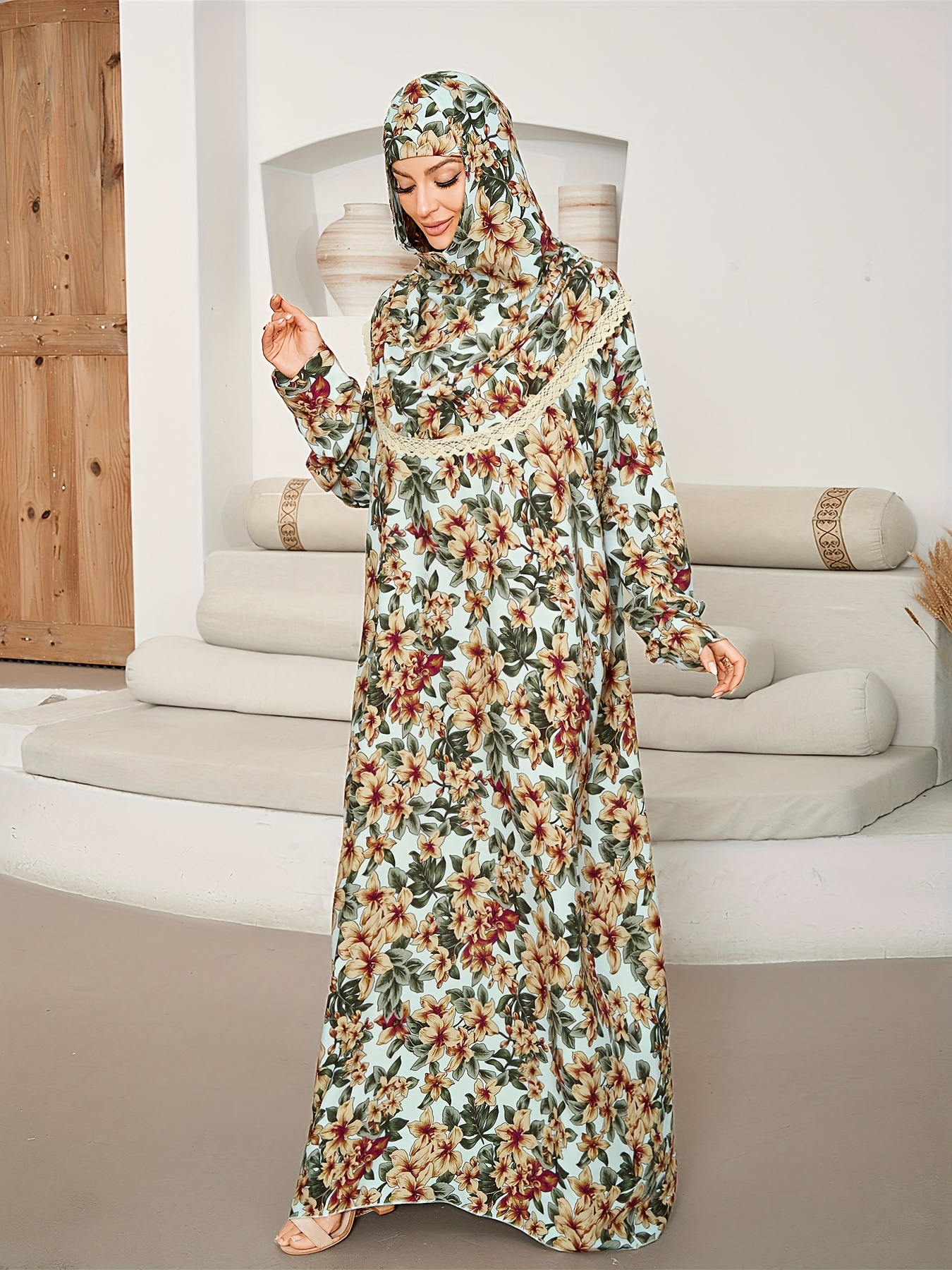
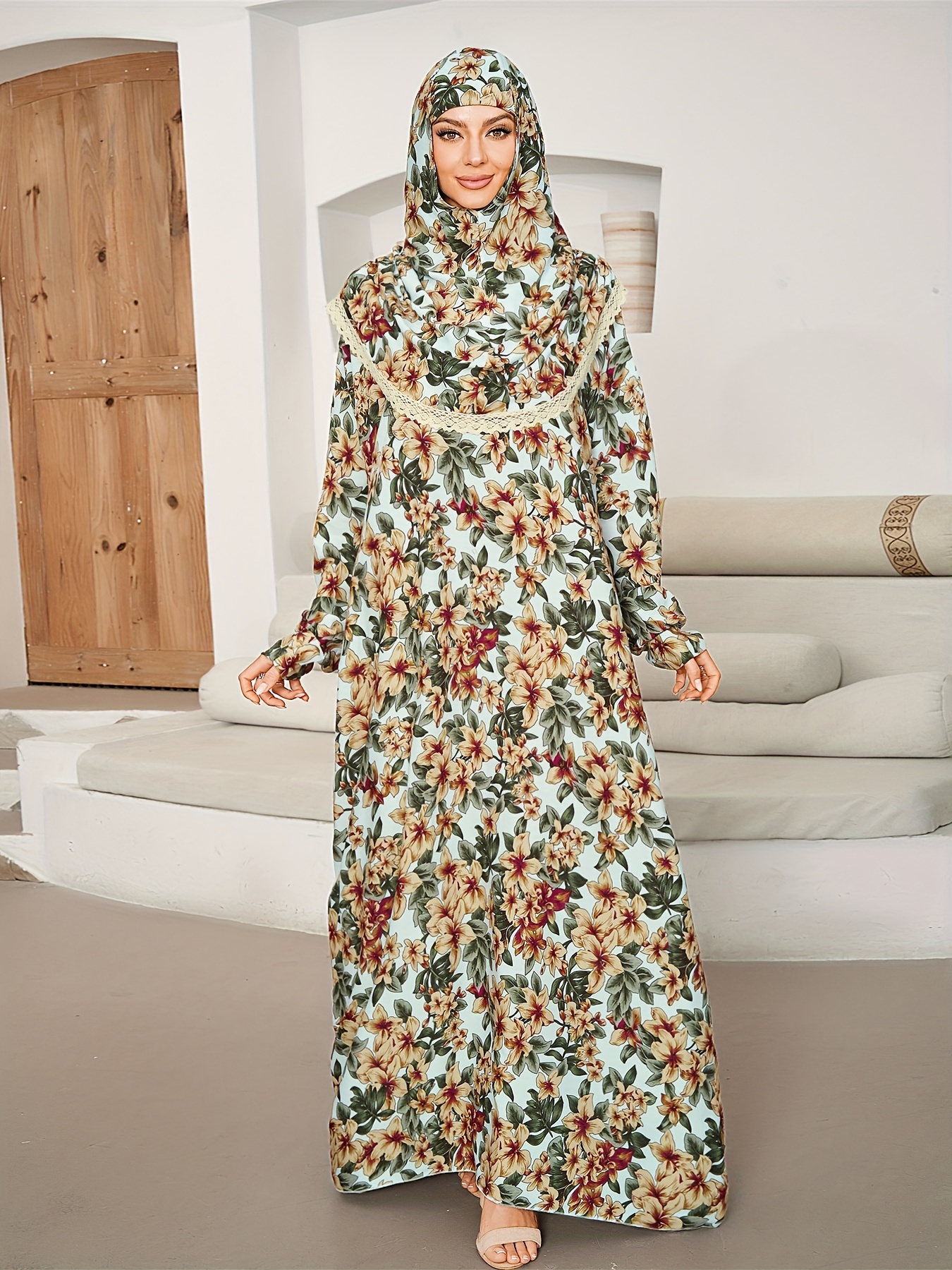
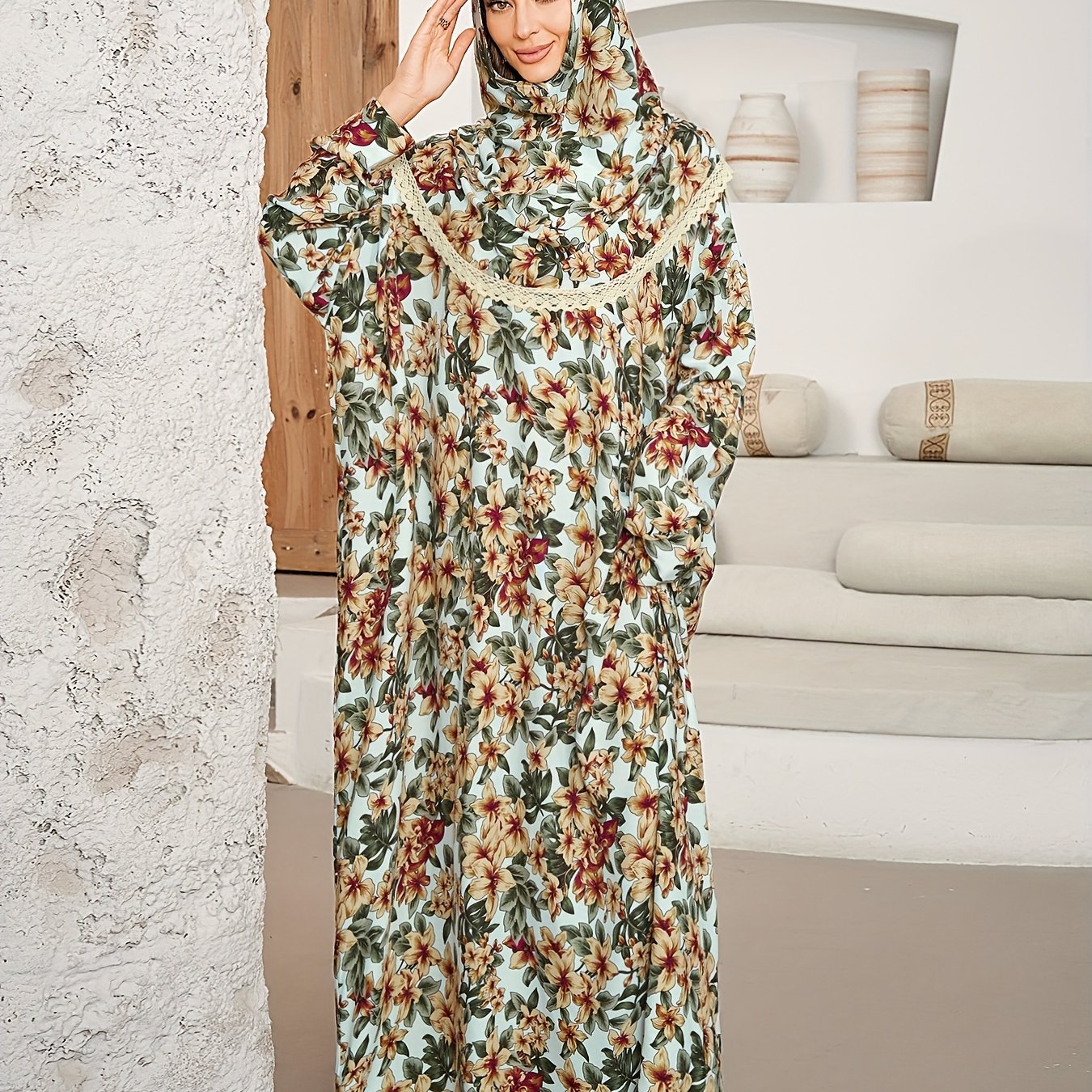
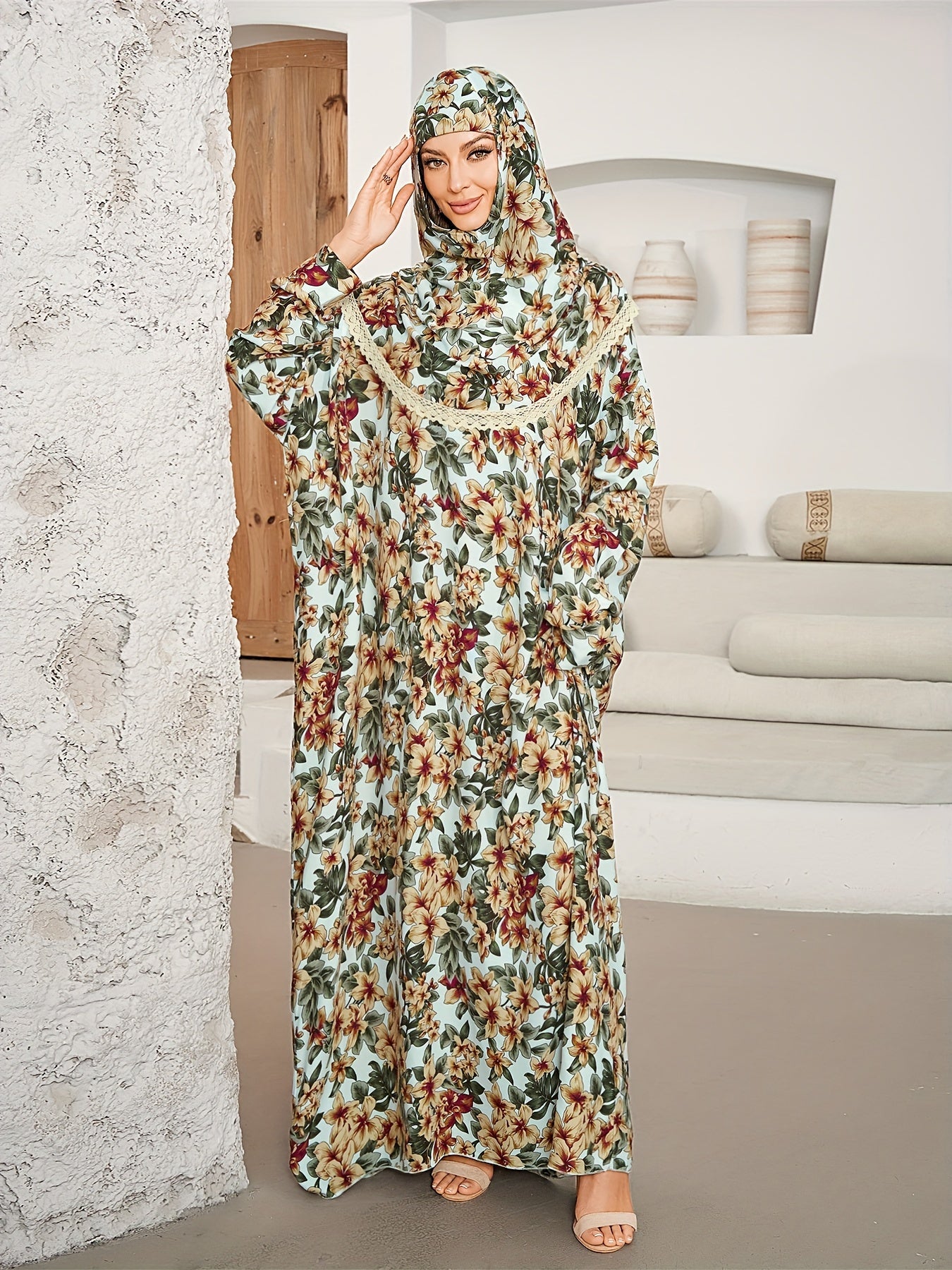
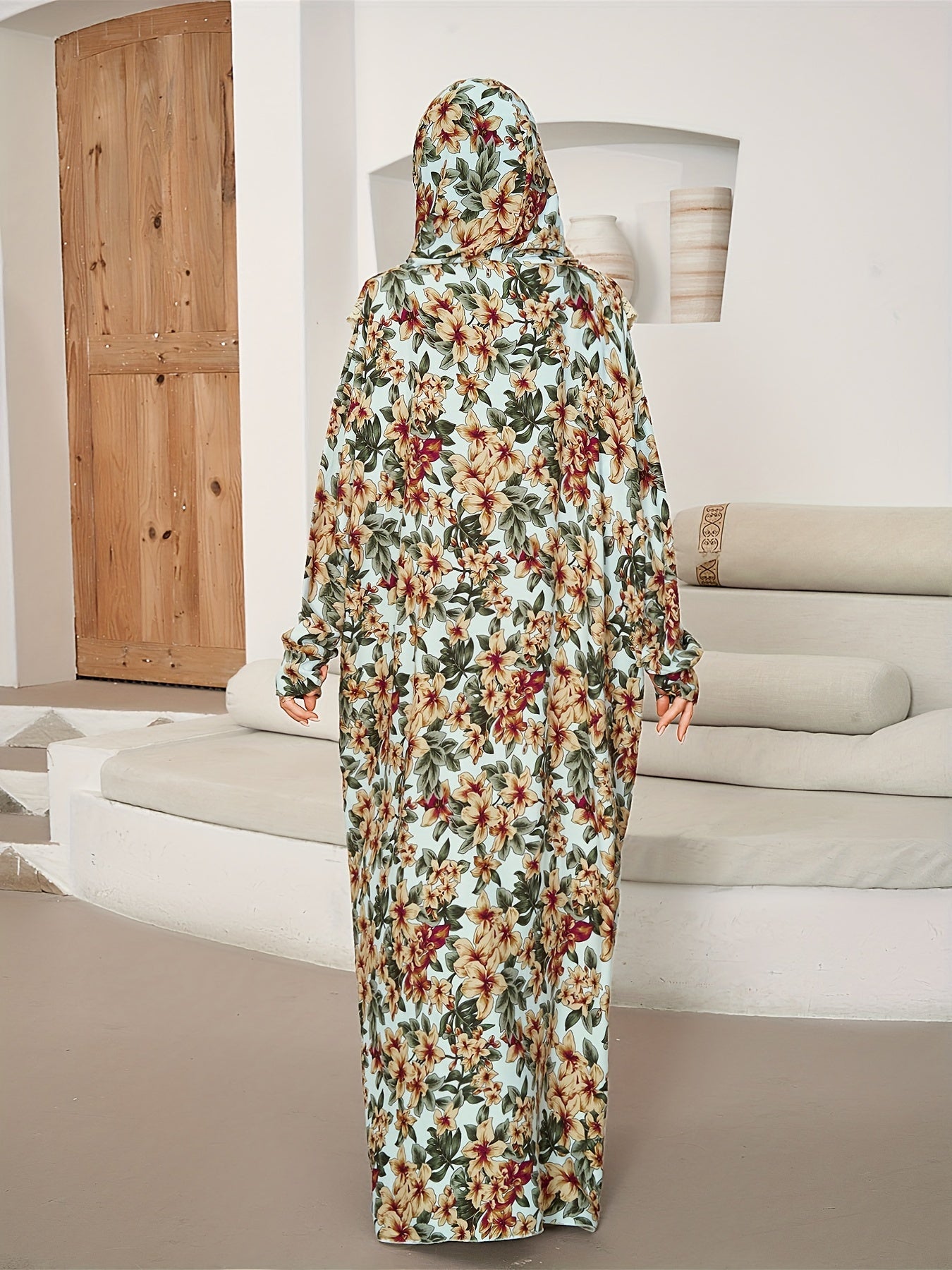
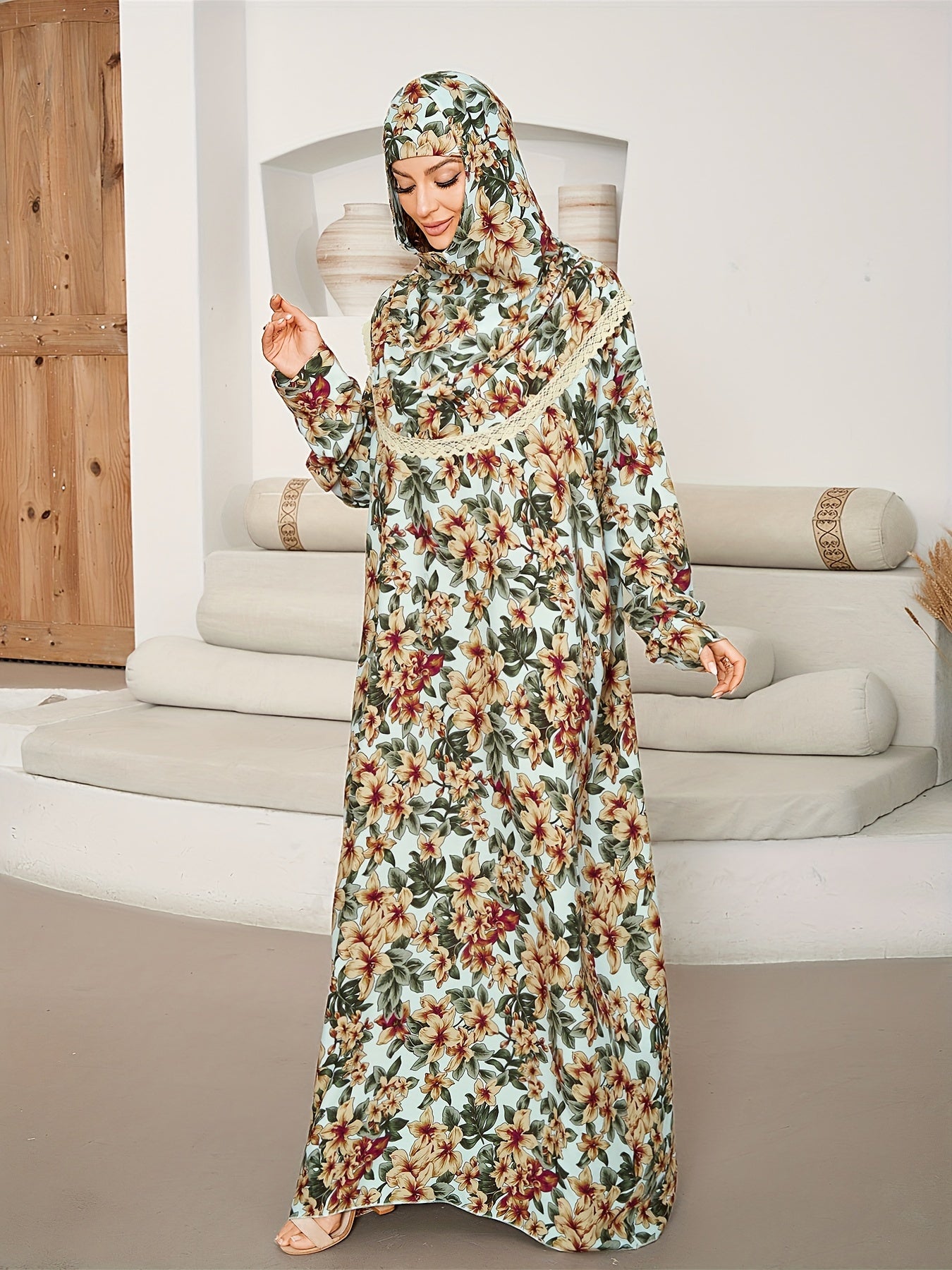
Ramadan Plus Size Abaya Dress – Floral Print Jilbab with Lace Trim, Long Sleeves & Hijab for Modest Elegance
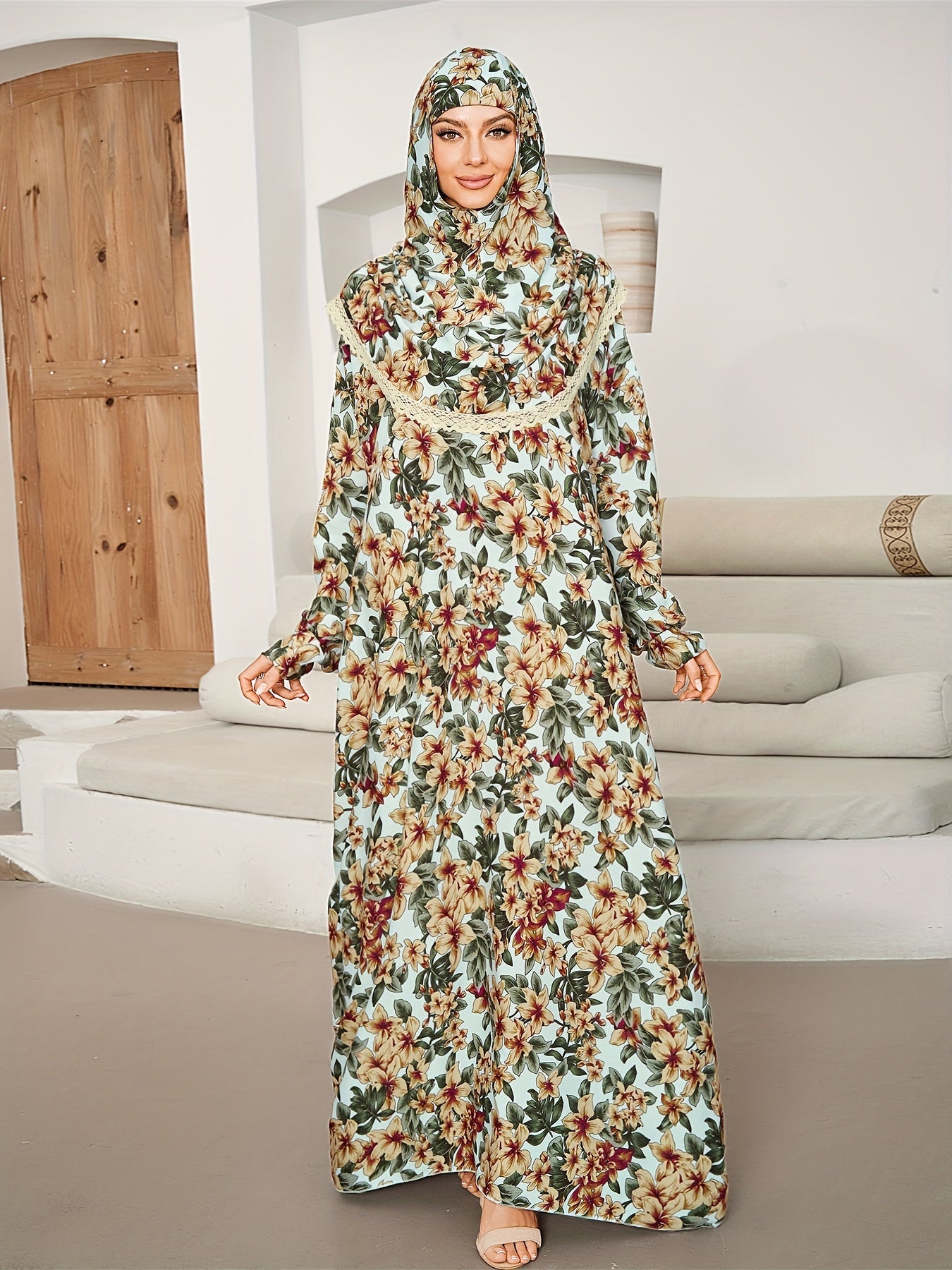
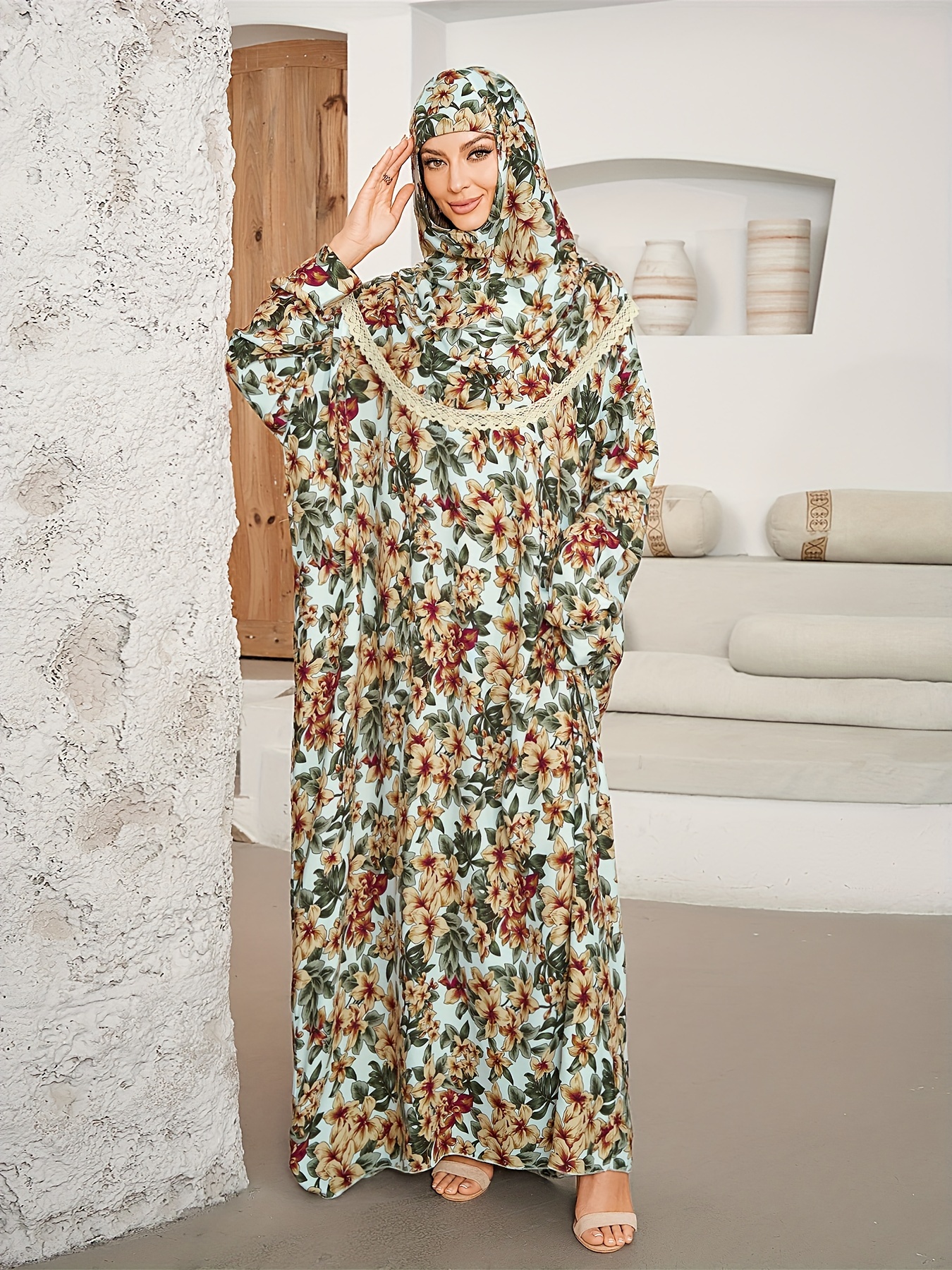
The Plus Size Ramadan Floral Pattern Jilbab Abaya Dress with Hijab is a garment designed with a clear purpose: to combine spiritual intention, cultural tradition, and modern refinement into a single expression of modest fashion. At first glance, the design is striking in its ability to balance ornate detailing with a flowing silhouette that emphasizes comfort and grace. The abaya form, long associated with modesty and dignity, takes on new meaning here through the integration of floral patterns and delicate lace trim that elevate it from a simple robe into a statement of elegance.
The overall shape of the dress is generously cut, allowing for ease of movement while maintaining full coverage. This is essential in the design of plus size garments, where comfort and confidence are given equal importance. The wide, flowing lines of the dress ensure that no matter the body shape, the wearer experiences a silhouette that feels both regal and effortlessly wearable. The inclusion of a long sleeve cut underscores the garment’s purpose as an attire suitable for prayer, Ramadan gatherings, and formal occasions, where modest presentation is of central importance.
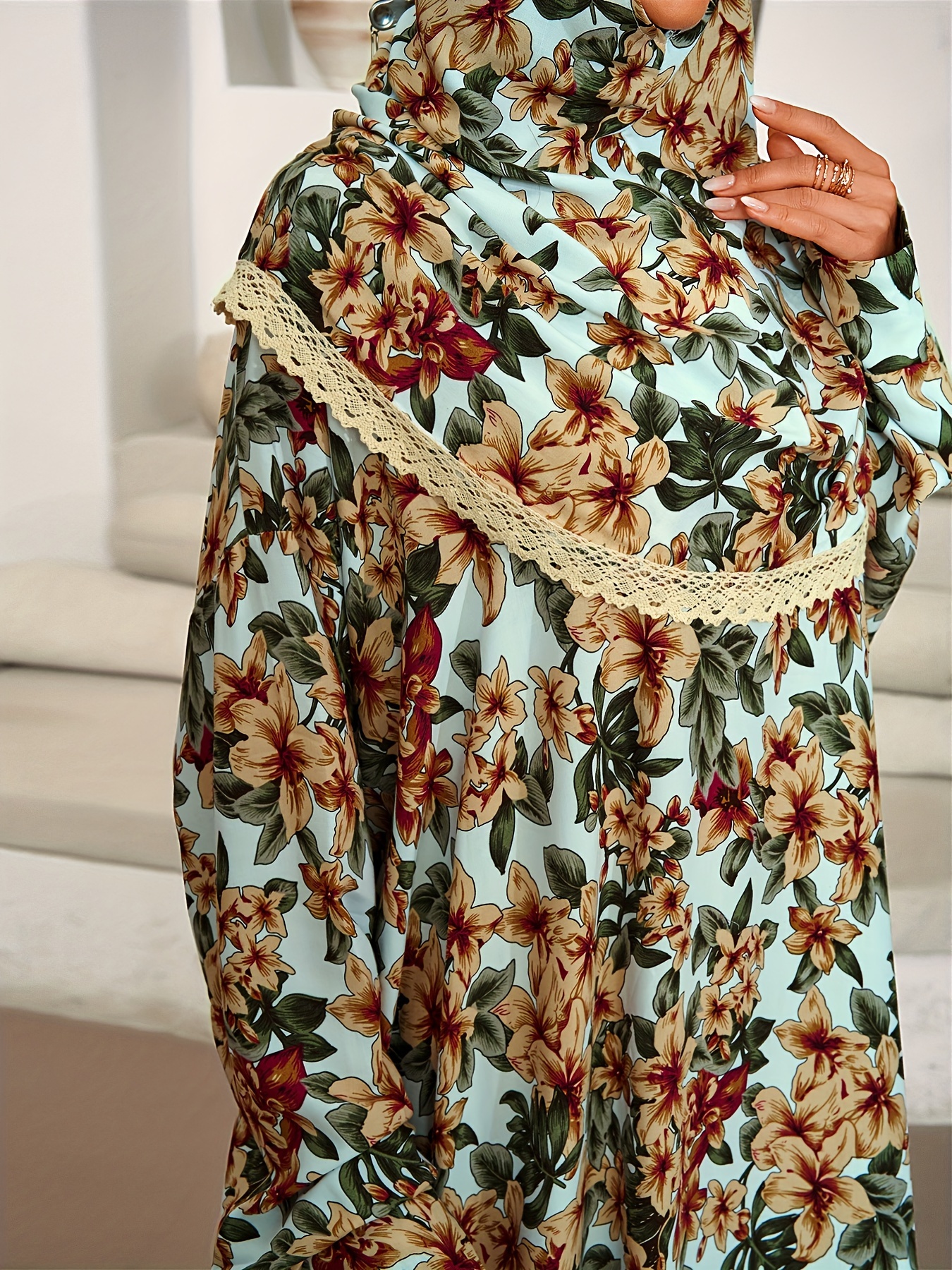
The floral patterns woven into the fabric’s design tell a subtle story of renewal and femininity. Flowers, often symbolic of growth, beauty, and spiritual blossoming, add a softness to the abaya’s strong lines. This floral motif not only offers visual appeal but also deepens the dress’s cultural resonance, as botanical references have long been a part of Islamic art and design. By blending floral patterns with an otherwise structured abaya silhouette, the design achieves a dialogue between tradition and modern fashion sensibilities.
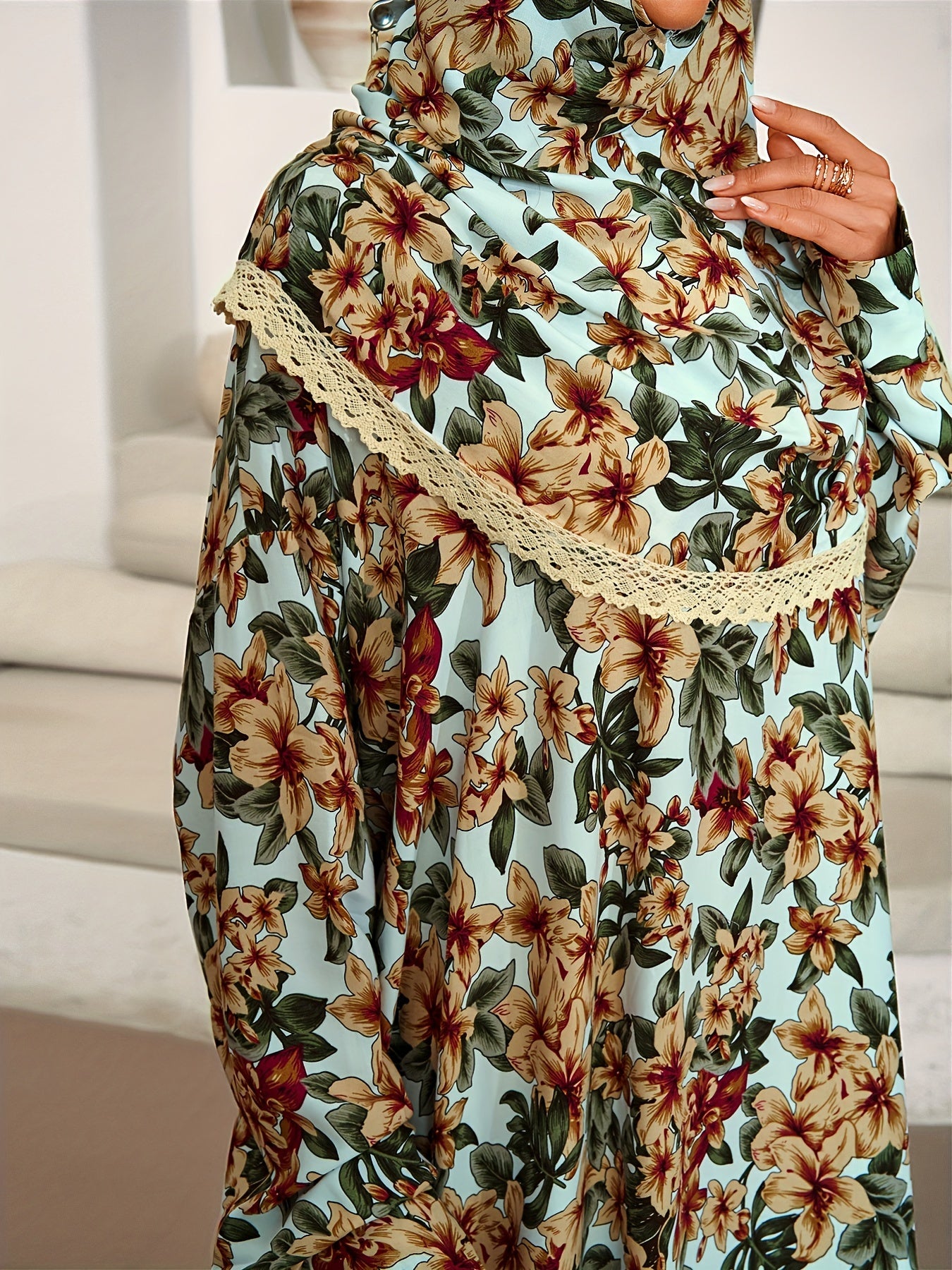
The lace trim is an element that enhances this interplay. Lace, with its delicate texture, introduces a note of refinement without overwhelming the garment. It frames the floral patterns and sleeves, adding depth and sophistication to the overall look. In modest fashion, these details matter; they allow the wearer to communicate personality and individuality without compromising modesty. In this way, the lace trim is not merely decorative but integral to the dress’s identity as a luxury garment designed for spiritual and celebratory contexts.
The addition of a matching hijab completes the ensemble. This integration transforms the garment from a single piece into a set, reflecting the holistic approach often taken in modest fashion. By providing a coordinated hijab, the design ensures harmony and visual continuity, while also recognizing the importance of convenience for the wearer. A thoughtfully matched hijab simplifies the process of preparing for prayer, gatherings, or events, making the set both practical and aesthetically complete.
Thus, the design of the Plus Size Ramadan Floral Pattern Abaya Dress achieves something rare: it acknowledges the wearer’s cultural and religious values while offering a garment that feels distinctly modern, fashionable, and celebratory.
Colors: Symbolism And Versatility In Modest Fashion
Color plays an essential role in modest fashion, where tone and hue often carry deeper symbolic meaning than mere aesthetic preference. The Plus Size Ramadan Floral Pattern Dress embraces this by offering shades that embody tradition, elegance, and spiritual reflection while also ensuring broad wearability.
The base palette is composed of solid tones—classic black, subtle neutrals, and seasonal florals. Black, the timeless cornerstone of abaya fashion, offers unparalleled versatility. It is a color that communicates solemnity and dignity, making it ideal for prayer and religious settings. Yet it also provides a canvas upon which details like lace trim and floral embellishments come alive with greater vibrancy. Neutral hues such as beige or ivory extend the dress’s usability into more casual or daytime contexts, while still retaining an aura of sophistication that aligns with formal settings.
The floral patterns themselves introduce carefully balanced bursts of color that carry their own symbolism. Soft pinks and blues suggest tranquility, renewal, and femininity, while more vivid tones evoke vitality and celebration. During Ramadan, a month marked by reflection, prayer, and community, these color choices gain even greater resonance. They invite the wearer to feel spiritually attuned while also celebrating the beauty of the occasion.
From a practical standpoint, the versatility of these colors makes the abaya an investment piece. It can be styled for multiple occasions without appearing repetitive or limited. Whether worn to family gatherings, prayer nights, or festive events marking Eid, the color palette ensures that the garment is always appropriate and flattering.
Historically, the use of solid tones in Islamic clothing has carried connotations of simplicity and humility. By layering floral patterns over these tones, the design acknowledges tradition while also embracing modern fashion’s emphasis on individuality and creativity. This balance reflects the broader trajectory of modest fashion today, where women seek garments that affirm faith but also speak to their evolving identities as global citizens.
Materials: Craftsmanship For Comfort And Longevity
Fabric choice is one of the most critical aspects of any garment, and in the case of modest wear designed for prayer and special occasions, it takes on heightened importance. The Plus Size Ramadan Floral Pattern Jilbab Abaya Dress with Hijab is crafted from high-quality polyester blends, chosen for their balance of durability, breathability, and fluid drape.
Polyester, though often considered a modern fabric, has become integral to contemporary modest fashion because of its ability to resist wrinkles, retain shape, and maintain vibrant colors even after repeated washes. For plus size garments, this is especially important, as the fabric must fall gracefully without clinging or losing its form. The result is a garment that looks freshly pressed and refined throughout the day, whether worn during long prayer sessions or festive family gatherings.
The material’s lightweight composition ensures comfort across multiple seasons. In warmer months, the fabric allows for sufficient airflow, reducing discomfort while still providing the necessary coverage. During cooler periods, the layering potential of the garment ensures that it can be worn over undergarments or paired with shawls and outer layers without feeling heavy or restrictive.
The lace detailing adds another dimension of craftsmanship. Unlike mass-produced trim, the lace used here is carefully selected for its fine texture and durability. It is not simply stitched onto the garment as an afterthought but integrated into the design to enhance both visual appeal and tactile experience. Lace, with its delicate openness, complements the sturdier polyester fabric, creating a balance between strength and delicacy.
Durability also plays into the garment’s long-term value. Polyester blends resist fading, which is crucial when floral patterns are involved. A faded print can quickly diminish the elegance of a garment, but here the choice of fabric ensures that the florals remain vibrant season after season. For women seeking investment pieces in their wardrobes, this durability transforms the abaya into more than a single-season purchase; it becomes a lasting symbol of both faith and fashion.
Functionality: Bridging Spirituality And Everyday Use
One of the defining features of this garment is its ability to function seamlessly across contexts. While primarily designed as a prayer dress for Ramadan, the Plus Size Floral Pattern Jilbab Abaya is not confined to religious settings. Its design and construction allow it to move fluidly between spiritual and social occasions, giving it a versatility that modern modest fashion increasingly demands.
For prayer, the garment offers full coverage through its long sleeves, flowing cut, and matching hijab. These elements ensure that the wearer can engage in prayer with confidence and ease, knowing that modesty requirements are fully met. The generous sizing also ensures that movement during prayer—whether bowing, kneeling, or sitting—remains unrestricted and comfortable.
Beyond prayer, the dress functions as elegant attire for family gatherings, community iftars, or formal events marking the conclusion of Ramadan. The lace trim and floral detailing elevate it from being merely practical to being celebratory, acknowledging the importance of dressing with intention during moments of joy and togetherness.
Functionality also extends to practical concerns such as maintenance and wearability. The polyester fabric’s resistance to wrinkles reduces the need for ironing, while its easy-care properties mean it can withstand regular washing without deterioration. For women with busy schedules, especially during Ramadan when family, spiritual, and social obligations converge, this practicality is invaluable.
The inclusion of a coordinated hijab underscores the garment’s holistic functionality. It eliminates the need for the wearer to search for matching pieces, ensuring that the ensemble always feels polished and intentional. This thoughtful integration demonstrates an understanding of the modern modest consumer’s needs: garments that respect tradition but also simplify daily life.
In this way, the Plus Size Ramadan Floral Pattern Jilbab Abaya Dress achieves a rare combination. It is deeply rooted in modest fashion’s cultural and spiritual ethos, yet it is equally attuned to the demands of contemporary lifestyles. By bridging these realms, it becomes not only a garment but also a reflection of how modern women harmonize faith, tradition, and modernity in their everyday lives.
Cultural Relevance: Modesty As A Timeless Expression
The cultural relevance of the Plus Size Ramadan Floral Pattern Jilbab Abaya Dress cannot be overstated. This garment is not only an item of clothing but a vessel of identity, belief, and belonging. Modesty has long been central to Islamic dress traditions, and the abaya, in its many forms, embodies this principle across generations. By incorporating floral patterns, lace embellishments, and an inclusive plus-size silhouette, this particular dress situates itself at the intersection of cultural fidelity and modern inclusivity.
For many women, modest dress is not just a fashion choice but a reflection of deeply held values. The abaya has always represented dignity, humility, and respect for faith, offering a sense of spiritual grounding. When such values are woven into garments designed for prayer and Ramadan, the connection between clothing and devotion becomes even stronger. Ramadan itself is a month of reflection, charity, and worship; wearing garments that honor these practices adds symbolic depth to the rituals of prayer and gathering.
At the same time, modest clothing has entered global conversations about empowerment, inclusivity, and cultural recognition. The Plus Size Ramadan Floral Pattern Dress is part of this larger dialogue. It gives voice to women who seek garments that reflect both their spiritual commitments and their individuality. The floral patterns and lace accents express a subtle sense of personal style, demonstrating that modesty does not require erasure of self-expression.
The inclusion of plus size tailoring further underscores the garment’s cultural relevance. For decades, mainstream fashion neglected the needs of women whose bodies did not conform to narrow ideals. By embracing inclusivity, the design reflects a broader cultural shift toward representation and equality. For Muslim women, this inclusivity is especially important; it affirms that modest fashion belongs to every body type, and that elegance and spirituality are accessible to all.
In this sense, the Plus Size Floral Abaya with Hijab is more than a prayer garment. It is a cultural statement that says modesty can be elegant, inclusive, and timeless. It acknowledges heritage while adapting to the changing needs and aspirations of women in contemporary society.
Historical Roots: The Abaya Through The Ages
To fully appreciate the significance of this garment, one must consider the long history of the abaya and its place within Islamic culture. While styles and fabrics have evolved, the abaya has consistently symbolized modesty, dignity, and social identity across centuries. It has not merely been clothing but a cultural marker, an expression of faith, and a means of uniting women across geographies and generations.
Originating in the Arabian Peninsula, the abaya began as a simple black cloak worn to provide coverage and protection from the desert environment. In its earliest form, it was both practical and symbolic: shielding women from sun, wind, and sand while simultaneously signaling adherence to cultural values of modesty. The choice of black carried meanings of humility and restraint, while the simplicity of the garment ensured universality. Its flowing silhouette was never meant to suppress individuality but to anchor women within the broader cultural narrative of dignity and respect.
As Islamic civilization expanded, the abaya traveled beyond its birthplace and adapted to new regions. In each cultural context, it absorbed local influences, creating a mosaic of variations while never losing its essence. In Ottoman culture, for example, abayas incorporated rich textiles such as velvet, brocade, and silk, often embroidered with gold or silver threads. These additions reflected not only modesty but also social prestige, demonstrating how garments could express both faith and refinement. Women of standing wore abayas that were both protective and ornamental, signaling their roles within layered societies.
In South Asia, long flowing garments akin to abayas became entwined with regional traditions. Heavy embroidery, intricate beadwork, and vibrant fabrics gave these garments a distinct identity. While the silhouette resembled the original cloak, the addition of South Asian textile artistry enriched its form. Across the subcontinent, such adaptations became symbols of cultural fusion—where the principles of modesty were preserved but expressed through local aesthetics.
North Africa provided yet another interpretation. Here, looser robes, often made from wool or cotton, carried echoes of abaya styles while incorporating Berber and Arab elements. In Morocco and Algeria, women wore garments that balanced modest coverage with artistic flair, often using stripes, geometric patterns, and handwoven textiles. These garments demonstrated how the abaya’s universality could harmonize with indigenous traditions without diminishing their distinctiveness.
The enduring presence of the abaya across these diverse geographies underscores its cultural importance. It is not bound to a single nation or people but is instead a unifying garment across Islamic traditions. From Morocco to Malaysia, from Turkey to Pakistan, women recognize the abaya as both familiar and meaningful, even as regional variations distinguish one from another. Its persistence across centuries speaks to its timelessness, proving that modesty is not a fleeting fashion but an enduring principle embedded in collective identity.
What makes the abaya remarkable is its ability to evolve while maintaining its core symbolism. It has weathered historical transitions, political changes, and global shifts in fashion without losing its place in the hearts of women. Where Western fashion cycles often thrive on constant reinvention, the abaya thrives on continuity, adapting not by discarding tradition but by reinterpreting it. This resilience explains why the abaya remains as relevant today as it was in centuries past.
The Plus Size Ramadan Floral Pattern Abaya Dress continues this lineage while responding to contemporary contexts. Its floral motifs and lace trim are not arbitrary embellishments but references to centuries of textile artistry in the Islamic world, where floral patterns dominated architecture, calligraphy, and design. These motifs echo the gardens of Islamic art, where geometry and nature combine to reflect divine harmony. By incorporating florals, the garment connects the wearer to a lineage of beauty that transcends time and geography.
At the same time, its plus size inclusivity acknowledges modern understandings of representation. Historically, fashion often excluded women whose bodies did not conform to narrow ideals. By embracing inclusivity, this abaya moves beyond those limitations to affirm that modesty and elegance belong to every body. This is not merely a practical decision but a cultural shift—an acknowledgment that modern modest fashion must be expansive, diverse, and representative of the real lives of women today.
By merging history and modernity, this garment bridges past and present. It honors the abaya’s roots as a cloak of modesty and respect while reimagining it for women who wish to embody tradition in today’s global fashion landscape. It carries echoes of desert winds, Ottoman palaces, South Asian embroidery halls, and North African weaving traditions, while simultaneously speaking to the needs of a contemporary woman navigating a complex and interconnected world.
This synthesis gives the garment timeless relevance. It is not just an article of clothing but a living archive, preserving centuries of cultural memory while adapting to present-day values. It tells a story that is both personal and collective, intimate and universal, ancient and modern. When a woman wears this abaya, she is not only clothing herself in fabric but in history—a history that continues to evolve with her.
Ramadan And The Ritual Of Dress
The connection between clothing and Ramadan is profound. Ramadan is not only a time of fasting and prayer but also of heightened mindfulness in every aspect of life, including attire. The garments worn during this month reflect the values of humility, devotion, and celebration. The Plus Size Ramadan Floral Pattern Abaya Dress is crafted with this very purpose in mind.
During prayer, garments must meet specific requirements of modesty, providing full coverage and ease of movement. This abaya meets those requirements while also offering a sense of beauty and grace that enhances the wearer’s spiritual state. The lace trim, floral patterns, and matching hijab transform prayer attire into something ceremonial, reminding the wearer that prayer itself is a moment of beauty and connection with the divine.
Beyond prayer, Ramadan is a time of gathering. Families and communities come together for iftar dinners, late-night prayers, and acts of charity. These gatherings often blend spiritual devotion with social celebration, and attire reflects this duality. The Plus Size Floral Abaya with Hijab is perfectly suited to these contexts. Its design honors modesty, while its detailing communicates joy, elegance, and reverence for the sacred month.
Eid al-Fitr, which concludes Ramadan, further emphasizes the ritual of dress. On this day, new or special garments are traditionally worn as an expression of gratitude and celebration. The Plus Size Ramadan Floral Pattern Dress, with its festive design, stands as an ideal choice for Eid gatherings. Its floral motifs echo the spirit of renewal, while its lace trim offers a celebratory touch that resonates with the joy of the occasion.
In this way, the garment participates directly in the rituals of Ramadan. It is not merely a piece of fabric but an extension of spiritual practice, reinforcing the values of modesty, gratitude, and community that define the month.
The Global Rise Of Modest Fashion
While the abaya has deep roots in Islamic culture, the past two decades have witnessed the global rise of modest fashion. What was once a niche market has become an international movement, with designers, retailers, and consumers recognizing the appeal of clothing that balances coverage with elegance. The Plus Size Ramadan Floral Pattern Dress is situated within this global movement, embodying both tradition and trend.
Fashion capitals from London to Dubai now host modest fashion weeks, where abayas, jilbabs, and hijabs are showcased alongside couture and ready-to-wear collections. This visibility has redefined perceptions of modest clothing, positioning it not as a limitation but as an artistic and cultural statement. Garments like this plus size floral abaya reflect that shift, offering women options that are fashionable, functional, and faithful to their values.
The demand for plus size modest wear has grown significantly within this movement. Representation matters, and women across the globe are seeking garments that celebrate their bodies without compromising modesty. By providing inclusive sizing, this dress not only fills a market gap but also participates in a cultural transformation where all women are affirmed as deserving of beauty, comfort, and dignity.
Brands such as Fabulive have been instrumental in shaping this global conversation. By designing garments that respect cultural traditions while appealing to contemporary tastes, they elevate modest fashion into the realm of luxury editorial style. The Plus Size Ramadan Floral Pattern Abaya Dress is an example of this approach—crafted not as a compromise between faith and fashion, but as a seamless integration of both.
As modest fashion continues to rise, garments like this abaya will remain central. They offer more than coverage; they offer meaning, heritage, and the possibility of self-expression within a framework of cultural respect.
Styling Versatility: From Prayer To Celebration
The beauty of the Plus Size Ramadan Floral Pattern Jilbab Abaya Dress lies not only in its design but in its adaptability to multiple contexts. While its primary purpose is to serve as a modest and elegant prayer dress, the garment is carefully constructed to transition seamlessly into social and celebratory settings. This adaptability allows the wearer to create a wardrobe that is at once spiritually intentional and fashion-forward.
For daily prayers, the abaya offers the required full coverage while maintaining ease of movement. The long sleeves, flowing hemline, and matching hijab provide a dignified silhouette suitable for religious devotion. Yet the addition of lace trim and floral motifs distinguishes the dress from purely functional garments, elevating it into a piece that also carries aesthetic charm.
When styled for family gatherings, community iftars, or festive occasions, the garment reveals its true versatility. Jewelry can be added to accentuate the lace trim, while accessories such as metallic clutches or embellished sandals highlight its celebratory character. A belt can also be introduced for those who wish to define the waistline while still preserving the overall modest silhouette. This ability to shift from prayerful simplicity to celebratory elegance makes the abaya a cornerstone piece within any modest wardrobe.
During Eid al-Fitr, the garment transforms once again. Eid is traditionally marked by wearing new or special clothing, and the floral motifs and lace embellishments of this dress align beautifully with the spirit of renewal and joy. By pairing the abaya with more formal accessories—such as pearl earrings or embroidered slippers—the wearer signals a transition from quiet devotion to community celebration.
The inclusion of a coordinated hijab within the ensemble enhances styling versatility. Because the hijab is already matched to the garment’s tone and detailing, it provides a unified appearance without requiring additional effort. This ensures that the wearer always looks composed, whether preparing quickly for prayer or dressing thoughtfully for a larger event.
In this way, the Plus Size Ramadan Floral Pattern Abaya Dress is not a single-purpose garment but a multi-functional piece that supports the rhythms of a woman’s life. It honors moments of solitude and prayer while also embracing the joy of gatherings, celebrations, and personal expression.
Modern Adaptations: Tradition Reimagined
While the abaya has a centuries-long history, modern modest fashion has reimagined its possibilities. The Plus Size Ramadan Floral Pattern Dress is part of this reimagining, demonstrating how tradition can be preserved while also adapted to contemporary sensibilities.
One of the most striking modern adaptations is the use of lace detailing. Lace, once reserved for European luxury fashion, has been seamlessly integrated into abaya design to introduce a refined texture that enhances the garment’s elegance. By incorporating lace trims along the sleeves and edges, this abaya acknowledges global fashion influences while maintaining modesty as its foundation.
The floral patterns represent another modern adaptation. Historically, abayas were often plain and monochrome, emphasizing simplicity and modesty. Today, floral designs allow women to express individuality and femininity without undermining cultural values. The floral motifs on this garment suggest renewal, nature’s beauty, and a connection to artistry, themes that resonate both spiritually and aesthetically.
Inclusivity is perhaps the most important modern adaptation embodied by this abaya. The decision to design specifically for plus size women signals a recognition that modest fashion must serve all bodies. This adaptation moves away from restrictive sizing that often excluded many women from participating fully in fashion. Instead, it creates a garment that celebrates diversity of form while still upholding the universal principles of modesty.
Technological advancements in fabric production also play a role in these modern adaptations. Polyester blends, chosen for this garment, allow for vibrant prints, durability, and ease of care—all qualities that suit contemporary lifestyles. Where older fabrics might have required intensive care or lost vibrancy after frequent washing, today’s textiles ensure that garments retain their elegance over time, fitting the fast-paced yet style-conscious rhythm of modern life.
Together, these adaptations demonstrate that tradition and innovation are not opposites but complementary forces. The Plus Size Ramadan Floral Pattern Abaya honors the abaya’s origins while integrating new aesthetics, inclusive design, and practical functionality, making it a modern icon of modest fashion.
Seasonal Wear: A Garment For Every Climate
Another dimension of this garment’s versatility lies in its adaptability to seasonal changes. Unlike clothing designed solely for either summer or winter, the Plus Size Ramadan Floral Pattern Abaya Dress functions across climates, offering year-round wearability.
In warmer seasons, the lightweight polyester fabric allows for breathability. Its flowing cut ensures that air circulates freely, reducing discomfort during hot weather. The floral motifs gain added resonance during spring and summer, echoing the season’s natural abundance and aligning with themes of growth and renewal. For Ramadan, which shifts across the calendar depending on the lunar cycle, such breathability is invaluable. It ensures that women can engage fully in prayer and community events without being weighed down by heavy or stifling fabrics.
During cooler months, the garment’s flowing design allows it to be layered with ease. An undershirt or thermal layer can be added without compromising the abaya’s silhouette. Outerwear such as shawls, cloaks, or coats can also be paired with it, ensuring warmth while preserving elegance. The darker tones available in this design—such as black or navy—align well with winter’s aesthetic, providing a dignified and seasonally appropriate look.
The lace detailing and floral motifs ensure that the garment remains visually relevant across seasons. In spring and summer, they harmonize with the vitality of nature. In autumn and winter, they provide contrast against the muted tones of the environment, offering a reminder of beauty and resilience. This adaptability underscores the garment’s value as a long-term wardrobe investment.
The coordinated hijab also contributes to seasonal flexibility. During summer, its lightweight fabric ensures comfort, while in cooler months, it can be layered with undercaps or paired with heavier outer hijabs for added warmth. By designing the hijab to match the abaya, the ensemble ensures that elegance is never compromised, no matter the season.
Ultimately, the Plus Size Ramadan Floral Pattern Abaya Dress transcends seasonal limitations. It is designed to be worn year-round, reflecting the rhythm of both the lunar calendar and the changing climates in which women live.
Contemporary Styling Narratives
The way a garment is styled often determines its cultural and personal narrative. The Plus Size Ramadan Floral Pattern Dress offers a wide canvas upon which women can project their own stories of faith, elegance, and individuality.
For professional settings, the abaya can be styled with minimal accessories to emphasize refinement. A simple leather handbag, understated earrings, and neutral-toned footwear allow the garment’s lace and floral patterns to take center stage. This approach demonstrates that modest fashion can also command authority in modern workplaces.
For casual outings, the abaya can be paired with comfortable flats, a lightweight tote bag, and subtle makeup. The floral design lends itself well to daytime wear, ensuring that the garment does not appear overly formal. By adapting accessories, the abaya becomes a reliable choice for errands, family visits, or casual social gatherings.
For more formal occasions, such as weddings or religious celebrations, the abaya’s lace trim and floral motifs can be highlighted with luxurious accessories. Statement jewelry, embroidered clutches, and ornate footwear elevate the garment, transforming it into evening attire. The flowing silhouette, combined with refined detailing, ensures that the abaya holds its own in even the most formal of contexts.
The inclusion of plus size tailoring ensures that these styling narratives are accessible to all women. It affirms that elegance is not confined to specific body types but is instead an expression of grace and dignity available to everyone.
Through these styling possibilities, the Plus Size Ramadan Floral Pattern Jilbab Abaya Dress becomes more than a single outfit. It becomes a canvas for personal expression, a versatile piece that can be shaped by the wearer’s imagination and the occasion’s demands.
Maintenance: Simple Care For Enduring Elegance
A garment’s true worth is often revealed not just in its beauty but in the practicality of its upkeep. The Plus Size Ramadan Floral Pattern Jilbab Abaya Dress with Hijab has been designed with the modern woman in mind, offering the rare combination of sophistication and low-maintenance care. While its lace trims and floral motifs may suggest delicacy, the carefully chosen polyester fabric ensures durability and ease of use, allowing the dress to retain its elegance even with frequent wear.
The polyester base resists wrinkles, which means the abaya maintains its polished appearance without requiring constant ironing. For women with busy schedules, particularly during Ramadan when life is filled with spiritual practices and community gatherings, this wrinkle resistance is invaluable. The wearer can move confidently from prayer to social events knowing her attire will continue to look graceful and refined.
Caring for the garment requires no complicated regimen. Gentle hand washing in cool water with a mild detergent will keep the fabric soft and vibrant. The lace detailing, though intricate, is secured with careful stitching to ensure resilience against regular cleaning. For those who prefer convenience, professional dry cleaning is also an option, particularly before formal events or special gatherings. After washing, the garment should be laid flat to dry, preserving its silhouette and preventing any distortion in its elegant drape.
The matching hijab, crafted from the same durable yet lightweight material, follows the same maintenance practices. This harmonizes the care routine and ensures that both pieces of the set maintain a consistent look and feel over time. The hijab’s durability ensures it will retain its softness and vibrancy, complementing the abaya across multiple seasons.
By combining luxurious detailing with practical care requirements, this abaya demonstrates that beauty and ease can coexist. It affirms that garments designed for devotion and celebration should never demand excessive effort but instead support the wearer’s daily rhythm with grace and simplicity.
Sustainability: Fashion With Conscious Integrity
In an era where sustainability has become an essential consideration, the Plus Size Ramadan Floral Pattern Abaya Dress stands as a thoughtful choice for women who value mindful fashion. While modest clothing has long been associated with timelessness and durability, this garment goes a step further by emphasizing responsible material use, long-term wearability, and reduced waste.
The polyester blend, chosen for its strength and resilience, ensures the garment does not succumb to the rapid deterioration associated with fast fashion. Its wrinkle resistance and color retention mean it can be worn across seasons without losing its elegance, reducing the need for frequent replacements. Each time the dress is worn for prayer, Ramadan, or Eid, it affirms the value of investing in garments designed for endurance rather than disposability.
The timeless floral motifs and lace trims also contribute to its sustainable character. Unlike garments tied to fleeting trends, this abaya is designed to transcend seasonal fads. It is equally relevant today as it will be in the years to come, allowing women to cultivate a wardrobe grounded in longevity. Choosing such pieces encourages intentional consumption—prioritizing quality and meaning over volume and novelty.
Moreover, sustainability is not only about fabric or durability but about inclusivity. By providing a plus size silhouette, this garment resists the exclusivity often associated with fashion industries. Inclusivity itself is a form of sustainability, ensuring that all women are represented and valued within the modest fashion landscape. In affirming that every woman deserves access to garments of quality and dignity, the abaya strengthens the social dimension of sustainability.
When one chooses this abaya, one is not only acquiring a garment but participating in a philosophy of fashion that values depth, endurance, and responsibility. In a world increasingly aware of its environmental and cultural footprint, this alignment with sustainability makes the garment as meaningful as it is beautiful.
Long-Term Value: A Wardrobe Investment
The concept of long-term value transforms this abaya from a mere purchase into an investment. With its careful balance of design, material, and cultural resonance, the Plus Size Ramadan Floral Pattern Dress offers a return that goes beyond cost. It provides durability, versatility, and emotional resonance, making it an enduring cornerstone of any wardrobe.
From a practical perspective, the durability of polyester ensures the garment maintains its structure and vibrancy even after years of wear. Unlike garments that quickly fade or lose their shape, this abaya retains its elegance across repeated use. For women who wear abayas regularly, this reliability means that one well-crafted piece can replace multiple lower-quality alternatives, offering both financial and environmental savings.
Versatility further enhances its long-term value. The dress transitions from prayer attire to festive wear, from Ramadan evenings to Eid mornings, and from casual family gatherings to formal community events. Its adaptability ensures it will never feel limited or redundant in a wardrobe. Instead, it becomes the garment one instinctively reaches for whenever modesty, beauty, and comfort are required.
The emotional value of the garment must also be acknowledged. Worn during Ramadan prayers, it becomes infused with memories of devotion and spiritual growth. Worn during Eid, it becomes tied to moments of joy and celebration with family and community. Over time, it transcends fabric and pattern, becoming a vessel of personal history and cultural identity. This emotional resonance is what elevates the abaya into a true investment piece—it not only serves the body but also nourishes the spirit.
The inclusion of a coordinated hijab further strengthens its value proposition. By offering a complete set, the garment ensures that the wearer always possesses a cohesive, ready-to-wear ensemble. This eliminates the need to search endlessly for matching pieces, saving both time and money while providing peace of mind.
In this sense, the Plus Size Ramadan Floral Pattern Jilbab Abaya Dress with Hijab represents more than modest attire. It is a conscious choice to invest in timelessness, inclusivity, and spiritual expression. Its long-term value lies not only in its durability but in its ability to accompany the wearer through countless moments of life—sacred, social, and personal.
Fashion As An Act Of Devotion
There are moments when clothing transcends fabric, stitching, and pattern. It becomes a spiritual vessel, carrying with it not only the identity of the wearer but also the resonance of belief and belonging. The Plus Size Ramadan Floral Pattern Abaya Dress emerges as one of those garments. Its flowing lines and carefully balanced details are more than visual statements; they are invitations to live with intentionality. When modest fashion aligns with values, it stops being a surface-level adornment and becomes devotion expressed in material form.
Every abaya is a narrative, but this particular one carries a stronger dialogue between inner life and outer appearance. Its presence allows the woman who wears it to communicate faith without words, to embody dignity without effort, and to affirm cultural roots without compromise. In a world where fashion is often accused of superficiality, garments like this one resist that critique. They tell us that when clothing is crafted with integrity, it can serve as an extension of prayer, a reminder of faith, and an act of reverence in itself.
What is striking is the balance between devotion and individuality. The abaya, in its floral elegance, does not erase the self; instead, it enhances the self while anchoring it in modesty. In this balance lies the garment’s greatest power: it reminds us that faith does not demand the abandonment of beauty but rather encourages a refinement of beauty into something purposeful and enduring.
Symbols Woven Into Fabric
Every detail of this abaya contains symbolism that extends beyond fashion. The lace trim is not merely decoration but a metaphor. It is delicate, intricate, and light in its construction, yet it is resilient in its form. This duality mirrors the life of the modern woman who moves between roles of strength and grace. Lace has always been associated with refinement, but here it takes on a deeper narrative—it becomes a reflection of inner resilience framed by outward elegance.
The floral patterns embedded in the dress hold their own language. Flowers symbolize renewal, rebirth, and the cycles of life. Ramadan itself is a month that mirrors these cycles: a time of reflection, abstention, and eventual renewal through celebration. The presence of florals in the garment echoes this rhythm, reminding the wearer of her alignment with nature’s balance and divine design. Each bloom printed on the abaya speaks of beauty that is not fleeting but rooted in continuity, growth, and meaning.
The plus size tailoring carries its own profound message. It asserts that spirituality cannot be confined to societal ideals of size or shape. Faith embraces every body, every woman, every identity. The inclusivity of the design sends a message that is cultural, social, and spiritual all at once: that modesty and elegance are rights, not privileges, and that every woman deserves to feel adorned with dignity. In this way, the abaya ceases to be a garment of limitation and becomes a garment of affirmation.
These symbolic elements come together to create a textile language that speaks directly to the heart. A woman dressed in this abaya is not simply clothed—she is articulated. Her presence carries the weight of cultural heritage, the dignity of faith, and the personal expression of individuality all in one.
A Companion On Life’s Journey
The true beauty of such a garment lies not in how it looks when it is first worn but in how it evolves as a companion throughout life’s journeys. For prayer, it becomes a shield of modesty and a garment of serenity. Its fabric drapes gently around the body, allowing movements of devotion to be unhindered, transforming the act of worship into one infused with physical grace. During these quiet moments, the abaya becomes an intimate partner in reflection, a silent presence that guards dignity while amplifying focus on the spiritual.
In celebration, the same garment shifts its role. Worn for Eid mornings or festive evenings, its floral motifs bloom into significance, reflecting the joy of community and the abundance of blessings. The lace trim that once framed prayer becomes the detailing that frames celebration. Jewelry and accessories may highlight its elegance, but even without them, the garment carries enough refinement to make the wearer feel prepared for any moment of joy.
Beyond these sacred or celebratory contexts, the abaya extends into everyday life. It becomes the attire for family visits, for conversations over tea, for the simple rituals of living. In each of these contexts, it bridges tradition and modernity, allowing the wearer to walk confidently in both worlds. Tradition ensures the garment’s modesty and cultural fidelity; modernity ensures its inclusivity, durability, and relevance in a global fashion dialogue.
Because it is durable and sustainable, the abaya becomes more than seasonal fashion. It becomes an heirloom of experience, a garment that accompanies a woman through different stages of life. Over years, it gathers memories—the Ramadan nights it witnessed, the Eid mornings it celebrated, the daily prayers it accompanied. In this sense, the abaya does not age; it matures alongside its wearer, becoming richer in meaning with every occasion.
Modesty As Liberation
Perhaps the most profound truth embodied in this garment is that modesty is not a form of restriction but a form of liberation. The Plus Size Ramadan Floral Pattern Abaya Dress demonstrates that covering does not diminish beauty—it refines it, elevates it, and grounds it in values that outlast trends. To wear this abaya is to step away from the fleeting tides of fashion cycles and anchor oneself in something eternal.
Modern culture often frames modest clothing as limitation, yet women who choose it understand the opposite reality. Modesty frees the wearer from external pressures to conform to revealing or ever-changing standards. It liberates her from fashion’s often shallow definitions of beauty and instead situates her identity in dignity, grace, and timeless elegance. The abaya becomes the evidence of this liberation. Its floral patterns and lace trims are not distractions but affirmations that beauty need not conflict with modesty.
Wearing this garment is a declaration: beauty and faith are allies, not adversaries. True elegance emerges when clothing reflects both personal identity and enduring principles. The abaya does not silence individuality; it amplifies it through subtlety, refinement, and symbolism. By embracing modesty, the woman who wears it takes ownership of her body, her values, and her presence in the world.
This philosophy extends to the garment’s inclusivity. By offering a design that celebrates plus size women, it dismantles the notion that beauty belongs only to a narrow range of forms. It demonstrates that elegance is expansive, not exclusive, and that dignity belongs equally to all. Such liberation is both personal and collective, affirming the universality of modest fashion as a cultural and spiritual force.
The abaya thus becomes a quiet revolution—an everyday act of devotion and resistance. It resists disposability by embracing sustainability. It resists exclusion by embracing inclusivity. It resists superficiality by embedding depth into its very design. It teaches us that fashion is not trivial when it is aligned with values; it becomes one of the most powerful languages of identity and devotion.
Frequently Asked Questions
What occasions is the Plus Size Ramadan Floral Pattern Abaya Dress most suitable for?
This garment is designed for both spiritual and social occasions. It is perfectly suited for Ramadan prayers, family gatherings, iftar dinners, and the joyful celebrations of Eid. Beyond these, its refined details allow it to transition into weddings, formal community events, or even casual outings, depending on how it is styled.
How should I care for the abaya to ensure its longevity?
The abaya is made from durable polyester with lace detailing. It is best cared for through gentle hand washing in cool water with a mild detergent. To preserve its form, it should be laid flat to dry. Professional dry cleaning is also an option for those who prefer added convenience. The fabric resists wrinkles, so it will retain its polished look with minimal effort.
Is the garment suitable for year-round wear?
Yes, the lightweight fabric and flowing silhouette make it breathable during warmer months, while its versatility allows for layering in colder weather. The coordinated hijab further enhances seasonal adaptability, making the garment relevant for all climates and occasions.
What makes this abaya different from other modest dresses?
The garment stands out through its thoughtful design, plus size inclusivity, and luxurious details. The floral patterns and lace trim elevate it beyond purely functional attire, while the coordinated hijab ensures a polished, cohesive look. It combines cultural fidelity with modern elegance, making it both timeless and contemporary.
Does the floral pattern hold symbolic meaning?
Yes, floral motifs have long been associated with renewal, growth, and spiritual beauty. Within Islamic traditions, floral designs often symbolize divine creation and harmony. On this abaya, the florals add depth and femininity, resonating with both spiritual and aesthetic significance.
How inclusive is the sizing?
The abaya is specifically crafted to serve plus size women, offering generous cuts that provide comfort without sacrificing elegance. The silhouette flatters different body types, ensuring that modest fashion remains accessible and beautiful for every woman.
Can the abaya be styled differently for various occasions?
Absolutely. It can be styled minimally for prayer, accessorized with subtle jewelry for family gatherings, or elevated with statement pieces for weddings and Eid. Its adaptability is one of its greatest strengths, allowing it to serve as a versatile wardrobe investment.
How does the garment reflect sustainability?
The abaya is designed with long-term wearability in mind. Its durable fabric resists fading and wrinkling, reducing the need for replacements. Its timeless design transcends fast fashion trends, aligning with values of intentional consumption and mindful fashion.
Is the matching hijab included?
Yes, the garment comes as a complete set with a matching hijab. This eliminates the difficulty of pairing and ensures a cohesive, polished look without additional effort.
Why is this abaya considered an investment piece?
Beyond its durability and versatility, the abaya holds emotional and cultural value. Worn during moments of prayer, devotion, and celebration, it becomes a garment imbued with memory and meaning. Its timeless design ensures it remains relevant across years, making it not just a purchase but a lasting addition to a woman’s wardrobe.
Customer Reviews
Aisha – United Kingdom
I purchased this abaya for Ramadan, and it exceeded my expectations. The floral design is elegant without being overwhelming, and the lace trim adds a touch of sophistication. The fabric is light yet durable, and the matching hijab makes it easy to wear as a complete set. ⭐⭐⭐⭐⭐
Fatima – Saudi Arabia
This abaya felt like a true celebration piece during Eid. The floral patterns reminded me of renewal and joy, while the plus size fit gave me the confidence I needed. The fabric is wrinkle-resistant, which is perfect for long days of prayer and gatherings. ⭐⭐⭐⭐⭐
Mariam – United States
I loved how versatile this abaya is. I wore it for prayer during Ramadan, but I also styled it with jewelry for a wedding. The lace detailing is so delicate, and the coordinated hijab made it effortless. Truly a wardrobe investment. ⭐⭐⭐⭐⭐
Samira – Canada
As a plus size woman, finding elegant modest wear can be challenging. This abaya fits beautifully and flows comfortably. It feels inclusive and thoughtfully designed. The floral print is timeless, and the lace adds luxury. ⭐⭐⭐⭐⭐
Zainab – Australia
The best thing about this abaya is its adaptability. I wore it for daily prayers and then again for Eid with accessories. It is lightweight enough for summer but works with layering in cooler months. Practical and elegant. ⭐⭐⭐⭐
Layla – United Arab Emirates
This abaya captures tradition and modernity perfectly. The fabric resists fading, even after several washes, and the fit is generous yet flattering. I appreciate that Fabulive designed something so inclusive. ⭐⭐⭐⭐⭐
Noor – Pakistan
I was impressed by the quality of the lace. It has a delicate look but is durable and well-stitched. The floral design feels feminine and celebratory, and the plus size cut is comfortable for long wear during gatherings. ⭐⭐⭐⭐⭐
Iman – France
What stood out to me was the balance between simplicity and elegance. The floral patterns are soft, and the lace adds refinement. I wore it for iftar dinners and received many compliments. A timeless piece. ⭐⭐⭐⭐
Khadijah – South Africa
This abaya has become my favorite modest dress. It is inclusive, elegant, and practical. I appreciate the wrinkle-resistant fabric, as it saves so much time. The coordinated hijab was a thoughtful addition. ⭐⭐⭐⭐⭐
Hana – Malaysia
A beautiful garment with spiritual resonance. I wore it for nightly prayers during Ramadan, and it felt both comfortable and meaningful. It transitioned effortlessly into Eid attire. This is truly an investment piece I will treasure. ⭐⭐⭐⭐⭐