


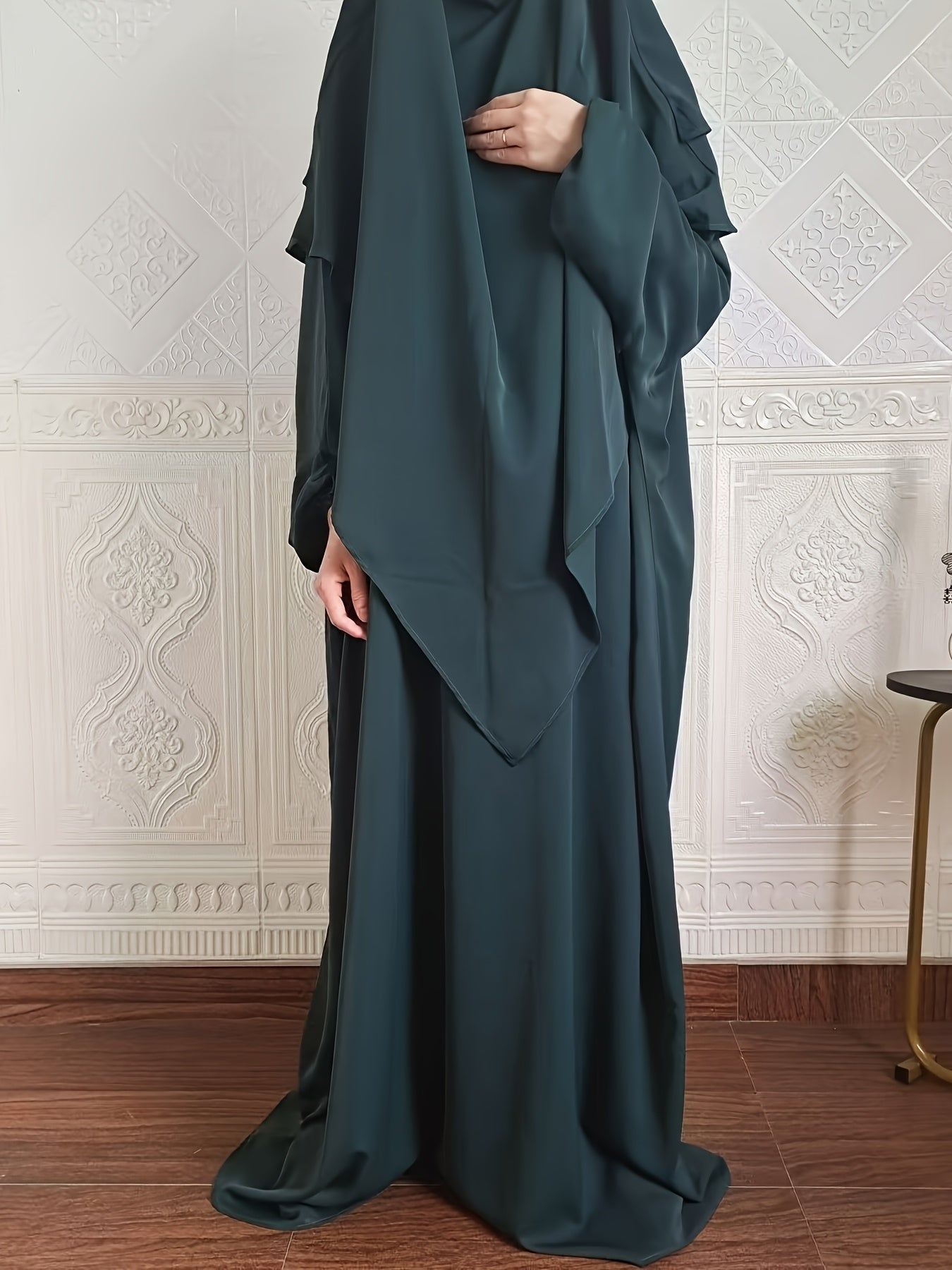
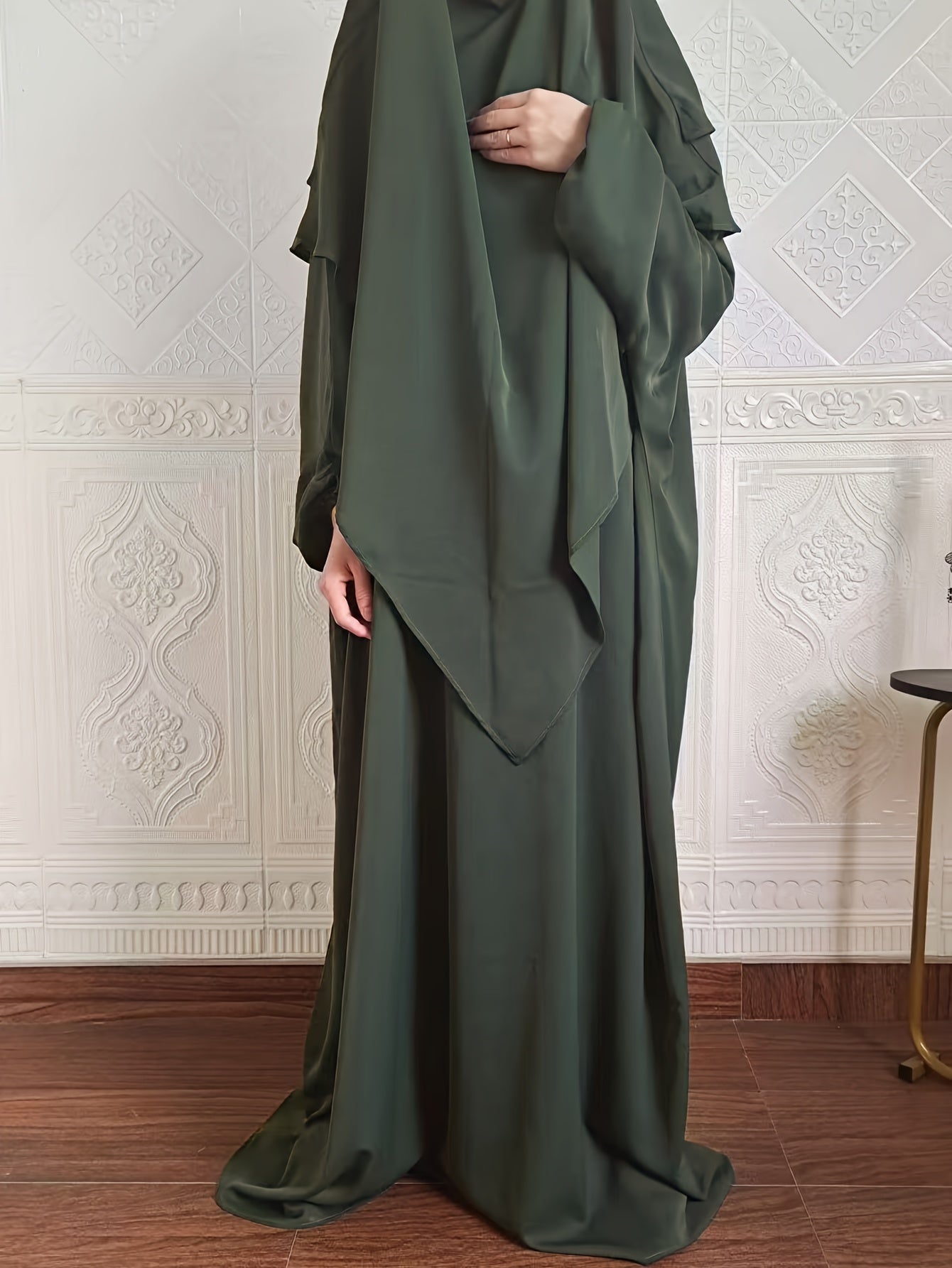
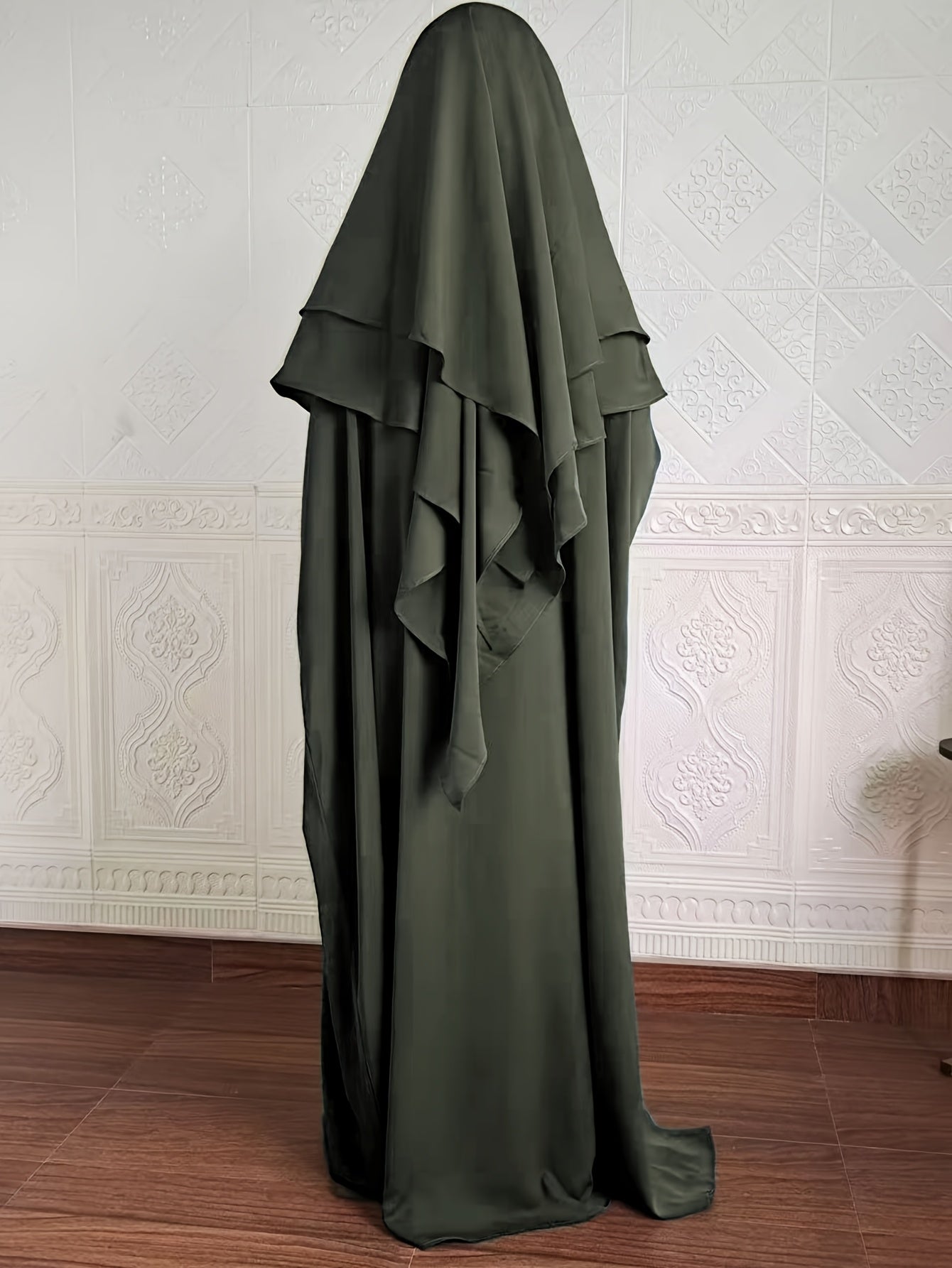
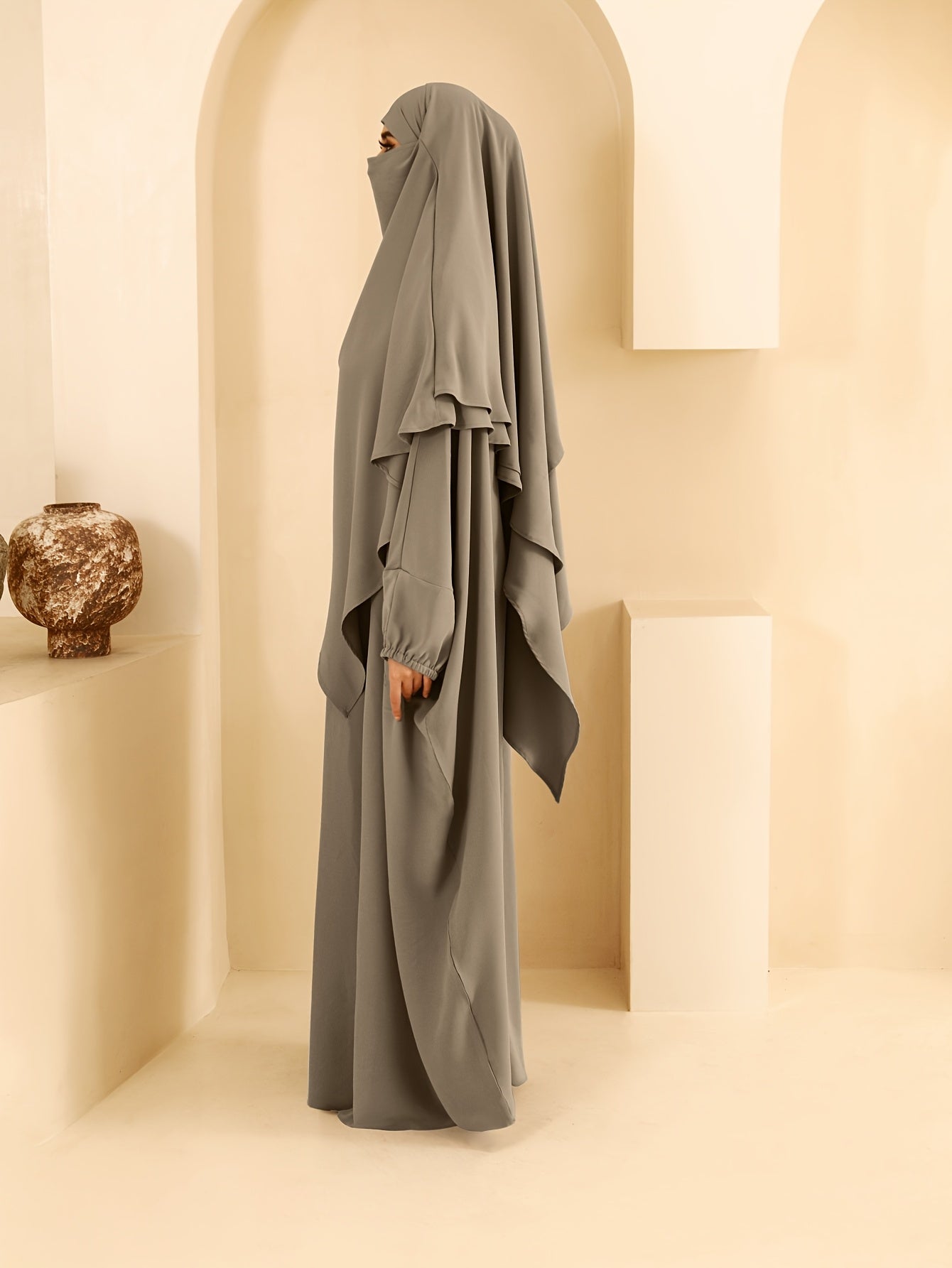
SPECIFICATIONS
Collar Style: Collarless
Composition: 100% Polyester
Fabric: Non-Stretch
Material: Polyester
Operation Instruction: Hand wash or professional dry clean
Pattern: Solid color
Printing Type: No Printing
Season: All-season
Sheer: No
Style: Casual
Type: Fitted
Weaving Method: Woven
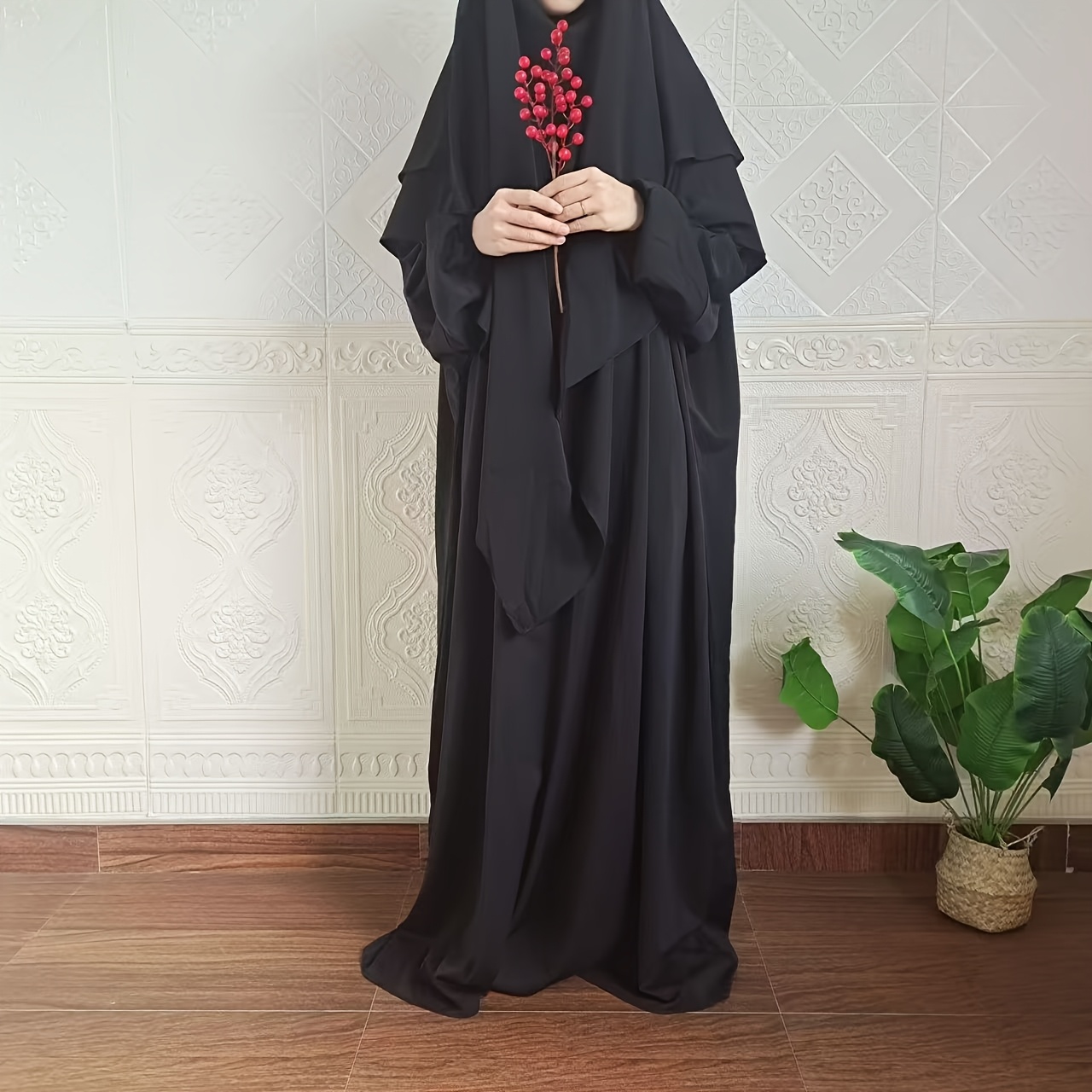
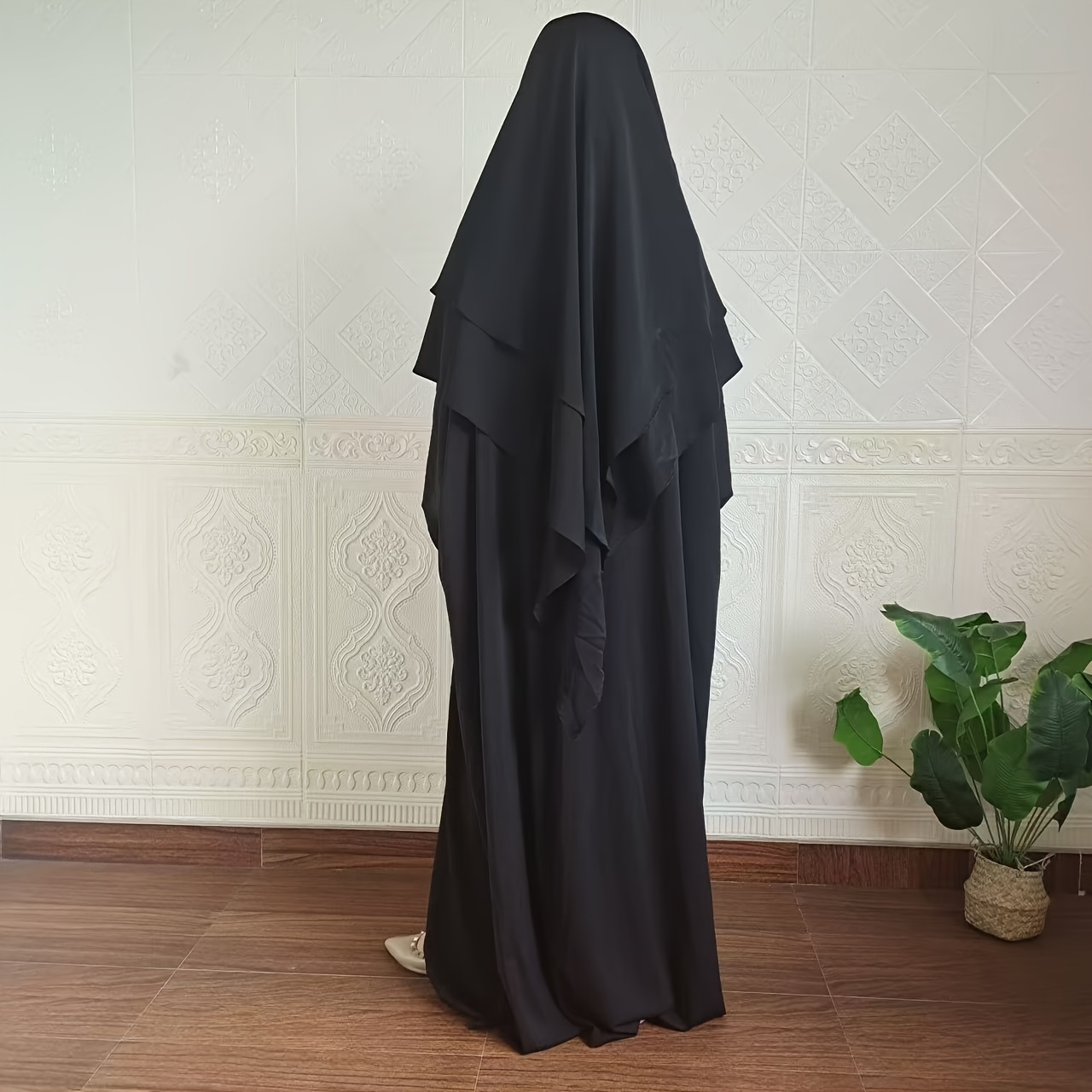
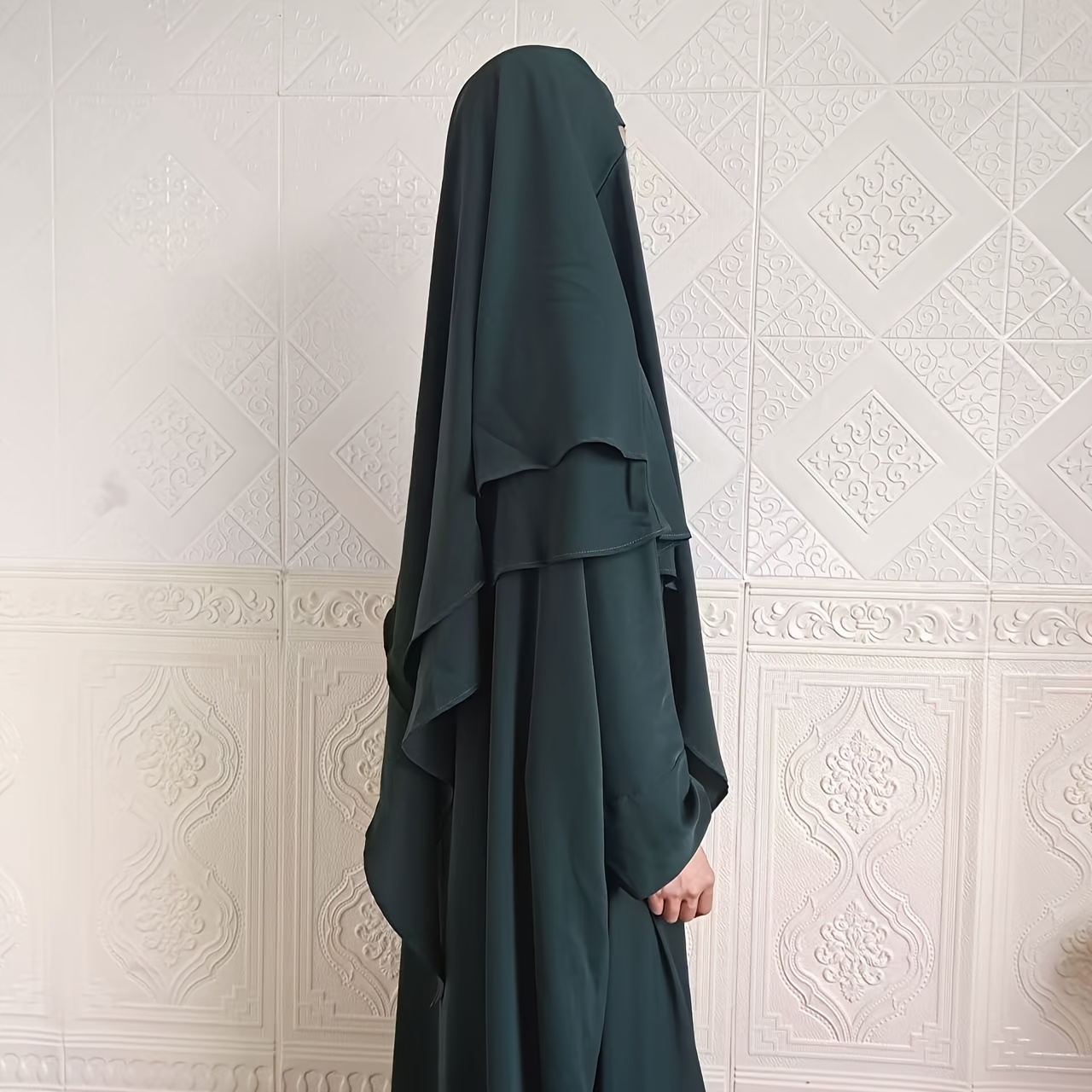
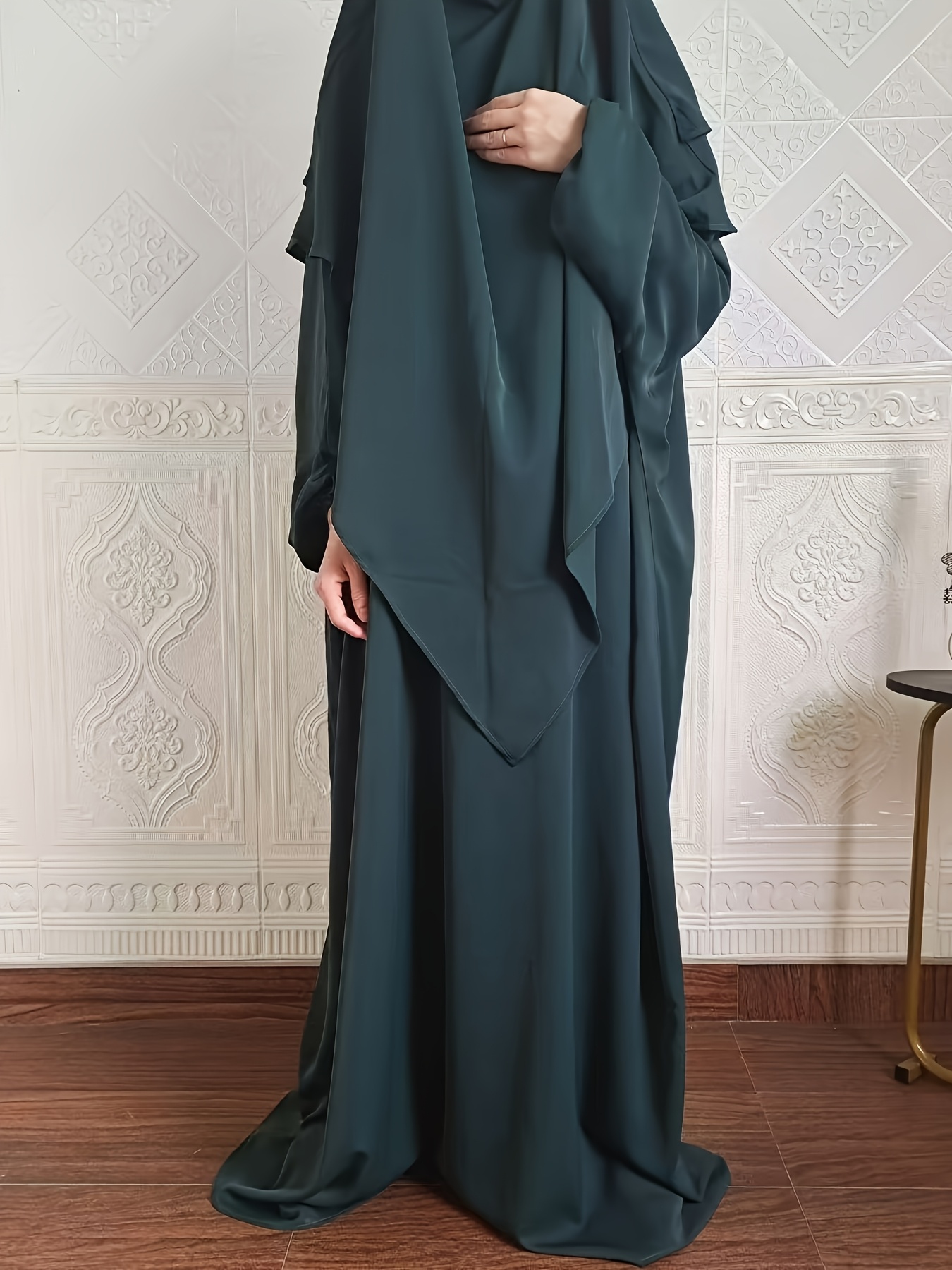
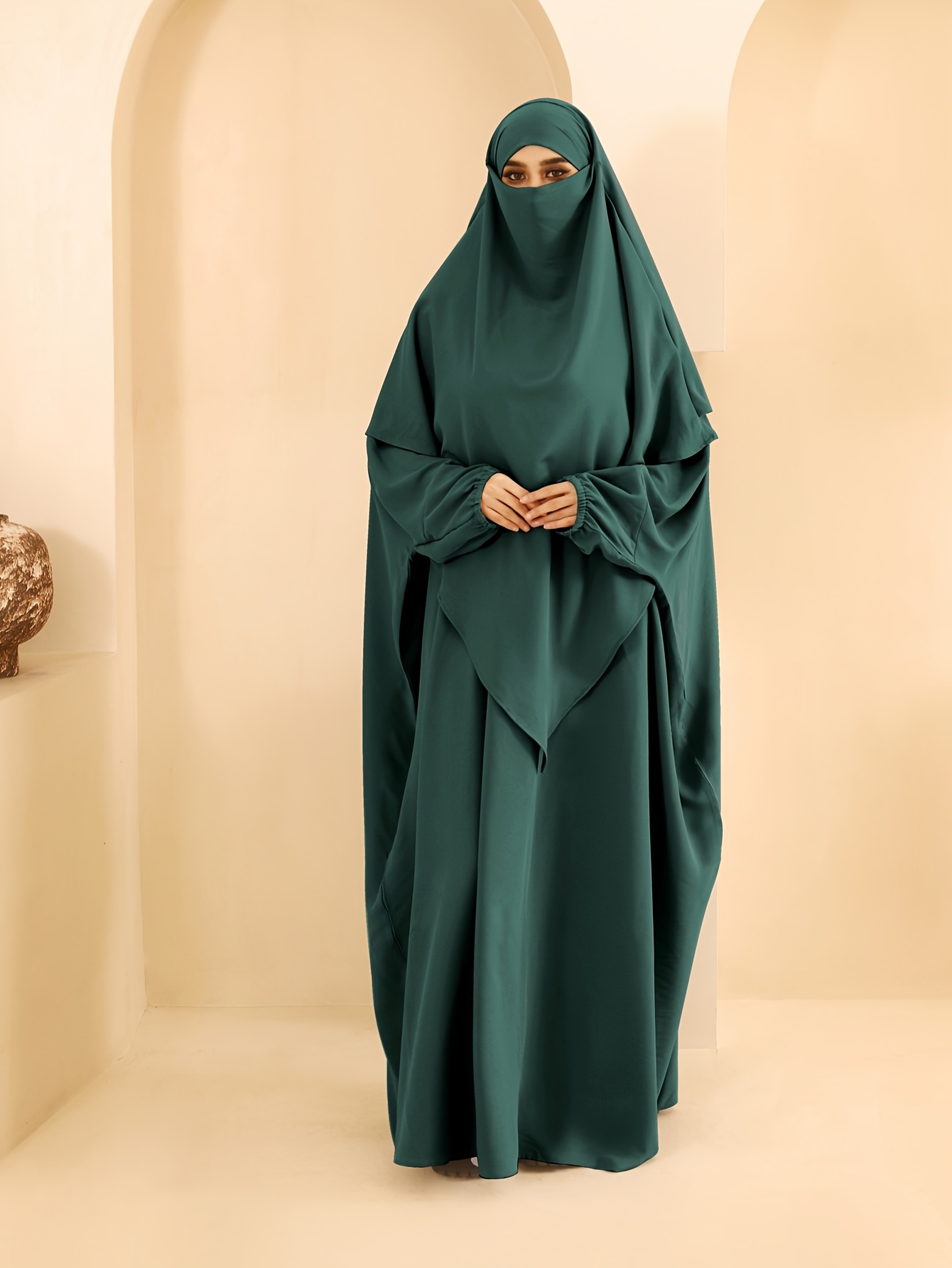
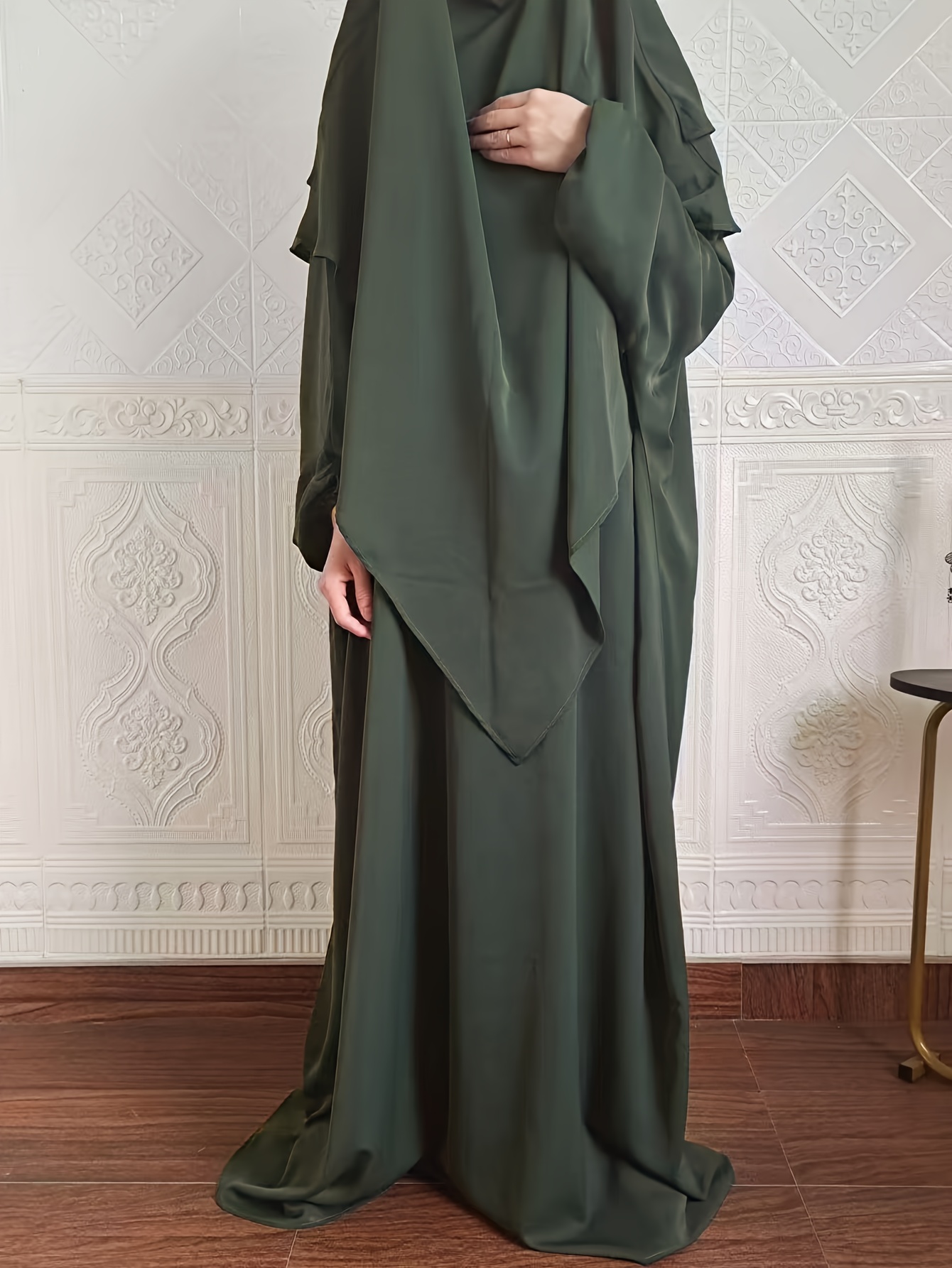
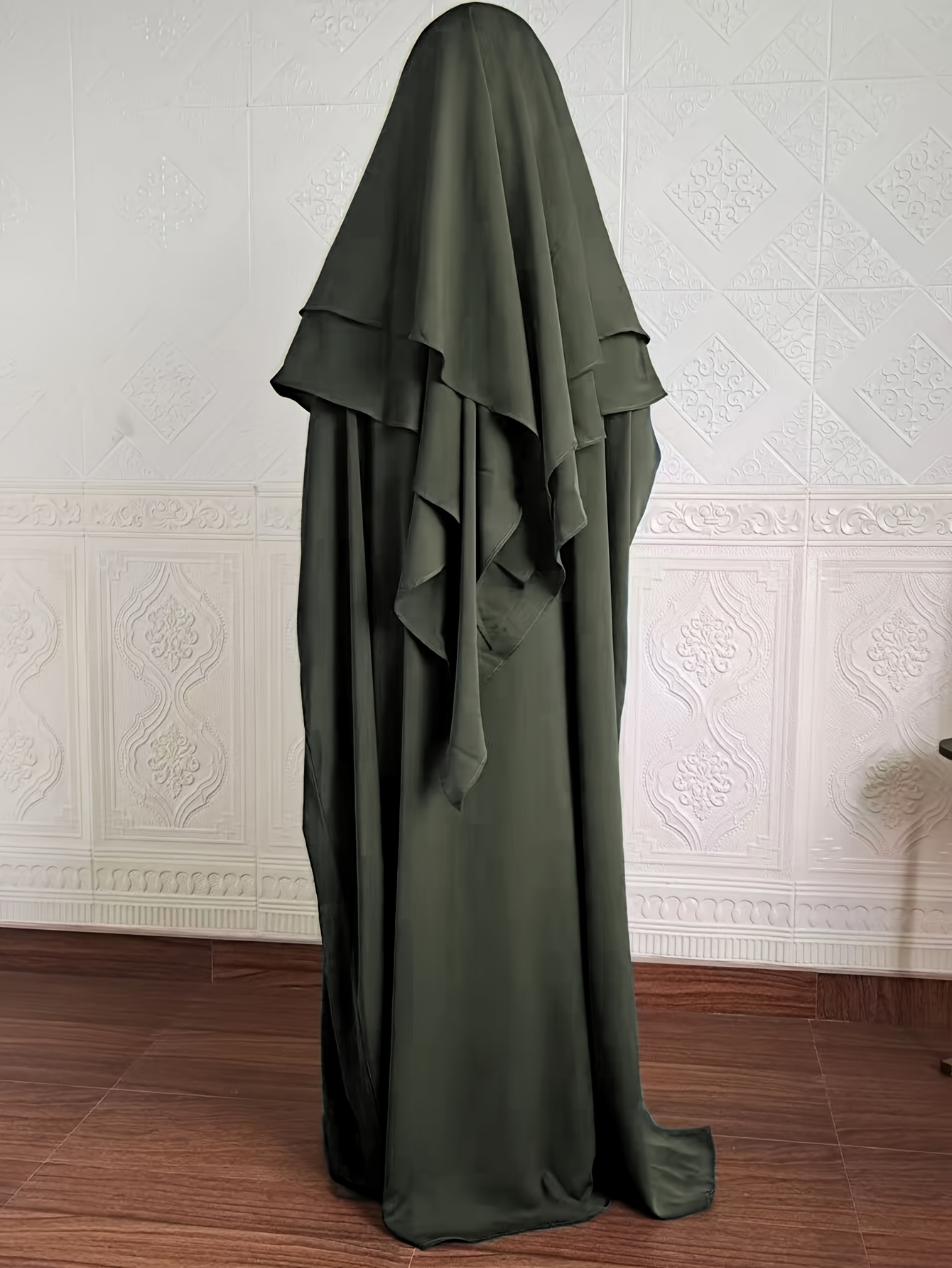
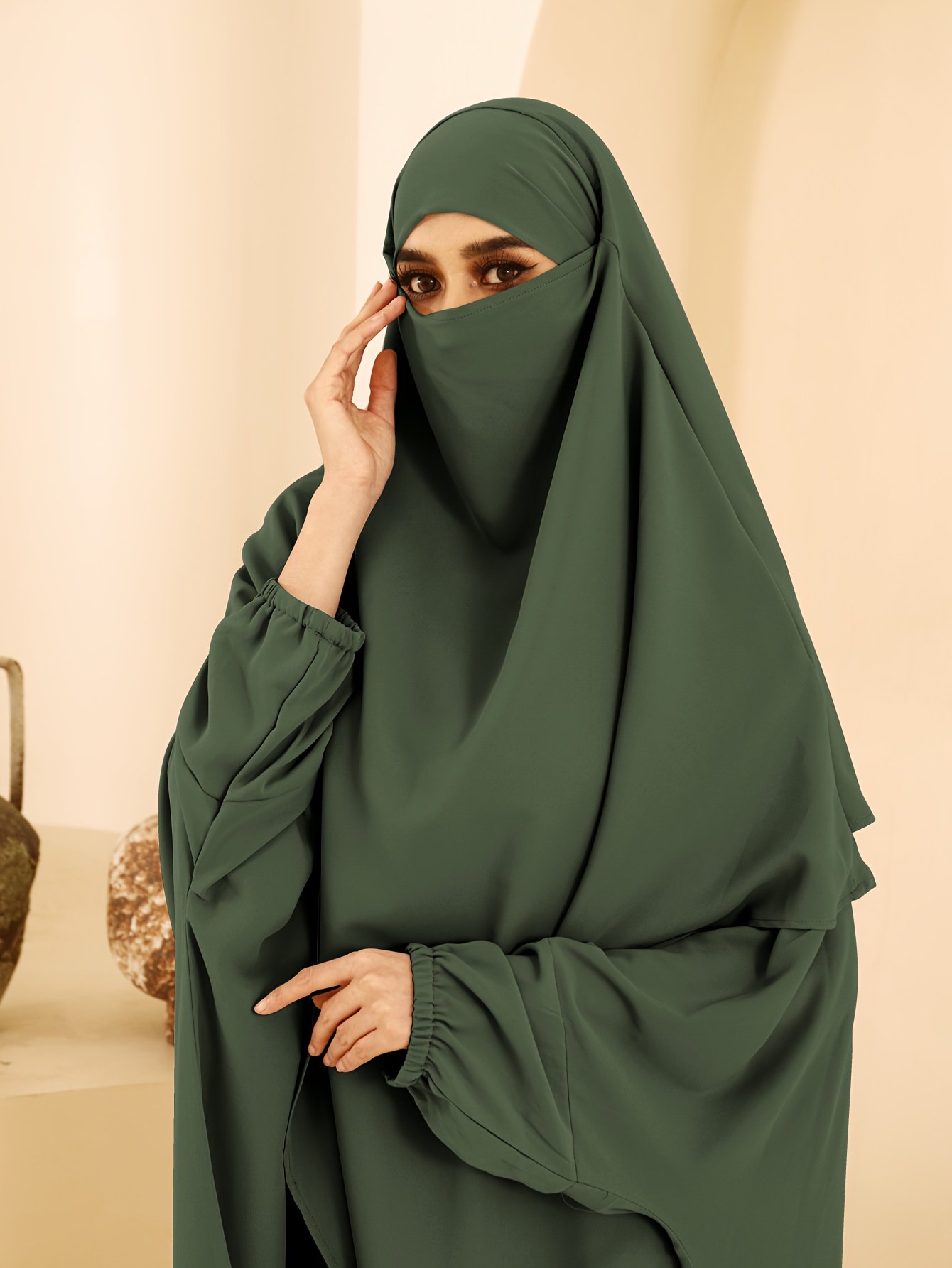
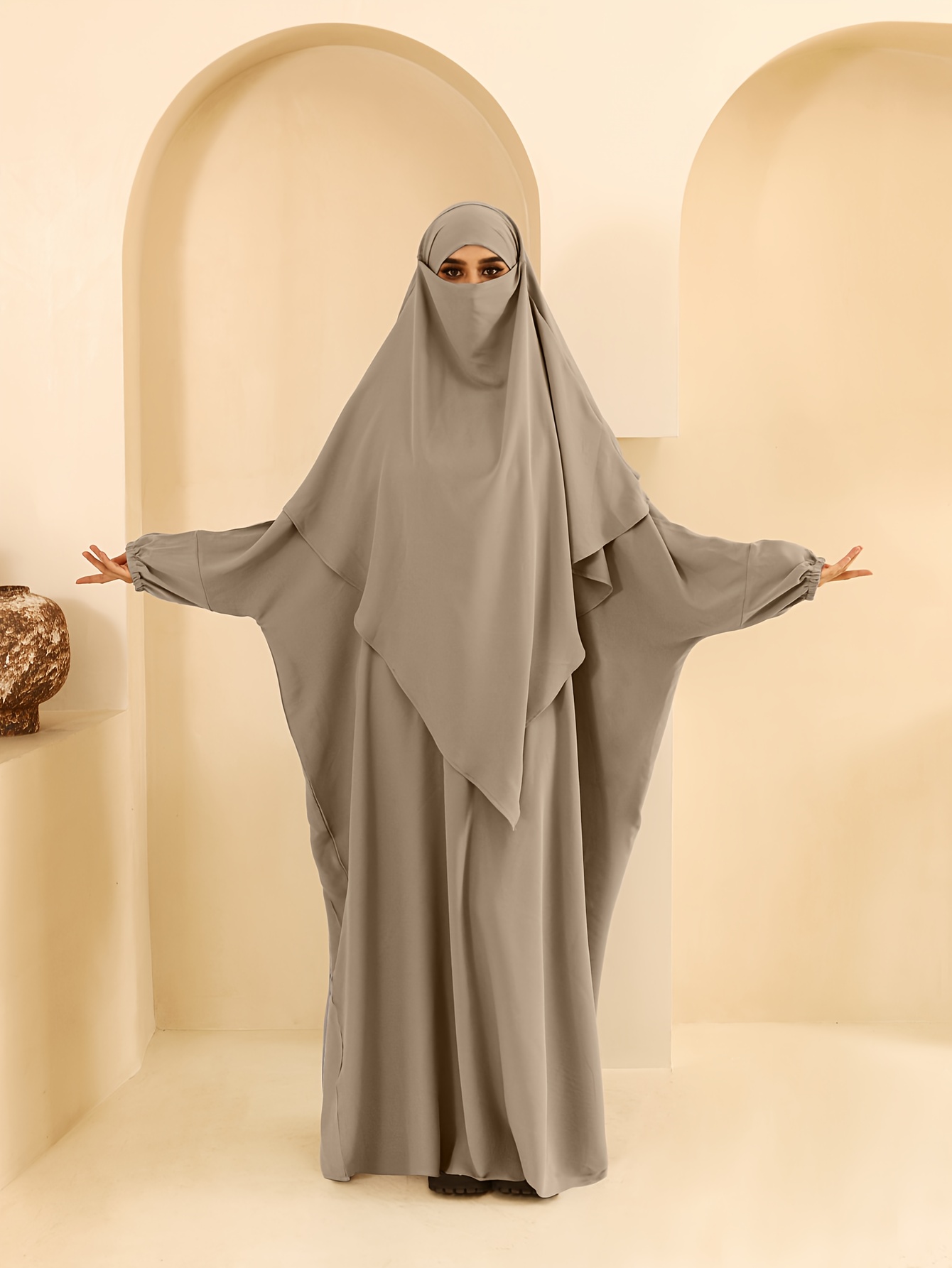
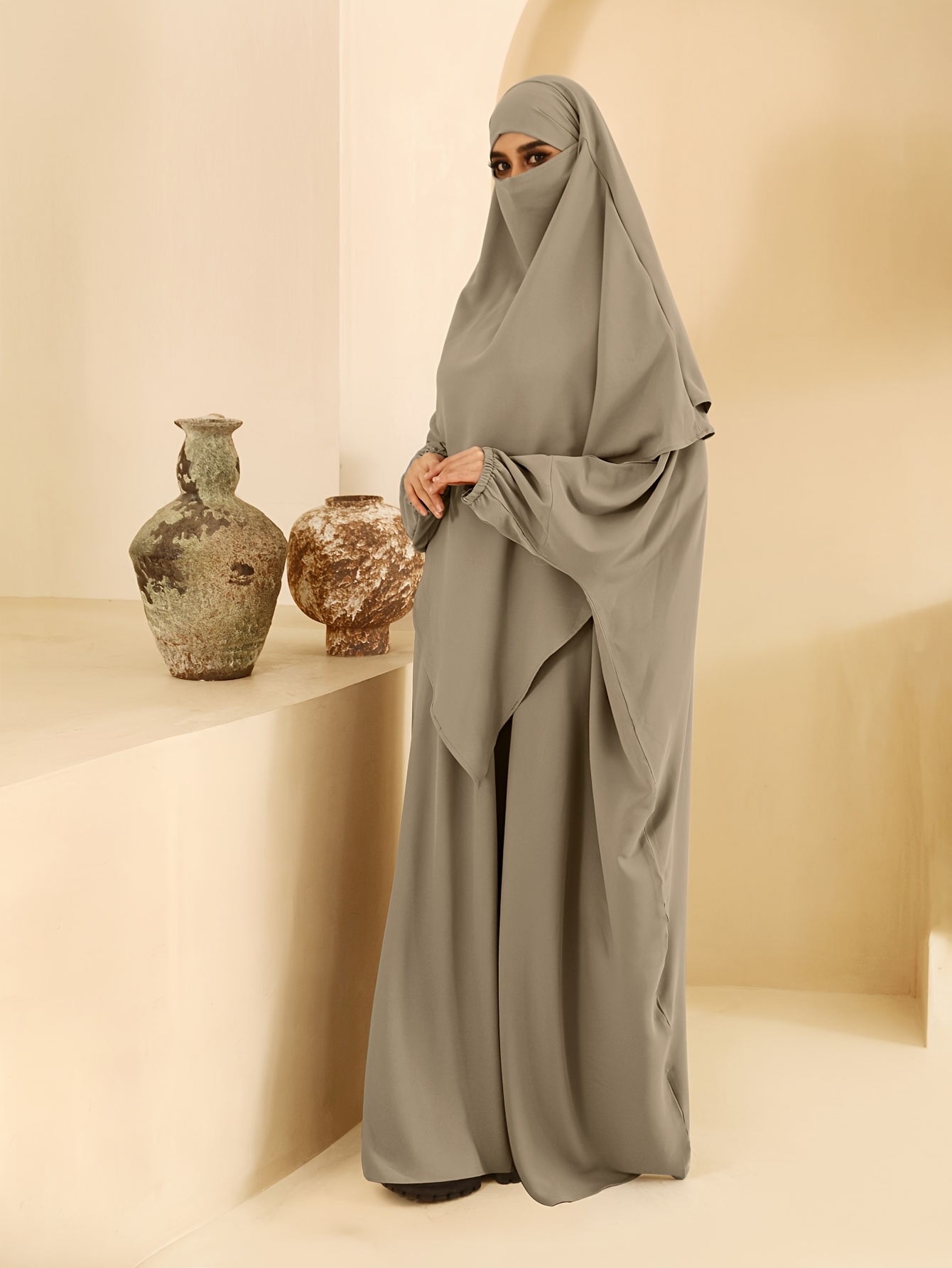
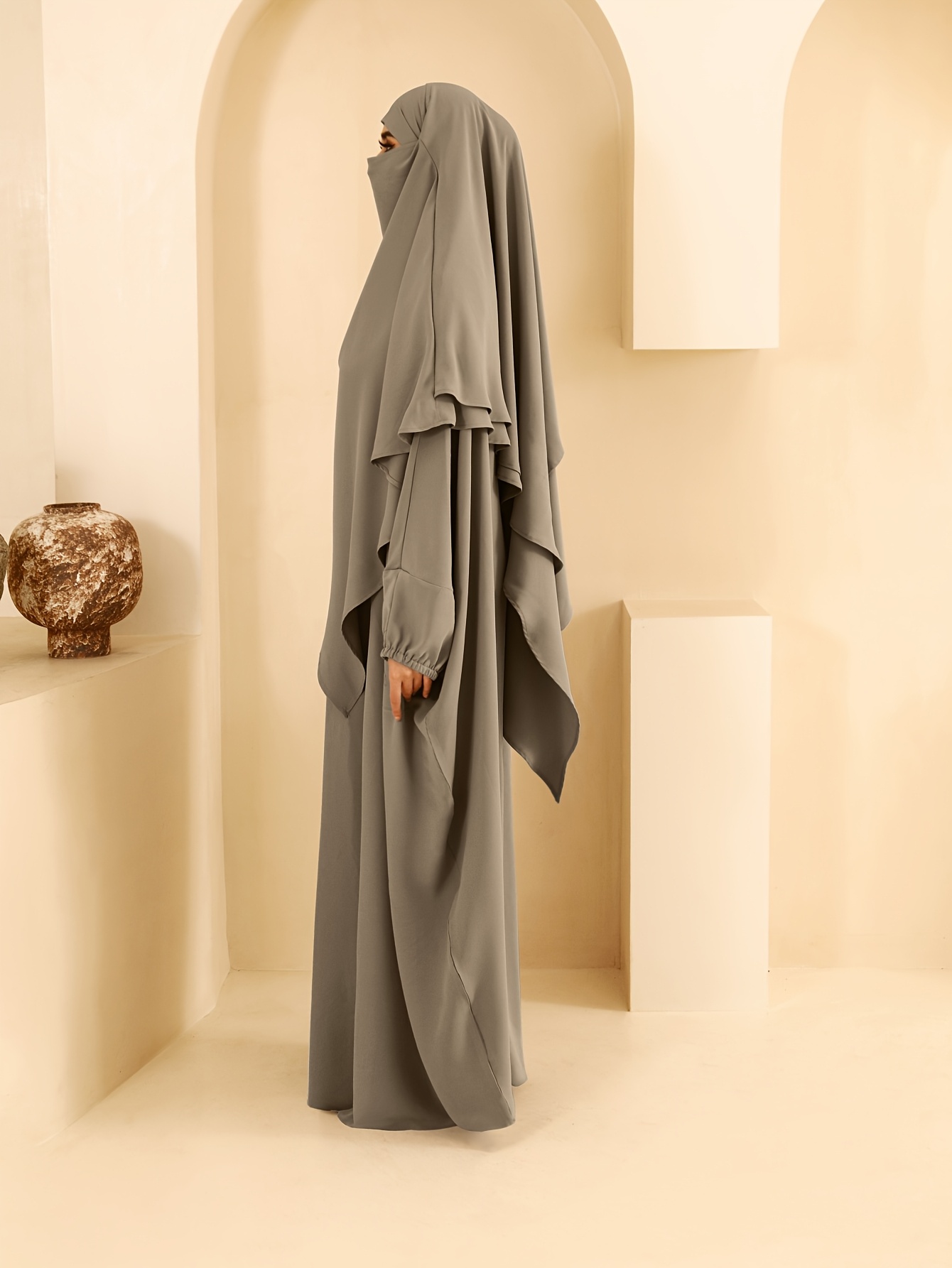
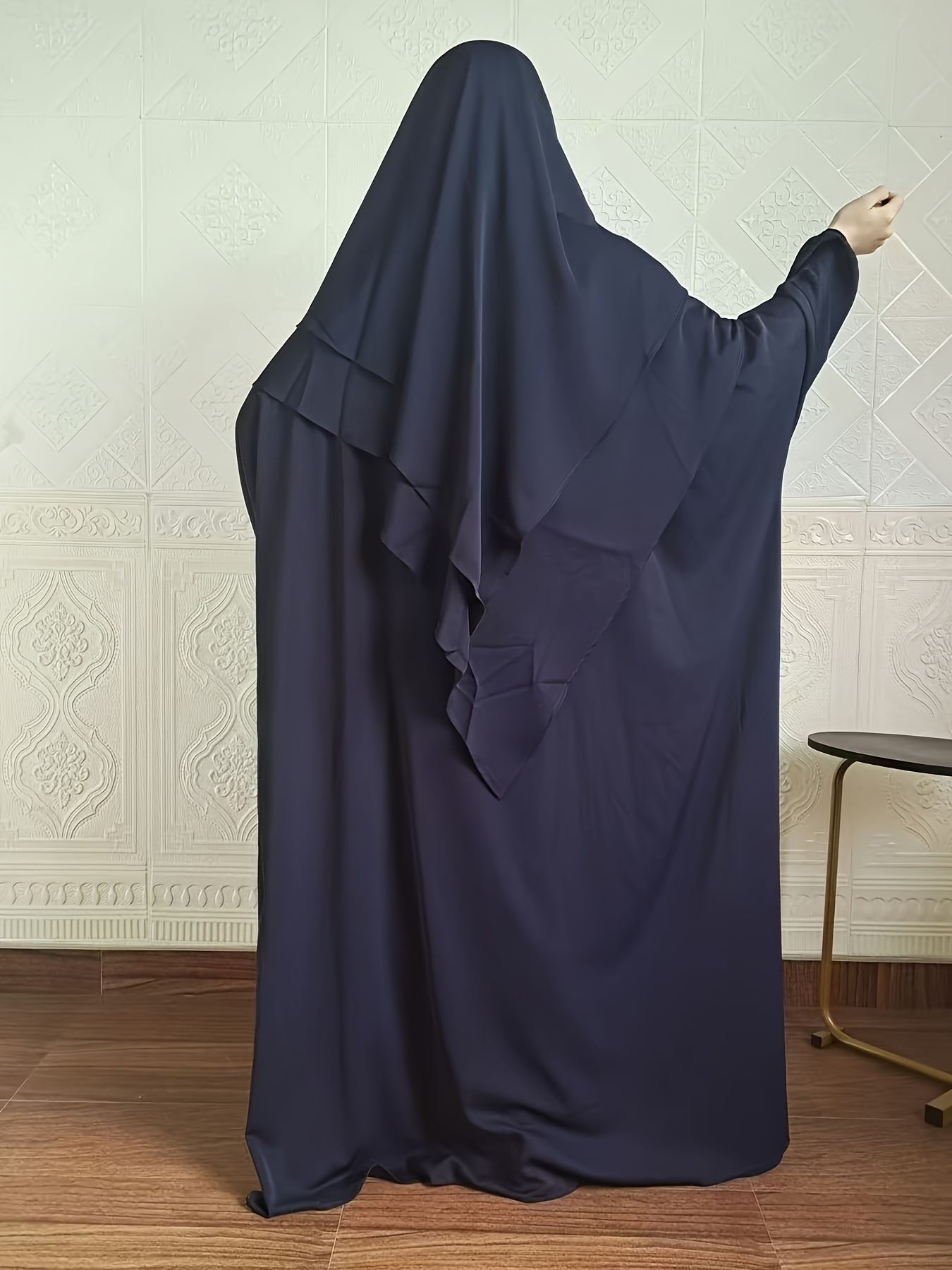
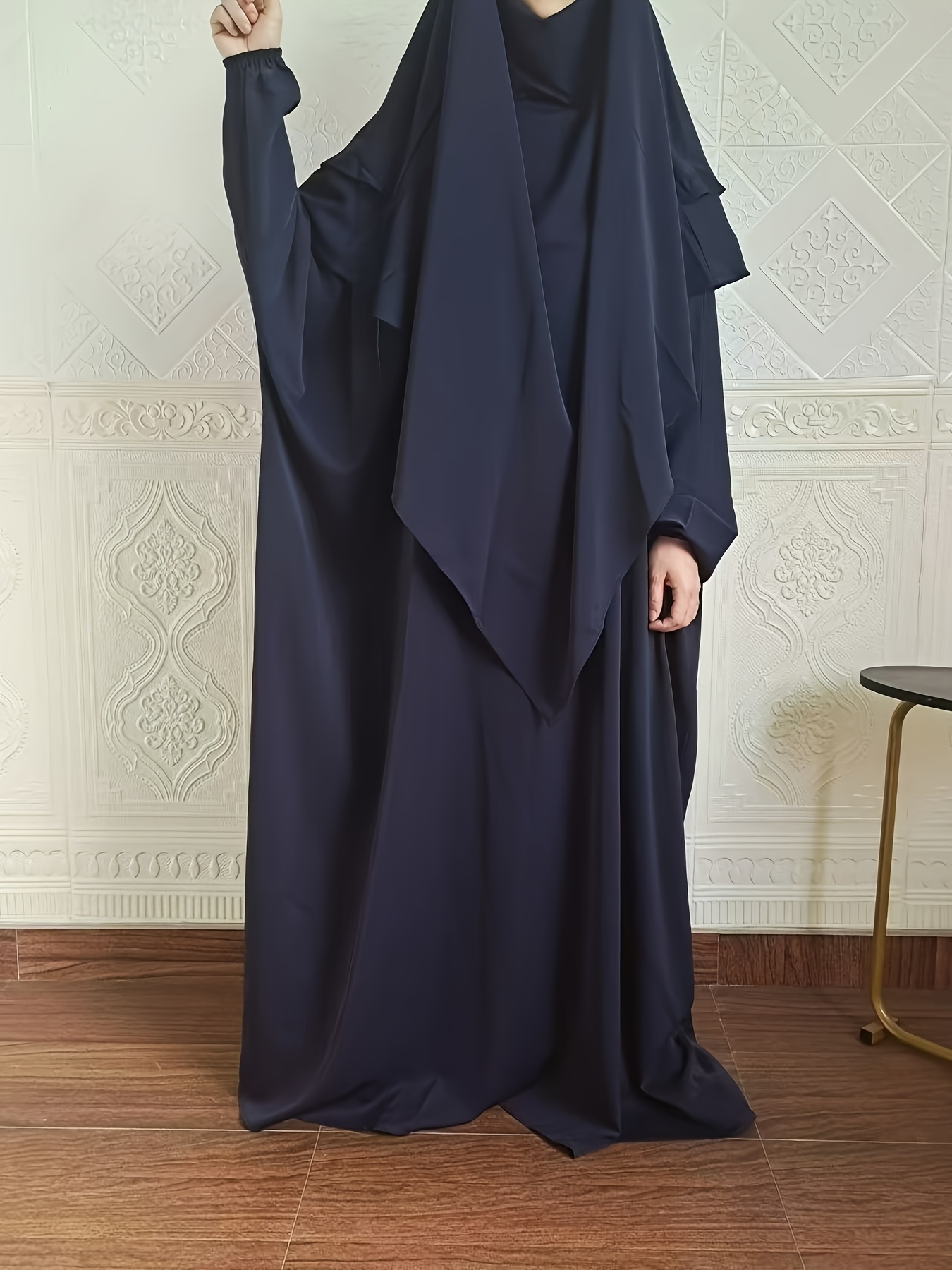
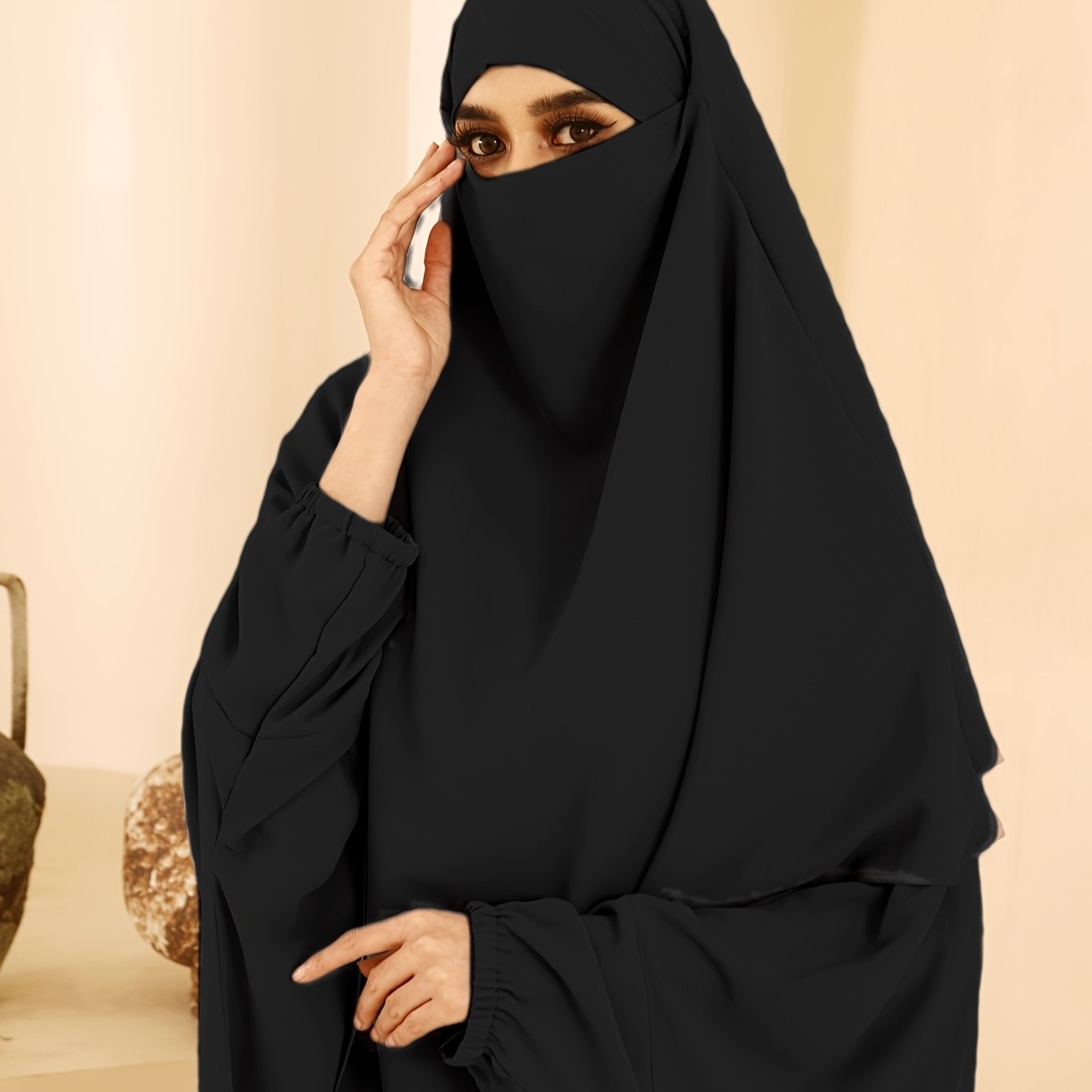
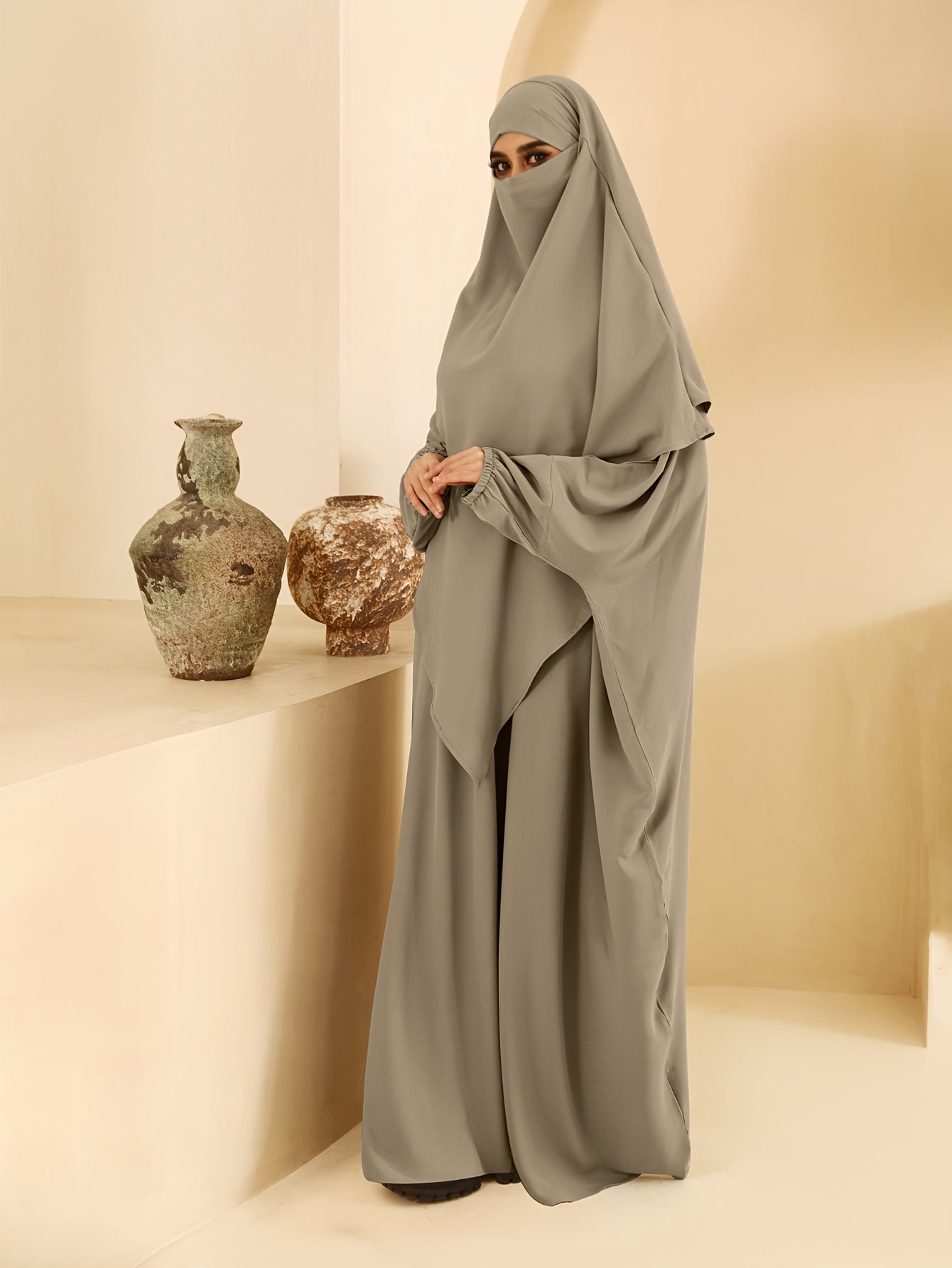
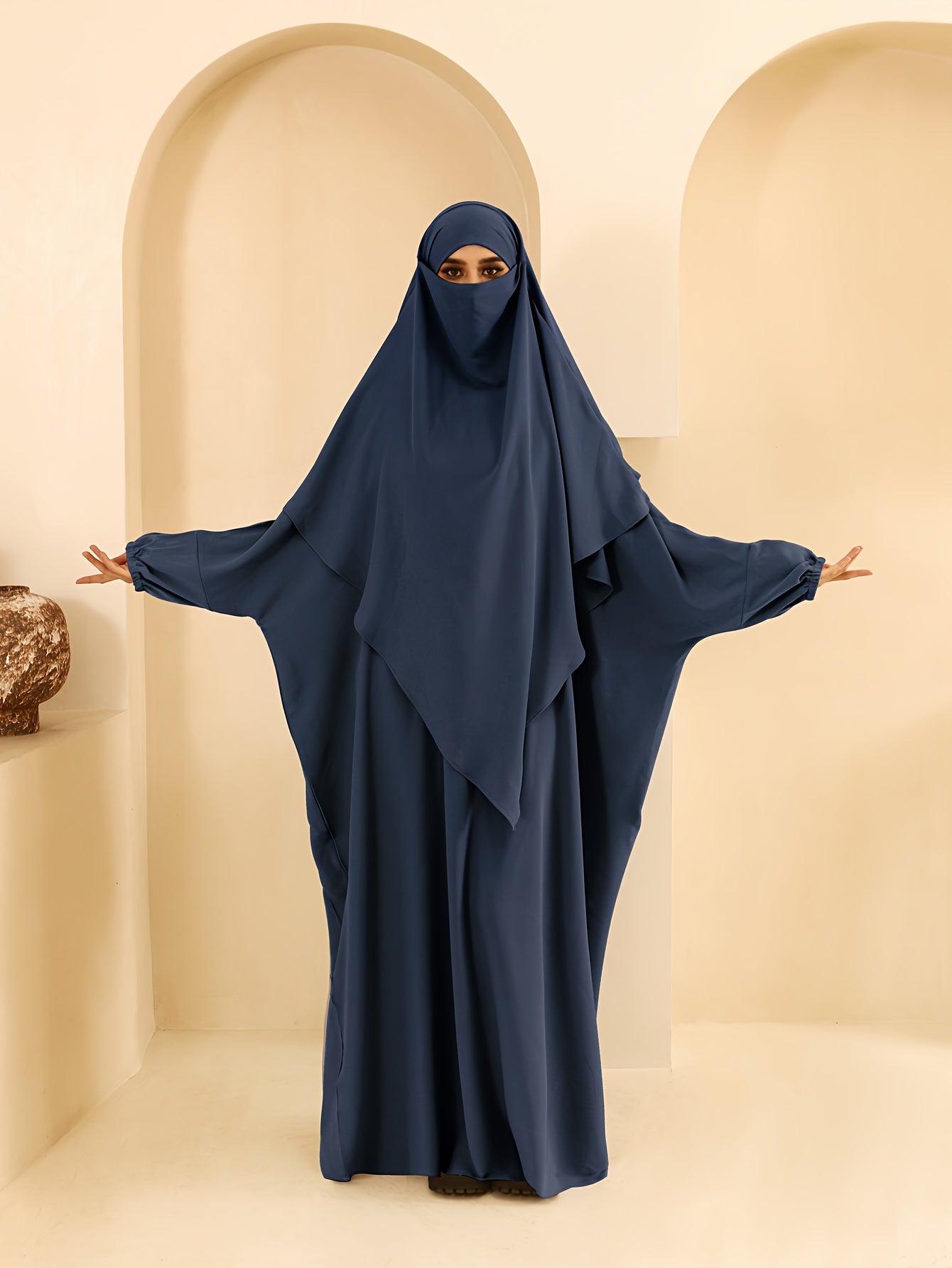
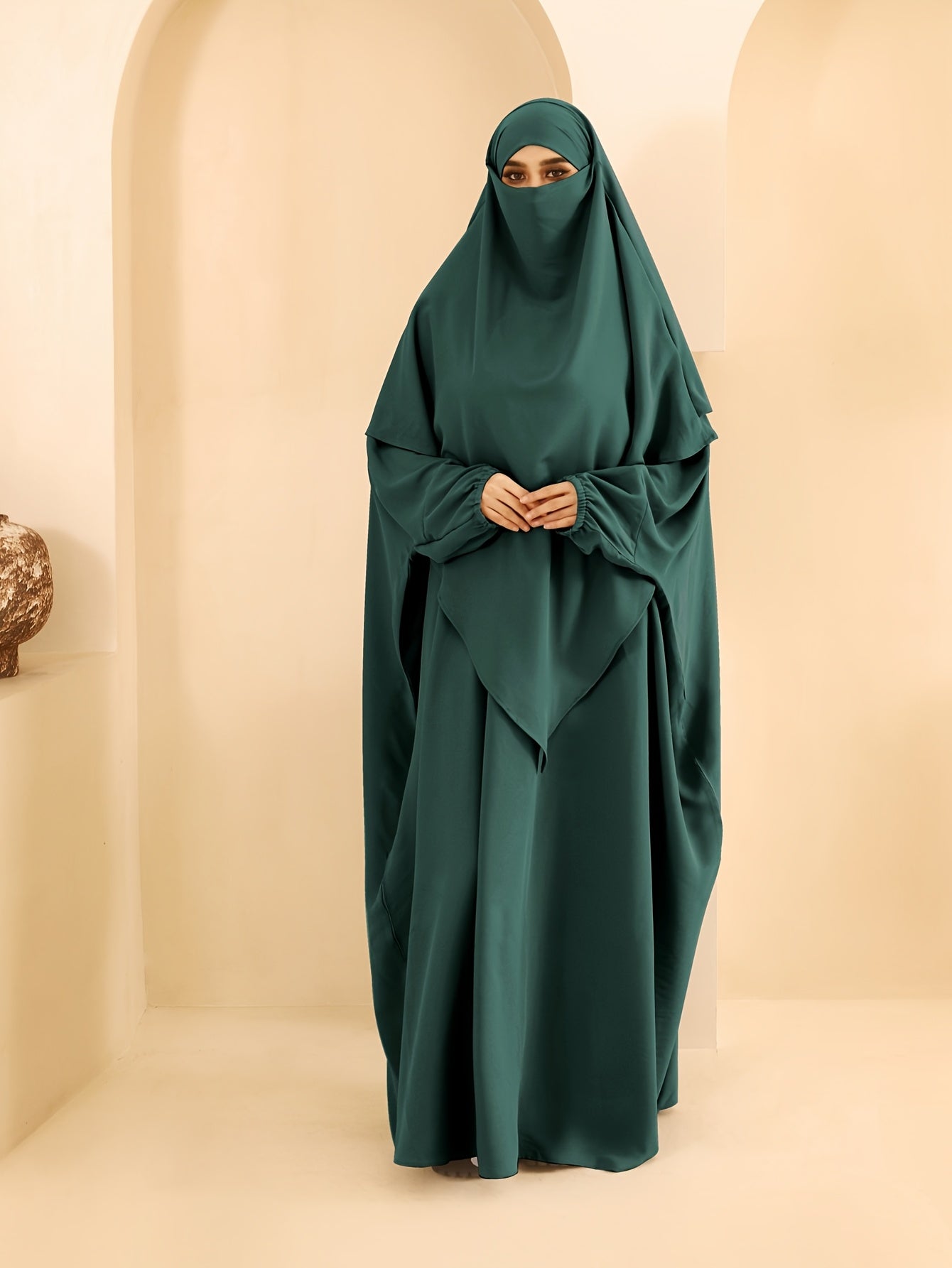
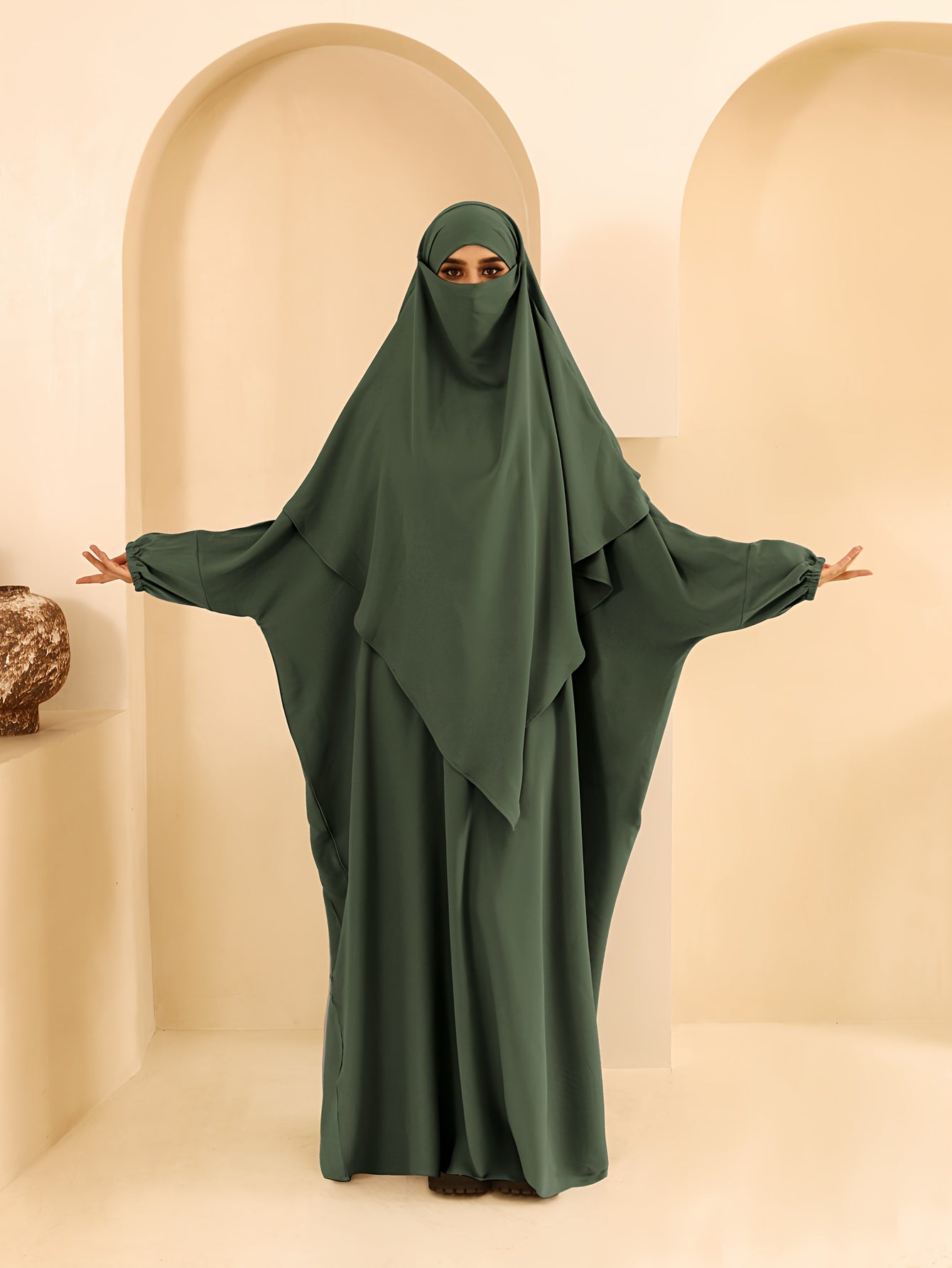
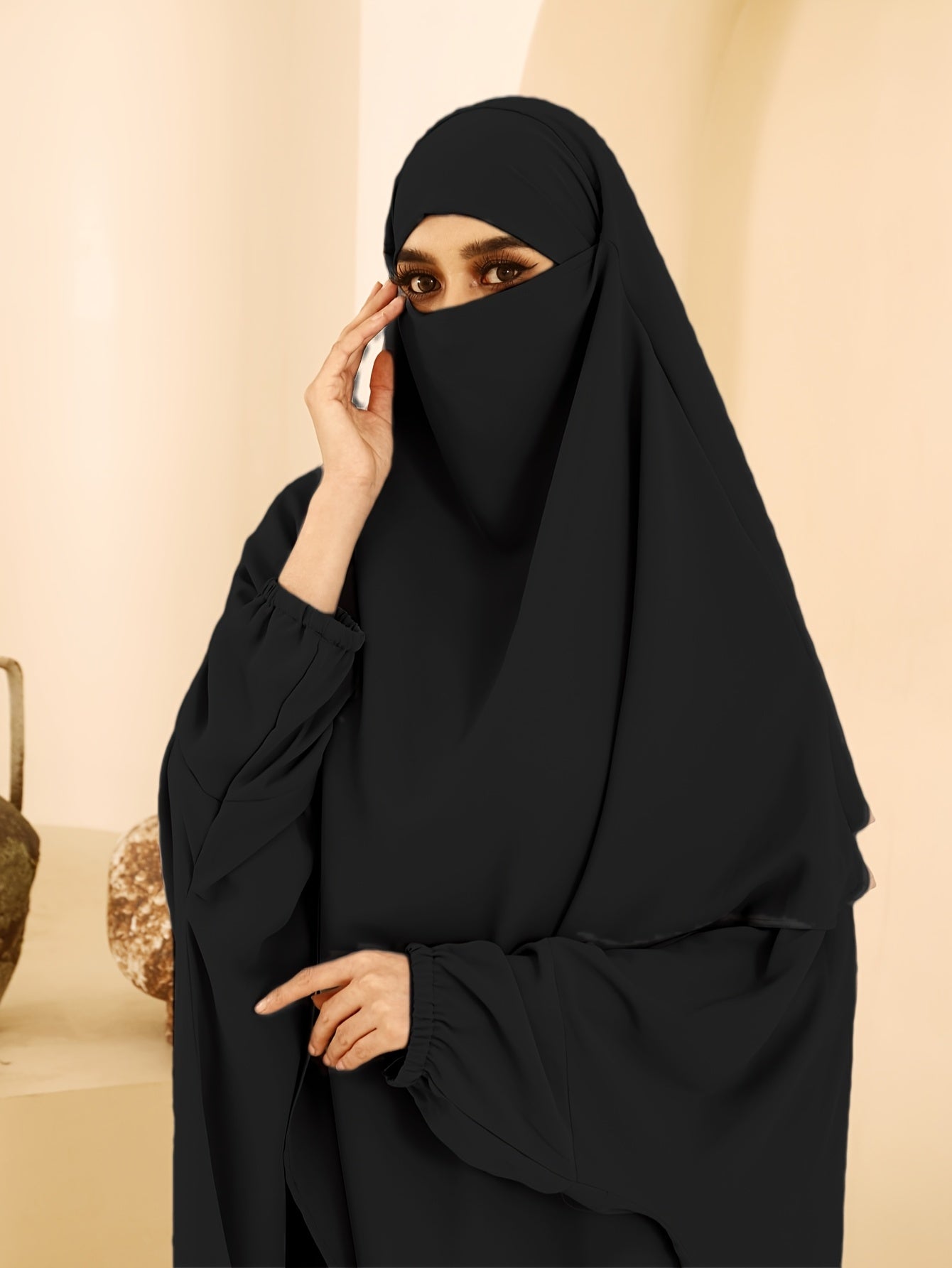
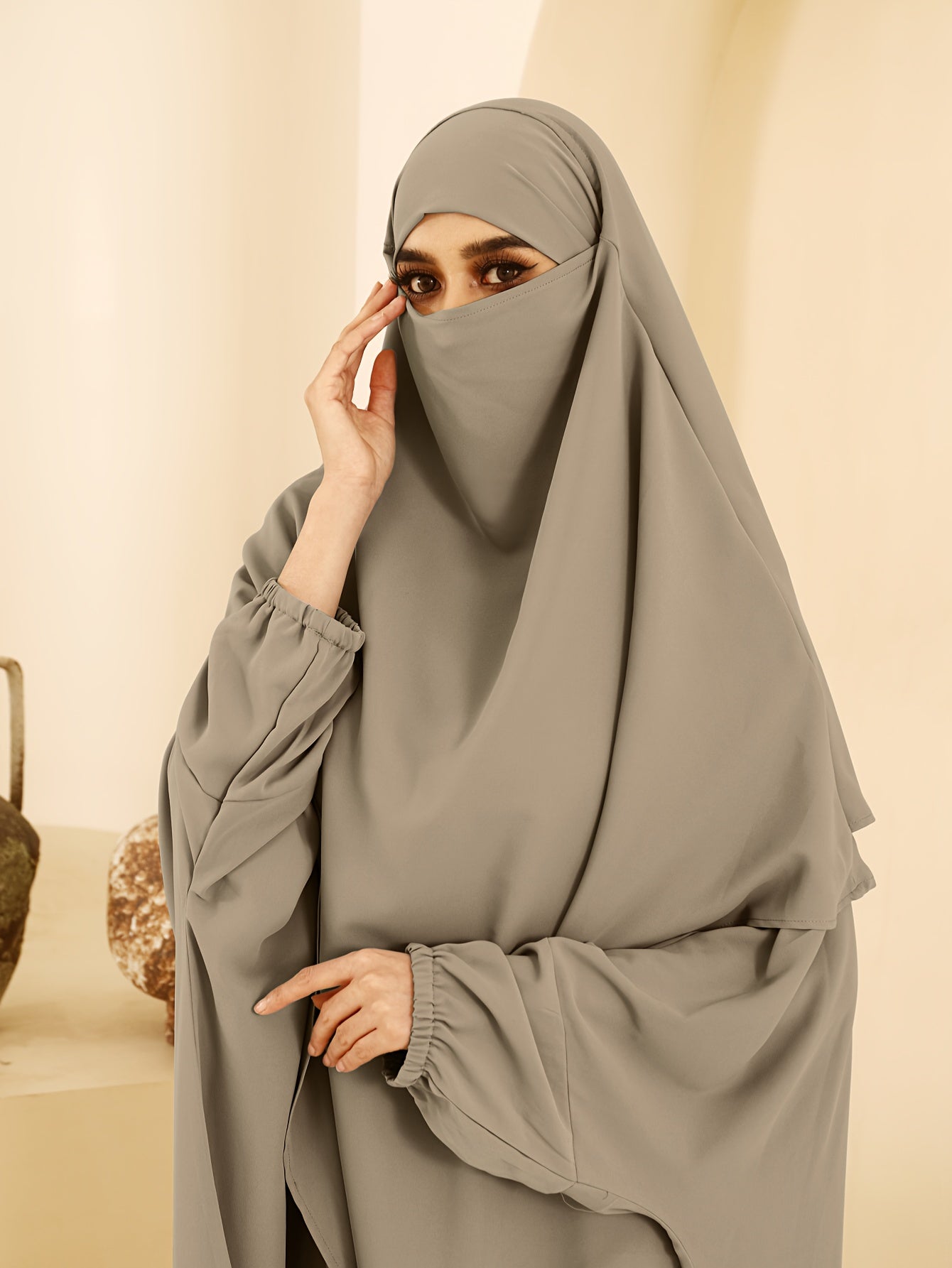
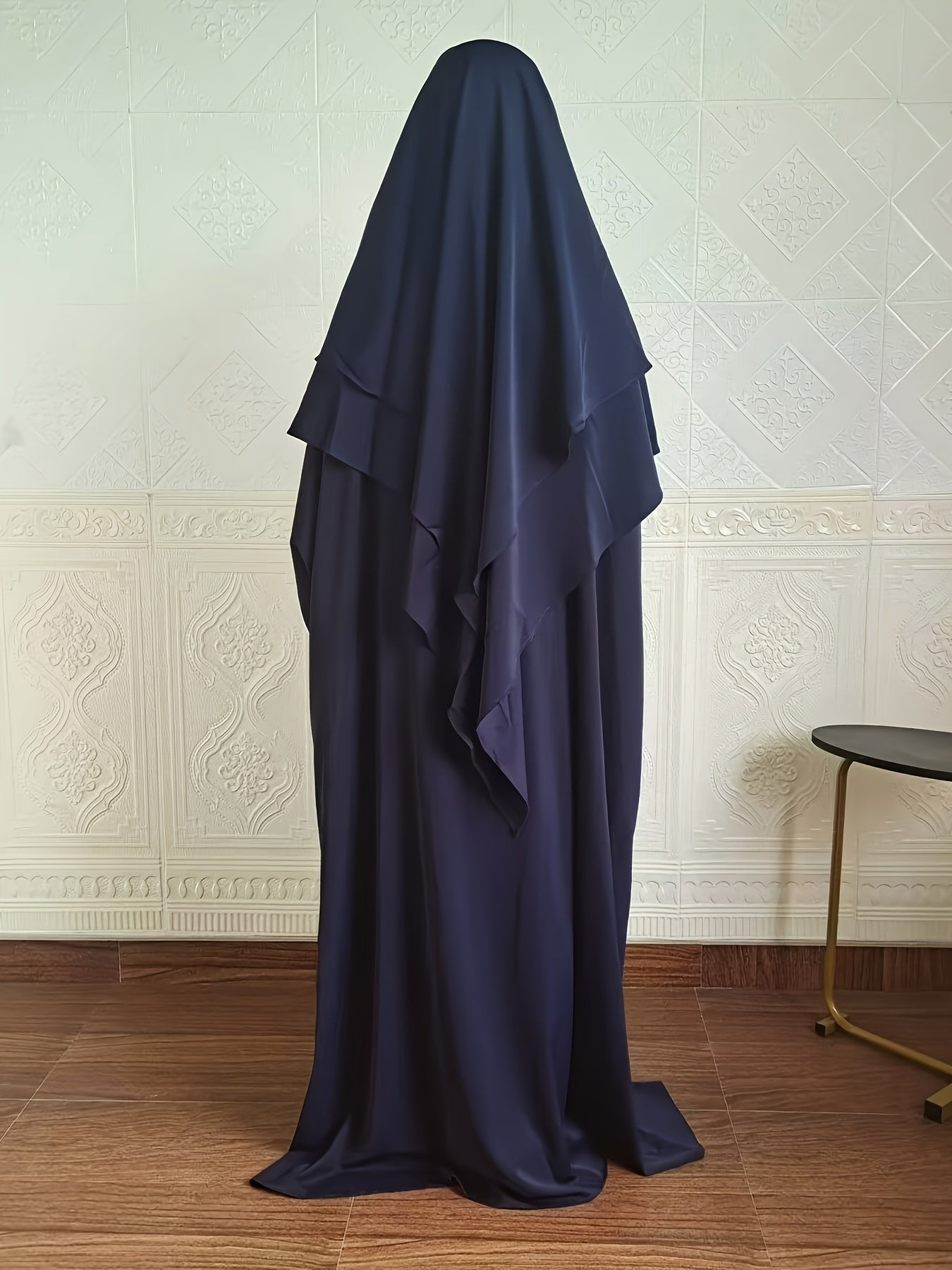
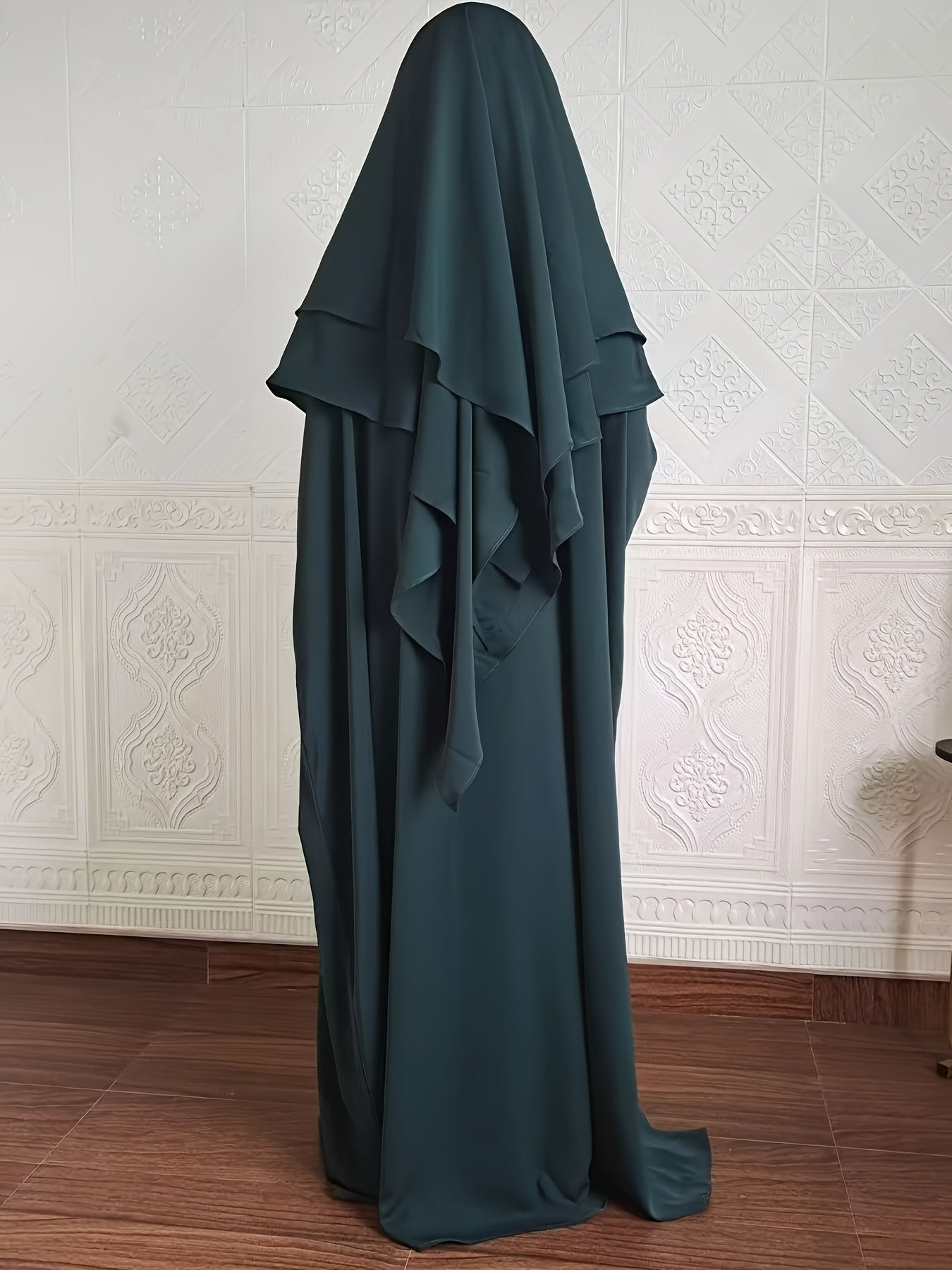
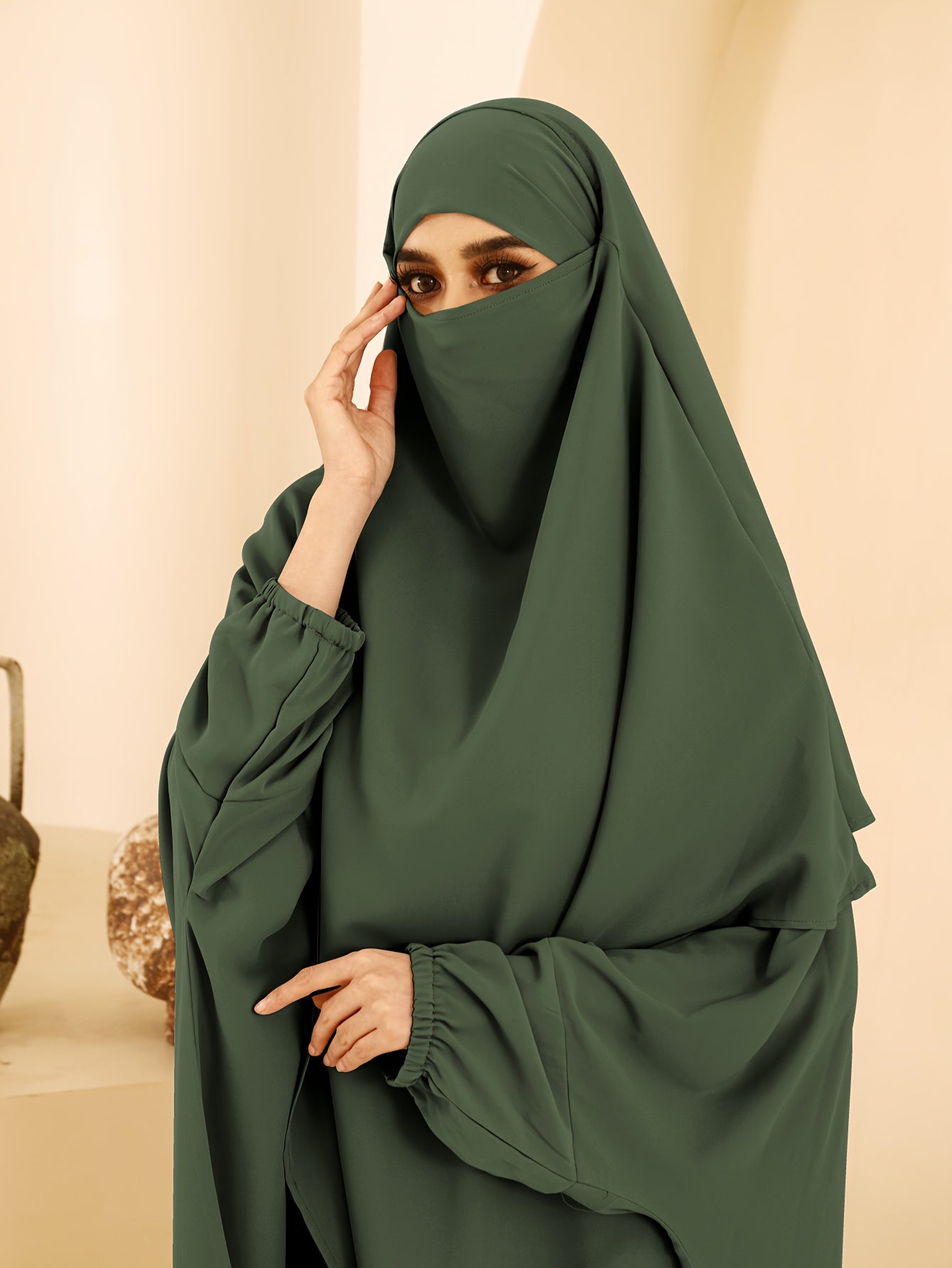
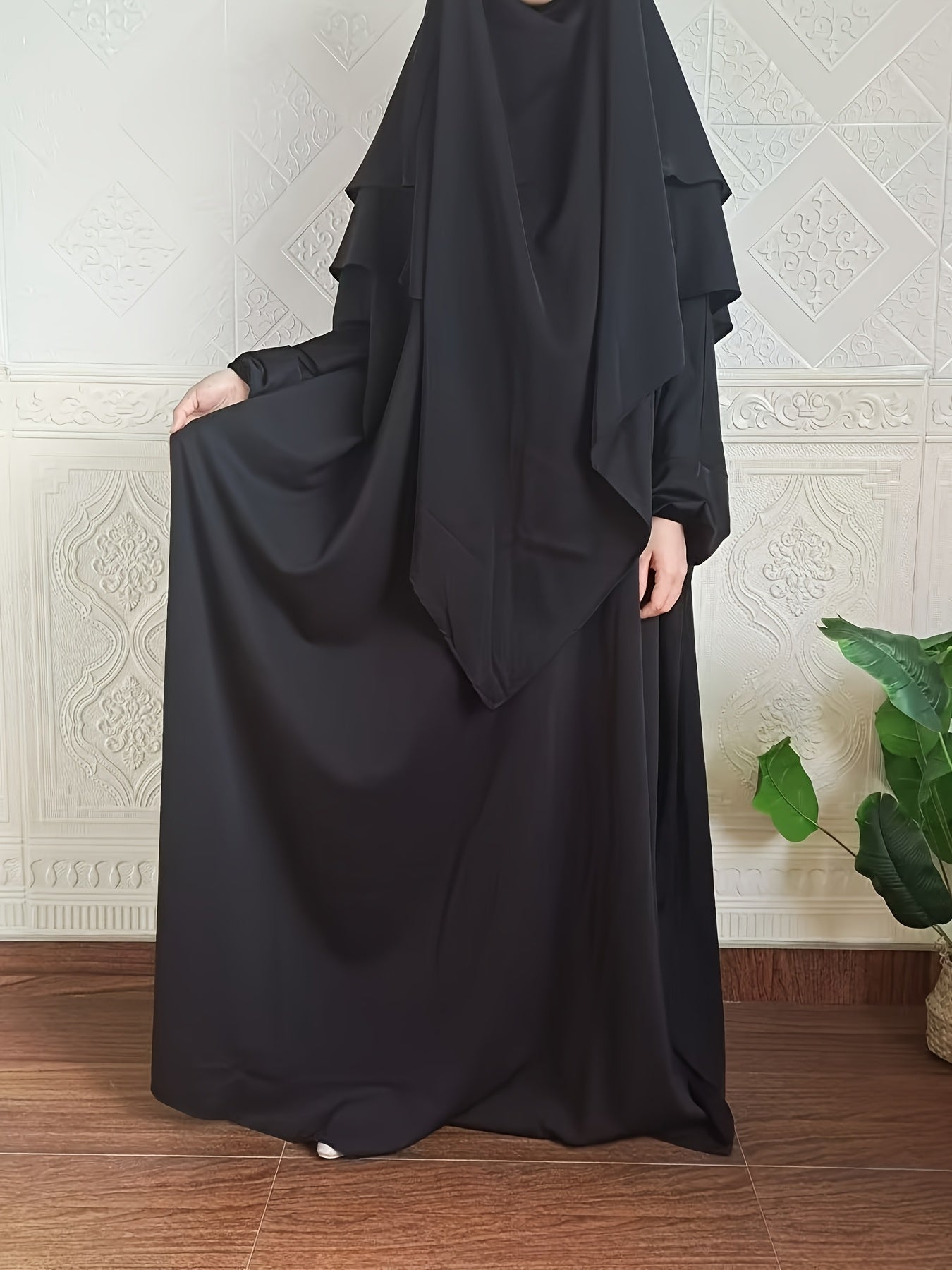
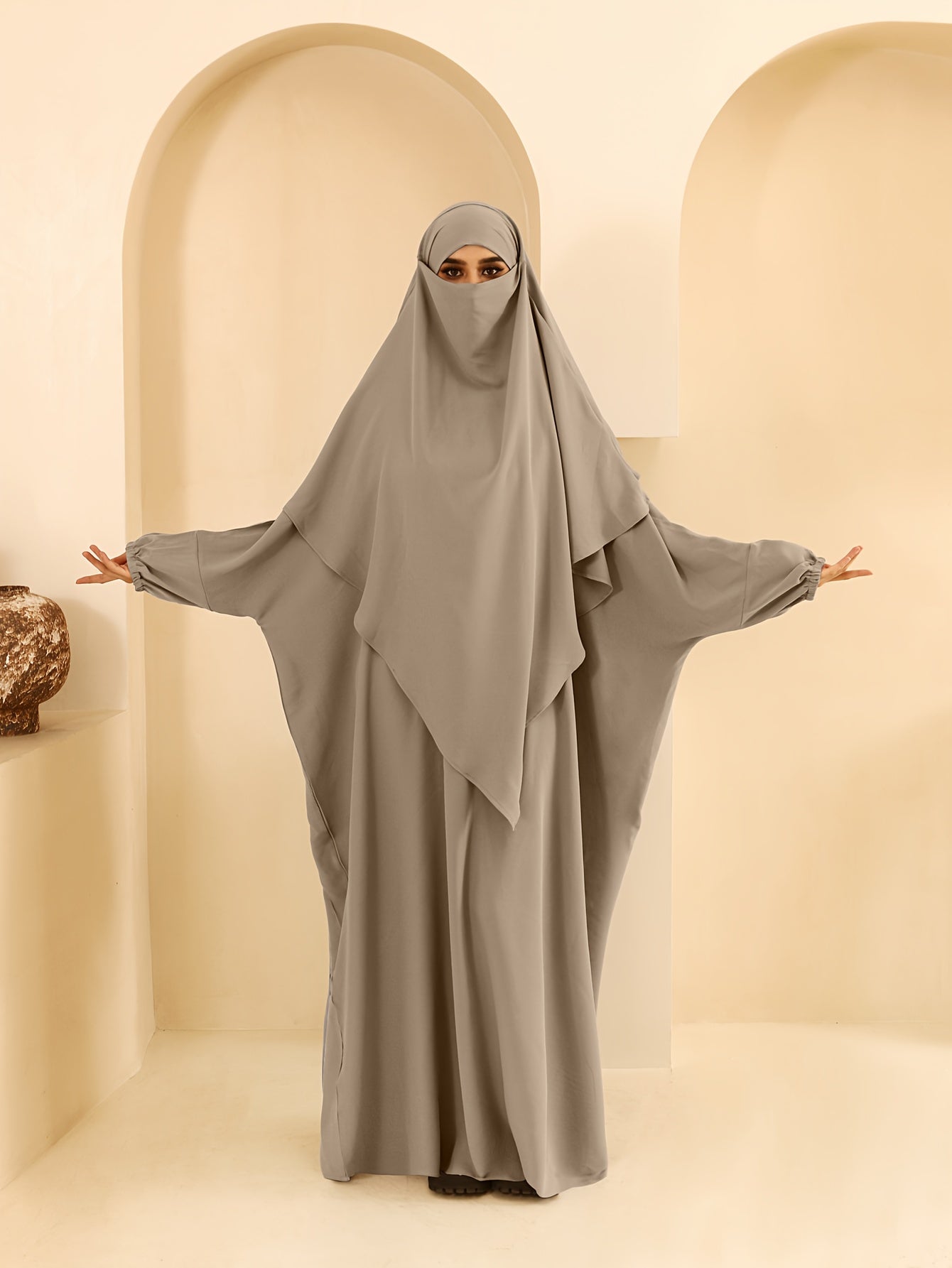
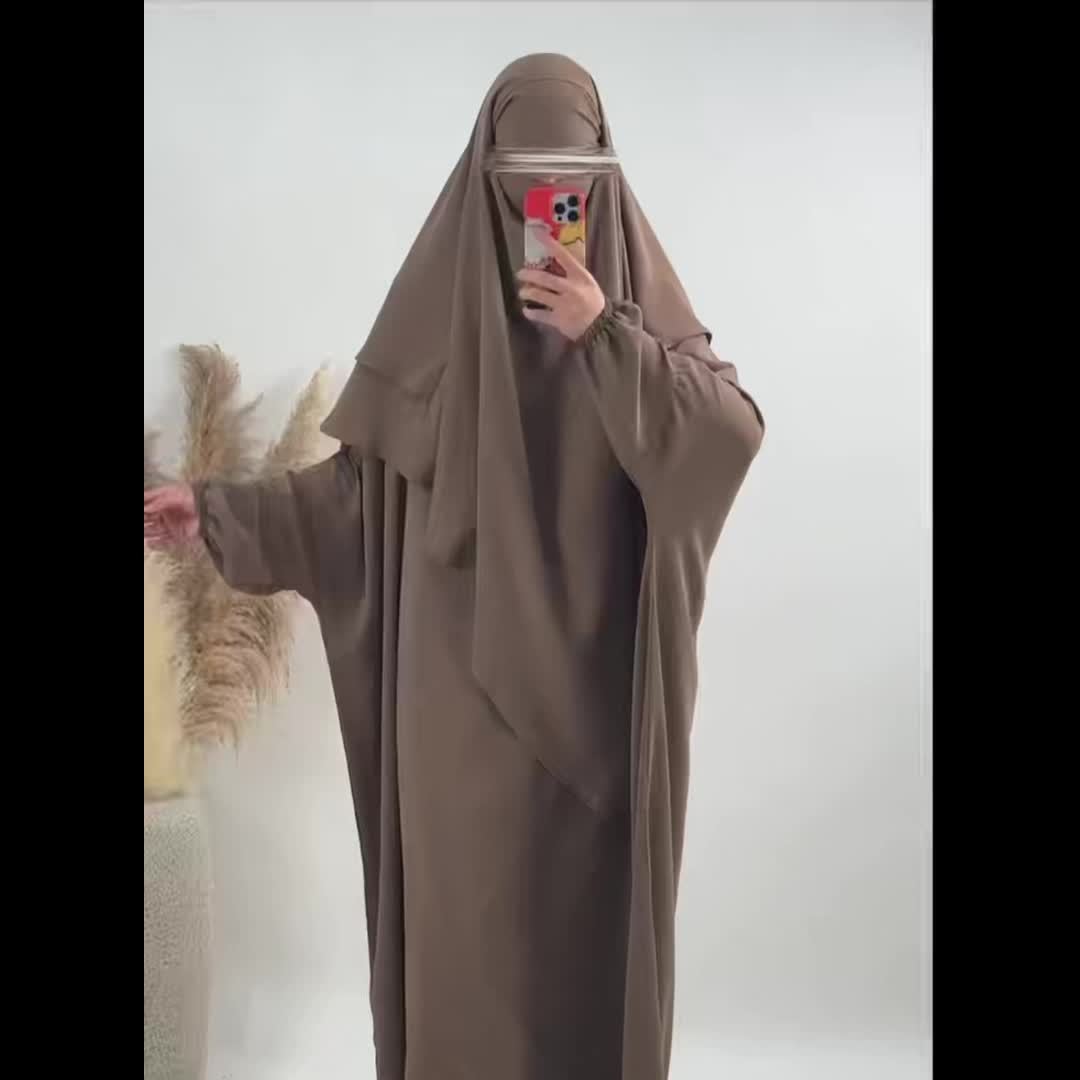
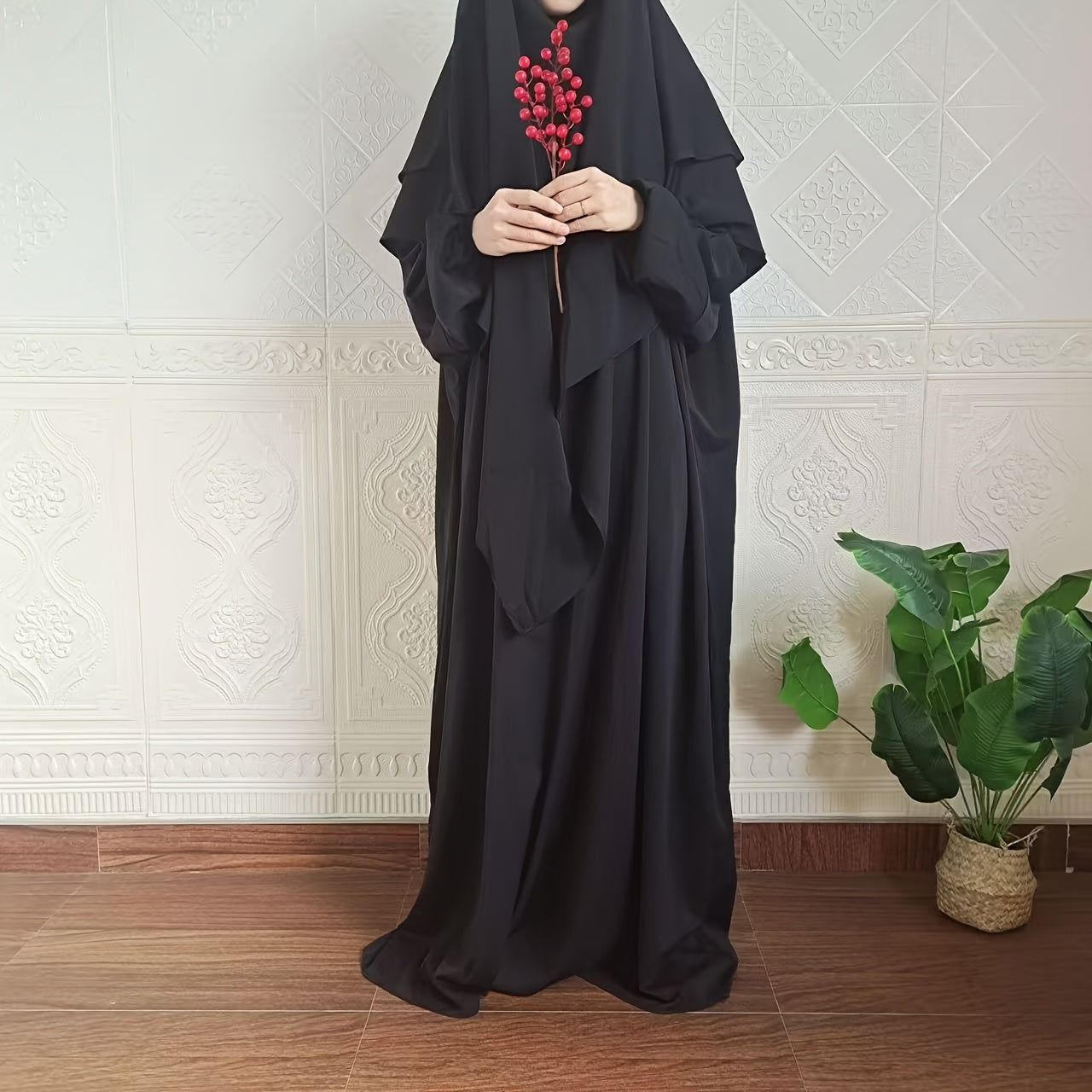
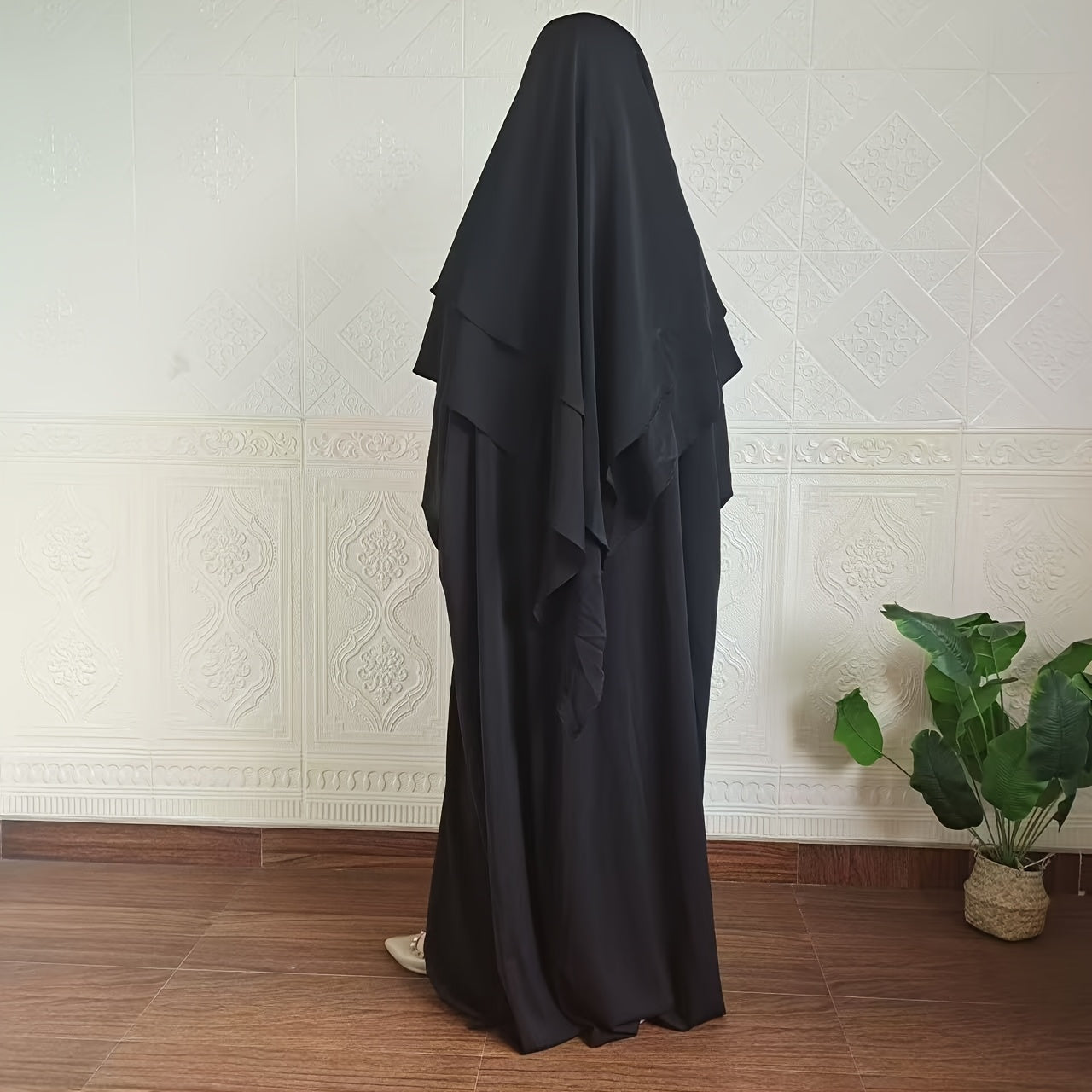
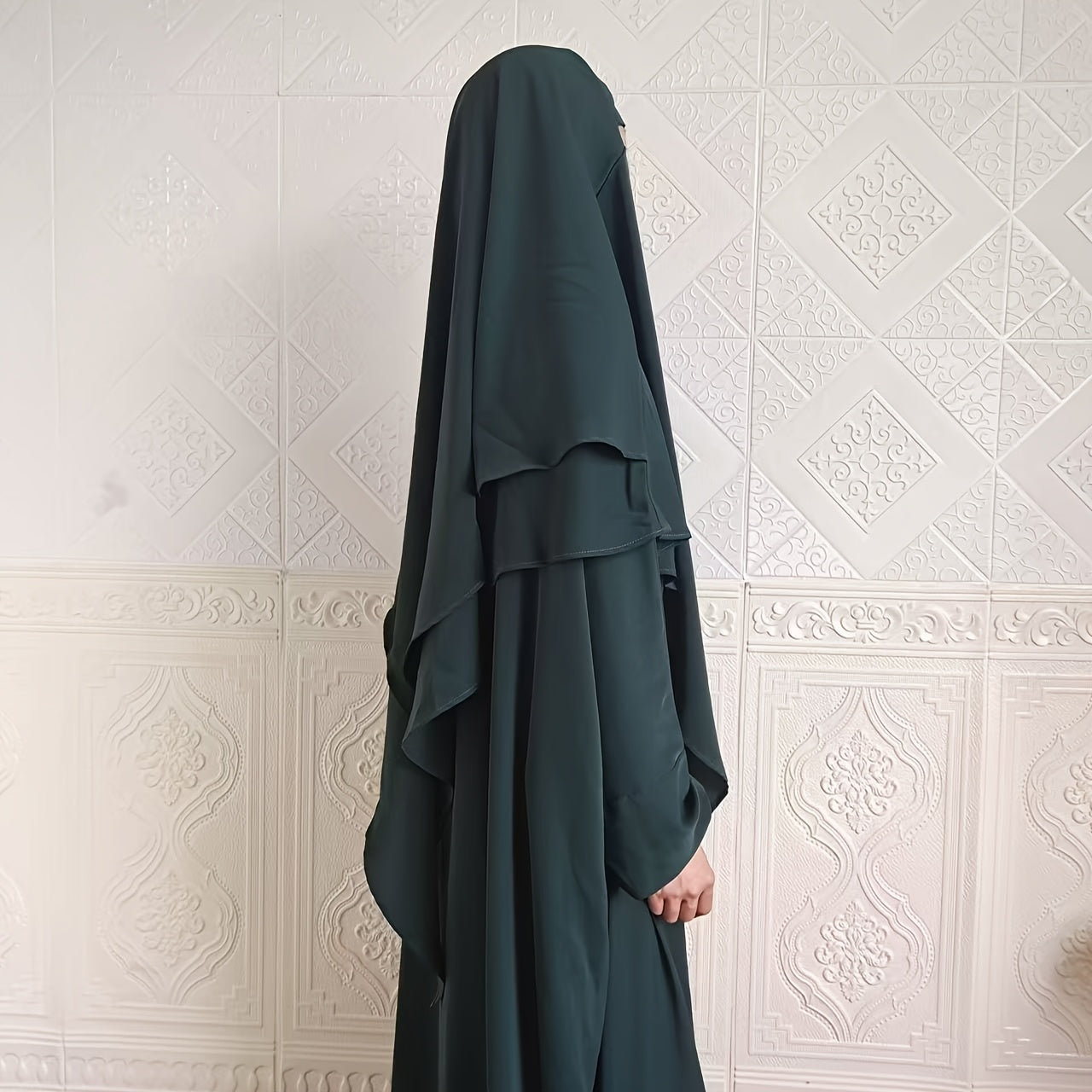
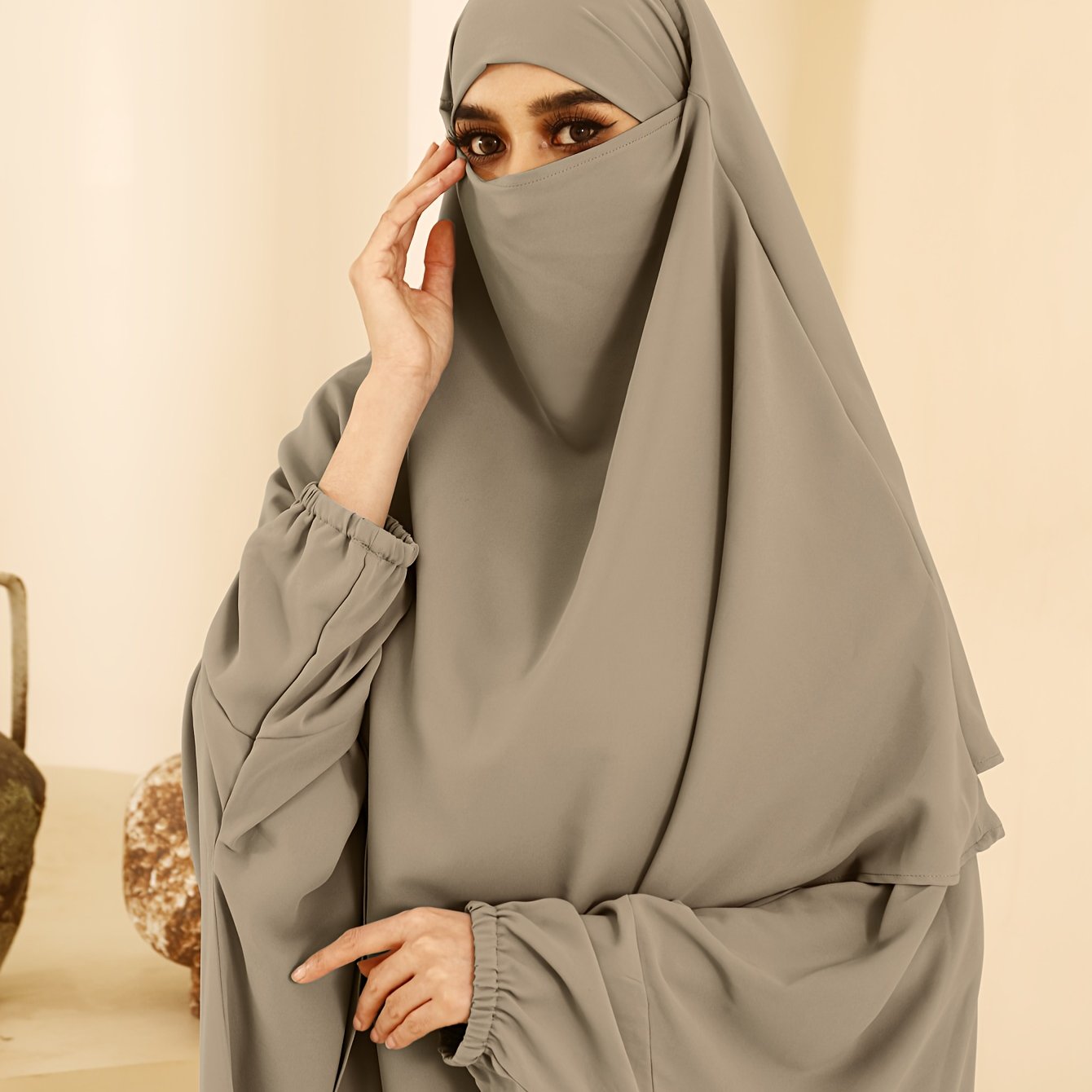
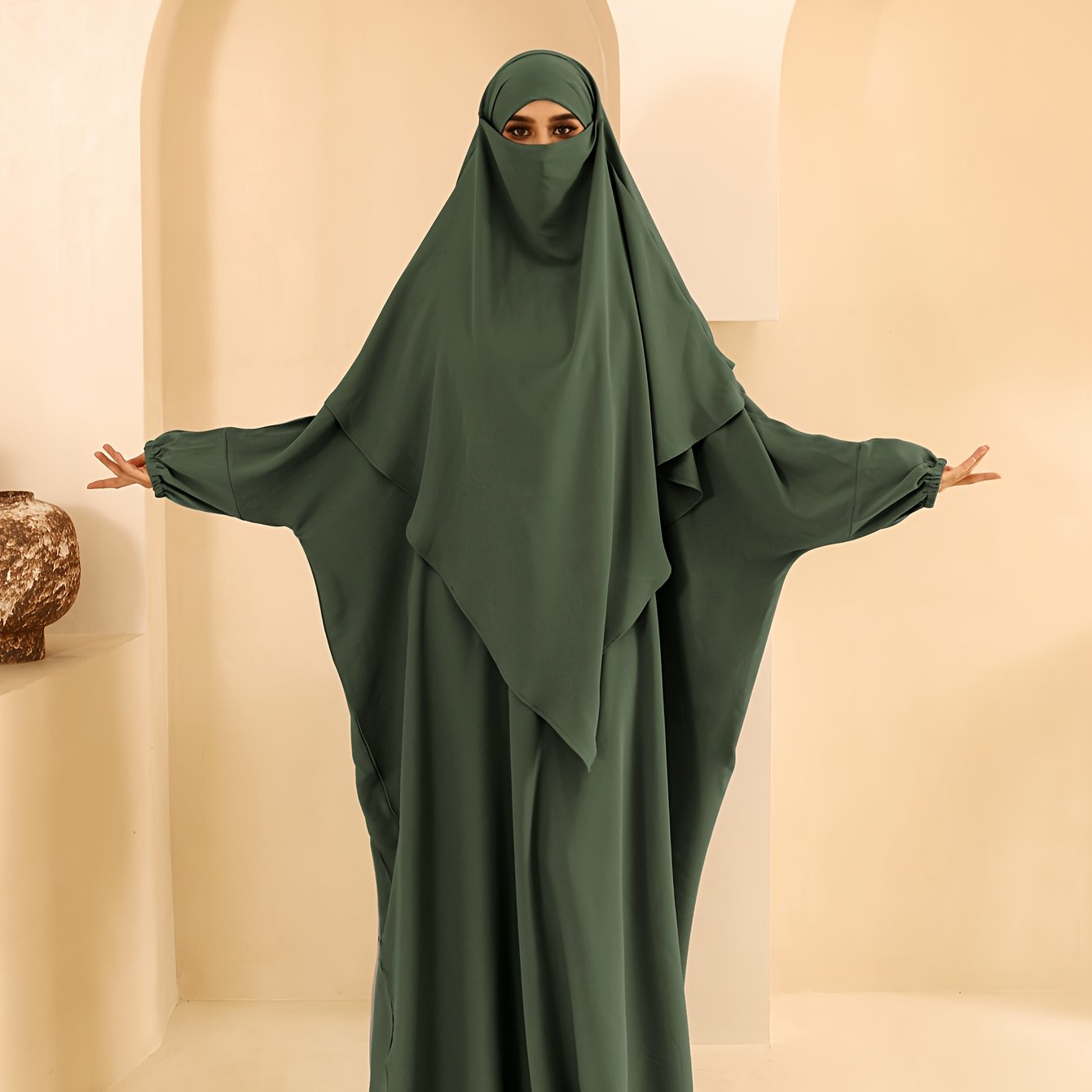
Modest Plus Size Women’s Jilbaab Dress Set – Elegant Solid Color Dubai Abaya with Hijab for Prayer and Ramadan
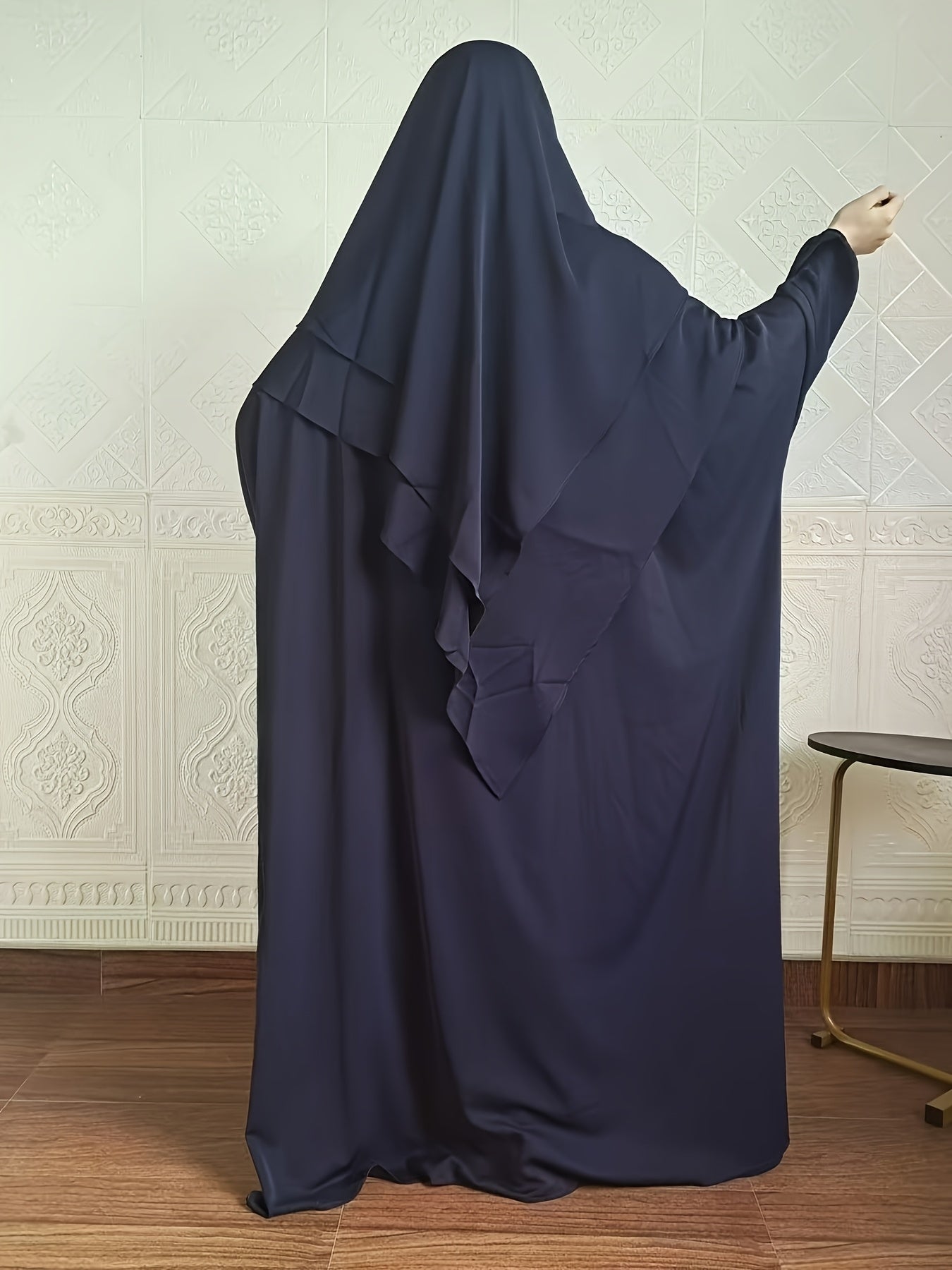
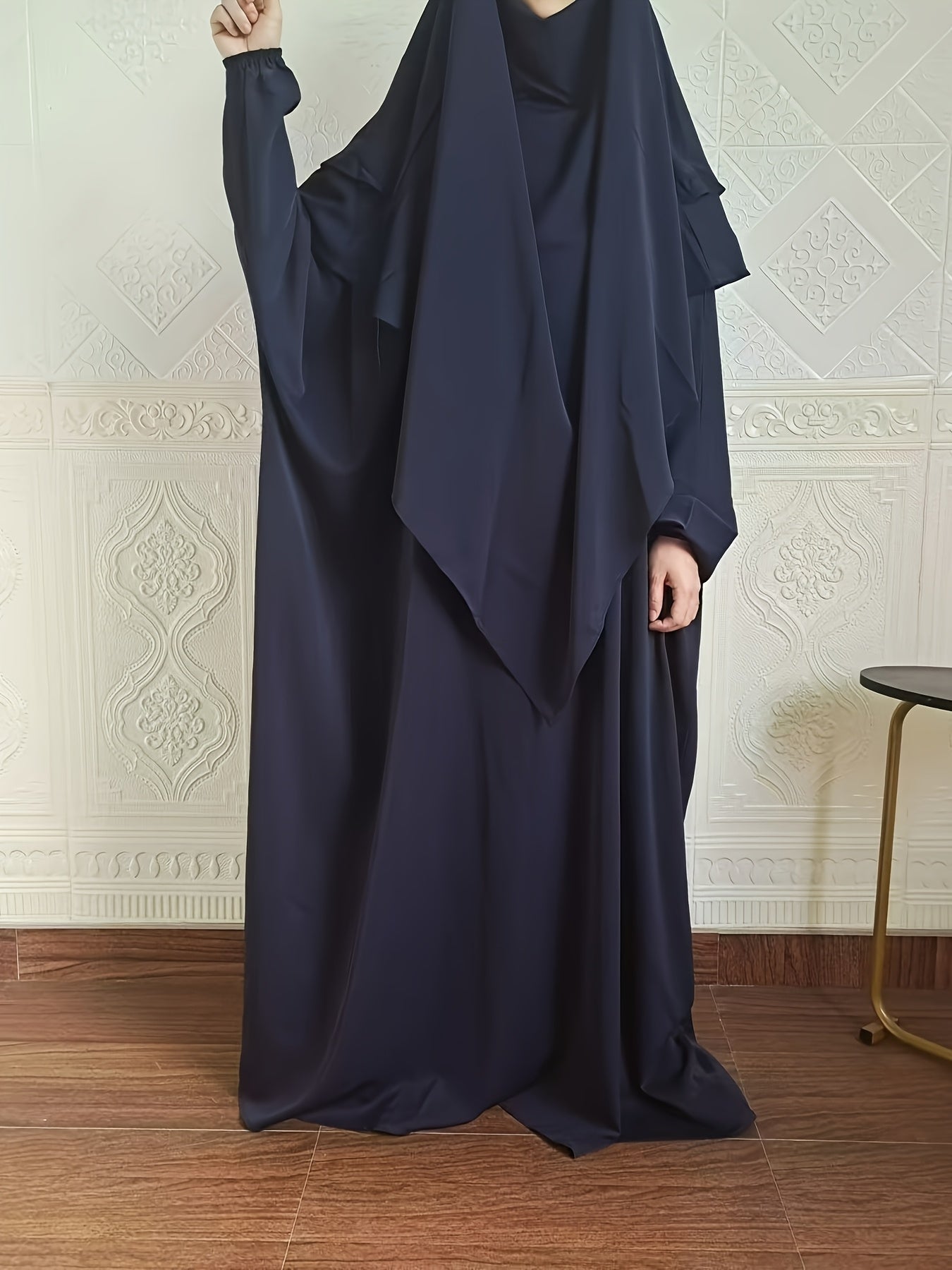
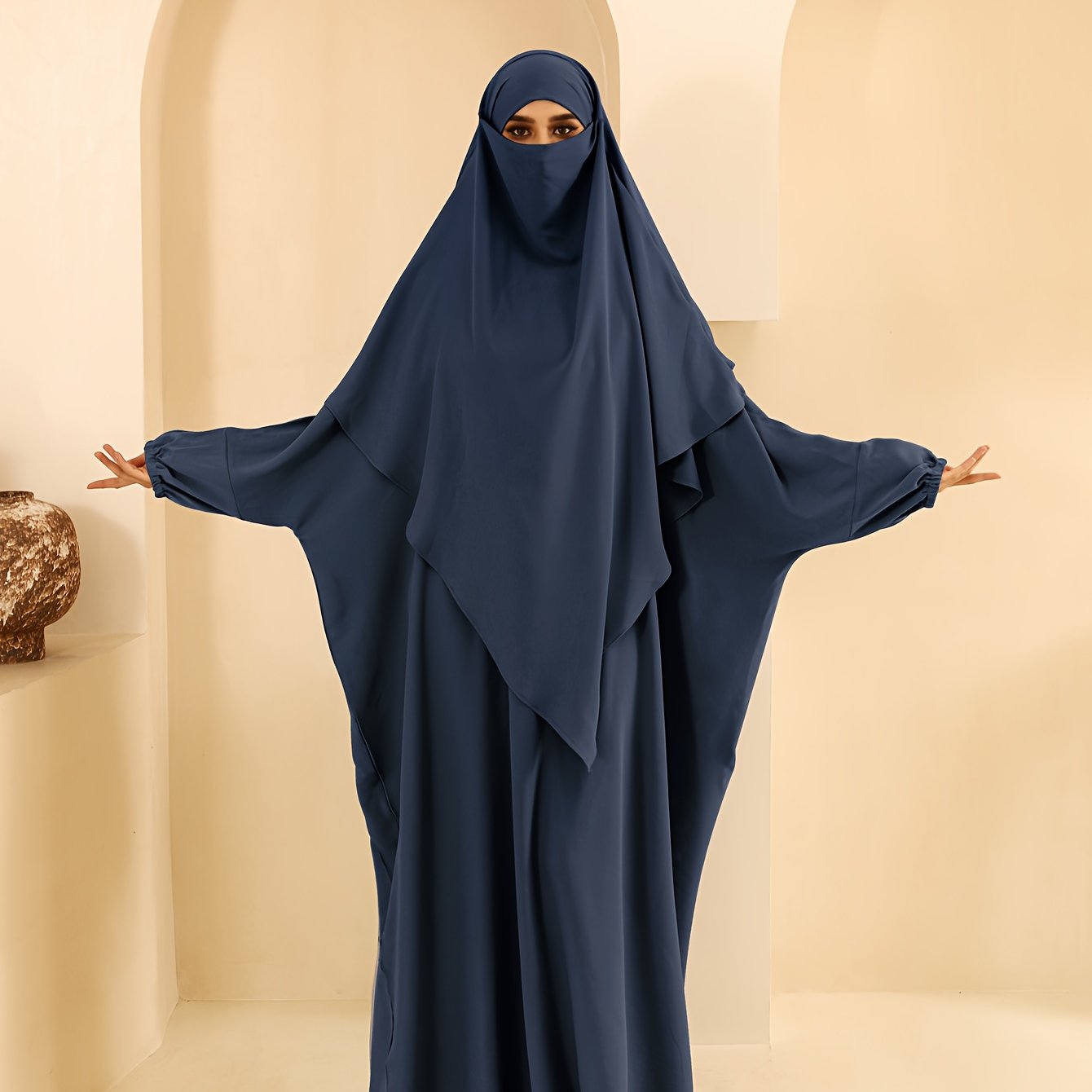
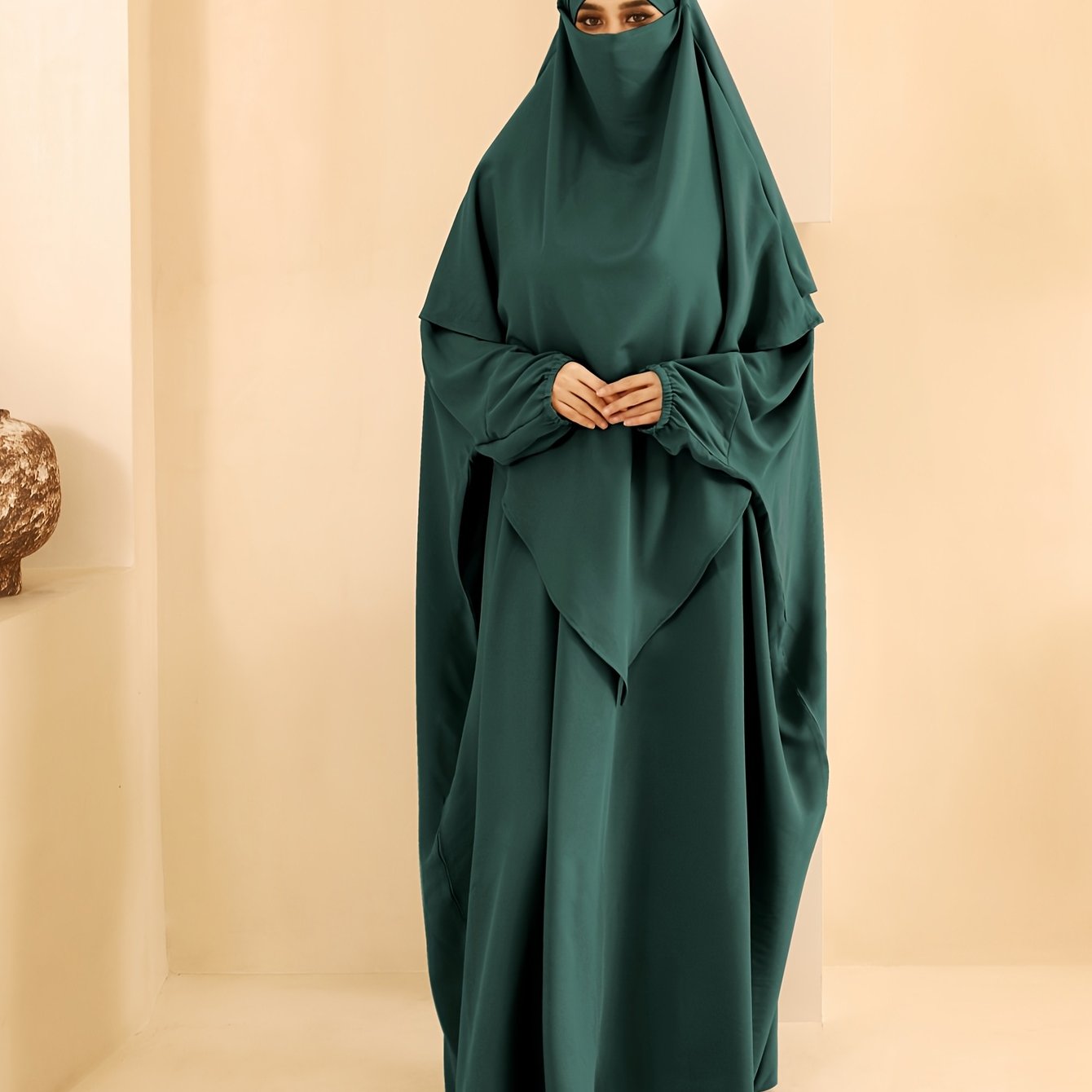
The Plus Size Women’s Jilbaab Two-Piece Set offered by Fabulive is a remarkable example of how modest fashion has evolved into a space where tradition meets modern design principles. At its core, the design emphasizes dignity, full coverage, and comfort, yet it does so with an eye for sophistication and graceful flow. The robe is cut to accommodate plus size silhouettes with effortless elegance, ensuring that modesty never feels restrictive but instead liberates the wearer by prioritizing comfort.
The silhouette of the jilbaab is long, fluid, and slightly loose, a design choice rooted in centuries of Middle Eastern robe-making traditions. Yet, it is not shapeless. The gentle tailoring ensures that the garment falls with balance, creating vertical lines that elongate the body. The two-piece construction further adds practicality: a robe complemented by a large matching hijab. Together, they form a cohesive outfit that functions as both a religious garment for prayer and a versatile choice for daily life.
What makes this design especially appealing is its universality. While specifically crafted with Islamic modesty in mind, its aesthetic simplicity allows it to be appreciated as timeless attire. The robe embodies cultural heritage while also resonating with global audiences who seek comfort-driven, sustainable fashion. Fabulive positions this set as more than clothing—it is a lifestyle garment that redefines everyday modest wear with modern refinement.
Colors: A Palette Rooted In Simplicity And Grace
Color in modest fashion is never arbitrary. The hues chosen for this jilbaab and robe set are designed to echo both spirituality and modern-day versatility. Solid color garments carry profound symbolism. They speak of restraint, humility, and focus on the person rather than the ornament. Fabulive’s approach reflects this ethos with its thoughtful palette, offering tones that embody both timelessness and adaptability.
Neutral shades such as black, beige, navy, and earthy tones offer versatility for both formal and informal occasions. Black, in particular, has long been considered the quintessential abaya and jilbaab color across Middle Eastern traditions. It symbolizes sophistication and solemnity, while its practicality ensures suitability for a wide range of events. Beige and cream, on the other hand, carry connotations of purity and serenity, aligning with the reflective state of mind often cultivated during Ramadan and prayers.
What stands out is the adaptability of these colors to different lifestyles. A woman can wear the darker shades for formal religious gatherings or special occasions, while lighter tones bring a sense of freshness and serenity to casual settings. The solid color concept also provides a clean canvas for accessorizing—allowing women to pair the garment with jewelry, handbags, or shoes without clashing aesthetics. In this sense, the robe becomes both an anchor of modest style and a flexible foundation for individual expression.
Materials: Crafting Comfort With Purpose
Materials dictate the lived experience of clothing, and in the case of this jilbaab set, fabric selection is paramount. Fabulive has crafted this collection with textiles that balance breathability, durability, and softness—qualities essential for a garment that may be worn daily or for extended hours during prayer and Ramadan evenings.
Polyester blends are often utilized for their wrinkle resistance and durability. These fabrics allow the robe to maintain structure while offering lightweight wear that suits warmer climates. Unlike heavier textiles, the chosen materials encourage airflow and ease of movement, essential for comfort during prolonged use. At the same time, these fabrics are durable enough to resist wear, ensuring longevity.
One of the understated virtues of such fabric choice is ease of maintenance. Unlike delicate natural silks or wool, polyester blends withstand machine washing without compromising their structure or losing their color depth. This practicality aligns with the needs of modern women who require garments that combine elegance with functionality. By integrating soft textures with resilient fibers, the jilbaab maintains its luxurious flow while meeting the demands of everyday life.
The hijab included in the set mirrors the robe’s material qualities. Its drape is lightweight yet sufficiently opaque, striking a balance between coverage and comfort. Together, robe and hijab present a harmonious textile design intended to serve women across different contexts and climates.
Functionality: Beyond Aesthetic To Purposeful Wear
The jilbaab robe set is not merely about appearance. It is engineered for functionality, addressing both religious observance and daily wearability. Modest fashion has always carried a functional dimension: to provide full coverage while ensuring that women feel at ease in their garments. In this respect, the Fabulive jilbaab set excels.
Firstly, the robe provides comprehensive coverage without adding unnecessary weight. This ensures comfort during long hours of worship, whether standing, kneeling, or sitting in prayer. The wide cut and non-restrictive sleeves allow movement, acknowledging the need for practical clothing in both spiritual and everyday routines.
Secondly, the inclusion of a large matching hijab simplifies the dressing process. Instead of coordinating separate pieces, the set offers a ready-made ensemble, enhancing convenience. This becomes especially significant during Ramadan, when women may shift between family gatherings, worship, and personal reflection. Having an outfit that transitions seamlessly across these contexts minimizes decision fatigue and strengthens one’s focus on spiritual priorities.
Thirdly, the garment is seasonally versatile. Its fabric construction enables wear during warmer months without causing discomfort, while in cooler conditions, it can be easily layered. This adaptability makes the jilbaab set a year-round wardrobe essential rather than a seasonal garment.
Finally, the plus size tailoring demonstrates inclusivity. Modest fashion is not only about covering but also about accommodating diverse body types with grace. The jilbaab robe ensures that women of all shapes feel dignified, emphasizing inclusivity as an extension of modest values.
Cultural Relevance: Preserving Modesty Through Modern Fashion
The jilbaab has deep roots in the history of Islamic clothing, serving as a symbol of dignity, modesty, and faith. Across centuries, women have embraced garments such as abayas, jilbaabs, and khimars not only as cultural identifiers but also as personal expressions of devotion. This robe and hijab set from Fabulive draws upon that lineage, yet it adapts it for the rhythms of modern life.
In Middle Eastern culture, modest clothing has always been more than just fabric. It is an embodiment of values: humility, faith, and respect. By offering a set designed for plus size women, Fabulive reaffirms the inclusivity inherent in modest fashion traditions. Modesty is universal, and garments must be accessible to women of every body type, reaffirming that dignity and elegance are not limited by size.
Equally important is the garment’s association with Ramadan and prayer. These are sacred moments that demand attire rooted in reflection and spiritual poise. The jilbaab’s flowing design allows the wearer to engage in prayer comfortably, its lightweight fabric easing movement and its modest cut maintaining coverage. The cultural relevance of such a garment lies in its ability to connect modern women with the traditions of their mothers and grandmothers, while still offering the refinement of contemporary tailoring.
Globalization has further expanded the significance of modest fashion. The jilbaab is no longer confined to Middle Eastern contexts but has become a garment embraced worldwide, from Europe to North America and Asia. Women who seek modest fashion as a lifestyle or who wish to honor their faith in diverse cultural landscapes can now find in this garment a bridge between tradition and modern expression.
Styling: Versatility Across Occasions
The brilliance of the Fabulive jilbaab set lies in its adaptability to different settings. While designed with Islamic modesty at its heart, it functions equally well as an elegant robe for formal gatherings, a practical garment for daily routines, or a sophisticated piece for travel.
For Ramadan evenings, when family gatherings and community iftars create an atmosphere of togetherness, the robe serves as a polished outfit requiring little effort to style. A single statement accessory—such as a metallic clutch, delicate bangles, or subtle heels—can elevate the robe into evening wear. The solid color design is the perfect canvas for experimentation with jewelry or scarves, making it suitable for festive occasions.
During Islamic prayers, the robe demonstrates its true functionality. Its full coverage ensures the body is appropriately veiled, while the breathable material supports comfort through long hours of prayer. Unlike heavy or constricting garments, this jilbaab promotes ease of movement while maintaining modesty, a vital factor for religious practice.
For everyday wear, the jilbaab doubles as a comfortable yet elegant solution. Paired with flats and minimal accessories, it becomes a refined outfit for errands, work, or casual gatherings. Its solid colors offer a professional edge, making it acceptable in workplaces that value modest attire. At the same time, it can be styled down for weekend wear, offering one garment that meets diverse lifestyle needs.
Styling flexibility extends into seasonal wear. In warmer climates, its lightweight design keeps the wearer cool, while in colder seasons, layering with coats, shawls, or heavier hijabs ensures warmth without sacrificing elegance. The robe’s universality makes it one of the most versatile pieces a woman can own—transforming from religious attire to daywear and evening fashion with ease.
Everyday Versatility: A Wardrobe Essential
Modern fashion has reached a stage where women expect clothing to perform multiple roles at once. It is no longer enough for a garment to look beautiful; it must also respond to the complex demands of modern life, blending elegance with practicality. The jilbaab robe from Fabulive embodies this expectation with ease. It is not a garment reserved for one specific purpose but a wardrobe essential that fluidly adapts to different roles—professional, spiritual, familial, and social—without losing its dignity or refinement.
One Garment, Many Roles
The day of a contemporary woman is layered with responsibilities and transitions. She may begin her morning in prayer, enter a professional environment shortly after, dedicate time to her children or family, and later attend a social gathering. The demand for frequent outfit changes is exhausting and unnecessary. A jilbaab set such as this provides continuity, a single garment that honors each of these contexts with grace.
In prayer, the jilbaab fulfills its core purpose: modest coverage, ease of movement, and comfort for extended rituals. In a professional setting, it adapts by presenting a sleek, solid-color appearance that radiates authority without excess. For family life, it offers comfort and freedom of movement, allowing a woman to engage in daily tasks without feeling restricted. When evening arrives and social gatherings beckon, accessories such as jewelry, handbags, or shoes instantly transform the robe into attire fit for formal occasions.
This seamless adaptability makes the jilbaab an investment piece. It relieves the wearer of the need to segment her wardrobe into rigid categories of spiritual, professional, or social. Instead, it acknowledges the fluidity of her roles and offers one garment that transitions naturally between them.
Coordinated Simplicity With Matching Hijab
One of the subtle yet profound strengths of this Fabulive set lies in the inclusion of a matching hijab. In modest fashion, coordination often poses a challenge—matching tones, fabrics, and textures requires time and consideration. By providing a robe and hijab designed to complement one another, this set eliminates the uncertainty of pairing, ensuring a polished and dignified appearance at all times.
This is not merely about convenience; it is also about confidence. A woman who knows that her attire is cohesive can move through her day with greater assurance. She does not waste time adjusting or second-guessing her appearance. Instead, she devotes her energy to the tasks and experiences before her. This level of certainty, provided by coordinated simplicity, transforms the garment from clothing into empowerment.
Versatility In Travel
Travel presents one of the greatest challenges for modest fashion. Packing multiple outfits for different occasions often results in excess baggage and stress. The jilbaab robe set answers this challenge with elegance. Its lightweight construction makes it easy to fold and carry, while its wrinkle-resistant fabric ensures it retains its refined appearance even after hours in a suitcase.
More importantly, the robe transitions across cultural contexts. For women traveling during Ramadan, it becomes an indispensable companion—suitable for prayer, family iftars, and even formal visits. In religious sites, its modest coverage aligns with cultural expectations, while in airports, hotels, or business settings, its solid tones communicate sophistication.
Travel versatility is also emotional. In unfamiliar environments, clothing often provides a sense of security and identity. By wearing a jilbaab that is both practical and elegant, women carry a piece of home with them. It becomes more than fabric—it becomes familiarity, dignity, and confidence that transcend geography.
Inclusivity As Everyday Luxury
Another dimension of everyday versatility lies in inclusivity. For too long, plus size women have been underserved in fashion, particularly in modest wear. Many garments are designed with limited body types in mind, leaving others to adapt ill-fitting clothing. The Fabulive jilbaab challenges this exclusion by tailoring specifically for plus size women, ensuring that elegance and modesty are never compromised by sizing limitations.
This inclusivity transforms the robe into more than a garment—it becomes a statement of respect. By accommodating diverse body shapes, it honors the universality of modest fashion, reinforcing the principle that dignity belongs to every woman. The flowing silhouette does not attempt to disguise or restrict but to celebrate and accommodate. In doing so, it creates a garment that offers emotional as well as physical comfort, affirming that inclusivity is itself a form of luxury.
Cultural Universality Of Daily Wear
The robe’s versatility also lies in its ability to exist across cultures. In Middle Eastern contexts, it aligns seamlessly with traditional attire, functioning as both religious clothing and everyday fashion. In Western settings, it can be worn as minimalist outerwear, blending into urban environments while retaining its modest identity. In South Asia, it harmonizes with vibrant accessories, adapting to colorful regional aesthetics.
This cultural universality means that the jilbaab is never out of place. Whether in a mosque, a workplace, a family gathering, or a city street, it retains its dignity. This flexibility is part of what makes it a wardrobe essential—an item that is not bound by geography but transcends cultural boundaries with ease.
The Emotional Ease Of Versatility
Versatility is not only practical but emotional. The knowledge that one garment can serve across occasions removes the stress of decision-making. Instead of being consumed by outfit planning, a woman can focus on her responsibilities, her faith, and her relationships. The robe becomes an anchor of calm amid the busyness of daily life.
This emotional ease extends into moments of transition. A woman leaving her office to attend an evening gathering does not need to rush home to change. She adjusts her accessories, and the robe shifts with her. In prayer, she feels spiritually aligned. In professional life, she feels respected. In social life, she feels stylish. In family life, she feels comfortable. The garment allows her to carry the same confidence across all spaces, reinforcing her sense of wholeness rather than dividing her into compartments.
Everyday Versatility As Timeless Luxury
Ultimately, everyday versatility is what elevates the jilbaab from functional clothing to timeless luxury. Luxury is not only about embellishment or exclusivity—it is about the ability of a garment to meet life’s demands with grace. A robe that adapts across roles, seasons, cultures, and sizes embodies true refinement. It acknowledges the complexity of modern women’s lives and offers a solution that is elegant, inclusive, and enduring.
The Fabulive jilbaab does not ask a woman to compromise. It does not force her to choose between modesty and modernity, between tradition and practicality, between spirituality and social life. Instead, it integrates all these dimensions into one garment, proving that fashion can be both simple and profound. In its adaptability lies its strength, and in its inclusivity lies its luxury. It is, quite simply, a wardrobe essential.
The Emotional Dimension Of Modest Styling
Fashion is not only about what one wears but about the profound impact that clothing has on how one feels, how one connects with others, and how one exists in the world. The jilbaab and hijab set goes beyond fabric and thread to embody a philosophy of living. It brings with it a sense of emotional security, spiritual alignment, and cultural pride. For many women, the choice to wear modest attire is not about concealing the self but about expressing identity through elegance, restraint, and quiet sophistication.
Serenity Through Fabric And Form
The fluid drape of the jilbaab creates an aura of serenity that few garments can replicate. As the robe moves, it echoes the rhythm of daily life—graceful, flowing, and unhurried. This natural movement becomes part of the wearer’s emotional experience. Rather than feeling constrained by fashion’s demand for sharp lines or revealing cuts, she feels enveloped in softness. The modest silhouette reinforces a sense of confidence that does not rely on visibility or exposure but on inner poise.
This emotional security is powerful. In public, the garment acts like a shield, not in the sense of hiding but in the sense of grounding the wearer. It frees her from the pressures of ever-shifting mainstream fashion trends. There is no need to compete with the fleeting novelty of seasonal styles. Instead, she embodies a timeless form of beauty—one that does not clamor for attention but quietly commands respect.
Identity Affirmed Through Modesty
The jilbaab affirms values that transcend the physical garment. It is not simply a piece of fabric; it is a declaration of identity. Women wearing it are not defined by what is shown but by the elegance of restraint. This quiet confidence sends a clear message: that individuality is not diminished by modesty but expressed through it.
Styling choices within modest fashion become an extension of individuality. Some women prefer the jilbaab in its purest form, unembellished and serene, as a reflection of their spiritual devotion. Others accessorize with subtle jewelry, handbags, or shoes, layering modernity onto tradition. Each approach is valid, each unique, and each demonstrates how modest wear supports expression without requiring compromise. The robe and hijab set thus become a personal canvas upon which identity is written in subtle strokes, never overwhelming yet always present.
The Spiritual Connection Of Ramadan
This emotional resonance becomes particularly powerful during Ramadan, a sacred month of fasting, prayer, and reflection. Clothing during Ramadan is more than practical—it is part of the reflective atmosphere. By wearing a jilbaab that balances modesty with beauty, women align their outer appearance with the inner discipline that defines the month. The robe thus becomes more than a garment; it becomes part of a personal ritual of devotion, self-discipline, and celebration.
During moments of prayer, the comfort and coverage of the jilbaab allow focus to remain on spirituality rather than physical appearance. The serenity of the fabric complements the serenity of the fast, creating harmony between body, mind, and spirit. At family iftars and communal gatherings, the robe’s elegance reflects the joy of togetherness without sacrificing modesty. It unites women with their communities, becoming both a spiritual companion and a social garment.
In many ways, the jilbaab during Ramadan mirrors the journey of the month itself. Just as fasting is about restraint that leads to renewal, modest clothing is about simplicity that reveals inner depth. Both practices embody dignity, patience, and reflection. The robe thus symbolizes not only fashion but a sacred alignment between outward form and inner faith.
Intergenerational Connections
The emotional depth of modest styling also lies in its ability to connect across generations. Grandmothers, mothers, and daughters often find themselves wearing similar garments, yet each interprets it through her own lens. The robe becomes a constant, a garment that bridges eras while allowing room for individuality.
For grandmothers, the jilbaab is often a symbol of continuity. It is a garment that ties them to their cultural and religious heritage, a reminder of their youth and of the traditions they carried forward. They may style it with traditional jewelry or scarves, evoking memories of a time when modest wear was less about choice and more about cultural expectation. For them, wearing the robe is about honoring lineage.
For mothers, the jilbaab represents balance. It allows them to embody the values of modesty while still navigating modern life. They may pair it with functional accessories for work, or elegant touches for social gatherings, demonstrating the garment’s ability to adapt to their multi-faceted roles. It becomes a way of teaching their daughters—both through example and conversation—that modest fashion is not restrictive but empowering.
For daughters, the jilbaab is often reinterpreted in contemporary ways. They may embrace minimalist styling, pairing it with sneakers, slim handbags, or understated jewelry, reflecting global trends while staying true to their roots. For them, modest fashion is not a limitation but an affirmation of identity in a world that often equates individuality with exposure.
Together, these generational interpretations create a living tradition. The robe becomes a thread that runs through family life, connecting women across decades and cultures. Each generation writes its own story onto the garment, yet the jilbaab itself remains timeless—always relevant, always dignified.
Modesty As Emotional Liberation
Mainstream fashion often equates empowerment with revealing more, but modest wear demonstrates that empowerment can also come from covering with intention. The emotional liberation of the jilbaab lies in its ability to free women from societal expectations. It allows them to participate in fashion without being dictated by its narrow definitions of beauty.
This liberation has psychological depth. When a woman steps into a jilbaab, she feels secure, dignified, and at peace. She no longer dresses for validation from others but for alignment with her own values. The garment thus becomes an act of self-care—an affirmation that her worth is not defined by visibility but by her presence, her values, and her dignity.
In private spaces, this liberation is equally profound. Women often report feeling calmer and more centered when wearing modest garments. The robe’s gentle drape, its simplicity, and its absence of constraint allow them to move freely and comfortably. The emotional comfort of knowing that one’s clothing aligns with one’s beliefs brings peace that fast fashion rarely offers.
Global Resonance And Universality
The emotional dimension of modest styling is not confined to one region or one community. As modest fashion gains global recognition, the jilbaab resonates with women across cultures. In Dubai, it may symbolize luxury and cultural pride; in Europe, it may signify minimalist elegance; in North America, it may represent identity and belonging.
Each cultural context adds another layer of meaning, but the emotional resonance remains constant. Women everywhere experience the same serenity, dignity, and empowerment that the robe offers. This universality reinforces the jilbaab’s role as more than regional attire—it is a global garment of identity and self-expression.
The Timelessness Of Emotional Fashion
Fashion trends rise and fall, but emotional connections endure. The jilbaab’s strength lies in its ability to remain timeless by forging emotional bonds that transcend seasons. A robe worn during Ramadan one year may carry memories into the next. A jilbaab worn to a daughter’s wedding may be remembered decades later. Over time, the garment becomes a vessel of memory, carrying with it the emotional weight of life’s milestones.
Unlike garments that fade quickly from relevance, the jilbaab grows more meaningful with time. Its emotional durability transforms it from fashion into legacy. Women do not discard it as trends change; they treasure it, re-wear it, and pass on its significance to the next generation.
The emotional dimension of modest styling is vast, encompassing serenity, confidence, spirituality, and legacy. The jilbaab and hijab set is not merely about what women wear—it is about how it makes them feel, how it aligns them with their beliefs, and how it connects them to others across generations and cultures. By embodying restraint, grace, and quiet sophistication, the jilbaab affirms that modest fashion is not about limitation but about liberation. It liberates women from external pressures, grounds them in identity, and allows them to express individuality in ways that are timeless, dignified, and deeply personal.
In the end, the robe is not just fabric. It is an experience. It is the serenity of prayer, the elegance of celebration, the comfort of daily life, and the thread of connection between grandmothers, mothers, and daughters. It is fashion elevated into philosophy—an emotional language spoken not through exposure but through elegance, restraint, and confidence.
Maintenance: Simple Care For Daily Use
The true strength of a garment does not end with its design or aesthetic appeal—it extends into how easily it can be cared for and maintained. A jilbaab such as this one is meant to be worn frequently, whether for prayer, Ramadan gatherings, or everyday life. Fabulive has ensured that the fabric used in this robe set supports practical maintenance without compromising luxury.
Polyester blends are renowned for their resilience. Unlike delicate silks or wool that demand specialized cleaning, this robe resists wrinkling and fading, allowing it to maintain its elegance through repeated use. A simple wash with mild detergent, preferably in cool water, is enough to restore freshness. Air drying rather than machine drying helps preserve the natural drape of the fabric while preventing shrinkage or unnecessary wear. For women who prefer convenience, machine washing on a gentle cycle is also acceptable, making the set easy to integrate into modern routines.
The hijab included in the set requires the same minimal care. Its lightweight texture dries quickly, a benefit for women who rely on it daily. Light ironing, if needed, helps restore its crisp finish, though many women find that the natural drape eliminates the need for constant pressing. The simplicity of care ensures that the robe remains as pristine as when it was first worn, reinforcing its status as a dependable wardrobe staple.
Care: Preserving Elegance Over Time
Proper care extends the life of a garment, transforming it from a short-term purchase into a long-term investment. The Fabulive jilbaab, though designed with practicality in mind, also carries an aura of refinement that deserves mindful treatment.
Stain resistance is one of the garment’s inherent advantages. The fabric does not easily absorb oils or liquids, making accidental spills less worrisome. However, prompt spot cleaning ensures the robe remains flawless. For best results, women can gently blot the fabric rather than rubbing it, preserving its weave and preventing distortion of color.
Storage also plays a role in preservation. Hanging the jilbaab on wide, supportive hangers allows it to maintain its silhouette, preventing creases or unwanted folds. For travel, it can be carefully rolled rather than folded flat, which minimizes wrinkles and keeps the fabric smooth upon unpacking. These small considerations reflect how modest wear, though practical, can also embody luxury when maintained with intention.
Caring for the hijab follows similar principles. Since it is frequently styled and adjusted, ensuring it is stored flat or hung neatly preserves its crisp edges. When accessorized with pins or brooches, careful placement prevents fabric damage. Over time, these habits cultivate a sense of stewardship, where the garment becomes more than material—it evolves into a trusted companion of spiritual and personal life.
Long-Term Value: Fashion As An Investment
Luxury editorial content often emphasizes the concept of fashion as an investment, and this jilbaab robe set exemplifies that philosophy. It is not a seasonal piece, nor is it bound by fleeting trends. Instead, it carries the weight of timeless design and cultural significance, making it a garment that retains relevance year after year.
The durability of the fabric ensures longevity. Unlike fast-fashion garments that lose form and vibrancy after a handful of washes, the Fabulive jilbaab is constructed to endure. Its resistance to fading means the colors remain deep and striking over years of use, while its wrinkle-resistant nature ensures the garment always presents itself elegantly without demanding extensive care.
From an economic perspective, long-term ownership reduces the need for repeated purchases. Instead of acquiring multiple lower-quality robes that deteriorate quickly, women can invest in one piece that lasts, combining elegance with practicality. This approach not only benefits the wearer financially but also aligns with sustainable consumption practices—purchasing fewer items of higher quality to reduce waste.
Long-term value also manifests emotionally. Garments often become imbued with memory and sentiment. A jilbaab worn during Ramadan prayers or family gatherings carries the imprint of those experiences. Over time, it becomes more than attire—it becomes part of one’s personal story, reminding the wearer of milestones, celebrations, and spiritual devotion. This intangible value makes the jilbaab not just clothing but a piece of lived history.
Sustainability: A Conscious Choice
In today’s fashion landscape, sustainability is no longer optional—it is a responsibility. The jilbaab robe set speaks to this responsibility by offering a garment that is durable, practical, and mindful of long-term wear. By focusing on longevity, Fabulive ensures that women reduce the cycle of frequent replacements, lowering their fashion footprint.
Polyester blends, though synthetic, contribute to sustainability when designed for endurance. The longer a garment lasts, the fewer resources are consumed in producing replacements. By constructing the robe for repeated use and resilience, the brand ensures that modest fashion aligns with the values of conscious consumption.
Sustainability is not limited to environmental factors—it also encompasses cultural and emotional sustainability. The jilbaab preserves cultural traditions, ensuring that women remain connected to heritage through attire. By providing plus size inclusivity, it also supports social sustainability, creating garments that respect diversity and inclusivity in fashion.
This holistic view of sustainability elevates the jilbaab beyond its material reality. It becomes an emblem of responsibility, a garment that contributes to an ecosystem of fashion where luxury and responsibility coexist harmoniously.
The Luxury Of Styling Across Seasons
True luxury in fashion is not merely defined by ornate embellishments or high-cost fabrics; it lies in the garment’s ability to adapt to different settings, climates, and moods while maintaining elegance. This jilbaab robe set demonstrates precisely that. Its styling potential allows it to remain relevant in spring, summer, autumn, and winter, providing women with a wardrobe foundation that shifts with the seasons without losing its timeless appeal.
In warmer months, the robe’s breathable fabric ensures that airflow is maintained, allowing the wearer to remain cool during long days of fasting in Ramadan or summer gatherings. The robe’s loose silhouette prevents clinging, giving an impression of freedom and fluidity. Women can style the robe with lighter hijabs or minimal accessories, creating a refreshing appearance that balances comfort with elegance.
In cooler months, the jilbaab transforms effortlessly into a layering piece. The long robe can be paired with coats, shawls, or heavier hijabs to create warmth while preserving modesty. Its solid color design allows outer layers to blend harmoniously without appearing overbearing. Whether accessorized with leather boots, wool scarves, or structured coats, the jilbaab accommodates seasonal changes gracefully.
This year-round adaptability is what makes the robe not just a garment but an investment. Fashion that only fits one season is fleeting, while a piece that adapts across climates demonstrates enduring luxury. Fabulive has embraced this concept by ensuring that the jilbaab’s styling possibilities extend across multiple environments and seasons.
The Spiritual Dimension Of Modest Wear
For many women, modest wear carries an emotional and spiritual dimension that transcends fashion. Wearing a jilbaab is not only about covering the body but about aligning outward appearance with inner faith. This robe set recognizes that truth and is designed to enhance both spiritual and personal experiences.
During prayer, comfort and coverage are paramount. The robe provides full modesty, allowing women to pray with confidence that their attire meets the standards of Islamic tradition. Its loose fit ensures ease of movement through the physical postures of prayer—standing, bowing, kneeling, and prostration—without restriction. The matching hijab simplifies the process further, ensuring the head and body are consistently covered with dignity.
The garment’s role in Ramadan is particularly significant. This is a month marked by discipline, reflection, and spiritual renewal. Clothing plays a role in cultivating that environment, with modest attire reflecting the inward focus of the season. Wearing a jilbaab during Ramadan allows women to embody the sacredness of the month in their daily lives. Its flowing silhouette mirrors the humility and serenity encouraged by the fast, while its elegance honors the festive gatherings that occur at night.
Beyond rituals, the jilbaab also nurtures spiritual confidence. In an era where fashion often demands conformity to fleeting trends, modest wear provides women with an alternative rooted in faith and individuality. By wearing garments that embody dignity, women affirm that their value lies not in exposure but in self-respect and devotion. The robe becomes a daily reminder of values, transforming clothing into an expression of inner strength.
Identity Through Modest Fashion
The jilbaab robe set is not a mere article of clothing but a canvas upon which identity is written in ways both subtle and profound. Modest fashion, while characterized by restraint and coverage, offers endless opportunities for individuality. The solid colors of this robe give women the freedom to project who they are without relying on elaborate patterns or ornamentation. Simplicity becomes a strength, allowing each wearer to curate her appearance according to her values, her surroundings, and her sense of self.
For a professional woman, the robe transforms into a uniform of authority and sophistication. By pairing it with structured handbags, neat footwear, and discreet jewelry, she steps into her workplace with an aura of dignity that resonates with both her faith and her career aspirations. The restraint of the garment does not silence her voice—it amplifies it, creating a presence that communicates confidence and poise. For women who prefer subtle refinement over loud statements, the robe becomes the perfect garment to convey strength through elegance.
The robe also becomes a stage for women who live socially vibrant lives. When paired with bold accessories, shimmering shoes, or metallic accents, the jilbaab demonstrates its ability to merge festivity with modesty. It allows a woman to move through weddings, family gatherings, and community events without feeling overshadowed or out of place. Instead, she shines in her individuality, showing that modest fashion need not be rigid but can adapt to celebratory settings with grace.
At the same time, there are women who prefer the garment in its most unadorned form. For them, the jilbaab is not about self-presentation to the outside world but about alignment with spiritual devotion. The robe’s flowing lines and neutral palette reflect their inner journey, reminding them that modest fashion is first and foremost about authenticity and humility. In this sense, the robe becomes less about fashion and more about a ritual of faith—an act of embodying belief through fabric and form.
The universality of the robe’s design means that each woman can translate it into her language of self-expression. Whether professional, social, or spiritual, the jilbaab serves as a mirror, reflecting individuality back to the world in ways that feel intentional and true.
Generational Relevance And Timeless Appeal
Fashion often shifts with generations, with younger women seeking innovation while older women embrace continuity. Yet the jilbaab has the rare quality of speaking across these divides. Its minimalist construction appeals to youth who value clean lines and contemporary aesthetics, while its timeless cut and functionality resonate with older women who seek practicality and tradition.
For younger women navigating global cities, the jilbaab feels refreshingly modern. They can style it with sneakers, slim handbags, or neutral scarves, turning it into a statement of effortless elegance. Its simplicity allows it to blend seamlessly with international minimalist trends while still grounding them in modest identity. It becomes a bridge between faith and modern living, signaling that modest fashion is not separate from the world’s style conversations but a part of them.
For older women, the jilbaab’s enduring practicality makes it a trusted garment. They appreciate its loose fit, breathable fabric, and the way it adapts to different settings without requiring effort. For them, it is less about experimenting with trends and more about honoring tradition with dignity. It serves as a familiar garment that still feels contemporary, allowing them to remain stylish without compromising cultural values.
This intergenerational appeal turns the robe into a cornerstone of modest wardrobes. A mother and daughter can wear the same robe in completely different ways, each bringing her own sensibility to the styling. The garment thus becomes a unifying thread, binding generations together through shared clothing while allowing each to express uniqueness.
The timeless nature of the jilbaab is what elevates it above the realm of trends. Unlike fast-fashion garments that lose relevance in months, the robe continues to carry dignity across decades. Its role in cultural life ensures it remains a constant, adapting to the nuances of each generation but never losing its essence. This balance of tradition and modernity ensures that the jilbaab does not become a relic of the past but a living, evolving garment that is always current.
Cultural Adaptability Across Regions
The jilbaab’s strength is not limited to personal or generational identity; it extends across cultures and geographies. Modest fashion, though rooted in Islamic tradition, has transcended borders to become a global phenomenon. Women in different regions interpret the robe according to their local aesthetics, creating a garment that speaks multiple cultural dialects while maintaining a consistent message of dignity.
In Dubai, the jilbaab often finds itself surrounded by opulence. Women may accessorize it with gold jewelry, luxurious handbags, and perfumes that reflect the city’s aura of extravagance. The robe becomes part of a cosmopolitan culture that values refinement and spectacle. Yet despite the abundance of adornment, the robe itself anchors the outfit in modesty, reminding wearers of its spiritual foundations.
In Europe, the jilbaab takes on a minimalist aesthetic. Women style it with monochrome hijabs, neutral handbags, and understated footwear, aligning modest fashion with the continent’s preference for simplicity and restraint. The robe blends seamlessly into urban streets while still declaring modest identity. It demonstrates how modest wear can integrate into global fashion landscapes without losing its cultural meaning.
In South Asia, the robe may be paired with colorful scarves, bangles, or regional footwear, creating a hybrid look that merges local traditions with global modest wear. In North America, it often serves as a daily garment for professional women, its simplicity allowing it to sit comfortably within diverse workplaces. Each region layers its own cultural vocabulary onto the robe, yet the garment remains unchanged at its core.
This adaptability reinforces the jilbaab’s status as an international garment. It transcends geography, offering women around the world a shared symbol of modest identity while allowing them to adapt it to their cultural contexts. In doing so, it demonstrates that modest fashion is not restricted to one community but resonates across global borders.
The Philosophy Of Expression Through Modesty
At the heart of the jilbaab’s appeal lies a philosophy that challenges mainstream fashion narratives. In a world that often equates visibility with exposure, modest fashion asserts that true presence can be achieved through restraint. The jilbaab robe set embodies this philosophy by offering women a garment that empowers them to express identity without revealing what they choose to keep private.
Expression here is not diminished by coverage—it is refined. The robe’s flowing silhouette communicates grace, while its solid colors allow the wearer to project strength, serenity, or festivity depending on how it is styled. The absence of elaborate detail gives room for personality to shine through in posture, accessories, or demeanor. Women wearing the jilbaab are not reduced to what they show but celebrated for how they carry themselves.
This philosophy also fosters deeper connections between faith and fashion. For many women, the robe is not only a stylistic choice but a reflection of spiritual alignment. By choosing modesty in a world that often pressures exposure, they declare autonomy over their bodies and identities. The jilbaab thus becomes more than clothing—it is an act of self-expression rooted in belief, conviction, and pride.
The robe’s universality strengthens this philosophy. Across different lifestyles—whether professional, social, or spiritual—the garment demonstrates that modest fashion is not restrictive but liberating. It frees women from the dictates of fast-changing trends while providing them with a stable, dignified foundation for self-expression. It affirms that fashion can be both modest and modern, restrained yet powerful, simple yet endlessly expressive.
Emotional Resonance: The Quiet Confidence Of Modesty
Every garment carries emotional weight. The jilbaab robe set resonates with women because it affirms dignity in a world where clothing is often tied to exposure. There is a quiet confidence in wearing a robe that flows freely, veils the body with grace, and yet allows the woman’s presence to command respect.
Luxury here is not loud—it is understated. It lies in the subtle shimmer of fabric under soft lighting, the way the robe moves with each step, and the serenity it brings during prayer. Unlike garments that fade quickly from relevance, this jilbaab offers emotional durability. It becomes part of a woman’s routine, accompanying her through sacred rituals, professional achievements, family milestones, and personal journeys.
Such resonance cannot be quantified in fabric weight or stitch count—it is felt in the way the robe affirms identity, supports faith, and cultivates serenity. Over time, the jilbaab becomes more than a garment; it evolves into a trusted companion, a witness to both ordinary and extraordinary moments of life.
Sustainability: A Responsible Path For Modern Modest Wear
Fashion today is inseparable from the conversation about sustainability. Consumers are more conscious than ever about the environmental and ethical impact of their wardrobe choices. This jilbaab robe set embodies a responsible approach to modest wear, where style, spirituality, and sustainability converge.
The fabric selection ensures longevity, which is one of the most crucial elements of sustainable fashion. By designing a jilbaab that retains its structure, color, and elegance over years of use, Fabulive minimizes the need for constant replacement. This reduces waste and encourages consumers to invest in pieces that endure. Durability, therefore, is not only an economic benefit but an environmental one.
The minimalist solid color palette also speaks to sustainable principles. Unlike heavily patterned garments that may feel dated quickly, this jilbaab resists the cycle of fast trends. Its simplicity ensures it remains relevant across seasons and years, reducing the impulse for unnecessary consumption.
Beyond environmental impact, sustainability extends into cultural responsibility. The jilbaab preserves heritage while ensuring it is accessible to diverse women, including plus size communities. This inclusivity strengthens social sustainability, reminding the fashion world that responsibility is not only about ecology but also about representation and respect.
When viewed as part of a global movement, the jilbaab robe becomes more than attire. It is a conscious choice for women who seek to balance their faith, their personal style, and their responsibility to the world around them.
Frequently Asked Questions (FAQs)
1. Is the jilbaab suitable for daily wear as well as special occasions?
Yes. The robe and hijab set is designed with versatility in mind. It can be worn daily due to its lightweight comfort, while its solid color sophistication allows it to transition seamlessly into evening gatherings or religious events.
2. How do I care for the fabric to ensure longevity?
The robe can be hand-washed or machine-washed on a gentle cycle with mild detergent. Air drying is recommended to preserve the drape of the fabric. Light ironing may be used if necessary.
3. Is the fabric breathable for warmer climates?
Yes. The polyester blend chosen for this jilbaab is lightweight and breathable, making it comfortable for long wear even in warmer regions or during Ramadan fasting hours.
4. Can the jilbaab be layered for colder seasons?
Absolutely. The robe’s minimalist design makes it easy to layer with coats, shawls, or heavier hijabs in cooler months, ensuring both warmth and modesty.
5. Does the set include a matching hijab?
Yes. Each set comes with a large hijab designed from the same material, ensuring complete coverage and a cohesive look.
6. Is the robe available in multiple colors?
The jilbaab is offered in a range of solid colors such as black, beige, navy, and earthy neutrals, allowing women to choose shades that align with their preferences and occasions.
7. How does this jilbaab accommodate plus size women?
The cut of the robe is deliberately tailored to suit plus size silhouettes. Its loose fit provides comfort and elegance without compromising modesty, ensuring inclusivity for all body types.
8. Can it be styled for professional settings?
Yes. The jilbaab’s solid tones and fluid lines make it suitable for work environments that value modest attire. When paired with structured handbags or subtle jewelry, it conveys professionalism and refinement.
9. Will the fabric fade after repeated washing?
No. The polyester blend fabric is chosen for its color retention qualities. With proper care, the robe maintains its vibrancy over long-term use.
10. Is the jilbaab appropriate for Ramadan and daily prayers?
Yes. The design was created with these occasions in mind. It offers full coverage, ease of movement, and a dignified appearance, making it ideal for both prayer and Ramadan gatherings.
Customer Reviews
Aisha – United Kingdom
I purchased this jilbaab for Ramadan, and it became my favorite piece throughout the month. The fabric is light yet opaque, perfect for prayer and gatherings. It gave me confidence and comfort every day. ⭐⭐⭐⭐⭐
Fatima – United Arab Emirates
The robe drapes beautifully, and the matching hijab makes it so easy to wear. I wore it to family iftars and felt elegant without needing extra accessories. Truly versatile and worth every penny. ⭐⭐⭐⭐⭐
Maryam – Canada
As a plus size woman, I often struggle to find modest wear that feels flattering. This jilbaab exceeded my expectations. The tailoring is thoughtful, and it flows without clinging. I will be ordering another color soon. ⭐⭐⭐⭐
Noura – Saudi Arabia
I wore this for prayer during Ramadan and Eid. It was both functional and beautiful. The simplicity of the solid color allowed me to accessorize for Eid celebrations. I received many compliments. ⭐⭐⭐⭐⭐
Zahra – France
The quality of the fabric is excellent. It resists wrinkles even after long days, and washing it is effortless. This has become my go-to garment for daily wear and special events. ⭐⭐⭐⭐⭐
Iman – United States
I travel often and needed a jilbaab that is practical and elegant. This set packs easily, and the material does not crease. It has been with me on business trips and spiritual journeys alike. ⭐⭐⭐⭐
Layla – Australia
What I appreciate most is how inclusive the sizing is. The robe feels comfortable and does not compromise modesty. It has restored my trust in online modest fashion shopping. ⭐⭐⭐⭐⭐
Hafsa – Qatar
During colder months, I layer this jilbaab with a coat, and it still looks sophisticated. In summer, it is breathable and cool. I love its year-round adaptability. ⭐⭐⭐⭐⭐
Samira – Germany
The simplicity of the design is its strength. It allows me to create different looks by adding jewelry, handbags, or shoes. It feels luxurious without being complicated. ⭐⭐⭐⭐
Ameena – Oman
This jilbaab has become part of my daily prayers. The comfort and coverage give me peace of mind, and the matching hijab makes it complete. A garment that honors both faith and fashion. ⭐⭐⭐⭐⭐