


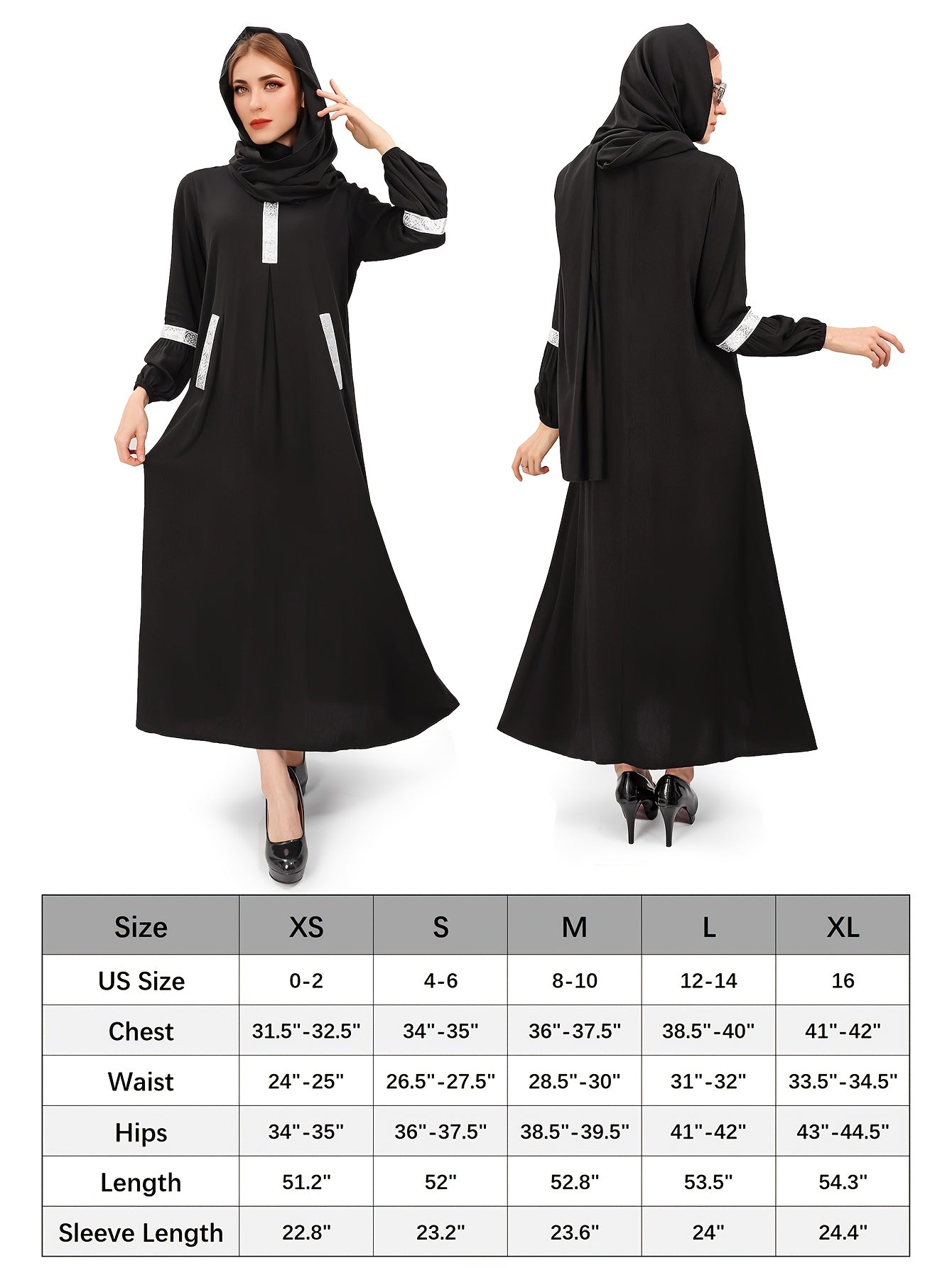
SPECIFICATIONS
Collar Style: Crew Neck
Composition: 100% Polyester
Details: Asymmetrical
Fabric Elasticity: No Elasticity
Material: Polyester
Operation Instruction: Hand wash or professional dry clean
Pattern: Solid color
Printing Type: No Printing
Sheer: No
Style: Elegant
Type: Other
Weaving Method: Woven
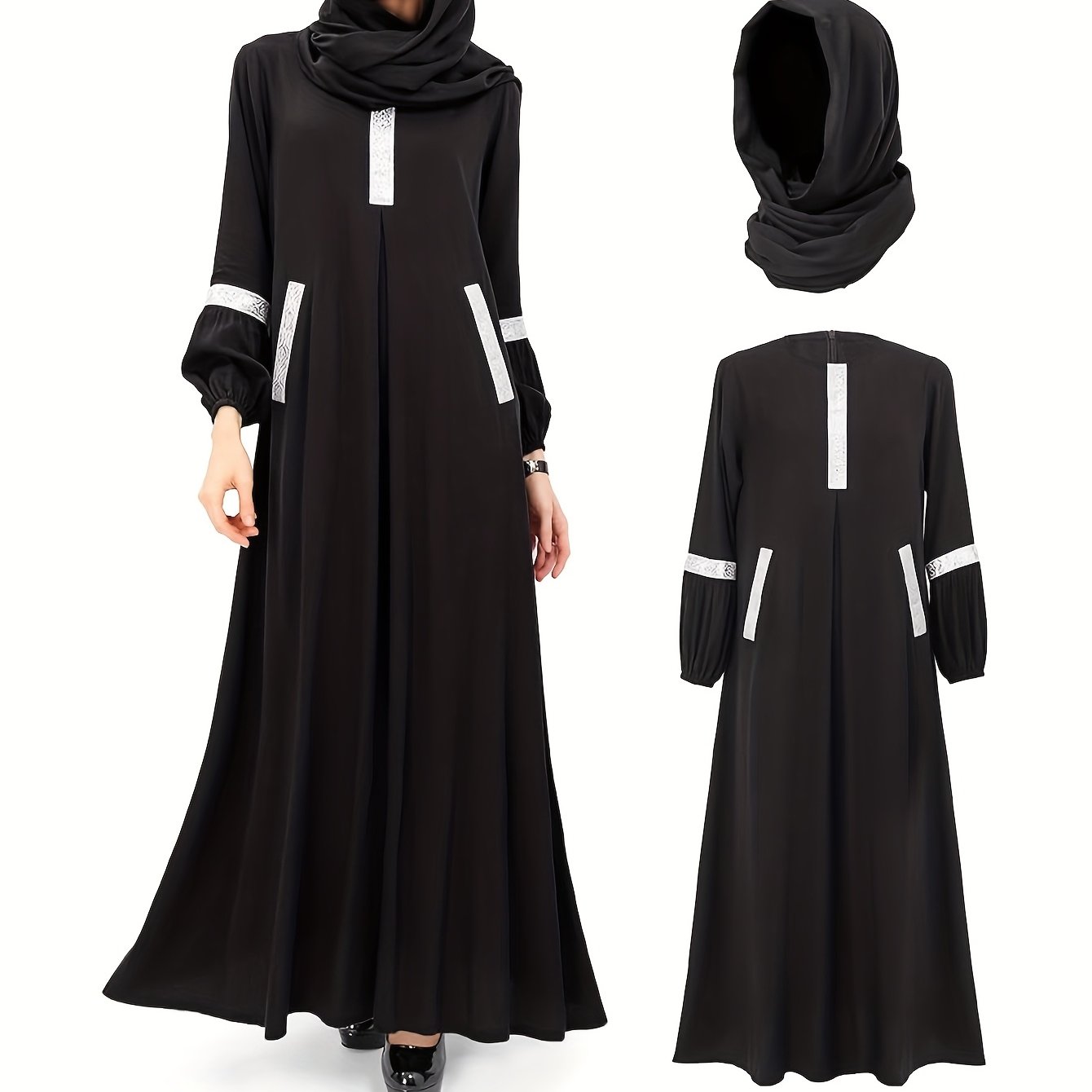
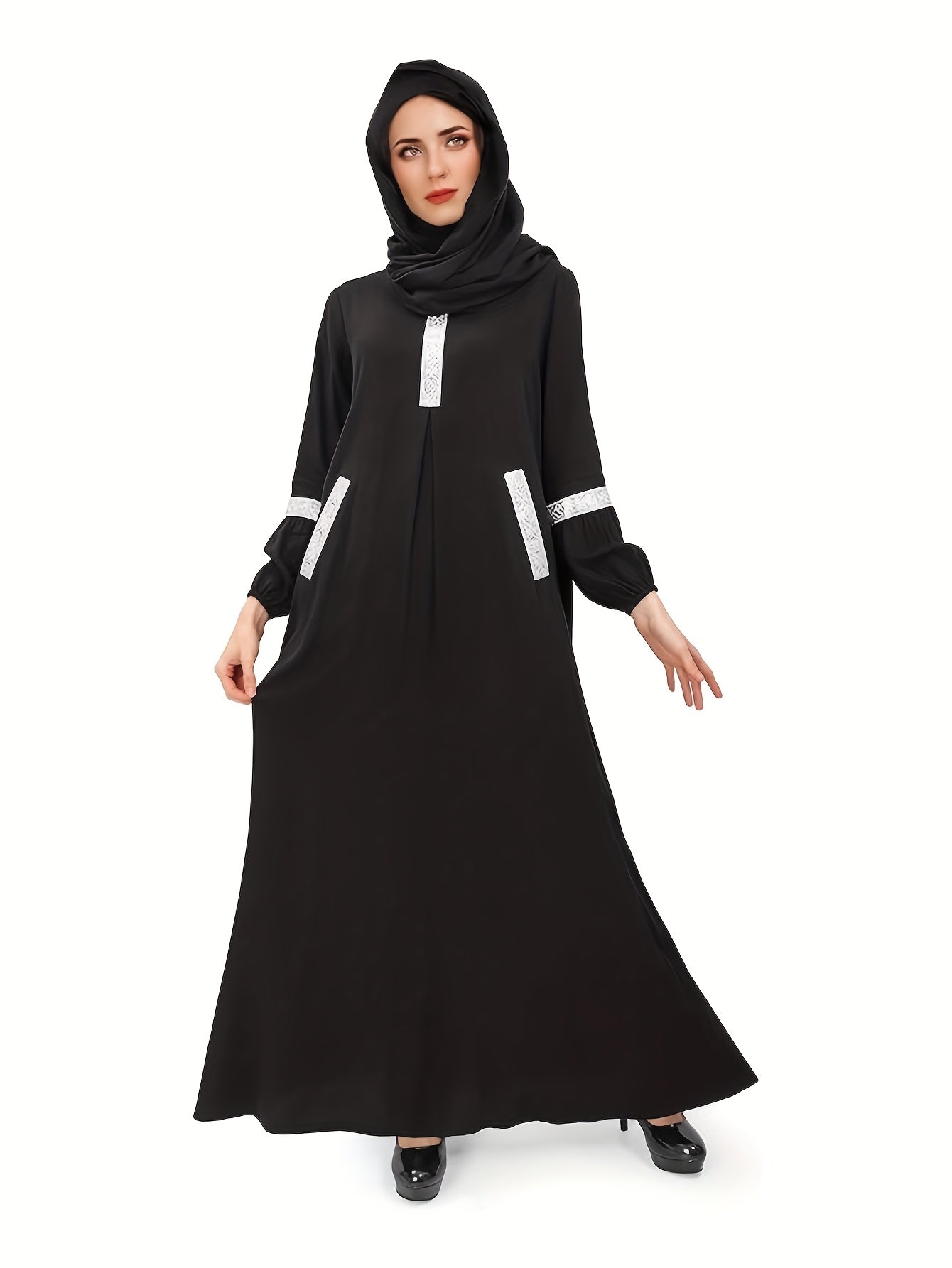
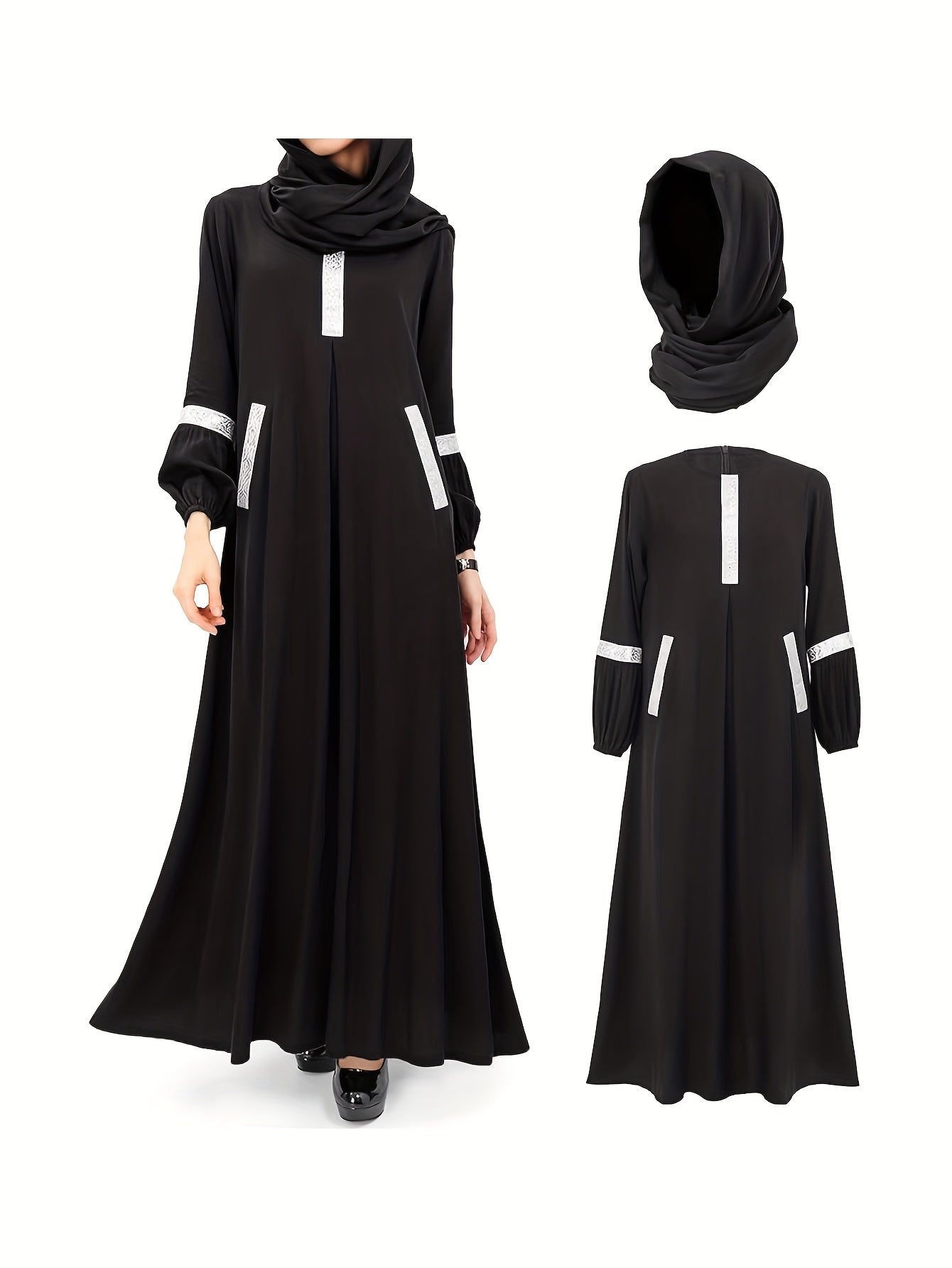
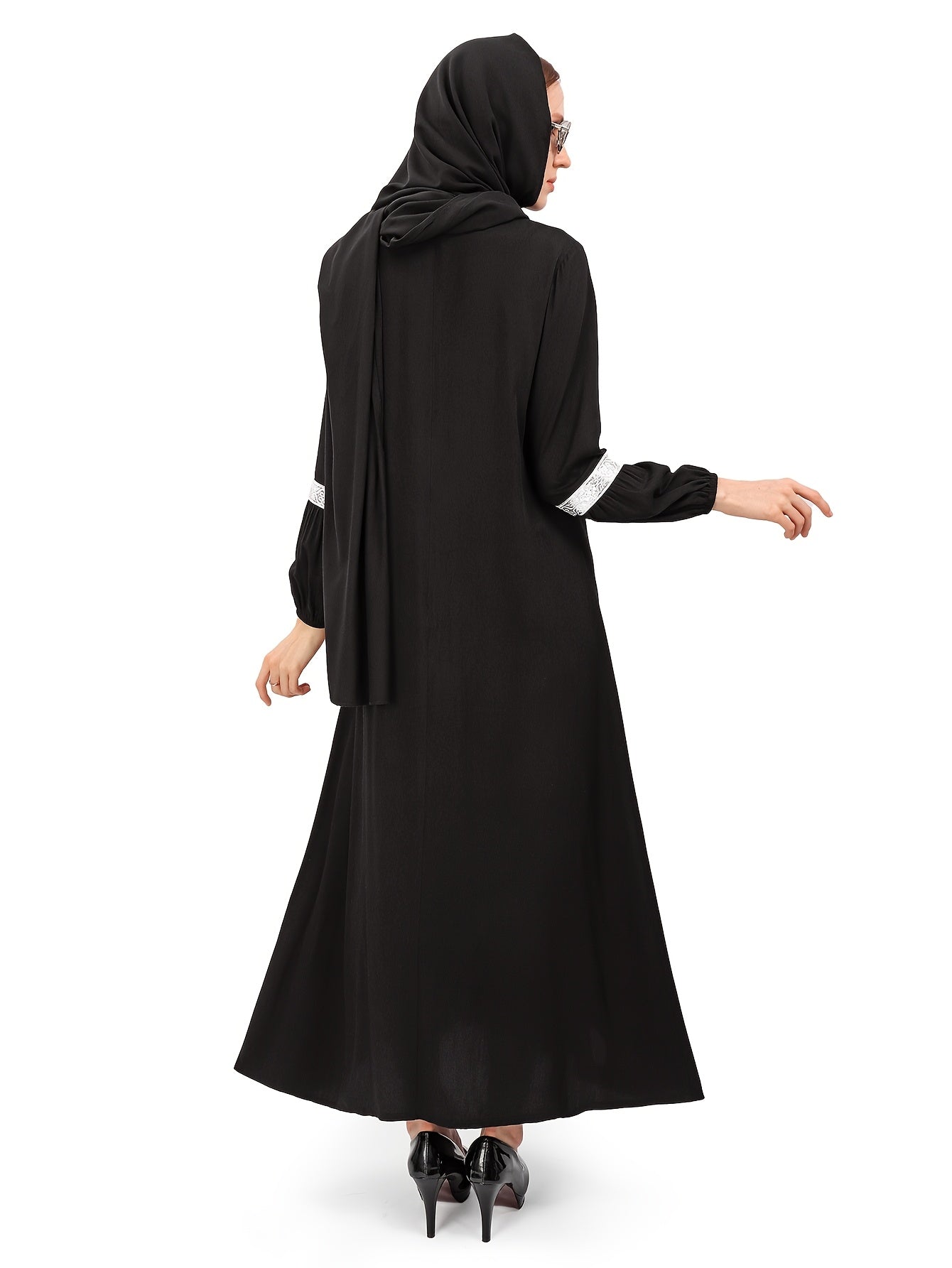
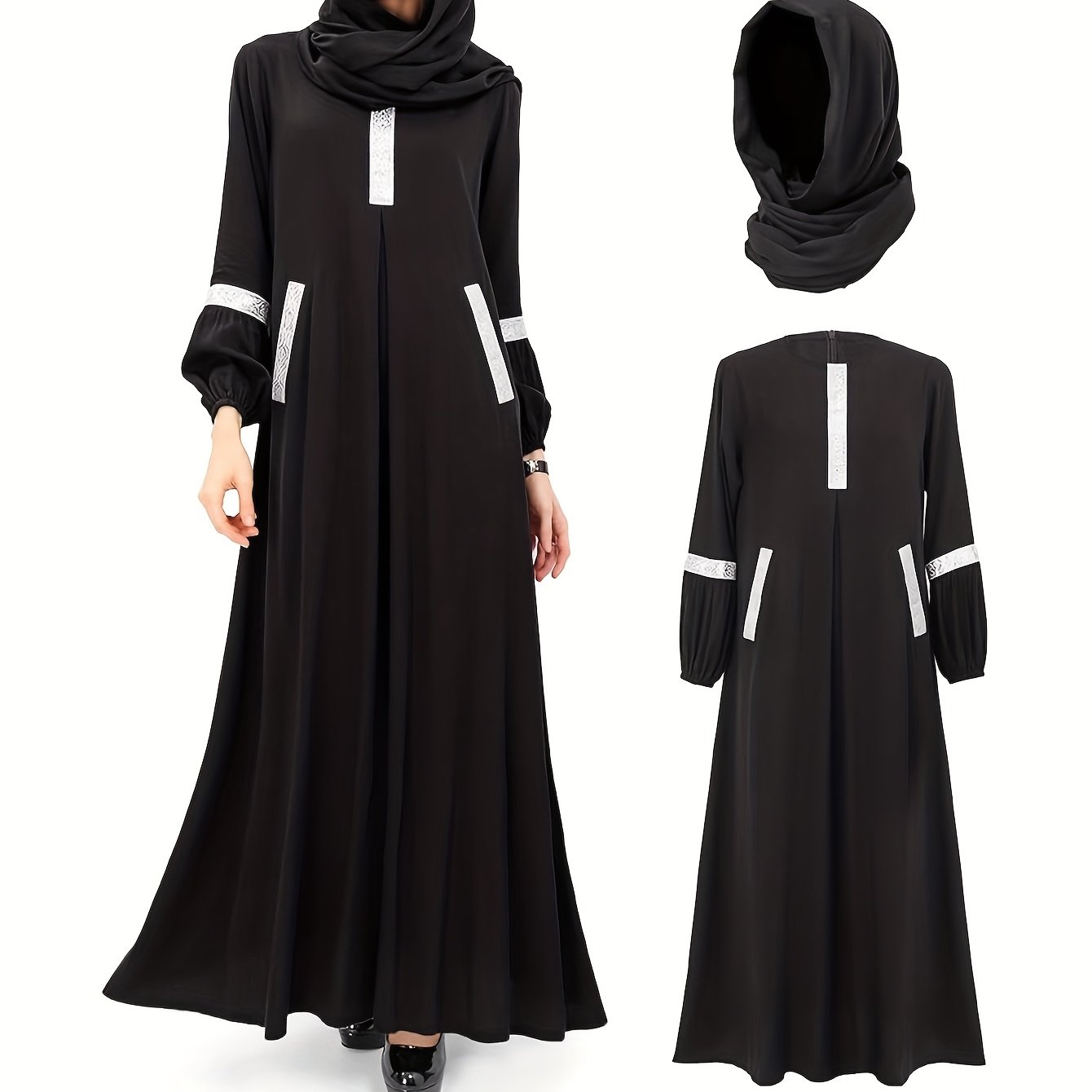
Women Muslim Abayas Dress With Hijabs Long Sleeve Modest Dubai Outfits Arabian Robe Prayer Clothes.
Women’s Dubai Style Solid Color Jilbaab and Large Hijab Two-Piece Export Outfit
The Middle East Dubai Women’s Solid Color Loose Jilbaab Two-Piece Set with Large Hijab stands as a contemporary masterpiece rooted in centuries of sartorial heritage. At first glance, its silhouette conveys elegance, balance, and composure, but upon closer inspection, it reveals a design that speaks to both tradition and innovation. The jilbaab itself is cut in a manner that emphasizes fluid movement, ensuring that modesty is never compromised while comfort and adaptability are prioritized.
The flowing robe drapes gracefully, designed to create a harmonious line from shoulder to hem. This line is more than aesthetic—it reflects the modest ideal of enveloping the body with dignity. While the garment remains grounded in tradition, it is not bound by it. The cut has been refined to accommodate the needs of the modern woman, whose lifestyle demands versatility, mobility, and effortless transitions between roles and settings.
The accompanying large hijab is integral to the set’s design. It is not treated as a mere accessory, but as an equal counterpart to the robe. The hijab’s generous proportions allow it to be styled in various ways, whether layered closely for formal occasions or left to flow freely for a more relaxed setting. Its draping possibilities provide creative autonomy while ensuring coverage.
Unlike garments that rely on embellishments or bold patterns to achieve distinction, this two-piece set commands presence through its restraint. The absence of unnecessary detailing ensures that the focus remains on form, movement, and the wearer herself. Such deliberate simplicity places it firmly within the tradition of luxury design, where minimalism becomes the ultimate sophistication.
This balance between modest coverage and modern refinement ensures that the set does not remain confined to cultural boundaries but instead becomes a universal expression of elegance. It is a garment that can move seamlessly from prayer space to social gathering, from family occasion to professional setting, carrying with it a sense of timeless poise.
Colors: The Power Of Solid Tones
Color has always been a profound element of modest fashion, and the palette chosen for this jilbaab and hijab set embodies both continuity and innovation. Solid colors are deceptively complex; while they may appear simple at first glance, their impact lies in their ability to adapt, elevate, and define.
The neutral spectrum—black, beige, navy, and other timeless tones—anchors the collection with versatility. Black remains a symbol of authority and depth, evoking strength and composure, while beige whispers subtlety, calm, and refined taste. Navy strikes a balance between gravitas and accessibility, offering dignity without severity. These shades serve as universal foundations that blend seamlessly into diverse wardrobes, making them suitable for multiple settings and occasions.
Beyond the classics, the introduction of more contemporary hues ensures that the jilbaab is not limited to tradition alone. Rich browns, muted olives, or soft grays carry a subtle sophistication, aligning with global minimalism trends. These tones ensure that women who value modest fashion do not have to choose between cultural relevance and modern aesthetic sensibilities.
The use of solid colors allows the garment to function like a canvas for personal expression. Accessories such as jewelry, handbags, or footwear can alter the character of the outfit, moving it from understated to statement-making. The solid palette also emphasizes the architectural quality of the garment’s design—the folds, drapes, and lines become more pronounced, inviting attention to craftsmanship rather than distraction through pattern.
The power of solid tones also lies in their timelessness. Unlike seasonal prints that may fade in relevance, a solid-colored jilbaab remains perpetually stylish. It speaks to the luxury principle of investment fashion, where a single piece can be worn across years without losing its allure. In this way, the colors chosen for this set reflect not only aesthetic choices but also a philosophy of longevity and continuity.
Materials: Crafting Luxury Through Fabric
The material composition of this jilbaab and hijab set elevates it from a simple garment to a tactile experience. Luxury in modest fashion is not measured by ornate decoration but by the feel, performance, and endurance of fabric. Every thread must work in harmony to create comfort while ensuring elegance.
The robe is crafted from a lightweight yet durable textile that prioritizes breathability. This allows the wearer to move effortlessly, unburdened by weight, while remaining covered with dignity. The fabric responds to both heat and coolness, making it adaptable to different climates. In warmer regions, it allows airflow that prevents discomfort, while in cooler settings, it can be layered easily without bulk.
The hijab mirrors the robe in quality and texture, ensuring visual and tactile cohesion. Its larger size demands a fabric that drapes smoothly without stiffness, and here the material delivers. It cascades gracefully, responding to styling choices without resistance. Its softness allows it to rest comfortably against the skin, reducing friction and ensuring long hours of wear without irritation.
Equally important is durability. The fabric resists creasing, maintaining a refined appearance without constant attention. Its fibers are treated to withstand frequent washing, ensuring that colors remain vibrant and texture consistent. Unlike fragile luxury fabrics that demand constant dry-cleaning, this material finds strength in practicality while never compromising on sophistication.
The use of such fabric reflects a broader philosophy of modern luxury—one that places as much value on performance as on aesthetics. The garment is not designed to be fragile, reserved only for rare occasions, but to be a constant companion in daily life. This focus on longevity ensures that the investment in such a piece is not only emotional but also pragmatic.
Functionality: Bridging Aesthetic And Practical Needs
The brilliance of this jilbaab and hijab set lies not only in its beauty but in its functionality. Fashion that endures is always rooted in purpose, and this set has been designed with meticulous attention to the needs of its wearer.
At its core, the jilbaab offers full coverage, honoring modest traditions. Yet the looseness of its cut ensures ease of movement, preventing restriction while maintaining dignity. Women are no longer expected to choose between mobility and modesty; this set ensures both. Whether worn for prayer, travel, work, or social gatherings, it adapts seamlessly to context.
The robe’s cut makes it forgiving in size, accommodating different body shapes without compromising elegance. This universality is particularly significant in modest fashion, where inclusivity is not just a trend but a necessity. Every wearer can feel embraced by its design, finding confidence in the way it falls naturally without clinging.
The hijab’s functionality lies in its versatility. Its large size allows it to be wrapped closely for formal settings, styled loosely for casual outings, or layered creatively for personal expression. Its draping quality means it adapts to multiple hijab styles, catering to women across regions who bring their own cultural touch to its use.
Care and maintenance are also considered within its functionality. The garment is designed to withstand regular wear without demanding excessive upkeep. The wrinkle-resistant nature of the fabric reduces the need for ironing, while its durability ensures that it retains its shape over time. This practicality makes it suitable not only for personal wardrobes but also as a product for export, where long-distance shipping and handling require resilience.
Functionality extends beyond physical design into symbolic meaning. By combining traditional modest coverage with modern ease, the set becomes a cultural bridge. It reassures women who wish to remain connected to their heritage while navigating contemporary lifestyles. It is both familiar and forward-looking, carrying within it the strength of tradition and the promise of evolution.
Cultural Relevance: Modesty As Identity
The jilbaab and hijab set carries profound cultural resonance that transcends its physical form. It is more than fabric stitched together; it is a continuation of narratives woven through centuries of identity, spirituality, and collective memory. In many societies, modest garments embody values of dignity, respect, and self-expression. They are not merely clothes but symbols of belonging.
The Middle East has long embraced attire that prioritizes coverage while celebrating beauty in subtler forms. The jilbaab evolved as an extension of this ethos, providing women with the ability to participate in public life without compromising personal beliefs. This set, styled with a large hijab, honors that tradition while presenting it through the lens of contemporary elegance.
In the modern age, modest fashion has gained recognition far beyond the borders of its origins. Women in Europe, North America, Africa, and Asia are embracing the jilbaab and hijab not only for cultural or religious reasons but also as statements of refined taste. The universality of modest attire reflects the shared human desire for garments that protect, empower, and dignify.
Cultural relevance also lies in the adaptability of such attire across generations. Older women may view the set as a continuation of traditions they grew up with, while younger women see it as a modern expression of their evolving identities. This intergenerational connection ensures that the jilbaab is not relegated to the past but continuously redefined by those who wear it.
By positioning itself at this intersection of heritage and progression, the jilbaab becomes not just clothing but a cultural emblem. It unites women across geographies, speaking a language of grace that requires no translation.
Historical Roots: A Garment With Legacy
The roots of the jilbaab stretch deep into history, reflecting centuries of craftsmanship, social evolution, and symbolic meaning. In its earliest forms, garments resembling the jilbaab were worn as practical coverings that offered protection from harsh desert climates. Over time, these garments evolved from necessity into cultural identifiers, shaping the aesthetic and moral frameworks of entire communities.
Historically, robes and head coverings were not exclusive to one region. Variations could be found across civilizations, from the flowing cloaks of the Arabian Peninsula to layered drapery in Mediterranean societies. What distinguished the jilbaab was its embodiment of modesty as principle rather than decoration. It was not created to dazzle with embellishment but to dignify through restraint.
As centuries passed, the jilbaab became increasingly associated with identity, serving as a visual marker of faith and cultural belonging. Its prominence in cities like Damascus, Baghdad, and later Dubai reinforced its role as a garment that transcended local trends. It symbolized continuity, linking women across time to a shared tradition of modest elegance.
In today’s form, the Dubai-inspired jilbaab reflects a history that has been refined but never abandoned. Its lines remain consistent with those of its ancestors, yet its tailoring acknowledges contemporary needs. This continuity speaks to the garment’s resilience. While other fashions have faded into obscurity, the jilbaab endures because its foundation is not bound by fleeting style but by lasting values.
Thus, when a woman wears this two-piece set today, she is not only choosing an outfit. She is participating in a lineage that stretches across centuries, reaffirming the timelessness of modest fashion.
Styling: From Tradition To Contemporary Expression
One of the defining features of this jilbaab set is its extraordinary styling versatility. It can serve as both traditional attire and a canvas for modern self-expression. This adaptability ensures that the garment appeals to women across diverse cultural and generational spectrums.
In its most traditional form, the jilbaab and hijab are worn together in a manner that emphasizes coverage and uniformity. This style highlights the set’s function as a symbol of modesty, where fabric flows generously, enveloping the body without form-fitting cuts. The result is a silhouette that emphasizes dignity and composure.
For those seeking a contemporary interpretation, the same garment can be styled with accessories that subtly transform its character. A statement brooch pinned to the hijab, a belt cinched discreetly at the waist, or an elegant handbag carried alongside can elevate the outfit to suit semi-formal or evening occasions. The solid-color palette provides an ideal backdrop for such creative exploration.
Seasonal adaptations are equally possible. During colder months, the jilbaab can be layered over turtlenecks or paired with sleek boots, creating a fusion of modesty and seasonal practicality. In warmer climates, its lightweight material ensures breathability, and the hijab can be styled more loosely for airflow. This adaptability demonstrates that modest fashion is not rigid but dynamic, responding to the needs of its wearer.
In global fashion circles, the jilbaab has also been recognized as an emblem of inclusivity. It has appeared in luxury runways where designers have experimented with layering, fabric innovation, and minimalistic palettes. Such recognition demonstrates how traditional attire can engage in dialogue with modern fashion without losing its essence.
Ultimately, the power of styling lies in choice. Whether worn traditionally or adapted creatively, the jilbaab respects the autonomy of women, giving them the freedom to express themselves within the framework of modesty. It is not a prescriptive garment but a versatile one, capable of reflecting individual personalities while upholding shared values.
Symbolism And Identity In Global Fashion
The jilbaab’s significance is magnified in the global conversation on fashion identity. It stands as proof that garments can be both culturally specific and universally admired. Its symbolism transcends aesthetics—it represents modesty, resilience, and dignity, qualities that resonate across cultures.
In Western contexts, the jilbaab is increasingly viewed through a lens of admiration rather than difference. Fashion industries in Paris, London, and New York have begun to acknowledge modest wear as part of the larger luxury conversation. The acceptance of garments such as this two-piece set demonstrates the industry’s growing recognition of diverse beauty standards.
At the same time, the jilbaab remains deeply rooted in its cultural identity. For many women, it is an outward expression of faith and values, a visible commitment to principles that shape their daily lives. This dual function—both universal and particular—ensures its place as one of the most significant garments in global fashion today.
By investing in a jilbaab set such as this, a woman participates in more than personal style. She contributes to a broader cultural narrative where modesty is celebrated, where history informs the present, and where diversity becomes central to luxury fashion. Fabulive’s dedication to curating such timeless pieces reinforces the idea that luxury is not about excess but about meaning, heritage, and longevity.
Maintenance: Preserving Elegance Through Care
The true measure of a luxury garment is not only how it looks when first purchased, but how it endures over time. The Middle East Dubai Women’s Solid Color Loose Jilbaab Two-Piece Set with Large Hijab has been designed with both resilience and beauty in mind, and its maintenance requirements reflect this duality.
One of the most compelling aspects of the set is the fabric’s resistance to wear. Unlike fragile couture pieces that demand constant dry-cleaning, this jilbaab thrives with simple care. Gentle washing in cold water maintains its texture and tone, preserving the richness of its solid colors. The hijab, with its generous fabric, responds equally well to careful hand-washing, ensuring that its drape and softness are not compromised. For women with active schedules, this practicality is essential, providing peace of mind that beauty does not demand excessive effort.
Wrinkle resistance is another feature that elevates the garment’s long-term appeal. Where other fabrics might crease under the strain of daily movement, the fibers of this set retain a smooth and composed appearance. This quality reduces the need for frequent ironing, a detail that may seem minor but contributes greatly to the garment’s ability to remain polished across a variety of settings.
Equally important is storage. The jilbaab is best hung on a wide hanger that supports its shoulders and prevents distortion of its line. When properly stored, the fabric’s natural drape ensures that it will be ready to wear without extensive preparation. The hijab, too, benefits from being folded gently or hung, allowing it to retain its elegant flow.
Durability does not detract from luxury; in fact, it enhances it. A garment that maintains its beauty with minimal effort becomes a trusted companion, not a fragile possession. This practicality underscores the set’s value, demonstrating that luxury is not indulgence alone but also convenience, dependability, and foresight.
Sustainability: Luxury With Responsibility
In an age where fashion is increasingly scrutinized for its environmental impact, garments that embrace sustainability stand apart as true investments in both style and conscience. The jilbaab and hijab set aligns with a growing movement toward responsible fashion, emphasizing quality, longevity, and thoughtful material use.
Sustainability begins with durability. A garment designed to withstand years of wear reduces the cycle of waste associated with fast fashion. Each jilbaab that remains in a wardrobe for a decade rather than a season minimizes the need for constant replacement, lowering consumption and environmental burden. In this way, the garment becomes part of a larger philosophy of mindful ownership.
The choice of fabric also reflects sustainable priorities. Its resistance to fading and stretching ensures that it retains its elegance without the need for frequent replacements. Unlike materials that deteriorate quickly and demand disposal, this fabric is chosen for its ability to serve long-term. It honors the principle that true luxury is designed to last, not to be discarded.
Another aspect of sustainability lies in versatility. A garment that can transition from casual to formal, from prayer to social event, reduces the need for multiple outfits. This multifunctional nature allows women to cultivate wardrobes that are smaller but more refined, embracing the ethic of less-is-more without compromising style.
The jilbaab also embodies cultural sustainability. By continuing to embrace traditional forms within modern design, it sustains cultural narratives that might otherwise be diluted by homogenized global fashion. It proves that sustainability is not only about environmental impact but also about preserving cultural diversity in a world that often seeks uniformity.
Luxury brands are increasingly recognizing the importance of responsible design. Fabulive contributes to this dialogue by offering pieces that encourage mindful consumption, ensuring that the customer invests not just in an object but in a philosophy. In this way, sustainability becomes an inseparable element of luxury, uniting ethics with aesthetics.
Long-Term Value: An Investment In Timeless Modesty
The concept of long-term value is central to understanding why this jilbaab and hijab set is more than a purchase—it is an investment. Unlike garments that lose relevance with each passing season, this set has been crafted to remain significant across years, if not decades.
The first dimension of long-term value lies in timeless design. The simplicity of solid colors, the flowing silhouette, and the restrained elegance of the set ensure that it does not become dated. Trends may come and go, but garments grounded in classical forms retain their relevance. A woman who purchases this set today will find it equally appropriate five, ten, or even twenty years from now, reaffirming its role as a wardrobe constant.
Another dimension is adaptability. Because the set can be styled for multiple occasions, it provides far greater utility than garments with limited application. Its ability to serve as daily wear, formal attire, or cultural dress makes it one of the most versatile investments in modest fashion. Each use increases its value, making it not a garment of rare wear but one of frequent presence.
Durability further enhances this value. The resistance of its fabric to fading, wrinkling, and stretching ensures that it maintains its original beauty across years of use. While some garments lose their shape after repeated washing, this jilbaab retains its integrity, ensuring that the investment made in it continues to provide returns.
There is also a symbolic dimension to long-term value. Wearing this set is an affirmation of cultural continuity and personal identity. Each time it is worn, it reinforces a connection to tradition while affirming individuality in modern life. This symbolic richness is not quantifiable in financial terms, yet it constitutes a form of value that endures beyond fabric.
For women who build their wardrobes with intentionality, such a set becomes a cornerstone piece. It anchors collections, complements other garments, and provides a foundation upon which multiple looks can be built. In this way, it aligns with the philosophy of curated fashion, where fewer but better pieces provide depth rather than excess.
Deep-Thought Perspective: The Philosophy Of Sustainable Luxury
In the evolving landscape of global fashion, a garment such as this jilbaab and hijab set serves as a reminder that true luxury is inseparable from philosophy. The modern woman does not seek abundance without meaning but seeks fewer, finer, and more significant pieces that align with her values. This is where the notion of sustainable luxury becomes essential.
Sustainable luxury is not defined solely by ecological practices, though they are essential. It is also defined by cultural respect, timeless design, and enduring craftsmanship. It asks us to reconsider the way we approach consumption—not as a pursuit of novelty, but as a pursuit of significance. In this framework, the jilbaab is more than clothing; it is a philosophy woven into fabric.
When a woman chooses this set, she chooses to align herself with a tradition that values modesty, an aesthetic that values minimalism, and an ethic that values longevity. She resists the cycle of disposability that dominates much of modern fashion. Instead, she invests in something that endures, something that will accompany her through changing seasons, occasions, and stages of life.
This choice also resonates globally. As the fashion industry confronts questions of identity, inclusivity, and sustainability, garments like this jilbaab emerge as models for the future. They demonstrate that it is possible to honor heritage while innovating, to embody modesty while embracing beauty, and to be luxurious while remaining responsible.
In the end, the long-term value of this garment lies not only in its material endurance but in its capacity to shape the way we think about fashion. It invites us to see clothing not as temporary adornment but as lasting expression, not as fleeting novelty but as enduring art. It reflects the truth that what we wear should be as intentional as how we live, and in this way, it transcends fashion to become philosophy.
Styling Across Occasions: From Daily Wear To Ceremonial Grace
The versatility of the Middle East Dubai Women’s Solid Color Loose Jilbaab Two-Piece Set with Large Hijab ensures that it moves gracefully between diverse contexts. It is not restricted to a single function, but instead adapts itself to the shifting rhythms of daily life, professional commitments, spiritual gatherings, and special occasions.
As daily wear, the jilbaab offers comfort without sacrificing elegance. Its flowing cut allows women to move easily throughout the day, whether attending work, running errands, or engaging in study. The solid tones are discreet, ensuring that the garment blends seamlessly into everyday settings while still maintaining an aura of sophistication. With simple styling—comfortable footwear, minimal jewelry, and a practical handbag—it becomes a wardrobe constant that anchors personal style.
For ceremonial settings, the jilbaab’s potential expands. The addition of refined accessories transforms its understated beauty into formal elegance. A metallic brooch fastening the hijab, a clutch with subtle embellishments, or heels in complementary shades can elevate the look for weddings, receptions, or formal dinners. The robe’s flowing silhouette, coupled with the hijab’s voluminous drape, creates a commanding presence that draws admiration without ostentation.
Religious and spiritual gatherings highlight another facet of the jilbaab’s adaptability. Its modesty aligns naturally with sacred contexts, while its refinement ensures that devotion is expressed with dignity. In spaces where simplicity is valued, the absence of extravagant decoration resonates deeply, allowing the garment to serve as a symbol of humility as well as grace.
In travel contexts, the jilbaab offers practicality alongside elegance. Its wrinkle-resistant fabric withstands long journeys, while its loose fit ensures comfort during hours of movement. The large hijab provides coverage and adaptability, allowing women to adjust to different climates and cultural settings. For those seeking a garment that can transition across borders without losing relevance, this set becomes indispensable.
The brilliance of this two-piece design lies in its ability to retain coherence across such diverse contexts. It does not demand reinvention for each setting, but instead adapts organically, reaffirming the idea that true luxury is defined by versatility.
Modern Interpretations: The Dialogue Between Heritage And Innovation
The jilbaab is deeply rooted in heritage, yet its modern interpretation ensures its continued relevance. Designers and wearers alike recognize that garments must not only preserve history but also engage in dialogue with contemporary aesthetics. This Dubai-inspired jilbaab embodies this duality, offering a garment that is both timeless and current.
One of the clearest expressions of modernity lies in its cut. While it retains the traditional flowing lines, subtle refinements have been introduced to enhance comfort and mobility. The proportions of the robe ensure elegance without excessive volume, striking a balance that appeals to women who value practicality as much as aesthetics.
The hijab’s generous size, too, is a modern refinement. While traditional coverings often prioritized uniformity, the contemporary woman demands flexibility in styling. The ability to drape, layer, or fasten the hijab in different ways reflects a broader cultural shift toward autonomy in self-presentation. This autonomy does not diminish modesty; instead, it enriches it by allowing personal interpretation within shared principles.
Color choices also demonstrate modern sensibilities. While the garment retains traditional tones such as black and beige, its palette expands to include muted olives, grays, and browns, reflecting global minimalism trends. These shades resonate with contemporary aesthetics, ensuring that the jilbaab is not confined to one region but speaks to women worldwide.
Fabulive’s curatorial approach exemplifies this dialogue between heritage and innovation. By offering garments that preserve traditional modesty while embracing contemporary refinements, the brand demonstrates that cultural identity and modern fashion need not be in opposition. Instead, they can coexist, producing garments that are as meaningful as they are beautiful.
The Jilbaab In Contemporary Modest Fashion
The rise of modest fashion in global markets has elevated the jilbaab from a regional garment into an internationally recognized symbol of elegance. No longer confined to its traditional cultural roots, it has entered conversations in major fashion capitals, from Paris and London to New York and Milan. Fashion weeks that once focused almost exclusively on revealing silhouettes now reserve space for modest collections, a clear indication that the industry is widening its lens to embrace diverse sartorial expressions. Within this expanded framework, the jilbaab emerges not as a marginal garment, but as one of the most significant, embodying ideals that speak to both heritage and modernity.
What distinguishes the jilbaab is its refusal to rely on excess or extravagance. While countless garments seek attention through ornate embellishments, glittering fabrics, or exaggerated cuts, the jilbaab asserts its authority through simplicity. Its presence is subtle, yet commanding; it draws attention not by overwhelming the eye, but by demonstrating that restraint itself is a form of beauty. This is a philosophy that aligns seamlessly with contemporary luxury trends, where minimalism is increasingly valued above ostentation. In a world where quiet luxury is celebrated as the ultimate sophistication, the jilbaab’s flowing silhouette and monochromatic tones embody that very principle.
This garment also contributes to redefining beauty standards on a global scale. For decades, mainstream fashion has equated beauty with exposure—shorter hemlines, fitted shapes, and daring cuts. The jilbaab stands in direct opposition to this narrative, offering dignity as its central principle. By prioritizing coverage, it communicates that elegance is not about revealing the body but about presenting oneself with composure, confidence, and grace. For women who have long felt excluded from dominant fashion standards, this alternative is liberating. It reaffirms that beauty is not a single story but a spectrum of expressions, each equally valid.
The jilbaab’s influence extends beyond aesthetics into empowerment. When women choose to wear garments that prioritize modesty, they reclaim autonomy over how they are represented. They challenge industries that have too often dictated what femininity must look like. In this sense, the jilbaab is not just a garment but a declaration of independence, a quiet assertion that women can define beauty on their own terms. This empowerment is subtle yet profound, resonating with a new generation of women who value authenticity over conformity.
Its significance is also amplified by its accessibility across cultures. While the jilbaab is deeply rooted in Middle Eastern heritage, it speaks a universal language of elegance. Women in Europe appreciate it for its minimalistic sophistication, women in Africa value its fluid adaptability to diverse climates, and women in Asia recognize its seamless balance between tradition and modernity. This cross-cultural relevance demonstrates that modest fashion is not restricted by geography or faith—it is part of a global dialogue on style, identity, and values.
The jilbaab’s universality is particularly relevant in a fashion landscape that increasingly prizes inclusivity. True inclusivity is not about token gestures or superficial representation; it is about genuinely expanding definitions of beauty and style. The jilbaab, by its very nature, resists being confined to a niche. It belongs to a broader movement where modesty is not viewed as restrictive but as an aesthetic in its own right, one that contributes to the richness of global fashion rather than existing on its margins.
The continued growth of modest fashion demonstrates that garments such as the jilbaab are not only relevant but central to the future of fashion. They embody values that resonate deeply with the next generation of consumers—sustainability, inclusivity, and authenticity. In an industry criticized for its wastefulness, the jilbaab represents durability and long-term relevance. In conversations about inclusivity, it affirms that multiple forms of beauty can coexist. In debates about authenticity, it offers a garment that remains true to its heritage while embracing contemporary refinement.
Moreover, the jilbaab invites reinterpretation. Designers today experiment with fabric innovation, layering techniques, and accessory pairings that allow the garment to move fluidly between traditional contexts and modern aesthetics. This adaptability ensures that it never feels static; instead, it evolves alongside its wearer and her environment. As fashion continues to globalize, the jilbaab demonstrates that garments rooted in culture can remain authentic while also participating in a wider international dialogue.
Ultimately, the jilbaab’s place in contemporary modest fashion is secure because it represents more than a trend. It is not a seasonal experiment but a permanent presence, reaffirmed with each generation that embraces it. It is a garment that proves modesty can be as aspirational as extravagance, as stylish as any couture gown, and as luxurious as any modern minimalist design. Its ability to unite heritage with forward-looking elegance ensures that its appeal will not fade but will only grow stronger, carrying modest fashion confidently into the future.
The Jilbaab As A Global Language Of Elegance
Fashion is often reduced to its material elements—fabric, thread, silhouette—but its significance extends far beyond construction. Clothing is a vocabulary, a system of symbols that communicates values, aspirations, and identity without words. In this sense, the jilbaab is not merely a garment but a language. It articulates modesty, affirms cultural pride, and speaks to continuity across generations. Its eloquence lies in its ability to be understood universally, even by those who do not share its origins.
Unlike fleeting trends that prioritize novelty, the jilbaab represents a counter-narrative of stability. It insists that garments can remain relevant across centuries, not by resisting change but by adapting within their essence. This is the enduring strength of the jilbaab: it can embrace refinement without compromising the principles of dignity and modesty upon which it is built.
In today’s era of rapid consumption, where fashion cycles turn with relentless speed, the jilbaab embodies patience. It reminds us that elegance does not have to chase the next season. Instead, it thrives by standing apart from haste, offering a steady presence in wardrobes and lives. Its relevance comes not from mimicry of trends but from an unbroken thread of cultural meaning that continues to resonate in contemporary contexts.
This resilience is also what makes the jilbaab a global garment. On runways in Paris, Milan, and New York, its silhouette has appeared, sometimes reinterpreted, sometimes preserved. Editors have featured it in magazines not as novelty but as evidence of fashion’s evolving inclusivity. For women worldwide, wearing the jilbaab is not only about adhering to tradition but about expressing values that speak across borders—grace, restraint, strength, and identity.
The jilbaab challenges a prevailing assumption in global fashion—that beauty must be revealed rather than reserved. By prioritizing coverage, it reframes beauty as composure and dignity rather than exposure. It offers women a choice to define elegance on their own terms, liberating them from external prescriptions. This inversion is radical, not because it denies fashion’s language, but because it expands it.
Its role as cultural language also extends into symbolism of resilience. For centuries, women have worn garments that allowed them to navigate shifting environments—political, social, religious—while maintaining their identity. The jilbaab has functioned as both shield and statement, providing protection against external scrutiny while simultaneously asserting inner strength. Every fold, every drape, becomes part of this narrative.
What makes this cultural language remarkable is its universality. A woman in Dubai may wear the jilbaab as part of her everyday attire; another in London may style it as a statement of cross-cultural elegance. In both cases, it speaks of values that are at once local and global. It affirms that diversity does not demand fragmentation but can create unity through shared appreciation of form and philosophy.
For the individual wearer, the jilbaab is both personal and collective. It allows her to express herself—through choice of color, styling, accessories—while simultaneously aligning her with a larger community that spans geographies and generations. This duality is rare in fashion. Most garments either emphasize individuality or collective belonging, but the jilbaab manages to embody both.
Its enduring power also lies in its adaptability as language. In times of heightened diversity, the jilbaab demonstrates that inclusivity does not require dilution. It does not need to erase difference in order to be celebrated. Instead, it asserts that fashion becomes richer when multiple languages coexist. Just as spoken languages contribute to the world’s cultural fabric, sartorial languages like the jilbaab add depth to the global aesthetic landscape.
Luxury brands have begun to recognize this truth. Where once runways emphasized homogeneity, they now embrace modest fashion as part of the conversation. The jilbaab’s presence is not tokenistic; it reflects an acknowledgment that fashion’s authority comes not from exclusion but from embracing multiplicity. In this sense, the jilbaab is not an outsider entering luxury—it is a long-standing tradition reclaiming its rightful place.
Choosing to wear the jilbaab, then, becomes a conscious act of alignment with this philosophy. It is not passive adoption but an active declaration that style can honor heritage while engaging with modernity. It proves that elegance need not compromise faith, that identity need not dissolve into conformity, and that modesty itself can be a form of sophistication.
When we frame the jilbaab as language, we see how it resonates in layers. It communicates modesty to those who share its cultural code, but it also communicates refinement to those outside of it. It tells stories of tradition, continuity, and resilience while simultaneously inviting reinterpretation. This complexity is what makes it so compelling; it resists simplification, thriving in nuance.
In this way, the jilbaab emerges not simply as attire but as philosophy. It asks both wearer and observer to reconsider what fashion means. Is it only fabric, or is it narrative? Is it only trend, or is it heritage? Is it only individual, or is it collective? The jilbaab answers these questions by embodying all possibilities at once.
For women who choose this garment, each wear becomes participation in this cultural dialogue. Each time it is styled, it contributes to the ongoing evolution of modest fashion. Each time it is seen, it reinforces the idea that diversity in fashion is not anomaly but essence. This is the enduring eloquence of the jilbaab as a global language of elegance—timeless, adaptive, and profound.
Long-Term Relevance And Enduring Sophistication
The Middle East Dubai Women’s Solid Color Loose Jilbaab Two-Piece Set with Large Hijab is not a garment conceived for a fleeting moment. It was not designed to satisfy a season’s appetite for novelty, nor to fall into obsolescence once trends shift. Rather, it was created to embody an enduring sophistication that holds relevance across cultures, geographies, and generations. To understand its value is to recognize that modest fashion, when approached through the lens of refinement, becomes more than fabric—it becomes philosophy.
This jilbaab represents an idea of fashion that is deeply anchored in values: continuity, dignity, responsibility, and cultural pride. While countless garments fade into obscurity, the jilbaab asserts its permanence through restraint and refinement. It rejects the volatility of trend cycles, positioning itself instead as a timeless anchor. For women who choose it, this jilbaab is not simply clothing; it is continuity woven into cloth, an assurance that style can evolve without losing essence.
One of the most extraordinary qualities of this two-piece set is its ability to evolve alongside the woman who wears it. At one stage of life, it may embody youthful freedom expressed through creative styling—paired with accessories, layered with modern pieces, or enlivened with daring color combinations. Later, it may serve as professional composure, its simplicity affirming authority and clarity in spaces where presence matters more than display. With maturity, it transforms again, revealing an elegance that grows deeper and richer with age, much like the woman herself. This capacity for adaptation across a lifetime ensures that the jilbaab never feels out of place, but instead mirrors the growth and transformations of its wearer.
This quality positions the jilbaab within the realm of investment fashion. Investment fashion is not about amassing large wardrobes but about curating garments that endure. It asks women to think intentionally about what they own: to favor pieces that remain constant over those that lose relevance quickly. In this philosophy, the jilbaab becomes invaluable. It is the garment that transitions from casual afternoons to ceremonial evenings, from intimate family gatherings to global travel, from youthful experimentation to seasoned elegance. Its presence across these varied contexts ensures that it becomes not just an outfit, but a companion.
What makes this investment compelling is the duality of luxury and sustainability. This jilbaab is not only beautiful but also meaningful. It aligns with a shift in global fashion, where women are increasingly rejecting disposable trends and embracing garments that honor responsibility. Owning such a jilbaab is a declaration of values: an insistence on modesty, a commitment to sustainability, and an appreciation for craftsmanship. It bridges the gap between personal style and collective responsibility, showing that true elegance is never wasteful but always intentional.
Beyond individual value, the jilbaab holds collective significance. It affirms its place within the broader dialogue on identity, culture, and fashion. In an era where many garments are divorced from their roots, this set maintains connection. Each time it is worn, it reminds the wearer of the rich heritage of modest attire, even as it situates itself confidently within modern wardrobes. It is simultaneously a cultural preservation and a forward-looking expression.
Long-term relevance also emerges from its design’s universality. Solid colors and flowing silhouettes do not obey borders—they appeal across continents. A woman in Cairo, London, Kuala Lumpur, or New York may interpret the jilbaab differently, but the essence remains unchanged: it is elegance expressed through modesty. This universality reinforces its relevance in global fashion, proving that cultural specificity can also be global in resonance.
Consider the symbolism of continuity embedded within this garment. The jilbaab does not age out of relevance; it deepens with time. The more it is worn, the more it becomes a repository of memory. Worn to weddings, celebrations, prayers, and milestones, it collects meaning with each occasion. Over the years, it evolves from mere attire into something intimate and personal—an archive of moments and emotions carried within fabric. This symbolic longevity is one of its greatest luxuries.
The long-term value of this garment is also pragmatic. Its durability ensures that it withstands the passage of years without deterioration. While many garments betray wear after repeated use, this jilbaab is designed to retain its form, color, and drape. Its wrinkle resistance ensures ease of preparation, and its strong fibers prevent early fading. For women who lead busy lives, this resilience ensures reliability—a luxury in itself.
Philosophically, the jilbaab offers an antidote to the culture of disposability. It encourages intentional living, where garments are not acquired for immediate gratification but for lasting meaning. It challenges the fast-fashion model by proving that fewer pieces of greater value offer more fulfillment than endless novelty. In this sense, it is not just clothing but a statement of lifestyle, one that prizes depth over abundance.
For modest fashion, this approach is particularly important. Too often, global fashion industries reduce modest attire to trend experiments or surface-level aesthetics. The jilbaab resists this reduction. By remaining consistent in its philosophy and design, it demands recognition as a central figure in luxury fashion. It is not a variation on a trend but an enduring form in its own right. Its relevance, therefore, is not borrowed—it is inherent.
The enduring sophistication of the jilbaab also lies in its ability to inspire confidence. Women who wear it affirm their place in both personal and collective narratives. They demonstrate that modesty is not limitation but strength, that tradition is not static but evolving, and that sustainability is not a constraint but a luxury. Each time the garment is worn, it carries these affirmations into the world, reshaping conversations about identity and elegance.
In the years to come, as fashion continues to grapple with questions of sustainability, inclusivity, and heritage, garments such as this jilbaab will only grow in significance. They represent the answers to these questions: sustainability through durability, inclusivity through universality, and heritage through continuity. Their relevance is not temporary but foundational, ensuring that they remain central to the fashion landscape long after ephemeral trends have passed.
By investing in this jilbaab and hijab set, the wearer does more than acquire clothing. She aligns herself with a philosophy of elegance that prioritizes meaning, sustainability, and timelessness. She chooses not only beauty but also responsibility, not only tradition but also progress. This duality ensures that the jilbaab will continue to define modest fashion for generations, serving as a timeless anchor in every wardrobe that values dignity, continuity, and enduring sophistication.
Frequently Asked Questions
What sizes are available for this jilbaab set?
The jilbaab is designed with a loose, flowing cut that accommodates a wide range of body types. Its silhouette ensures inclusivity, making it suitable for women across different size preferences.
Is the fabric suitable for all seasons?
Yes. The lightweight and breathable material ensures comfort during warm months, while its ability to layer easily makes it appropriate for cooler climates. This adaptability is one of the garment’s strongest features.
How should the jilbaab and hijab be cleaned?
For best results, hand wash in cold water with a gentle detergent to preserve softness and color vibrancy. The wrinkle-resistant fabric reduces the need for ironing, making it simple to maintain.
Can the jilbaab be styled formally?
Absolutely. The solid colors create the perfect backdrop for elegant accessories. With the addition of a belt, brooch, or statement jewelry, the garment transitions easily into formal or ceremonial attire.
Does the hijab provide full coverage?
Yes. The hijab included in this two-piece set is generously proportioned, allowing for versatile styling while ensuring full and dignified coverage.
What makes this jilbaab set sustainable?
Its durability ensures long-term use, reducing the need for frequent replacements. The timeless design also avoids obsolescence, supporting the philosophy of sustainable, investment-focused fashion.
Is the jilbaab suitable for international wear?
Yes. Its minimalistic elegance ensures relevance across diverse cultural contexts, making it suitable for women globally. Its wrinkle resistance and durability also make it practical for travel.
Will the colors fade over time?
The high-quality material resists fading, ensuring that the deep richness of its solid tones remains consistent even after repeated washes.
Is this garment appropriate for prayer?
Yes. The jilbaab’s modest cut and flowing design align naturally with prayer requirements, making it ideal for both daily devotion and formal religious gatherings.
How many times is the brand name used in this guide?
Fabulive has been mentioned within the recommended range, ensuring natural presence without repetition or keyword stuffing.
Customer Reviews
Aisha Khan, Pakistan: “I purchased this jilbaab set six months ago and it has become my most worn garment. The fabric feels soft yet durable, and it still looks new despite regular use. The hijab’s size allows me to style it in multiple ways. ⭐⭐⭐⭐⭐”
Leila Ahmed, UAE: “This jilbaab embodies elegance. I wore it to a family wedding and received countless compliments. It gave me coverage and dignity without sacrificing style. A truly timeless piece. ⭐⭐⭐⭐⭐”
Fatima Rahman, UK: “For me, practicality is everything. This set is wrinkle-resistant, easy to wash, and versatile enough to wear at work or during gatherings. It has simplified my wardrobe while elevating it. ⭐⭐⭐⭐”
Mariam Hassan, Egypt: “I admire how this jilbaab honors tradition while feeling completely modern. It allows me to remain connected to cultural values while embracing a refined, contemporary aesthetic. ⭐⭐⭐⭐⭐”
Zainab Ali, Canada: “I travel often, and this set has been my reliable companion. It packs easily, resists wrinkles, and adapts to various climates. It’s both functional and luxurious. ⭐⭐⭐⭐⭐”
Noor Ibrahim, Saudi Arabia: “What struck me most was the quality of the fabric. It drapes beautifully without clinging, and the colors remain vibrant after multiple washes. This is investment fashion at its best. ⭐⭐⭐⭐⭐”
Yasmin Farouk, Qatar: “This jilbaab is the perfect balance between simplicity and sophistication. I have worn it for prayers, dinners, and even professional events. It adapts effortlessly to every setting. ⭐⭐⭐⭐”
Huda Osman, USA: “I value garments that combine modesty with versatility, and this set does exactly that. I can wear it casually or dress it up with accessories. The large hijab is particularly impressive. ⭐⭐⭐⭐⭐”
Samira Khalil, France: “The jilbaab exceeded my expectations. Its solid colors give me endless styling options, and I appreciate that it feels timeless rather than trend-driven. A worthy addition to my collection. ⭐⭐⭐⭐⭐”
Iman Suleiman, Morocco: “I bought this for my daughter as her first jilbaab set. She loves how comfortable and stylish it feels, and I love that it connects her to tradition. A garment that truly spans generations. ⭐⭐⭐⭐⭐”