
-

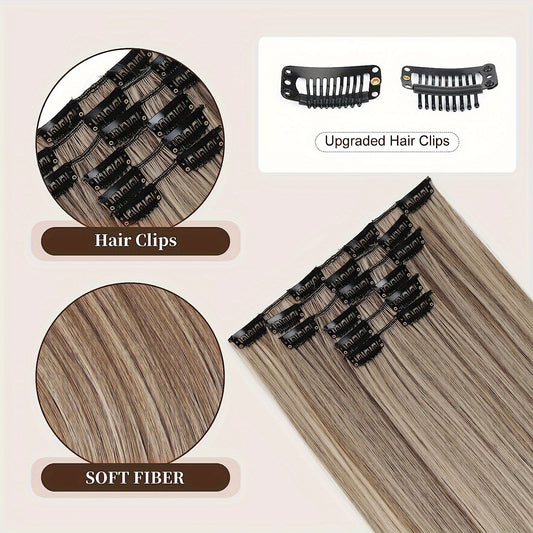
24 Inch Clip In Long Straight Synthetic Hair Extension | 6PCS Balayage Pale Golden Honey Thick Hairpieces
Regular price $109.99 USDSale price $109.99 USDUnit price per -

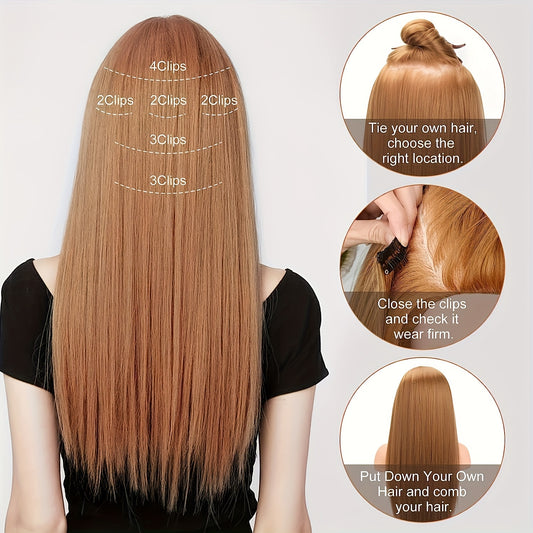
24-Inch Synthetic Hair Extensions - 6pcs, Balayage Pale Golden Honey Blonde, Soft Double Weft
Regular price $109.00 USDSale price $109.00 USDUnit price per


Ash Black Balayage Hair Extensions: Cool-Toned Dimension That Blends Like It’s Yours
Ash black balayage hair extensions are for anyone who wants deep, dark hair that still looks airy, modern, and naturally dimensional. The “ash” tone keeps the finish cool and refined, while the balayage fade softens the look through the lengths so it doesn’t read flat or harsh in daylight. This collection works especially well if you want a high-end contrast effect without committing to extreme blonde, and it’s ideal for styling because the subtle ribbons of tone make waves, curls, and sleek looks appear more defined. Use the guide below to choose the right shade, texture, and construction for seamless blending and long-lasting wear.
What This Collection Is and Who It’s For
Ash black balayage extensions combine a deeper base with a gradual, cool-toned lift through the mid-lengths and ends. Instead of a single solid color, you get tonal movement that mimics real hair: darker near the top and softly lighter where sunlight would naturally hit. That dimension is what makes the look feel premium, because it adds depth without looking “striped.”
This collection is best for:
- Cool-toned brunettes and natural blacks who want dimension without warmth.
- Anyone who finds flat black too intense, but still wants a darker overall look.
- People who style often and want color variation that makes texture look richer.
- Short-to-medium hair lengths that need a believable gradient to blend longer pieces.
- Event styling where photos matter and you want the color to read as “expensive,” not artificial.
If you’re comparing shade families before committing, it helps to view the broader dark palette first: black hair extension shades and textures for building a deeper color wardrobe.
Why This Category Matters Now
Dark hair is trending in a more nuanced way than the old “one-note jet black” era. The current preference is depth with softness—color that looks intentional, multi-tonal, and wearable across seasons. Ash black balayage fits that shift because the cool undertone keeps the look modern, and the gradient creates movement so the hair doesn’t look heavy.
This category also solves a real problem: dark hair can be unforgiving in bright light. Flat color can emphasize track lines, density changes, and any mismatch in shine. Balayage dimension diffuses those issues by breaking up light reflection across the surface of the hair. That’s why it’s popular with both first-time wearers and experienced extension users who want a believable upgrade rather than a dramatic, obvious change.
How to Choose the Right Option
Decision Framework
Use this fast decision method to choose the right ash black balayage extension setup for your hair and routine:
- Goal → length, volume, tone enhancement, or all three
- Shade/undertone → cool ash, neutral dark, or slightly softened black
- Texture/finish → straight, loose wave, or defined wave to match your natural pattern
- Construction/type → clip-in, tape-in, or micro-ring based on wear frequency
- Weight/coverage → enough density to match your ends without creating a shelf
- Occasion/frequency → everyday comfort vs occasional high-impact styling
- Care tolerance → realistic upkeep for detangling, washing, and heat styling
- Budget/value → prioritize longevity and blend over the most hair per set
How to choose ash black balayage extensions for thin hair right now
If your hair is fine, the most common giveaway is an end-density mismatch: your natural hair tapers, but the extension perimeter stays thick. The fix is to choose coverage that supports a natural taper and to style with soft movement that blurs the ends. A minimal, professional trim on the extension ends can also help—think gentle taper, not a big haircut.
What ash black balayage looks most natural in daylight
In daylight, undertone matters more than darkness. A natural ash black balayage reads as cool depth with subtle lift, not gray or overly smoky. Match your mid-lengths first because that’s where your natural hair overlaps the extensions. If your ends are warmer from sun fade, choose a gradient that transitions gently so the blend looks intentional rather than mismatched.
How many pieces or units do you actually need
Decide based on your most-worn hairstyle. If you wear hair down, you need even mid-shaft coverage so the balayage gradient appears continuous. If you wear half-up styles, side coverage becomes essential so lifting the top section doesn’t reveal gaps. If you prefer ponytails, you’ll want a secure base and careful temple blending because contrast and tracks show faster there.
Best option for daily wear vs special occasions
Daily wear is about comfort and consistency. Special occasions are about impact and camera-ready polish. If you like switching looks, a removable method gives you control without long-term commitment. If you want hair to feel “done” when you wake up, installed methods can reduce daily styling time—provided you’re comfortable with maintenance.
When removable balayage clip-ins make the most sense
Choose removable balayage clip-ins if you want the color effect without committing to a full-time install. This is also the easiest way to test how cool-toned dimension changes your overall contrast with makeup and wardrobe. For this construction, browse: balayage clip-in hair extensions for quick, removable dimension and easy blending.
When black tape-ins are the smarter “built-in” choice
If you wear your hair up frequently and want a flatter lay, tape-ins can feel more seamless at the base than clips. They’re also great for a consistent day-to-day look when installed correctly. If tape-ins suit your routine, compare options here: black tape-in hair extensions for a smooth, low-bulk installed finish.
When micro-rings win for longer-wear structure
Micro-rings can be a strong fit if you prefer longer wear and want to avoid adhesives. The key is neat sectioning and regular check-ins so the beads stay comfortable and discreet. To explore that category: black micro-ring hair extensions for long-wear blending with natural movement.
Shade, Undertone, and Finish Selection
Ash black balayage is not “black plus blonde.” It’s a controlled gradient where the lift is cool, refined, and designed to look like natural dimension. Choosing the right version depends on your undertone, your natural hair’s warmth level, and how you like your hair to reflect light.
How to match undertones without overthinking it
Check your hair in indirect daylight. If your hair reads cool espresso, smoky brunette, or soft black, ash tones will blend easily. If your hair reads chocolate, chestnut, or has copper warmth, choose a softer ash gradient that doesn’t fight your natural warmth. The goal is believable harmony, not a lab-perfect match.
Ash brown vs ash black: choosing the right depth
Ash brown tends to feel softer and slightly lighter overall, while ash black carries more drama and sharper contrast. If you want cool tone without going very dark, ash brown can be a stepping stone. For a deeper explanation of that shade logic: ash brown hair extensions as a cool-toned alternative to deeper dark shades.
How to choose the contrast level for a believable balayage
Low-contrast balayage reads natural and understated; high-contrast balayage reads bold and editorial. If your natural hair is fairly uniform, keep the lift subtle so it looks like real sun-softening. If you already have lighter ends or existing highlight dimension, you can go brighter without it feeling abrupt.
When ash blonde knowledge helps you choose a cooler lift
If you’re deciding how cool you want your lighter pieces to read, ash blonde guidance is surprisingly useful because it clarifies how cool tones behave across lighting. For that broader understanding: how ash blonde tone behaves and what it teaches about cool-toned dimension.
When jet black is a better base reference than ash black
If your natural hair is extremely dark at the root and you prefer a crisp, high-impact silhouette, jet black may match your base better than a softer ash black. It’s also a helpful comparison shade if you’re choosing between a smoky finish and a more inky finish. For that family: jet black hair extensions for maximum depth and a sharp, polished look.
Texture and Blend Strategy
Color alone won’t make extensions look seamless. Texture is what makes the blend believable. Even a perfect shade can look obvious if your natural hair pattern and the extension pattern disagree. Treat blending as a system: placement, texture matching, perimeter control, and styling technique working together.
How to blend with blunt haircut types
Blunt ends create a strong line that can expose where your natural hair stops. The fastest fix is movement: a soft bend or wave breaks the line so the perimeter looks intentional. If you prefer straight hair, a gentle taper on the extension ends can help the blend without changing your natural cut.
How to blend with layered haircut types
Layers can hide transitions beautifully, but they can also create a shelf if heavy pieces are placed too high. Keep the densest pieces lower, use lighter coverage near the crown, and style everything together so layers integrate into the longer lengths rather than sitting separately on top.
How to blend with short hair without the “two-tier” effect
Short hair can wear ash black balayage extensions well because the gradient disguises the transition—if you build a length ladder. Place shorter-support pieces higher and longer pieces lower, then style a consistent bend through the blend zone. For confidence and practical reasons short hair benefits: why extensions work for short hair and how to avoid an obvious transition.
How to blend with medium-length hair for the easiest realism
Medium hair is often the simplest starting point because the gap to extension length is smaller. Focus on matching mid-shaft density and ensuring the ends don’t look overly thick compared to your natural perimeter. Loose waves tend to produce the most natural “grown” effect.
What to do if it looks obvious at the root area
If attachments show near the root, it’s usually a placement issue rather than a color issue. Move bulk lower, avoid placing heavy pieces too close to the crown, and confirm your part line isn’t cutting directly through attachment rows. Slight crown lift can help, but the real win is a cleaner distribution that follows your head shape.
What to do if the blend line shows through the mid-lengths
Blend lines typically come from density mismatch, texture mismatch, or a “step” in placement. Fix it by redistributing weight lower, adding side support where needed, and styling the hair together so the surface behaves as one layer. If you want technique-first help for lift and integration: clip-in volume techniques that improve blend and reduce visible transition lines.
How to avoid warm tones creeping into a cool balayage look
Warmth can show up when your natural ends are warmer than the extension lift, or when product buildup changes how hair reflects light. Keep products lightweight and avoid heavy oils on the surface. If you’re mixing tones intentionally, make sure the contrast looks designed, not accidental.
Styling Ideas: Daily + Event
Ash black balayage is extremely style-responsive. The dimension makes curls look deeper, waves look more sculpted, and straight styles look glossy without appearing flat. The best styles highlight the gradient in motion and keep the finish controlled rather than heavy.
Quick looks that still feel polished
- Low sleek pony with a wrapped base to display the gradient through the tail.
- Half-up twist with soft waves for lift at the crown and a blended side profile.
- Loose brushed curls for a soft-focus, premium finish.
- Low bun with face-framing pieces so the dimension shows near the cheekbones.
Photo-ready looks for nights out and milestone moments
- Old-Hollywood waves that turn the balayage into a ribbon effect.
- High pony with curled ends for a sculpted cascade that shows tone shifts.
- Braided ponytail that reveals dimension through the braid pattern.
- Soft glam blowout with a clean center part for modern contrast.
If you’re planning a formal event, many medium-length styling concepts translate beautifully when you add length and dimension: prom hairstyle ideas that scale up elegantly with extensions.
For broader finish inspiration that helps you choose between sleek, waved, and voluminous looks: celebrity hairstyle inspiration for choosing a photo-ready finish.
Bandanas and accessories that flatter dark dimension
Accessories look striking against dark hair because they create crisp contrast. To keep the look balanced, choose structured clips, wider scarves, or bandanas with enough visual weight to match the hair’s presence. For wearable ideas: bandana hairstyle ideas that work with sleek hair, waves, and ponytails.
How to make straight styles look dimensional, not flat
Straight styling shows everything: tone, shine, and blending. Keep the surface smooth but avoid a glassy finish by using minimal product and a gentle micro-bend through the mid-lengths. If you love timeless sleek hair and want to refine the silhouette: sleek jet black styling ideas that improve polish and shape.
Care, Maintenance, and Longevity
Dark, dimensional extensions look their best when the cuticle stays smooth and the ends stay hydrated. The most common maintenance problems at darker shades are tangling at the ends, product buildup that dulls the tone, and excess shine that makes hair look less natural in flash photos.
How often should you wash ash black balayage extensions
Wash when buildup shows, not on a rigid schedule. If you wear removable extensions occasionally, they may only need washing after many wears. If you wear installed hair frequently, wash when the hair starts tangling faster, looks dull, or feels coated. Always detangle before washing to prevent knots from tightening when wet.
A low-friction wash routine that preserves cool tone and softness
Brush thoroughly, then keep the hair aligned while washing by smoothing product downward. Condition mid-lengths to ends and comb gently while the conditioner is in. When towel drying, press rather than rub. If you air-dry, guide the hair into the shape you want so it dries with minimal frizz and fewer tangles.
How to keep ends soft without making dark hair look oily
Apply lightweight moisture to the last few inches, then brush through so it distributes evenly. Avoid piling product on the surface layer, because that can make dark hair look greasy and overly reflective. If the ends still feel rough, reduce heat frequency and add protective styles during high-friction days.
Heat styling rules that protect shine and reduce breakage
Use lower heat, fewer passes, and fully dry hair before styling. Let curls cool before brushing so the shape sets naturally. If you style frequently, rotate looks: sleek one day, wave the next, then a low-heat set. That variety reduces repeated stress on the same areas and keeps the hair looking smoother over time.
Night routine and storage that prevents matting
For removable pieces, store hair fully dry, brushed, and gently secured to prevent tangling. For installed methods, sleep with a loose braid or low ponytail to reduce friction. A smooth pillow surface helps too, especially if your hair rubs against fabric overnight.
Comparing Nearby Categories
Ash black balayage sits at the intersection of black hair and balayage hair. Comparing adjacent categories helps you choose the right direction for your contrast level, your undertone, and your maintenance comfort.
Balayage family comparison for dimensional blending
If your priority is multi-tonal realism and softer contrast, the balayage family is the right ecosystem to shop. It gives you gradient options that can be subtle or bold depending on your preference. For broader browsing: balayage hair extensions for dimensional blends across a wide shade range.
Classic black vs ash black balayage: when uniform depth wins
Uniform black is powerful and simple, and it can be easier to match if your natural hair is one consistent shade. If you want a clean, classic look with removable flexibility, consider: black clip-in hair extensions for quick depth and easy everyday wear.
When you want brighter balayage contrast instead of smoky lift
If you prefer a more noticeable highlight effect, a brighter balayage blend can feel fresher and more high-contrast, especially in waves. For that direction: biscuit blonde balayage hair extensions for a brighter, high-contrast gradient.
How to achieve a realistic balayage placement with extensions
The most believable balayage looks painted: softer near the face, blended through the mid-lengths, and lighter toward the ends without harsh bands. Placement is as important as shade. For a practical, step-by-step approach: how to achieve balayage with extensions using a realistic placement strategy.
Featured Picks and Use-Case Recommendations
Product selection should match your styling identity. If you wear hair straight most days, choose options that look natural under scrutiny. If you wear waves or curls, choose a texture that enhances dimension and reduces visible transitions. If you want face framing, pick targeted pieces that change the silhouette quickly.
For an easy, classic black clip-on refresh
If you want fast volume and depth with flexible wear, this is a clean entry point: black human hair clip-on extensions for quick fullness and natural-looking coverage.
For a richer, deeper dark when you want more intensity
Some people prefer a darker, inkier result rather than a softer black. If that’s you, consider: dark black clip-on hair extensions for a bolder, more saturated depth.
For sleek, straight styling as your signature look
Straight styling highlights blend and shine, so a polished straight option can deliver a crisp finish: black straight clip-in hair extensions for a smooth, salon-like silhouette.
For soft waves that make dimension look effortless
Waves are one of the most flattering ways to show balayage tone shifts, and they help soften small density differences at the perimeter: black wavy hair extensions for movement, softness, and easier blending.
For instant face framing without cutting your own hair
Face-framing pieces can change your entire look, especially in dark shades where the face frame controls brightness. If you want a quick shape shift: black side bangs hair extensions for instant face-framing shape and softness.
For longer-wear micro-ring installation in a jet black tone
If you want secure, longer wear with a deep jet-black finish, micro-rings can be a strong option when installed and maintained well: jet black micro-ring extensions for long-wear depth with a natural swing.
Buying Guidance and Common Mistakes to Avoid
Dark, cool-toned hair is striking, but it can be unforgiving if something is off. Most problems come from predictable mistakes: choosing the wrong undertone, overloading product on the surface, or selecting a construction that doesn’t match your routine.
Mistake: choosing the wrong “black” undertone
Not all black reads the same under light. Some blacks skew warm and look brownish; others skew cool and look smoky. Decide whether your natural hair reads cool or neutral, then match mid-lengths in daylight. If you’re considering coloring your own hair black to match, read this first: what to consider before dyeing your hair black for long-term compatibility.
Mistake: committing to black without weighing the maintenance realities
Black hair can look timeless, but it can be harder to lift or change later. If you’re debating whether black is right for you, evaluate upkeep and future flexibility before making the leap: pros and cons of dyeing your hair black before deciding.
Mistake: chasing contrast without a plan for balance
High contrast can look incredible when it’s intentional, but it can look accidental if the placement is uneven or the tones fight each other. If you love the idea of bold contrast, use a reference that shows how to keep it controlled: how to wear black and bleach blonde contrast so it looks designed.
Mistake: skipping blending fundamentals for clip-ins
Clip-ins can look incredibly natural, but they require correct placement and texture matching. If you want a dependable routine that stays seamless across styles, follow a blending-first approach: black clip-in blending guidance for a secure, natural-looking finish.
FAQ
What exactly is ash black balayage, and who does it suit best?
Ash black balayage combines a darker base with a cool-toned, gradual lift through the lengths. It suits cool-to-neutral undertones best and works well for anyone who wants dark hair with movement and softness. It’s especially flattering if you want dimension without a dramatic blonde commitment.
Will ash black balayage match naturally dark brown hair?
Often, yes—especially if your dark brown reads neutral or cool. Match the mid-lengths in daylight, because that’s where your natural hair overlaps the extensions most. A soft wave finish can help blend small differences in tone.
Do cool-toned blends look gray in real life?
They shouldn’t if the lift is balanced and the base is deep enough. “Ash” in this context is more about reducing warmth than turning the hair silver. If you’re worried, choose a subtler gradient so the cool tone reads refined rather than overly smoky.
Which texture shows balayage dimension best?
Loose waves and blowout-style movement tend to show tonal shifts most clearly because they create highlights and shadows as the hair moves. Straight hair can also look stunning, but it requires cleaner blending and careful shine control. If you want the easiest realism, opt for soft movement.
Are clip-ins or tape-ins better for a seamless look?
Tape-ins often lay flatter and can feel more “built-in,” while clip-ins offer flexibility and easy removal. The most seamless result depends on correct placement and matching texture. Consider your routine: frequent switching favors clip-ins, consistent wear favors tape-ins.
Can short hair wear ash black balayage extensions without looking obvious?
Yes, if you build a length ladder and blend texture through the transition zone. Place shorter-support pieces higher and longer pieces lower, then style everything together. Soft waves usually look more natural than pin-straight styling on short-to-long transformations.
How do I keep dark extensions from looking too shiny in photos?
Avoid heavy oils on the surface and wash when buildup dulls the hair or makes it overly reflective. Choose a finish that looks like natural shine, not gloss coating. A brushed wave can also diffuse reflection and look more realistic under flash.
How long will these extensions last with good care?
Longevity depends on wear frequency, heat usage, and storage habits. Gentle detangling, low-friction washing, and protective storage significantly improve how long the hair stays soft. Treat the hair like an investment piece and the finish stays better for longer.
Where should I start if I’m new to Fabulive and want to explore options?
Start by browsing the full brand range, then narrow by shade family and construction type based on your routine: Fabulive hair extensions for exploring shade families, textures, and installation options.
Relate Collections
If you’re building a cohesive path from shade to construction, use the categories referenced above as your navigation system. Compare the broader balayage family when you want more or less gradient, compare classic black and jet black when you’re deciding how bold the base should look, and choose construction based on how you plan to wear the hair. If you want removable dimension, balayage clip-ins keep things flexible. If you want a flatter daily lay, tape-ins can feel more seamless. If you want longer-wear structure without adhesives, micro-rings are worth comparing. For quick refreshes, classic black clip-ins can anchor your everyday look.
Conclusion Browsing the Collection
Ash black balayage hair extensions are the refined answer to modern dark hair: depth without heaviness, dimension without harsh contrast, and a cool-toned finish that looks believable across lighting. The best results come from matching undertones in daylight, choosing a texture that mirrors your natural pattern, and picking a construction that fits your schedule. Browse with the Decision Framework in mind, prioritize seamless blending over extremes, and you’ll get a look that reads like your hair—only better.