
-

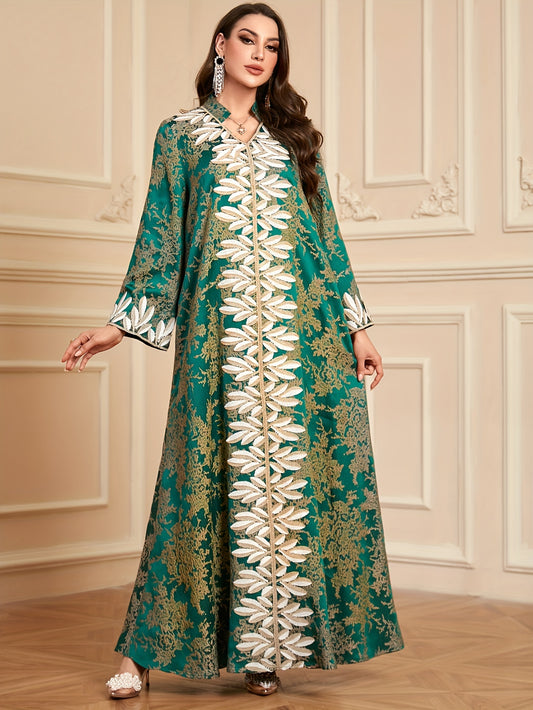
Elegant Green Floral Embroidered Long Sleeve Maxi Kaftan Abaya Dress - Polyester, Machine Washable, Non-Stretch Fabric for All Seasons
Regular price $210.18 USDRegular priceUnit price per$0.00 USDSale price $210.18 USD -

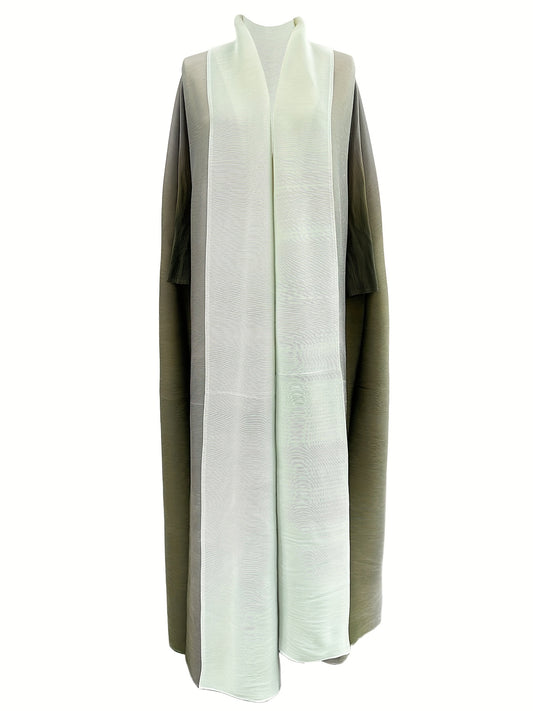
Middle Eastern Fashion Open Abaya Muslim Woman Luxury Formal Robe Saudi Arabia Eid Abaya Gate Ramadan Green Gradient Pleated Long Sleeve Coat with Belt Plus Size Clothes
Regular price $186.58 USDRegular priceUnit price per$0.00 USDSale price $186.58 USD -

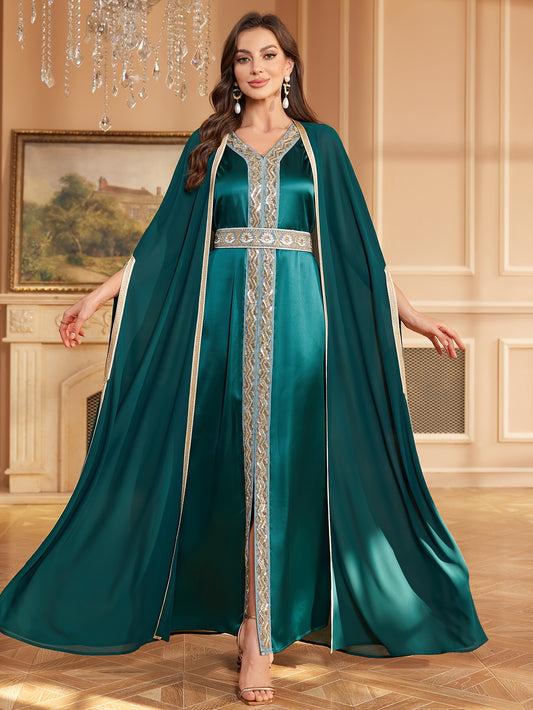
Arabian Middle Eastern Women's Long Abaya Dress Two-Piece Set, Embroidered Decoration, Chiffon V-Neck Dark Green, Elegant and Luxurious Court Style
Regular price $212.12 USDRegular priceUnit price per$0.00 USDSale price $212.12 USD


About Green Abaya
Green Abaya: The Complete Style, Fit, And Care Guide For A Modern Wardrobe
Green is more than a color on an abaya—it is a language of serenity, dignity, and thoughtful presence. When you wear green, you communicate poise without loudness, confidence without spectacle, and elegance without excess. The green abaya, once reserved for singular occasions, has matured into a year-round essential that moves from prayer to boardroom, campus to wedding hall, airport to art gallery—always modest, always current, always composed. This comprehensive guide distills everything you need to select, style, care for, and love a green abaya for many seasons to come. It is designed for clarity and depth: a single resource you can trust when comparing fabrics, choosing shades, planning event looks, packing for travel, or streamlining a capsule wardrobe. The purpose here is twofold—equip you with precise, practical knowledge, and help you discover the joy that comes from a garment that works perfectly with your life.
What The Green Abaya Conveys In One Look
The reason a green abaya feels so effortless is psychological as much as visual. Green sits between cool and warm on the spectrum, carrying the restful qualities of blue and the organic vitality of yellow. That blend is why the garment feels calm yet alive, composed yet celebratory. In modestwear, this balance matters: you want clothing that quiets the noise while still carrying intention. A green abaya does exactly that. If black abayas are architectural, green abayas are botanical: structured where needed, flowing where it counts, and always rooted in harmony. The color reads as trustworthy in offices, gracious at family events, and refreshing in outdoor settings. When you build a core outfit around a green abaya, everything else—hijab, shoes, bag, jewelry—slots into place with less effort, reducing decision fatigue while increasing visual cohesion.
A Brief Cultural Context Without The Clichés
Across cultures, green has long been linked with renewal, blessing, and growth. For many, it carries spiritual resonance and a connection to paradise; for others, it symbolizes prosperity, hope, and nature’s constant renewal. The modern green abaya draws respectfully on those associations while embracing contemporary craftsmanship—new weaves, breathable finishes, innovative closures, and silhouettes that move fluidly through daily life. It honors heritage without locking you into a single way of wearing it. The point is not to replicate museum fashion; it is to dress for the present with grace and intelligence.
A Shade Map: Choosing The Right Green For Your Skin Tone, Setting, And Season
Emerald: Deep, luminous, and instantly formal. Works beautifully with evening lighting, gold jewelry, and structured silhouettes. Emerald flatters tan to deep complexions and creates striking contrast on fair skin during winter events.
Forest: Slightly muted compared to emerald, perfect for dignified occasions and professional settings. Forest green loves matte textures—crepe, brushed satin, fine-wale velvet—because they keep the color grounded and refined.
Olive: The workhorse of everyday wear. It behaves like a neutral, pairing effortlessly with ivory, taupe, tan, black, and cognac leather. Olive looks particularly cohesive in autumn wardrobes and transitional weather.
Sage: Contemporary, soft, and architecturally minimal. It shines in clean lines with subtle hardware. Sage complements minimalist jewelry—brushed silver hoops, pearl studs—and harmonizes well with beige or stone hijabs.
Mint: Airy and optimistic, wonderful for spring, daytime events, and outdoor gatherings. Choose fluid fabrics to prevent mint from reading too rigid or uniform-like.
Teal: Modern and photogenic, sitting between blue and green. Teal enjoys silver hardware, cool-toned hijabs, and sleek shoes.
Moss: Earthy, slightly shadowed, ideal for textured weaves and artisanal embroidery. It pairs beautifully with antique gold details and woven accessories.
Pistachio: Playful and contemporary; choose crisp tailoring or pleats so it feels intentional rather than pastel-casual.
Bottle Green: Intense, dignified, and forgiving for camera flashes. Suits gala lighting, hotel ballrooms, and winter ceremonies.
Avocado: Retro-inflected and surprisingly chic with sharp tailoring, utility pockets, and modern belts; use black or off-white anchors to keep it sleek.
Fabric Science: How Each Weave Changes Drape, Breathability, And Care
Crepe: The backbone of all-season abayas. Crepe’s pebbled surface diffuses light, resists wrinkles, and creates graceful vertical fall. Medium-weight crepe suits offices and formal events; lighter crepes are excellent for daily wear in warm climates.
Chiffon: Featherlight and sheer; best in layered designs or as drapey overlays. Chiffon moves like water, photographs beautifully in breeze, and dries quickly after delicate washes.
Satin: Elevated luster for evening and ceremonial moments. Look for matte or “liquid” satins that flow without clinging; double-check that the interior surface feels soft against the skin.
Velvet: Regal and dimensional, appropriate for winter weddings and holiday events. Consider stretch velvets for comfort and a cleaner silhouette through the arms and shoulders.
Linen Blends: Summer’s hero if humidity is an issue. Linen-cotton or linen-viscose blends offer airflow while reducing wrinkling compared with 100% linen.
Jersey: Comfortable, travel-friendly, and forgiving through the shoulders and bust. Choose heavier jerseys with good recovery so elbows and knees don’t bag out.
Tencel/Lyocell: Cool touch, eco-leaning, and beautifully drapey. Tencel twill in sage or moss looks refined with minimal accessories.
Organza Overlays: Best as capes or sleeve panels. The crispness frames embroidery and creates a formal outline without adding weight.
Georgette: Slightly grainy, floaty, and matte; excellent for layered pleats or softly flared hems.
Brocade/Jacquard Accents: Use sparingly along cuffs, plackets, or belts to keep movement light while adding luxurious texture.
Construction Details That Raise The Bar
Shoulder Architecture: A subtle drop shoulder creates easy movement; a set-in shoulder reads sharper and office-ready. Raglan sleeves soften the line for athletic shoulders and make outerwear layering easier.
Sleeve Silhouettes: Kimono sleeves for drama; tapered sleeves for practicality; bell sleeves for festive flow; cuffed sleeves to control volume while preserving elegance.
Closures: Invisible snaps for clean lines, covered buttons for classic appeal, magnetic plackets for dexterity, tonal zips for travel efficiency.
Seaming: Princess seams refine shape without clinging; empire seams lift visual height on petite frames; waist darts can be added by a tailor to fine-tune fit.
Pockets: Side-seam pockets preserve silhouette; patch pockets read utilitarian; hidden zipper pockets secure passports and cards while traveling.
Hem Engineering: A slightly weighted hem maintains straight fall in wind; a curved shirt-tail hem lengthens the leg line over trousers; side slits add stride ease without revealing shape.
How To Read Fit Notes Like A Stylist
Length: Traditional abayas skim the top of the foot. If you wear platform sneakers or block heels often, aim for a hem that clears the ground by 1–1.5 cm to avoid wear.
Ease: You want measurable ease through the torso so the garment floats rather than prints the body’s outline. In crepe, 8–12 cm of additional circumference through the bust and hips is typical for comfort.
Shoulder Width: If the seam sits well inside your natural shoulder point, the garment may pull at the upper arm. If it drops too far, the silhouette can look collapsed.
Armhole Depth: Too shallow causes pulling across the back; too deep can feel sloppy. A balanced armhole plus a sleeve head with modest ease gives you movement without bulk.
Lining: Partial linings in satin or breathable mesh reduce transparency while keeping airflow. Full linings are better in winter fabrics.
Body-Specific Strategies For A Flawless Look
Petite: Select vertical seaming, high-placed waist details, and a single uninterrupted color block. Avoid large horizontal trims at the hem.
Tall: Embrace drop waists, deep hems, and elongated sleeves. Ensure sleeve and body lengths are generous enough for your reach.
Curvy: Look for structured crepe, princess seams, and skims—not clings. Avoid ultra-thin jerseys that telegraph every layer underneath.
Athletic: Raglan or kimono sleeves soften angularity; gentle A-line hems balance broad shoulders.
Maternity: Empire seams, front pleats, and wrap-front plackets adapt as your shape changes.
Postpartum/Nursing: Hidden zippers at the chest, double-layer panels, and snap plackets provide practical access without compromising modesty.
The Green Abaya As A Capsule-Wardrobe Anchor
A single well-chosen green abaya can support a week of distinct looks with minimal packing. Select a core shade (olive for everyday, emerald for formal, sage for minimalism) and round it out with three hijabs (neutral, tonal, metallic), two footwear options (sleek flats, low block heels), one versatile belt, and a compact crossbody. Rotate jewelry to modulate mood: delicate for daytime, sculptural for evening. This capsule logic keeps your wardrobe coherent while expanding your styling range.
Office-Ready Without Compromise
Choose a matte fabric (crepe, georgette with lining) in olive, forest, or sage. Keep embellishment restrained—clean cuffs, discreet buttons, subtle darts. Pair with a tonal hijab, structured tote, and low-profile loafers or softly squared pumps. Jewelry stays efficient: stud earrings, a thin bracelet, a classic watch. The silhouette should promise movement when you walk and composure when you sit. This is the meeting-to-mosque uniform that respects your calendar and your values.
Ceremonial And Wedding Styling That Photographs Beautifully
Evening photography magnifies shine; balance it. If the abaya is satin or velvet, keep the hijab matte; if the abaya is matte, permit metallic threads or pearl accents in the hijab. Emerald and bottle green love gold filigree and freshwater pearls; teal pairs elegantly with silver and cool crystals. Consider organza capelets or detachable belts to shift from prayer to reception. Shoes matter for posture and pictures—low block heels stabilize on carpeted ballrooms and outdoor lawns alike.
Color Pairing: Hijabs, Shoes, And Bags That Always Work
Neutrals: Ivory, cream, stone, mushroom, camel, and black are universal partners. They quiet the outfit and put the abaya’s shade at center stage.
Metallics: Gold with emerald and forest; silver with mint, sage, and teal; rose gold with pistachio and moss. Choose brushed finishes for day, high-polish for evening.
Contrast Pops: Soft blush, dusty lilac, cornflower blue, or marigold as small accents—a scarf edge, a shoe trim, a bag strap—add editorial precision without noise.
Leathers: Cognac with olive; black with emerald; taupe with sage; dark chocolate with bottle green. Grainy leather feels daytime; patent reads evening.
Jewelry That Complements Without Overwhelming
Pearls soften formal greens; geometric silver modernizes pastel greens; lattice-work gold amplifies deep greens. If the abaya has embellished cuffs, skip bangles to avoid catching threads. Long pendants can elongate the torso on closed abayas, but keep chains smooth so they do not abrade delicate fabrics. Brooches are back—pin them on a placket or at the shoulder for controlled sparkle.
Makeup And Fragrance Harmonies
Complexion-first, then accent. For emerald or forest, a neutral-rose lip and soft eyeliner balance depth. For mint and sage, taupe shadows and a gentle coral blush keep the face awake without fighting the outfit. Fragrance should trace the fabric rather than announce itself: green florals for daytime, woody musks or soft ouds for evening. On velvet, spray a brush and stroke lightly across the lining to avoid staining.
Weather-Smart Dressing In Green
Hot And Humid: Linen-blend or crepe with mesh linings, side vents, and moisture-wicking underlayers. Lighter greens (mint, pistachio, sage) reflect heat visually and emotionally.
Dry Heat: Tencel twill or lightweight crepe with a brimmed hat when applicable; keep jewelry minimal so skin can breathe.
Cool And Windy: Weighted hems and interlined sleeves in forest or bottle green; add a tonal shawl scarf for wind protection.
Cold Winters: Velvet or brushed crepe layered over a thermal base and boots; place heat packs at the lower back under the abaya for outdoor events.
Travel Tactics That Keep You Polished
Pack one all-rounder green abaya in a wrinkle-resistant crepe, one event-ready piece in satin or velvet, and a compact steamer. Roll rather than fold; store hijabs in zip pouches by color family; and keep a tiny kit—lint roller, spare snap, mini sewing needle with dark and light thread. Airport security is easier with slip-on flats and magnetized closures. On long flights, switch to a jersey abaya with a moisture-wicking undercap, then change into your crepe the moment you land.
Sustainability, Sourcing, And What “Quality” Really Means
Quality is a chain, not a single link. Start with fiber: durable weaves with smooth hand-feel that do not snag at the first clasp. Move to dye: colorfast greens that do not run or fade dramatically after two gentle washes. Evaluate construction: consistent stitch length, well-bar-tacked pockets, straight plackets, secure snaps. Finally, test drape: lift and release the hem—good fabric settles in a single breath, not in a rumpled heap. Ask for transparency where possible: blend percentages, care labels, and dye methods. Thoughtful production respects both wearer and maker.
Care Routines That Preserve Shape And Shade
Washing: Turn inside out, place in a mesh bag, and use a delicate cycle in cool water with a gentle detergent. For velvet and beaded panels, spot clean or dry-clean only if the label directs.
Drying: Air-dry on a padded hanger away from direct sunlight to prevent shade shift.
De-Pilling: Use a fabric shaver lightly on jersey and knits; avoid snagging seams.
Steaming: Steam from the inside to protect face fabric and embellishment.
Storage: Give each abaya space; do not trap them under heavy coats. Insert cedar sachets to deter moths without perfume build-up.
Solving Common Fit Frustrations
Pulling Across The Back: You likely need a deeper armhole or additional ease over the shoulder blades.
Twisting Sleeve Seams: The sleeve may be pitched incorrectly; a tailor can rotate it.
Hemline “Wave”: Over-pressed hems in lightweight fabrics can ripple—steam gently and let cool flat.
Cling In Dry Weather: A light antistatic spray or a silk underslip neutralizes static.
Transparency In Bright Sun: Use color-matched slips and consider double-layer panels in the skirt while keeping the bodice lighter.
Building A Year-Round Rotation With Three Pieces
The Everyday: An olive crepe with side pockets and tapered sleeves.
The Occasion: An emerald satin with detachable belt and organza overlay.
The Minimalist: A sage lyocell-twill with hidden placket and precise topstitching.
With these three, you can meet 90% of calendar demands while controlling costs and storage.
Event-Specific Playbook
Religious Gatherings: Choose matte fabrics and quiet trims; let dignity lead.
Graduations And Award Nights: Bottle green photographs reliably on stage; pair with sleek pumps.
Work Presentations: Forest green with a crisp, tonal hijab and structured tote.
Garden Parties: Mint or pistachio chiffon with block-heel sandals to avoid lawn sinks.
Winter Weddings: Velvet in deep emerald, pearl drops, and a satin-lined shawl.
Photography And Social Media Notes
Green can shift under phone sensors. If your abaya looks dull on screen, increase exposure slightly and reduce warmth to maintain true shade. Textured greens—crepe, jacquard—read better on camera than ultra-flat weaves. For motion shots, chiffon overlays catch light—walk slowly so the fabric arcs rather than whips. In mirror photos, step back to preserve vertical lines and avoid lens distortion at the hem.
Budgeting With Cost-Per-Wear
A well-made green abaya delivered at mid-market pricing can outpace a cheaper option within months. If the better garment lasts 5× longer and looks sophisticated on the hundredth wear, the cost per use becomes gentler. Budget for tailoring where it will actually improve longevity—hemming to the correct height prevents fraying, and reinforcing pocket bags stops blowouts.
The Role Of Belts, Vests, And Capelets
Belts carve structure without revealing shape; in olive or bottle green, a thin leather belt with a quiet buckle creates a refined waist cue. Long vests in tonal shades streamline layers in winter without bulk. Detachable capelets transform one abaya into two personalities: spiritual in the morning, celebratory by night.
Undercaps, Pins, And Fabric Safety
Choose undercaps with silicone grips to reduce pressure lines. Use magnet pins for chiffon hijabs to protect delicate weaves. Store beaded hijabs flat so embellishments do not press into folds. When layering necklaces, protect satin by wearing jewelry over the hijab rather than directly on the neckline.
A Quick Guide To Measuring Yourself Accurately
Bust: Measure at the fullest point over a well-fitting base layer.
Waist: Measure at the natural crease when you bend to the side.
Hips: Around the fullest part, feet together.
Shoulder Span: Tip-to-tip across the back.
Sleeve Length: From shoulder tip to wrist bone with elbow softly bent.
Total Length: From the top of the shoulder near the neck down to the desired hem. Re-measure after trying usual footwear.
When To Take It To A Tailor
Shorten sleeves that pool at the wrist and adjust hems to your shoe habits. Add discreet darts if the back bubbles under a backpack. Replace loud snaps with quieter magnets if you need dexterity. Ask for thread-matched topstitching so alterations disappear into the garment’s original language.
Safety, Movement, And Everyday Practicalities
Public transport favors tapered sleeves and secured plackets. School drop-off lines appreciate zippered pockets that hold keys and cards. In workplaces with mechanized doors or rolling chairs, keep bell sleeves controlled with soft cuffs to prevent snagging. Choose footwear with stable bases—low wedges or block heels—when navigating stone courtyards and polished floors.
Myths That Deserve Retirement
“Green is hard to match.” In reality, olive and forest behave like neutrals and integrate gracefully with classic accessories.
“Chiffon is too fragile for daily wear.” With layered construction and careful washing, chiffon overlays withstand routine use.
“Velvet is only for winter.” Lightweight stretch velvets work in climate-controlled venues year-round.
“Embellishment must be loud to be festive.” Fine threadwork and micro-sequins can create radiance without glare.
How To Evaluate Product Pages And Reviews Intelligently
Scan fiber content first, then weight, then care. Zoom into seams and cuffs—the stitch tells you more truth than the marketing copy. Read reviews for repeated notes on sizing consistency and color accuracy; three comments about a sleeve being tight or a shade running dark are signals. Favor retailers that show garments on multiple heights and body shapes and provide exact garment measurements in addition to size labels.
Using The Collection Page Efficiently
The collection page organizes abayas alongside adjacent categories such as kaftans and hijabs, with navigation that lets you browse by fabric, color, and special occasions; this structure helps you move quickly from a specific shade to the correct fabrication and event use case. (Fabulive)
Where A Green Abaya Works Hardest In Real Life
School Events: Olive crepe with low loafers and a crossbody—presentable, punctual, and practical.
Client Lunches: Forest green with a cream hijab and structured tote—quiet authority.
Volunteer Days: Sage jersey with tapered sleeves and sneakers—easy, and kind to your shoulders.
Weekend Gatherings: Mint chiffon overlay, thin belt, soft flats—effortless charm.
Long Errands: Lyocell-twill, hands-free bag, a water bottle sleeve—intentional comfort.
Future-Facing Trends Worth Watching
Architectural Minimalism: Monochrome sets in sage and stone with precise seaming.
Quiet Shine: Matte bodies with micro-sequin cuffs that glow under evening light.
Tech Weaves: Antistatic, cool-touch fibers for desert travel and indoor heating.
Modular Accessories: Clip-on capelets, convertible belts, detachable cuff panels.
Nature-Led Palettes: Moss and pistachio next to river blues and weathered stone.
A Few Words On Retail Experience
A helpful product page shows exact garment measurements, multiple body types modeling the same size, and real-world lighting. You should not have to guess whether the hem will clear your shoes. The best shops photograph close-ups of fabric hand and movement. They also keep returns straightforward and care guidance precise so you can preserve the shade and shape for as long as you choose to wear it.
Shopping With Confidence And Clarity
Before you commit, make a quick list: the shade that best serves your calendar, the fabric your climate needs, the length your shoes require, the sleeve shape your day demands, and one accessory you already own that will elevate the look. If a green abaya satisfies those five, it will not sit in your closet; it will live your life with you.
Brand Touchpoints In The Green Abaya Space
The contemporary modestwear landscape offers an array of curated destinations. A well-organized store makes comparison effortless, from emerald evening pieces to sage minimalist sets and olive everyday staples. The Green Abaya collection at Fabulive exemplifies the kind of navigation that saves time while stimulating styling ideas for both newcomers and experienced dressers. (Fabulive)
A Note On Service, Community, And Curation
When an online retailer invests in clear structure, helpful imagery, and coherent categories, you feel it in every click. Fabulive’s careful curation of complementary categories—abayas, hijabs, kaftans, and accessories—helps you build outfits with fewer decisions and better outcomes. (Fabulive)
Sharing Your Looks And Preserving Privacy
Post what brings you joy, not pressure. Crop faces when sharing in large groups if privacy matters; shoot from behind in motion for artistry without oversharing. Store original photos in a protected album. Green reads beautifully in natural light—doorways, courtyards, shaded gardens—so you can document your outfits with minimal editing.
Educating Younger Wearers With Care
If you are helping a teen choose a first abaya, start with olive or sage in a robust crepe, then add a playful hijab they love to wear. Teach fabric care as part of the milestone: how to hang, steam, and store. An early positive experience sets a respectful relationship with modestwear for life.
Owning The Joy Of Rewearing
A green abaya rewards repetition. Change hijab texture (matte to sheen), switch belt thickness, rotate jewelry scale, and adjust footwear height. The garment transforms while remaining the same—an anchor against trend churn. Make notes after events: what felt exceptional, what needed adjustment. That log becomes your personal styling education.
The Five-Minute Refresh Before You Leave
Steam the front panel, wipe shoes, lint-roll cuffs, add one scent touch, and check hem clearance with your chosen bag. That sequence is a habit loop: it builds confidence into your muscle memory and reduces last-minute stress.
Two Edits That Upgrade Most Closets
First, replace a tired black daily abaya with an olive crepe that has secure pockets and a clean cuff. Second, add one formal emerald piece with detachable elements (belt, cape, cuff panels) so a single garment yields multiple event personalities. These two edits reshape dozens of outfits without exploding your wardrobe.
End-Of-Season Review
At the close of each season, examine wear patterns and note maintenance needs. Replace overworked undercaps, mend a loose snap, reinforce a pocket bag, and hand-wash delicate overlays. Donate pieces that no longer serve your life; a joyful closet makes dressing an act of calm.
Closing Reflection: Why Green Endures
Green belongs to seasons and to timelessness at once. It is the color of resilience, renewal, and respectful presence. In an era that prizes speed, the green abaya lets you slow your aesthetic down without losing relevance. When your clothes are as serene as your intentions, the rest of your day organizes itself. Seek shade integrity, fabric honesty, and construction that holds up to your calendar. With those pillars in place, the green abaya does what great garments do—it takes care of you while you take care of what matters.
Customer Reviews
• Sophia M., USA: My bottle-green crepe abaya drapes straight, the cuffs stay put, and the color looks true in indoor photos—practical and elegant for workdays. ⭐⭐⭐⭐
• Fatima R., UK: I wore an emerald satin abaya to my cousin’s wedding and the fabric moved like water under the lights—paired it with pearl earrings and felt regal without being flashy. ⭐⭐⭐⭐⭐
• Nur A., UAE: The olive shade blends with everything in my closet; it behaves like a neutral so I reach for it on busy mornings when I don’t want to think. ⭐⭐⭐⭐⭐
• Amelie G., France: Sage lyocell is my minimalist dream—clean lines, hidden placket, and a silky cool touch that’s perfect for museum days and evening dinners. ⭐⭐⭐⭐
• Layla S., Saudi Arabia: I commute a lot and the tapered sleeves plus side pockets make life easier; fabric hasn’t pilled after multiple gentle washes. ⭐⭐⭐⭐⭐
• Hannah K., Canada: Mint chiffon was a risk for me but it’s so airy in summer; I use a matte hijab to balance shine and it photographs beautifully outdoors. ⭐⭐⭐⭐
• Miriam Z., Germany: Forest green with subtle beadwork felt dignified at a formal event—no snagging, no heaviness, just an easy, confident silhouette. ⭐⭐⭐⭐⭐
• Zoya P., Australia: My travel set in olive crepe packs small, shakes out fast, and the hem weight stops wind from flipping it around on the pier. ⭐⭐⭐⭐
• Sara L., USA: I’m petite and the curved hem plus higher waist seams kept me from looking swallowed; tailoring the sleeve length was worth it. ⭐⭐⭐⭐
• Reem Q., Qatar: Bottle green velvet for winter weddings is everything; the lining is soft and the color stays rich under camera flash. ⭐⭐⭐⭐⭐